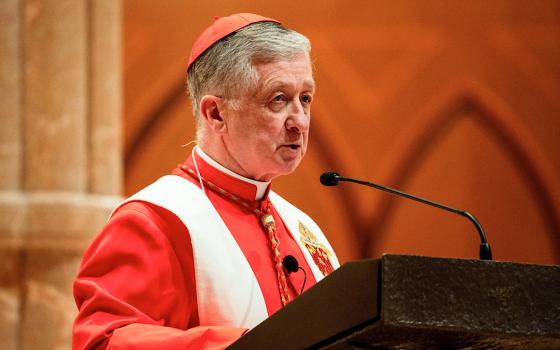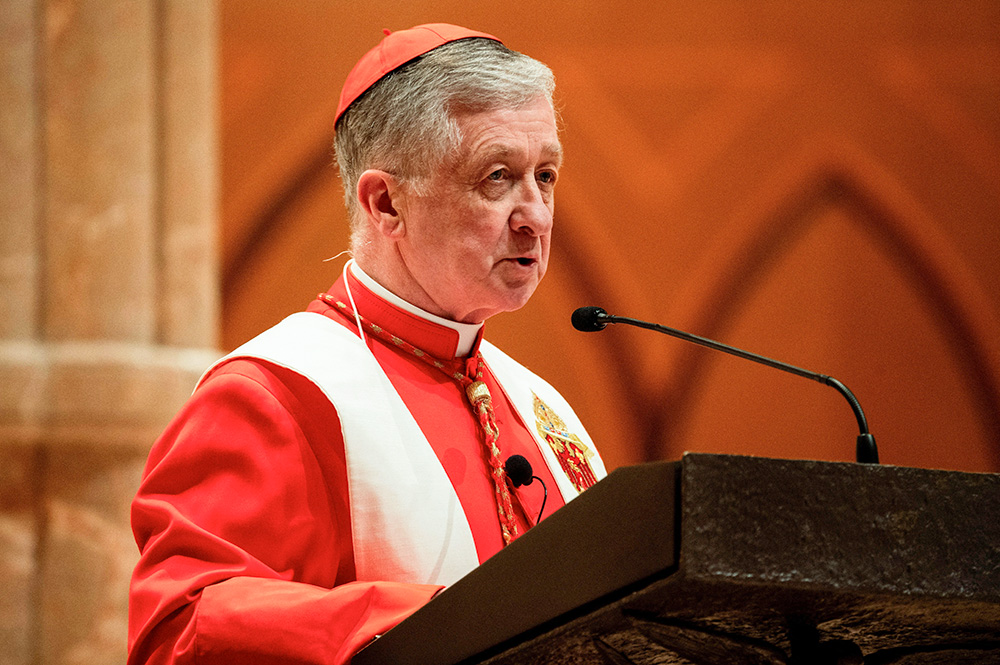
Chicago Cardinal Blase Cupich speaks at Holy Name Cathedral in Chicago in a file photo from Feb. 24, 2025. (OSV News/Reuters/Vincent Alban)

by Jeromiah Taylor
Join the Conversation
Send your thoughts to Letters to the Editor. Learn more
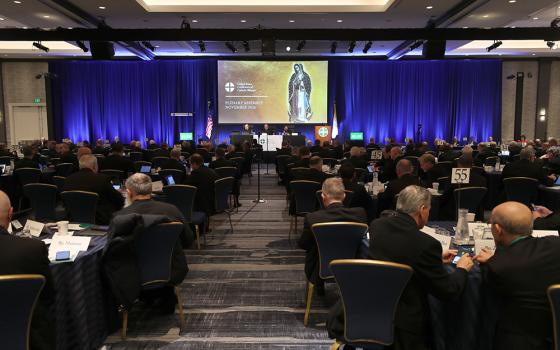
A week after the U.S. bishops met in Baltimore for their annual fall plenary session, Chicago Cardinal Blase Cupich said the body of bishops has failed to meet the moment and that they must not be afraid "to raise our voice."
"We had the election — this is an opportunity for maybe the bishops to talk about national unity as we come to Thanksgiving; we have us a healthcare crisis that's going to be fairly imminent in January when the funding is no longer there for people; and we have a world war fought piecemeal, as Pope Francis said, but our discussions were all about internal things," Cupich said Nov. 22 at an event marking the 30th anniversary of the death of one of his predecessors, the late Cardinal Joseph Bernardin. The event was held at the Holy Name Cathedral in Chicago.
Bernardin, who died in 1996, popularized the idea of a "consistent life ethic" that tried to weave together the church's teaching on life issues such as abortion, as well as what are sometimes considered more social justice-focused issues, like peace and economic justice.
Speaking with Steven Millies, director of the Bernardin Center at Catholic Theological Union in Chicago, Cupich said that it was "a little frustrating" that "we've backed off of that as a conference."
Asked by an audience member what Bernardin would say to today's U.S. bishops' conference, Cupich responded, "I think he'd say, 'Continue to read the signs of the times,' " invoking Gaudium et Spes, the Second Vatican Council's 1965 Pastoral Constitution on the Church in the Modern World.
Advertisement
The bishops' fall meeting last week in Baltimore was described as relatively muted, especially given the flood of news in the weeks leading up to the meeting. While bishops issued new ethical investing guidelines, pledged to work with the new Congress, and provided public updates on the work of their new committee on AI, they did not release any major statements about the recent elections, the ongoing debate over immigration, or the challenges facing the U.S. economy.
At the Catholic Theological Union event honoring Bernardin, the discussion largely centered on the consistent life ethic, a moral paradigm where life issues of concern to Catholics are treated as a holistic whole, from abortion to the death penalty. Referencing a seminal 1983 speech of Bernardin's, Cupich said that the consistent life ethic was both "morally correct and tactically necessary," adding that the church's moral witness is impaired when it focuses on one issue at the expense of others.
Millies asked Cupich about the designation of abortion as the bishops' conference's "preeminent priority." Millies said that such language "suggests that we can't get to work on any of the other threats to life until we have resolved the preeminent one."
In response, Cupich lamented the divisive nature of politics and said that the American approach to life issues contributes to polarization and hampers progress on any one issue. Bernardin, Cupich said, "demanded that, in fact, we not allow ourselves to gravitate around one issue only, because that is what will divide us."
In light of Bernardin's consistent life ethic, also echoed by Pope Leo XIV, and Vatican II's call for reading the signs of the times, the U.S. bishops are not, Cupich said, "giving the sense that we understand the church as a field hospital," as the late Pope Francis often referred to the church.
Bernardin, Cupich continued, would call the bishops to "look at what's happening in the world and to not be afraid to raise our voice."
Late last year, Leo himself expressed similar sentiments, saying that the church could not be silent on the issue of immigration, and that "even within the [bishops'] conference there are challenges."
"I wish there were a stronger voice," the pope said.