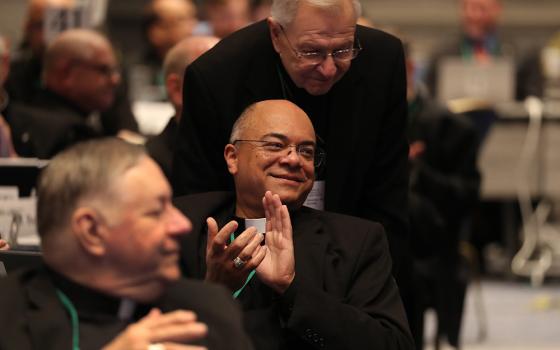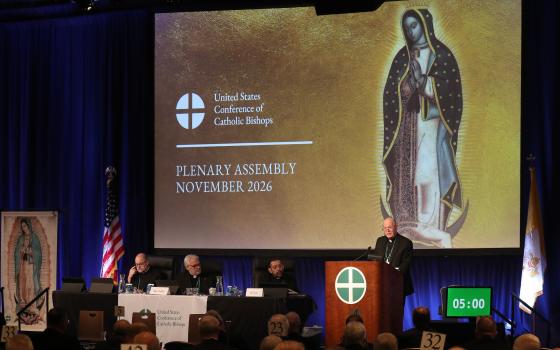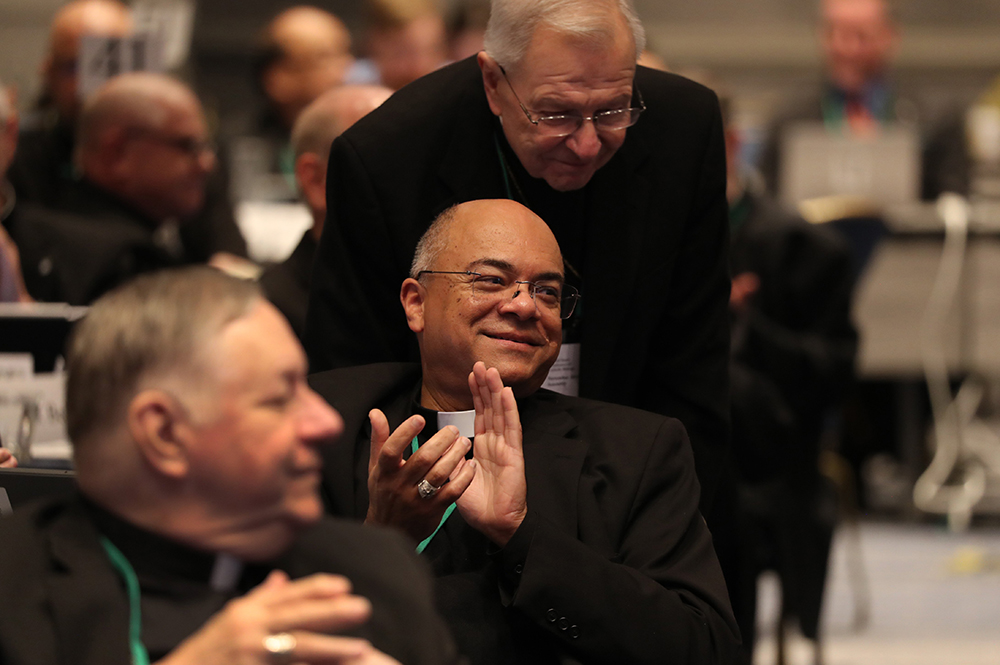
Archbishop Shelton J. Fabre of Louisville, Kentucky, applauds during a Nov. 17, 2026, session of the fall general assembly of the U.S. Conference of Catholic Bishops in Baltimore. (OSV News/Bob Roller)

by Brian Fraga
Staff Reporter
Join the Conversation
Send your thoughts to Letters to the Editor. Learn more
The U.S. Catholic bishops approved updated investment guidelines this week that address artificial intelligence's impact on society, and look at the economy, education, healthcare and the environment, among other issues.
The guidelines also touch on environmental stewardship, private prisons and immigration detention centers, human rights matters such as child labor and food speculation and provide guidance on emerging issues that include cryptocurrency and prediction markets.
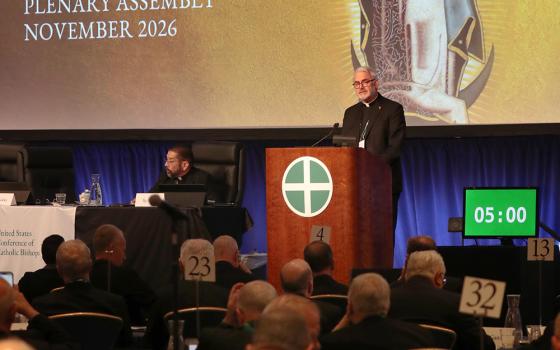
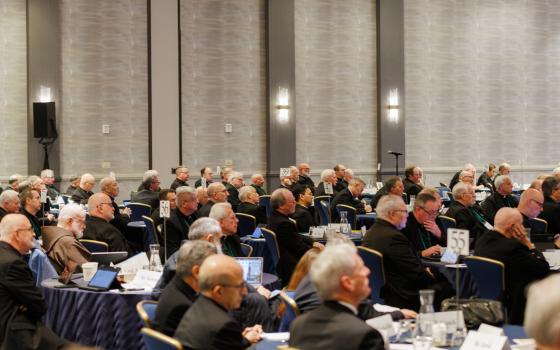
The bishops on Nov. 18 voted to adopt the updated Socially Responsible Investment Guidelines For the United States Conference of Catholic Bishops at their fall plenary assembly in Baltimore. The guidelines had been last updated in 2021.
The investment guidelines "require regular review in order to remain relevant and useful," said Archbishop Shelton Fabre of Louisville, Kentucky, who serves as chairman of the bishops' Committee on Domestic Justice and Human Development.
Fabre said during his presentation on the guidelines that his committee consulted several other committees at the conference and sought feedback from individual bishops and major investment portfolio managers used by Catholic dioceses and other Catholic institutions.
The guidelines incorporate guidance from church documents that have been adopted and edited since 2021, including the conference's ethical and religious directives, and Magnifica Humanitas, Pope Leo XIV's encyclical on humanity in the age of artificial intelligence.
Drawing on Mensuram Bonam, a document published by the Pontifical Academy of Social Sciences in November 2022, the guidelines also seek to have the bishops' conference move beyond avoiding harmful investments to using investment as a tool for advancing human dignity and social justice.
"I think you will agree that these revisions are both helpful and necessary and can ensure that the guidelines remain relevant and useful for the USCCB and the many Catholic institutions that rely upon them," Fabre said.
Regarding artificial intelligence, the guidelines declare that the bishops' conference will not invest in companies that "design, develop or manufacture AI technologies that fail to safeguard the dignity of the human person." The guidelines add that the conference will promote measures to apply ethical guardrails to the development and deployment of AI while ensuring "human oversight, transparency, fairness, and accountability, and prioritizing human dignity, as reflected in Church teaching."
The bishops' conference says it will also not invest in AI companies that design, develop or manufacture autonomous weapon systems that are capable of selecting, tracking and engaging targets without human control and oversight.
Advertisement
As far as data centers are concerned, the guidelines say that the bishops' conference, as a shareholder, will urge companies to safeguard the environment in their construction while being mindful of the limits of regional resources and scrutinizing the extraction of rare earth minerals.
As shareholders of companies involved in AI, the guidelines also say the bishops' conference will seek guardrails against the misuse of the technology in healthcare data systems and the replacement of human decision-making in determining who receives care or which insurance claims should be approved. The conference will also promote audits of supply chains to ensure just wages and safe working conditions.
Archbishop Paul Coakley of Oklahoma City, president of the U.S. Conference of Catholic Bishops, said in a prepared statement that the updated guidelines "offer important direction to those managing the USCCB's investments" in the age of artificial intelligence.
"As society addresses the reality of AI and emerging technologies, it's vital that we engage actively as stewards and shareholders to uphold the dignity of the human person and the common good as we seek to build a better world," Coakley said.
On the environment, the updated guidelines largely continue the same recommendations from the 2021 edition around climate change and fossil fuels, the primary driver of heat-trapping greenhouse gas emissions that have pushed global temperatures to dangerous levels for humanity and ecosystems.
The bishops again say they will encourage companies through shareholder engagement to reduce emissions, and "will consider divestment" from companies that consistently fail to initiate policies to meet the goals of the 2015 Paris Agreement, which committed nearly every country in the world (including the Holy See) to cut global emissions to net-zero by 2050.
In one addition, the bishops state they will make investment decisions "fraternally mindful" of the calls from the bishops of Africa, Asia and Latin America, who in March issued a joint appeal from the Global South church endorsing a treaty to phase out fossil fuels and transition to clean energy "as a moral and political imperative."
Still, the bishops of the U.S., the country responsible for the largest share of cumulative emissions, stopped short of a full prohibition from fossil fuel investments. In contrast, they declared they "will not invest" in companies involved with abortion, in vitro fertilization, human cloning, pornography, gender-affirming surgeries or gambling.
To date, more than 400 Catholic institutions worldwide have publicly committed to fossil fuel divestment, including two U.S. dioceses (San Diego and Lexington, Kentucky) and nine national and regional bishops' conferences. Thirty-one Catholic organizations announced divestment pledges this week during the COP31 United Nations climate summit.
The guidelines note that the bishops' conference will not invest in companies that "build or administer" private prisons or private detention facilities, either for the criminal justice system or the system of immigration enforcement.
Regarding cryptocurrency and prediction markets, the guidelines urge caution. Cryptocurrencies, which have grown in popularity over the last 10 years, have "sometimes been associated with illicit or criminal activities" because of the lack of a unified regulatory framework, the guidelines note. Meanwhile, the guidelines say that prediction markets, such as Kalshi and Polymarket, "raise ethical concerns, including questions around corruption, insider trading and the monetization of violence and human suffering."