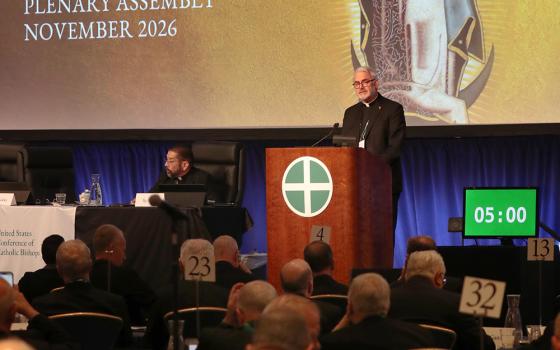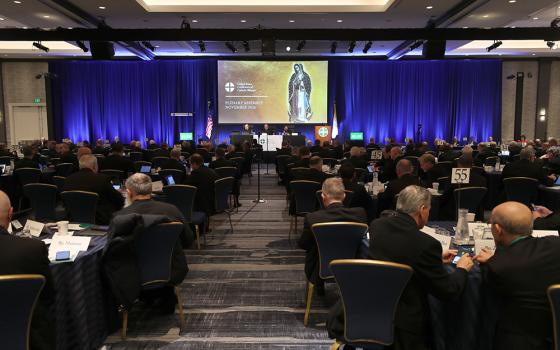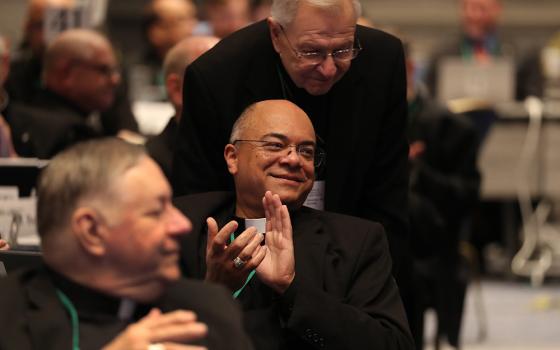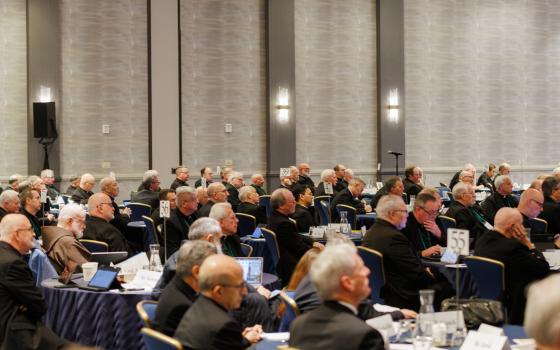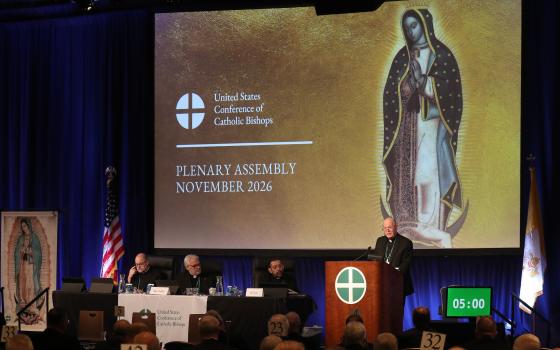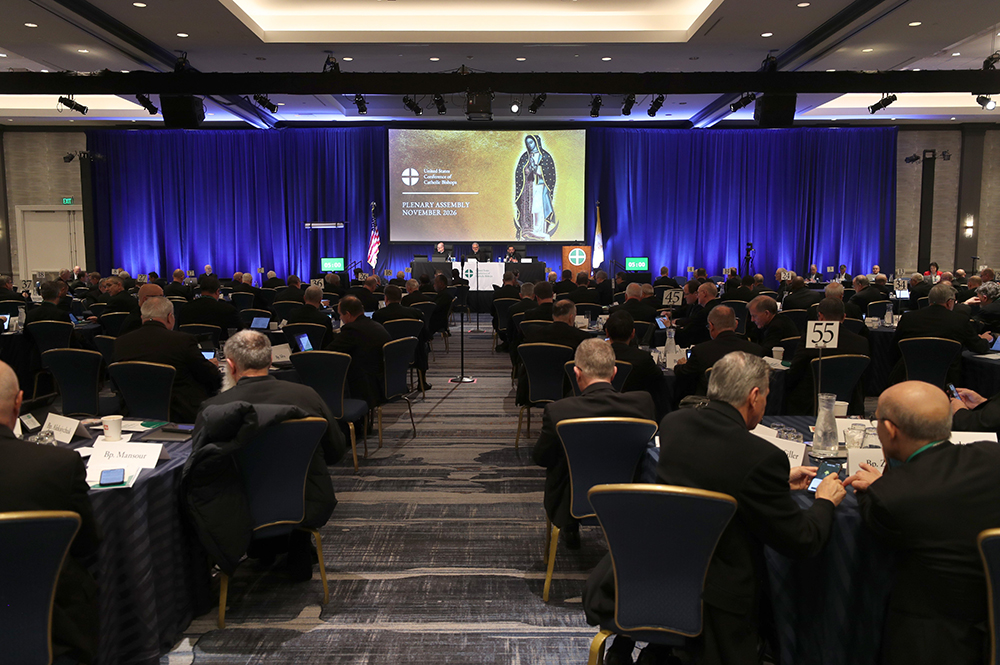
Bishops attend a Nov. 17, 2026, session of the fall general assembly of the U.S. Conference of Catholic Bishops in Baltimore. (OSV News/Bob Roller)

Join the Conversation
Send your thoughts to Letters to the Editor. Learn more
It would be going too far to say that this week's meeting of the U.S. Conference of Catholic Bishops was a waste of time. But not by much.
Bishop Oscar Cantú's update on the work of the artificial intelligence task force he leads was the best presentation of the two days of public sessions. Of course, he had Pope Leo's Magnifica Humanitas to draw from, which gave him a leg up.
The good news? "Our delegations have found genuine openness to dialogue among major technology companies," Cantu said. "While their priorities and cultures differ from each other, most have expressed interest in ongoing conversation with the church. Many recognize the deep moral and ethical questions at stake."
But it is not all good news. Cantú warned against a "reduced vision of the human person," indeed suggested this is the greatest danger posed by AI. "Magnifica Humanitas warns against the view 'that every person must earn or justify his or her own worth, to the point of attributing greater value to those who are more efficient or effective' [MH, 51]," the bishop said. "God formed mankind with his own hands and continues to breathe life into humanity; that breath cannot be replaced by an algorithm."
Cantú encouraged the bishops to educate themselves about AI and announced that webinars for bishops are being developed. Importantly, he also promised that the "task force will work closely with the USCCB government relations team to continue advocating for clear guardrails on the development and use of AI, including transparency, accountability and human oversight." I hope this comes true, but it will mean confronting the libertarianism of President Donald Trump and the conference seems unwilling to challenge him.
Archbishop Shelton Fabre, chair of the domestic justice committee, won approval of the Socially Responsible Investment Guidelines For the United States Conference of Catholic Bishops. Certainly, the new section on AI investments is both much needed and, as Fabre said, "robust."
The guidelines also said divestment from fossil fuels should be considered if "companies that consistently fail to initiate policies intended to achieve the Paris Agreement goals." And, while it is not always popular to point this out, the archbishop is correct when he stated: "Although divestment is sometimes appropriate, so too are efforts to actively work for change as shareholders."
Advertisement
The election of new committee chairs is always important, although no one I spoke with could discern any pattern or trend in the results. As is often the case, the selection sometimes comes down to which candidate is better liked, not if he is better suited to the task. I repeat my conviction that the conference should ask each nominee to speak for one minute, explaining why he agreed to stand for election to a particular office. This would not turn the selection into a political campaign; it would provide some substance to the choice.
Overall, many bishops are frustrated with the conference. Never have migrants been more threatened than they are now. Never have the challenges posed by climate change been more acute. Never has our military been sent to such an unjust and counterproductive war. The moment requires extraordinary measures and, instead, this was the most boring plenary I have ever attended.
Every bureaucracy is prone to a cautiousness that can be debilitating, even suffocating. At the U.S. bishops' conference, that tendency has combined first with an inward-facing attitude quite at odds with Pope Francis' call to go out to the peripheries and, second, with a willingness to align the bureaucracy with part of the conference, not the whole.
When I first became familiar with the work of the bishops' conference, back in the 1990s, I noticed how much time staffers like John Carr, Msgr. John Strynkowski and Dominican Fr., later Archbishop, Augustine Di Noia would spend making sure every document had something for everybody. They understood that part of their job was to keep the conference united.
In recent years, the senior leadership has failed to defend the Catholic Campaign for Human Development, and oversaw drastic personnel cuts at the office of Justice, Peace and Human Development. In short, they chose to diminish the conference's focus on social concerns, even though many bishops think those concerns should be prioritized.
As noted earlier, it was remarkable that the new president of the conference, Archbishop Paul Coakley, did not even mention the plight of immigrants in his presidential address this week. I fear the conference now only answers to half of its members instead of the whole, and the half that is in charge remains out of step with the reform begun by Francis and being continued by Leo.
We will see if the conference itself will play much of a role in helping the church and the ambient culture navigate the complex issues raised by AI — or migration or anything else — given the fact that the conference staff seems more adept at slow-walking initiatives rather than implementing them. The bishops need to demand more.