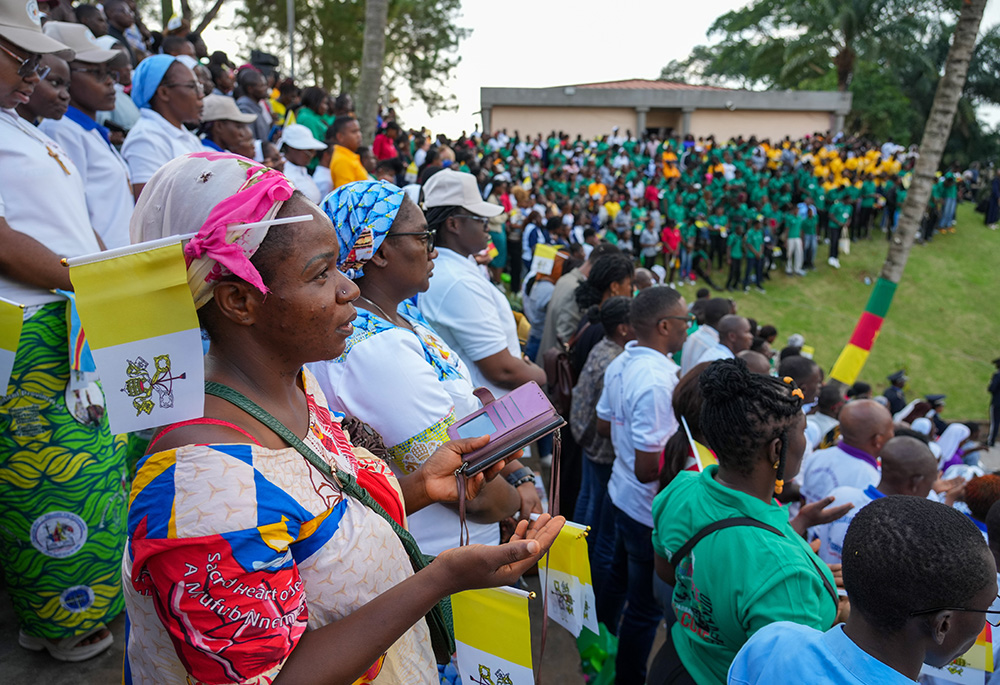
Men and women pray during Pope Leo XIV's meeting with the university community at the Catholic University of Central Africa in Yaoundé, Cameroon, April 17, 2026. (CNS/Lola Gomez)
by Stan Chu Ilo
Join the Conversation
Send your thoughts to Letters to the Editor. Learn more
This week, Pope Leo XIV has invited the College of Cardinals to Rome for a second consistory this year. The first took place on Jan. 7-8, with approximately 170 cardinals in attendance from around the world.
This second consistory is expected to draw a similarly representative gathering of the church's most senior leaders. As Cardinal Giovanni Battista Re, dean of the College of Cardinals, explained in his letter of invitation, the consistory is intended to be "a space of mutual listening, discernment and shared reflection on issues of particular importance for the life and mission of the church today."
At a moment when the world is marked by war, polarization, displacement, economic uncertainty and profound cultural change, the pope is inviting the church's senior leaders to gather not simply to exchange reports, but to engage in a process of shared discernment characterized by "listening, freedom, and parrhesia."
The agenda itself is revealing and builds upon the conversations begun in January, when the cardinals reflected on the themes of mission, synodality and the liturgy, guided in part by the ecclesiological vision of Praedicate Evangelium, Pope Francis' apostolic constitution on the reform of the Roman Curia, and by Evangelii Gaudium, his programmatic roadmap for evangelization in the contemporary world.
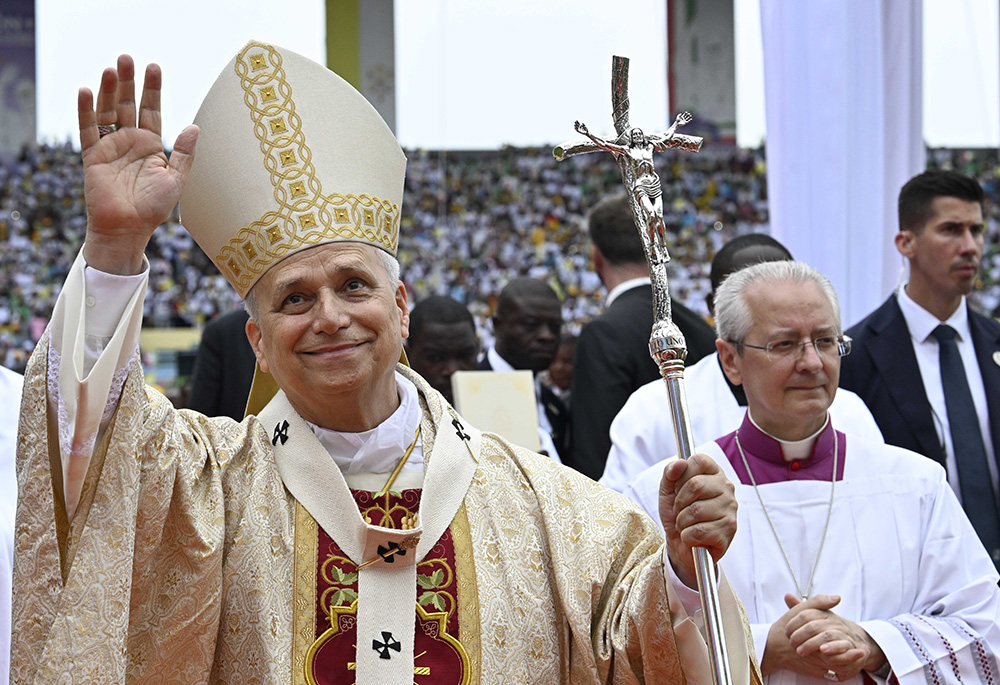
Pope Leo XIV waves as he arrives to celebrate the final Mass of his apostolic journey to Africa at Malabo Stadium in Equatorial Guinea April 23, 2026. (OSV News/Vatican Media/Simone Risoluti)
The question, for me as an African theologian, is not merely what the consistory will say about Africa, but what Africa can contribute to the church's discernment as it seeks pathways toward peace, integral human development and a more synodal future for the people of God. The themes of this consistory — war and peace, power and service, reconciliation and human flourishing, synodality and mission — are not abstract questions for African Catholics. They are lived realities.
From Sudan to the Democratic Republic of Congo, from the Sahel to Mozambique, from communities affected by poverty and migration to those confronting the promises and perils of digital transformation, African churches have accumulated pastoral wisdom born of resilience, suffering, creativity and hope. The universal church has much to learn from these experiences of hope amid crisis, vibrant missionary discipleship, and relational resilience through communal support and communal discernment through the African palaver of inclusive and reverential dialogue, rooted in the lived experience of shared communal bond.
It is important, therefore, that African cardinals meet regularly not only with the pope and with their brother cardinals from around the world, but also with one another. Such encounters provide opportunities to identify common pastoral concerns, deepen collaboration and contribute more effectively to the church's universal discernment. The growing importance of Africa within global Catholicism requires not only greater visibility but also stronger structures of consultation, reflection and shared pastoral planning among the continent's ecclesial leaders. The annual consistory could become one of those privileged spaces where such conversations take place within the wider communion of the church.
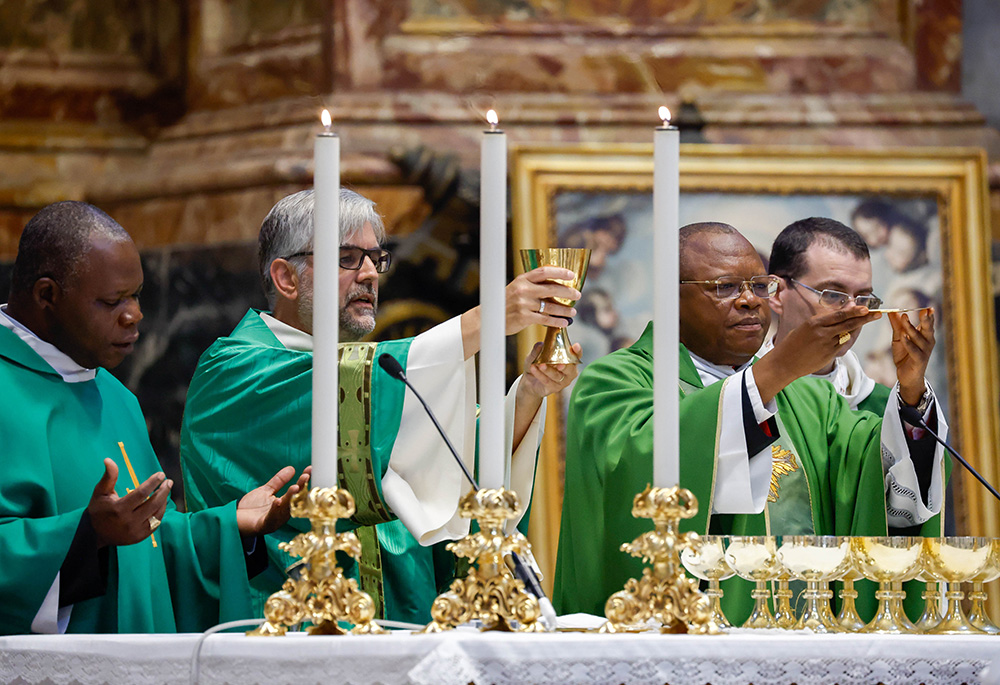
Congolese Cardinal Fridolin Ambongo of Kinshasa, right, elevates the host alongside concelebrants during Mass at the Altar of the Chair in St. Peter's Basilica at the Vatican Oct. 13, 2023, as part of the assembly of the Synod of Bishops. (CNS/Lola Gomez)
As representatives of God's people, African cardinals — and indeed all the cardinals of the world — must also develop more intentional channels through which they can consult with the faithful entrusted to their care. The value of representation within the church depends not only on being present in Rome but also on remaining deeply connected to the lived experiences, aspirations, fears and hopes of one's people. Cardinals carry with them not merely their personal opinions or theological insights; they bring the stories, struggles and wisdom of the local churches they serve. In an increasingly interconnected world, more formal mechanisms of consultation may be needed so that the voices heard in the consistory genuinely reflect the sensus fidelium, the lived faith and experience of the people of God.
Pope Leo's initiative may offer an opportunity to develop new forms of communion between Rome and the local churches, between episcopal collegiality and ecclesial synodality, and between the Petrine ministry and the lived experience of Catholic communities. It also offers a new moment to engage critically with the question of consultation and participation — a concern that already emerged during the January consistory and touches on one of the most important ecclesiological questions facing the church today.
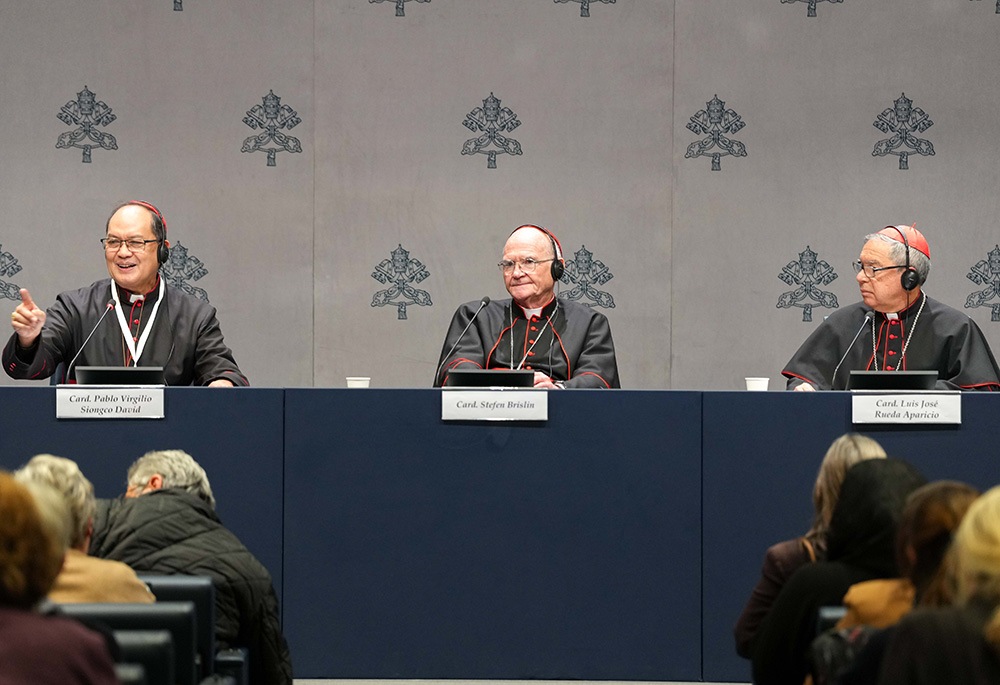
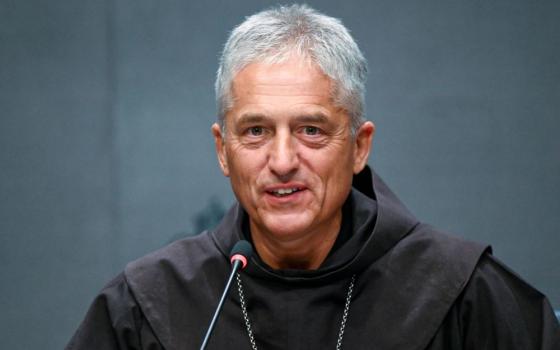
Cardinals Pablo Virgilio David of Kalookan, Philippines; Stephen Brislin of Johannesburg, South Africa; and Luis José Rueda Aparicio of Bogotá, Colombia, participate in a news conference at the Vatican about the consistory that had just concluded Jan. 8, 2026. (CNS/Lola Gomez)
It was articulated with particular clarity by Cardinal Pablo Virgilio David of the Diocese of Kalookan in the Philippines, when he raised a question that has become increasingly central to contemporary Catholic reflection: "How can we not recognize the contribution or the participation of of women in the ministries in the church?" As reported by Vatican News, David noted that the role of women remains a "constant concern," recalling the work of the Commission for the Study of the Female Diaconate and the broader conversations taking place within the church regarding women's participation in ecclesial life and mission.
African wisdom captures this reality with remarkable simplicity. As the proverb reminds us, "You cannot clap with one hand," and "a bird does not fly with one wing." The church, as the body of Christ, cannot fully realize God's mission if the whole body is not involved in deliberation, dialogue, consultation, participation and mission. The church does not belong only to bishops, priests, religious or theologians. Nor does it belong only to those who hold ecclesiastical office. This conversation inevitably raises broader questions about representation within the College of Cardinals itself. If the consistory is to become an increasingly important instrument of consultation and discernment in the governance of the church, then questions about the composition of the college cannot be avoided.
To his credit, Pope Francis made significant efforts to internationalize the college by appointing cardinals from countries and regions that had never before been represented in its ranks. This helped broaden the college's geographical and pastoral horizons and brought new voices into the heart of ecclesial governance. Nevertheless, concerns remain about the degree to which the college adequately reflects the changing face of global Catholicism. As the church continues to grow in Africa and throughout the Global South, there will likely be increasing calls for greater representation from those regions so that the voices participating in the discernment of the universal church more accurately reflect the lived realities of the majority of the world's Catholics.
Advertisement
We are obviously still at a very early stage in the development of Pope Leo XIV's practice of regular consultation with the College of Cardinals. It would be premature to pass judgment on the effectiveness of this approach or to speculate about its long-term institutional consequences. Much remains to be learned about how these annual consistories will function, what influence they will have on decision-making, and how they might become more inclusive and representative over time. Yet the questions being raised are important because they touch on some of the unfinished work of the Second Vatican Council and the central aspirations of the synod on synodality.
Pope Leo's decision to convoke a second consistory within a single year suggests that he is taking seriously the call to listen — to his brother cardinals, to the local churches they represent, and ultimately to what the Spirit is saying to the church in this moment of history. This insight was captured beautifully by Cardinal Stephen Brislin of Johannesburg, South Africa, following the January consistory when he reflected on Pope Leo's leadership style: The pope "wants to be collegial, he wants to listen, he wants to draw on the experience and knowledge of the cardinals who come from different parts of the world, because this can help him to guide the church."
If that spirit of listening, humility and shared discernment continues to grow, then Pope Leo's second consistory may prove significant not because of any immediate decisions it produces, but because of the ecclesial culture it helps to create. In that sense, it may already be changing the church.