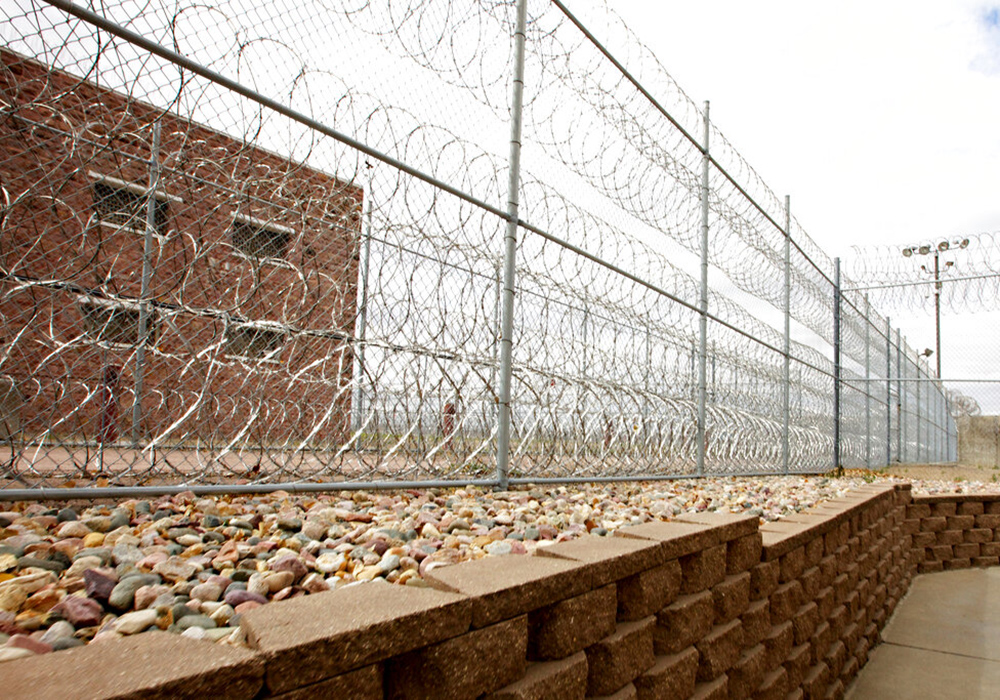
The South Dakota State Penitentiary is seen in this photo taken Tuesday, Oct. 9, 2012. Briley Piper, the only prisoner on South Dakota's death row, began speaking by phone with NCR's Camillo Barone in February 2026. (AP photo/Amber Hunt)

Join the Conversation
Send your thoughts to Letters to the Editor. Learn more
For the past four months, the story of Briley Piper has occupied a large part of both my reporting and personal life.
NCR has now published my three-part series about Piper, a man sentenced to death in South Dakota for his role in the torture and killing of another young man in 2000. Eight years after the crime, Piper converted to Catholicism. While he was on death row and wearing shackles, he was baptized by the local bishop.
Since then, Piper has maintained an active spiritual life through prayer, Bible studies and retreats, supported by Catholic clergy, ministers and laypeople. He has married, learned Spanish, German and some Italian, and earned a degree in social sciences, literature and history from Ohio University.
His story raises difficult questions about punishment, conversion and redemption and whether a human being should be defined entirely by the worst act of his life. It required me to remain attentive to a truth that could never be pushed to the margins: Piper was convicted of an extraordinarily brutal crime and another young man lost his life because of it.
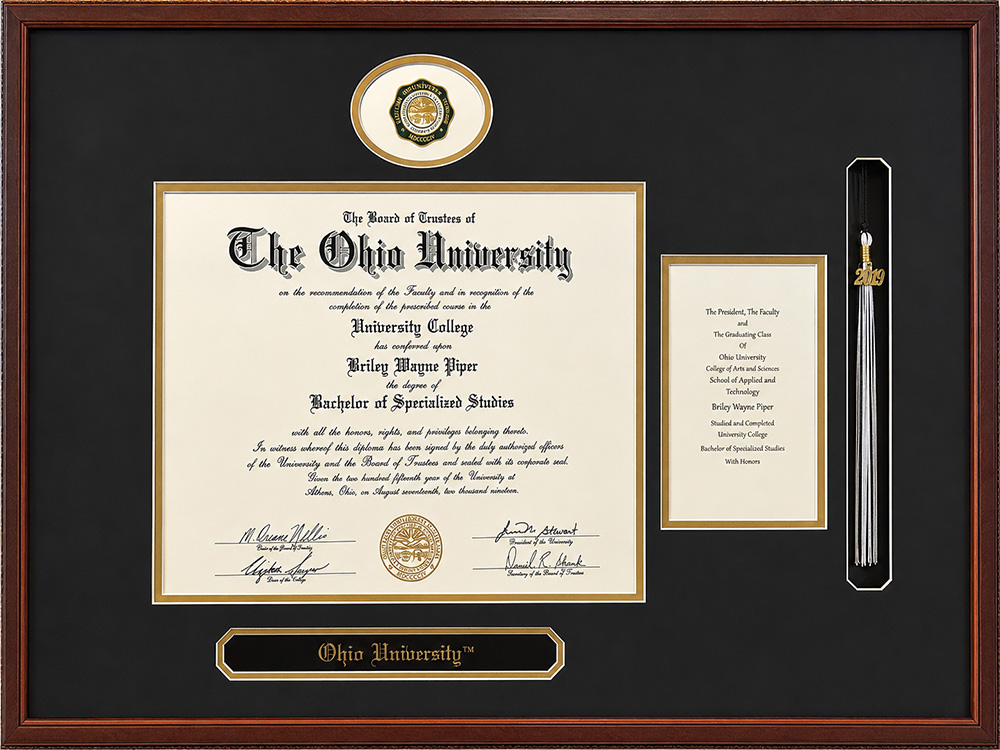
Briley Piper's college diploma from his 2019 bachelor's degree. He studied social sciences, literature and history at Ohio University. (Courtesy of Briley Piper)
I first heard Piper's name in August 2024, while reporting on the Pax Christi USA annual conference. My editor, Carol Zimmermann, had asked me to interview Catholic peace activists from different parts of the country. One of them was Deacon Denny Davis, a South Dakota opponent of the death penalty.
Davis told me about Piper's conversion and the Catholic community that had developed around him. I immediately wanted to pursue the story, but other news events demanded my time. First there was the 2024 session of the synod on synodality in Rome.
Then came Donald Trump's election and the beginning of his second administration. Months later, Pope Francis was hospitalized and died, sending me to Rome for five months to cover the interregnum, the conclave and the opening weeks of Pope Leo XIV's pontificate. After returning to New York, I reported on the consequences of Leo's election, the U.S. church's response to the ICE deportations and the shooting at an opening school Mass at Minneapolis Annunciation Catholic Church.
Finally, in December 2025, I sent Piper a letter.
He replied, and in February we began speaking by telephone. Over approximately four months, we spoke almost every week, both on and off the record. Our on-the-record interviews amounted to about nine hours across roughly 10 sessions.
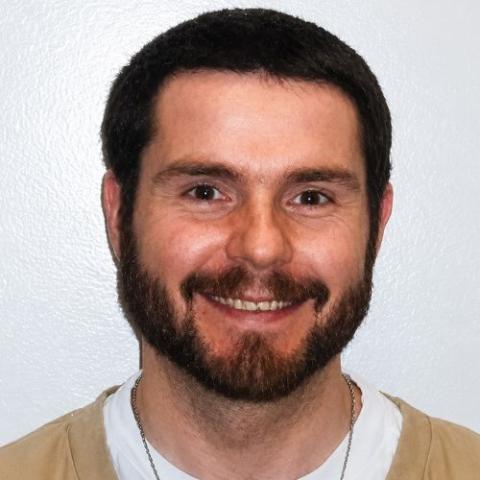
Briley Piper in a 2025 picture at the South Dakota State Penitentiary (Courtesy of Briley Piper)
The process of arranging those conversations was complicated. Under prison rules, I could not call Piper. He had to call me, and I had to be ready to accept. Each call could last only 20 minutes. When the time expired, he would hang up and call again.
His wife, who speaks with him almost every day, was essential in coordinating the dates and times. Piper and his wife married while he was on death row, after his conversion to Catholicism.
Before each conversation, a prerecorded voice informed us that the call was being recorded and monitored. That announcement created an unusual atmosphere. From my first day at Columbia Journalism School, I was taught the importance of establishing clear boundaries between on-the-record and off-the-record conversations. Here, there could never be a guarantee of confidentiality. Even when Piper and I agreed that something was off the record, we knew someone else might be listening.
That tension reminded me of something Fr. Andrew Dickinson, a Catholic priest who regularly visits Piper and hears his confessions, told me during an interview I had with him, featured in Part 2 of the series. I asked whether those confessions could be overheard by prison guards.
"Every time I hear a confession in private there I always say aloud for the inmate, and for anyone, 'If anyone's listening, this is considered confidential in private by the Catholic Church,' " Dickinson said. " 'And the Catholic Church has sued to protect the seal of confession and we will again if anything is ever said in confession in that way,' in case there are ears listening to let them know of my intentions about what's going to follow. "
The prison's restrictions also prevented me from visiting Piper in person. Because I am neither a relative nor part of a religious ministry, the South Dakota Department of Corrections did not permit me to meet him as a reporter.
I still hope to find a way to meet him. After speaking with someone almost every week for four months, it feels strange not to have seen him sitting across from me.
Advertisement
At the same time, the telephone restrictions became an unexpected advantage. A single in-person visit might have given me only a limited amount of time, perhaps without the ability to record or take meaningful notes. The phone allowed me to return with new questions as the reporting developed. Each interview became another layer rather than a single, definitive encounter.
During our first conversation, Piper's command of language immediately surprised me. His answers were so structured that, at first, I wondered whether he was reading from prepared responses. I began asking questions in a deliberately irregular order, moving back and forth among subjects to see whether he was following a script.
He was not.
His ability to respond with clarity to unexpected questions told me something about the intellectual and spiritual life he had developed in prison. I was also struck by the calmness with which he discussed his possible execution.
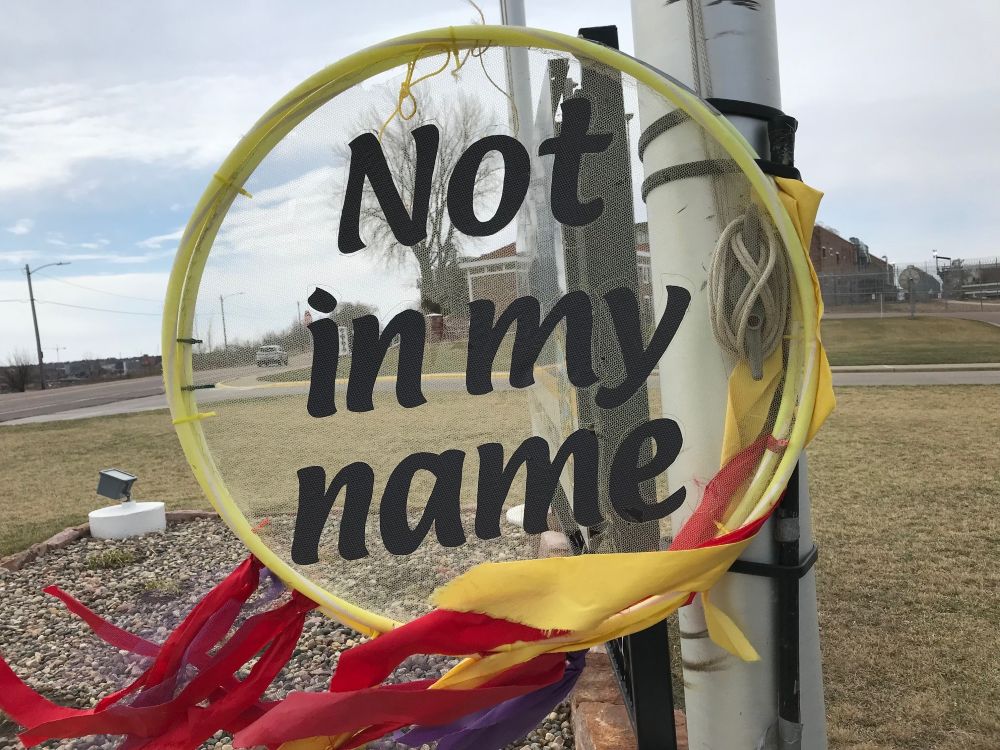
A sign opposing the death penalty is displayed during the Presentation Sisters' annual gathering, held each Good Friday, at the South Dakota Penitentiary. (Courtesy of Presentation Sisters)
It took me a few weeks to realize that that calmness was coming from the high level of freedom with which he has been living his faith, despite almost 26 years of isolation — a kind of spiritual freedom I don't get to experience that often among everyday Catholics who are not in prison. This reminded me of what Pope Francis would ask himself almost every time he visited jails: "Why them and not me?" he said, referring to inmates.
The death penalty itself is new and foreign territory for me. I was born and raised in the European Union, where capital punishment felt almost as distant from ordinary reality as an abstract historical practice. The state does not kill citizens in its custody — not even those convicted of murder. Instead, it reeducates them.
Reporting this series required me to learn an unfamiliar legal and political system: the appeals process, clemency procedures, the role of the South Dakota Board of Pardons and Paroles, the governor's authority and the pressures faced by Catholic public officials in a state where opposition to capital punishment can place them in the minority.
I interviewed politicians from both parties, along with Catholic clergy, ministers, friends and laypeople who have accompanied Piper. By the end, I had approximately 48,000 words of transcribed interviews with him and another 40,000 words from roughly 25 conversations with people surrounding his case.
Nearly every day, alongside the other stories I was working on, I tried to reserve an hour or two for transcribing, writing and shaping this series.
The process was long, painful and, at times, deeply moving. More than once, I found myself crying while listening again to an interview. The most difficult task was deciding what could not fit. Every person offered details and reflections I wanted readers to encounter, but I knew I had to select what is most revealing, verify it and build a narrative that remains clear without becoming emotionally manipulative.
I also discovered that an extensive network had formed around Piper, including volunteers maintaining an Instagram page, a Patreon account featuring a screenplay Piper wrote and a GoFundMe campaign. They believe his life demonstrates the possibility of redemption through faith.
I do not know where the story will ultimately lead. I hope to travel to South Dakota and meet Piper in person as it develops.
What I do know is that this was not a story that could be understood through one interview or written in a single afternoon. It required time, patience and a willingness to remain with uncomfortable questions — about the pain brought by a crime, the possibility of transformation and what justice means when the state claims the authority to end a human life.