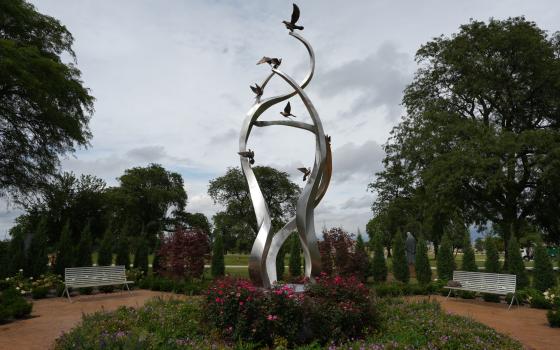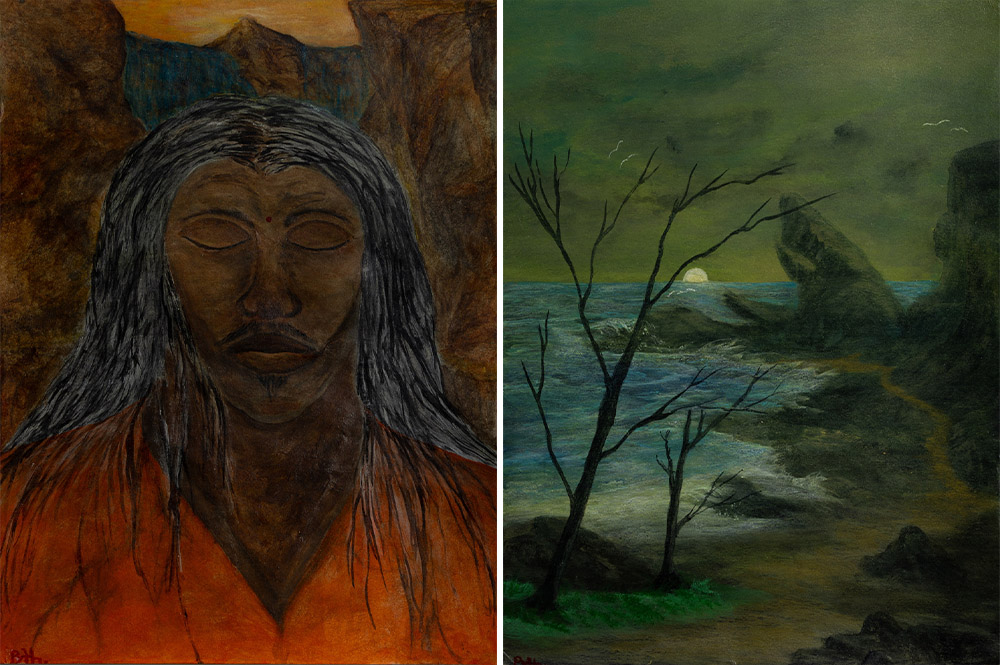
Billy Kearse, known to his friends as Pyth, painted the artworks above. Kearse was executed by the state of Florida on March 3, 2026. (Courtesy)
by Susan Kaspari
Join the Conversation
Send your thoughts to Letters to the Editor. Learn more
I did not expect to become friends with a man on Florida's death row.
Our friendship began with a small favor for a friend in Switzerland named Chiara. Through a program run by the Community of Sant'Egidio that connects people around the world with prisoners on death row in the United States, Chiara had begun writing to Billy Kearse, whom his friends called Pyth.
Because Chiara lives abroad, she asked if I could place the quarterly food order allowed for prisoners, which must be ordered from within the United States. Pyth wrote to thank me for helping with the order, and through that exchange we began writing to each other directly.
Over the next two years, our letters turned into regular video calls and eventually visits. In November 2025, after Pyth's clemency hearing, Chiara and I traveled to Florida to visit him at Union Correctional Institution. By then I already knew Pyth to be a wise, funny and deeply caring person.
Still, I did not know what to expect walking into the visiting room on death row. What I encountered instead stretched my understanding of human love.
Mothers sat with their sons. One couple spent the entire day walking slowly back and forth across the room holding hands. Siblings teased each other the way siblings do anywhere else. The circumstances that brought people there were heavy with grief and loss, yet the room was filled with love.
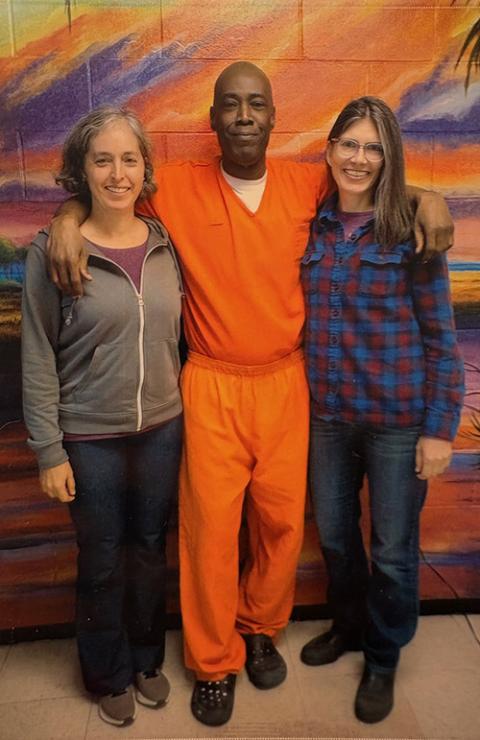
Susan Kaspari, right, is pictured with Billy "Pyth" Kearse, center, during her November 2025 visit to Kearse at the Union Correctional Institution in Raiford, Florida. (Courtesy)
When Pyth's death warrant was signed earlier this year, our conversations grew more intense.
What struck me most was how strong he was. His faith seemed to give him a deep sense of peace. When we spoke, he was less concerned about himself than about the people who loved him. Again and again, he reminded me not to respond with anger and not to let my heart harden.
He spoke about the community that had grown around him and hoped we would continue to support one another. Even in those final days, he sounded full of joy and ready to be with God.
The week before his execution, I returned to Florida to visit him. By then he had been transferred from death row at Union Correctional Institution to Florida State Prison and placed on what the prison calls "death watch." Visits there were more restricted. Instead of sitting together, we spoke across a barrier.
The hardest things had already been said during earlier phone calls, and our time together was simply about human connection — sharing stories, laughing easily together and talking about his artwork. Pyth was a talented artist who left behind a collection of beautiful paintings, many of which he sent as gifts to those closest to him.
While I was in Florida visiting Pyth, another execution was scheduled. On that night I joined a vigil across the road from Florida State Prison for a man named Melvin Trotter, who was executed there the week before Pyth.
A Catholic parish from Daytona Beach had brought a bus of parishioners, something they do for every execution. Faith leaders, lawyers, longtime advocates and ordinary citizens gathered as a community to stand against violence.
The priest leading the vigil explained why people return to that roadside again and again. "We don't come because this has become routine," he said. "We come because our faith calls us to stand wherever life is not valued."
I left the Catholic Church long ago, but my father, who served as a Catholic priest before leaving the priesthood to have a family, never treated that as a failure of faith. What mattered to him was not whether I attended church, but how I lived my life. Standing there that night, I found myself unexpectedly brought back to the faith of my childhood, and the message of mercy resonated deeply with me.
Advertisement
Florida has carried out executions at a pace not seen in many years. Nineteen people were executed in the state in 2025, and Pyth's execution was the third this year. Florida's Catholic bishops have urged Gov. Ron DeSantis, who is Catholic, to stay executions and commute death sentences to life in prison, arguing that justice and mercy are not opposites.
On the morning of Pyth's execution on March 3, he and I spoke by phone one final time.
The day before, a friend had sung to him — something he told me had never happened to him before. I am not much of a singer, so instead I played him the cello version of "Benedictus" by 2Cellos, his favorite. We listened together for a few minutes. Then, as he had done so many times since his death warrant was signed, he showed me strength, the power of his faith, and urged me to be strong.
Pyth spoke about the faith that had sustained him through his years in prison. "I stopped holding on to the darkness, and learned how to grab hold of the light," he said.
Later that evening, before his execution, Pyth apologized to Officer Danny Parrish's family and asked for their forgiveness.
I do not know what justice looks like in a world shaped by so much loss. But I know that another death cannot restore what was taken so many years ago. As I mourn the loss of my friend, I find myself returning to Pyth's final counsel: not to let anger take hold and not to let my heart harden.
If his life taught me anything, it is that even in the darkest places we are still capable of choosing mercy over vengeance, and light over darkness.
Pyth’s artwork is available for exhibition. Inquiries can be sent to [email protected]
Details of Billy Kearse's crime were removed from this story to honor the author's intent.