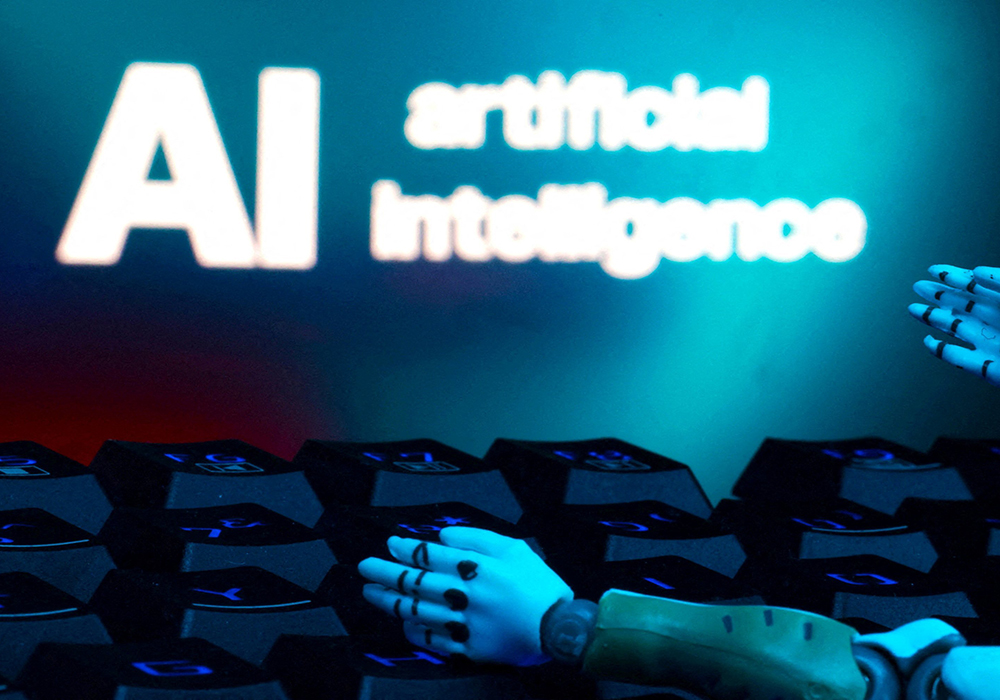
A message reading "AI artificial intelligence," a keyboard and robot hands are seen in this illustration created on Jan. 27, 2025. (OSV News/Reuters/Dado Ruvic)

by Michael J. O'Loughlin
NCR executive editor
Join the Conversation
Send your thoughts to Letters to the Editor. Learn more
Human connection risks being lost, a generation of young people serve as guinea pigs and the speed at which new life-altering technology is being rolled out makes necessary ethical and moral discernment feel impossible. But Irina Raicu, the director of the Internet Ethics program at Santa Clara University's Markkula Center for Applied Ethics says she still feels hopeful about the future of artificial intelligence.
Raicu spoke recently at The Way Forward conference at the University of St. Thomas in St. Paul, Minnesota, a gathering of bishops, theologians, nonprofit leaders and journalists, where I was on hand to moderate a panel. The focus of the meeting was communications in the digital age but the panel on AI seemed to have generated the most robust — and perhaps most ominous — discussion. (More than a few participants joked they were grateful that a cocktail hour immediately followed the AI panel.)
The rapid rise of AI is certainly attracting attention in the church. Pope Leo XIV repeatedly highlights the dangers of AI, most recently warning priests that technologies like ChatGPT and Claude are unacceptable when it comes to preaching. And just this week, the Vatican released a document that warns "the human family is faced with questions so radical that they threaten its very existence as we have known it."
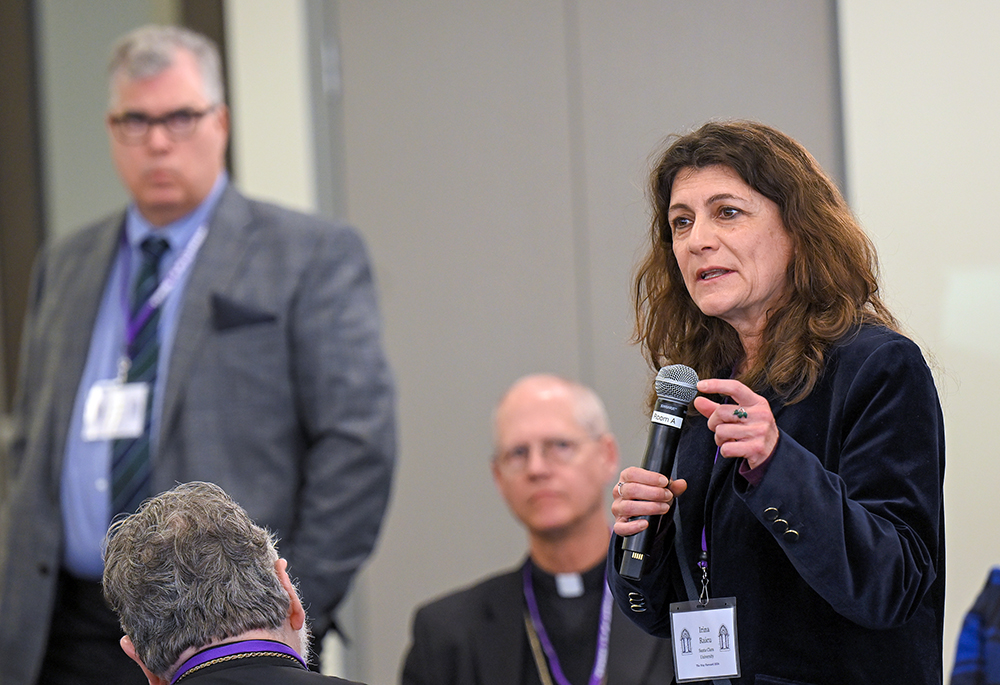
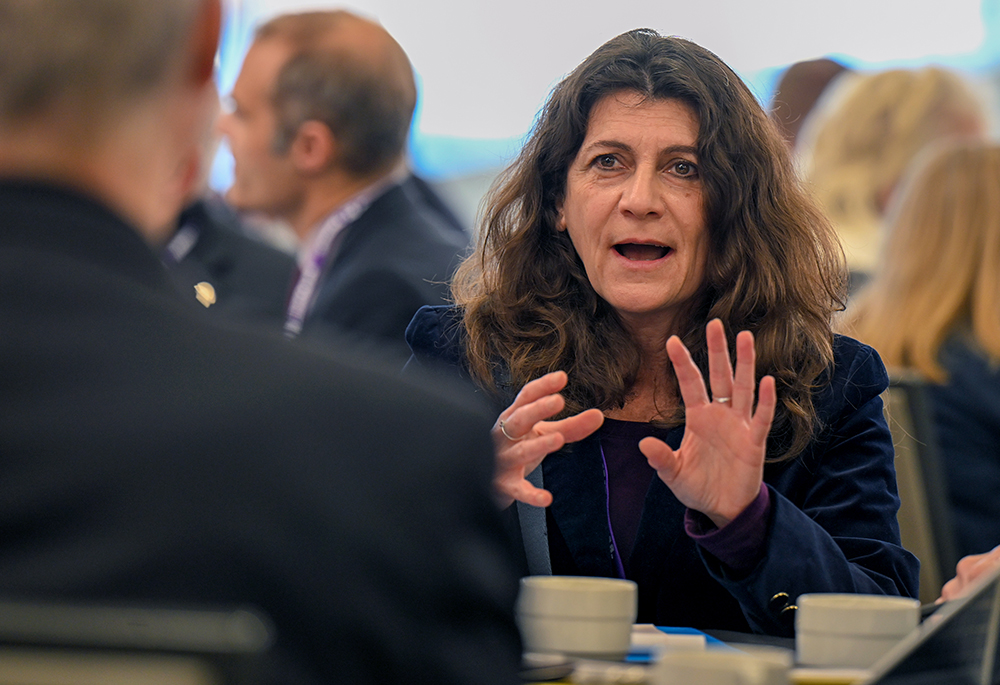
Irina Raicu, director of the Internet Ethics program at Santa Clara University's Markkula Center for Applied Ethics, is pictured at the Way Forward conference at the University of St. Thomas in St. Paul, Minnesota. (Courtesy of University of St. Thomas/Nick Wosika)
During an interview a few days after the conference — recorded and transcribed, coincidentally, by an AI tool — Raicu was clear-eyed in her assessment of AI's impact: "Human connections, human relationships, which are a key part of human flourishing, are definitely at risk."
Young people and the elderly are already relying on AI chatbots for companionship. Social media is flooded with images, music and even realistic films all generated by AI. Entire fields are being up-ended, including higher education, where Raicu has spent much of her career considering the ethical implications of technology, such as privacy and data-harvesting.
"We have been assessing students based on essay writing for so long, and now we have to find other means to assess them," she said, because research papers that once took weeks for students to write can be generated in a matter of seconds simply by typing in a concise prompt.
Advertisement
Companies have already started mass layoffs, pointing to AI's efficiency, though some of those claims have been questioned.
Many people who encounter so-called generative AI through tools like ChatGPT use them as a sort of super Google. Raicu said this is problematic, because even though companies promise that they are instituting safeguards against hallucinations and error-prone results, if human beings cede all their critical thinking skills to AI, we risk falling victim to artificial memories and even the power to reimagine history. As George Orwell put it, "He who controls the past controls the future. He who controls the present controls the past."
Despite all the challenges, Raicu is hopeful.
After all, what we call AI has been around for a while, helping to improve climate modeling, and providing better tools to oncologists. While generative AI presents increasingly dire challenges — ready for autonomous wars? — ultimately these are tools created by human beings.
"We do have to be really thoughtful about how this technology changes us," Raicu said. But, "this is not God-given. This is technology that was shaped by other human beings who made certain choices. We can make different choices."
Religious leaders, ethicists and academics should all be part of these decision-making processes. While leaders in big tech sometimes say things that sound eerily similar to claims from comic book villains, Raicu said there are many thoughtful people working in technology, and they also will have to contend with the fallout from choices made by government officials, regulators, tech CEOs and everyday people discerning how best to incorporate this technology into their lives.
"There are people within big tech who understand that they are shaping the society that they will live in and that their children will live in," she said.
Whether those kids will be tucked in by an AI teddy bear spouting Chinese Communist Party talking points or, like the children of big tech execs, are kept far from this technology, remains an open question. But Pope Leo and ethicists like Raicu are refusing to let this technology take over our lives without at least putting forward some difficult questions — and perhaps are even helping to shape a more hopeful future.