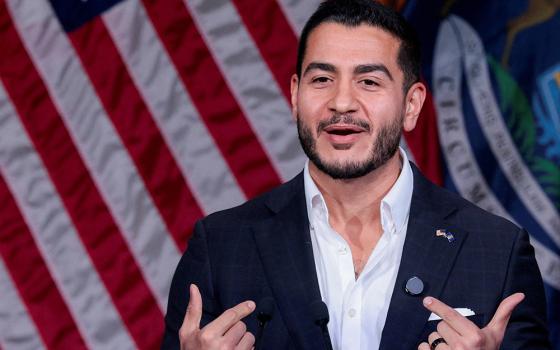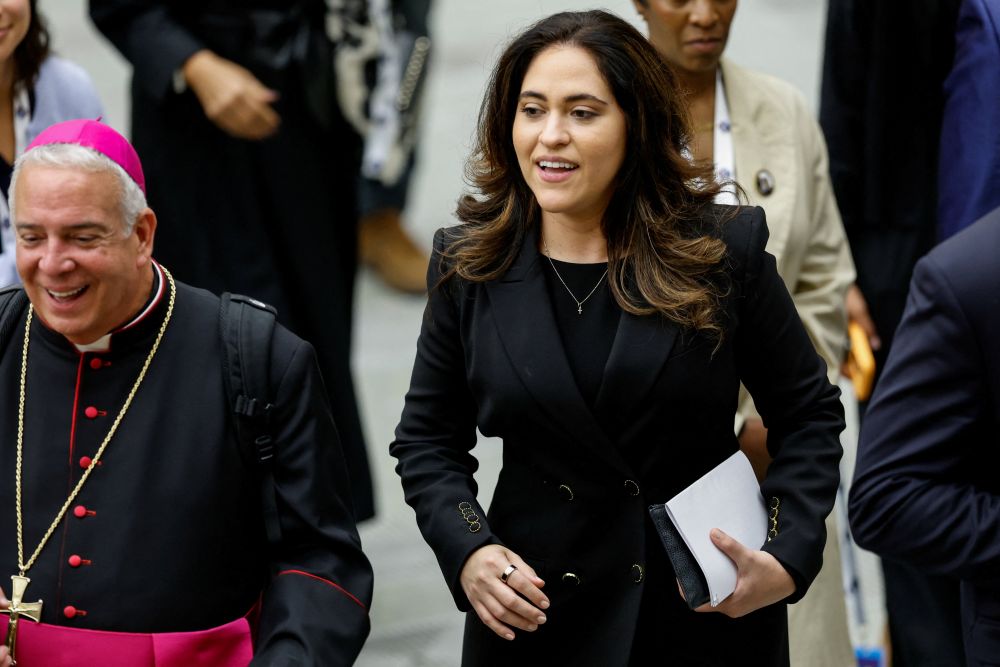
Philadelphia Archbishop Nelson Pérez and Maria Montserrat "Montse" Alvarado, who became the prefect of the Vatican's Dicastery for Communication Nov. 1, 2026, attend an audience with Pope Leo XIV and delegations from the University of Notre Dame's Fighting Irish and Villanova Wildcats basketball teams in Paul VI Audience Hall at the Vatican Oct. 31. (OSV News/Reuters/Remo Casilli)

Join the Conversation
Send your thoughts to Letters to the Editor. Learn more
The Vatican's new communications director introduced herself to English-speaking journalists with a telling anecdote about the cultural shift taking root in Rome under the first U.S.-born pope.
On Nov. 2, her second day as prefect of the Dicastery for Communications, Maria Montserrat "Montse" Álvarado, the Mexican American former president of EWTN News and Pope Leo XIV's surprise pick to lead the Vatican's extensive communications arm, shared how a friend had called the Holy See Press Office during the 2025 conclave and introduced herself as an American journalist.
The staffer on the other end immediately replied, "I'm so sorry," Álavardo recalled, drawing laughter in the Vatican briefing hall.
"We're not saying 'I'm so sorry' anymore," she said.
The joke was a playful jab at the subtle disdain Americans are met with abroad, including within the Vatican, but it also hinted at how the new prefect might change the way the Holy See presents the pope to the world's media.
The appointment of a 39-year-old former U.S. news executive who is still learning Italian to lead a department of the Roman Curia remains the most eye-catching personnel choice of Leo's 18-month tenure as pope. The move was seen as an effort to bring an American management style to the Vatican's sprawling communications operation and diversify its historically Italian-dominated leadership.
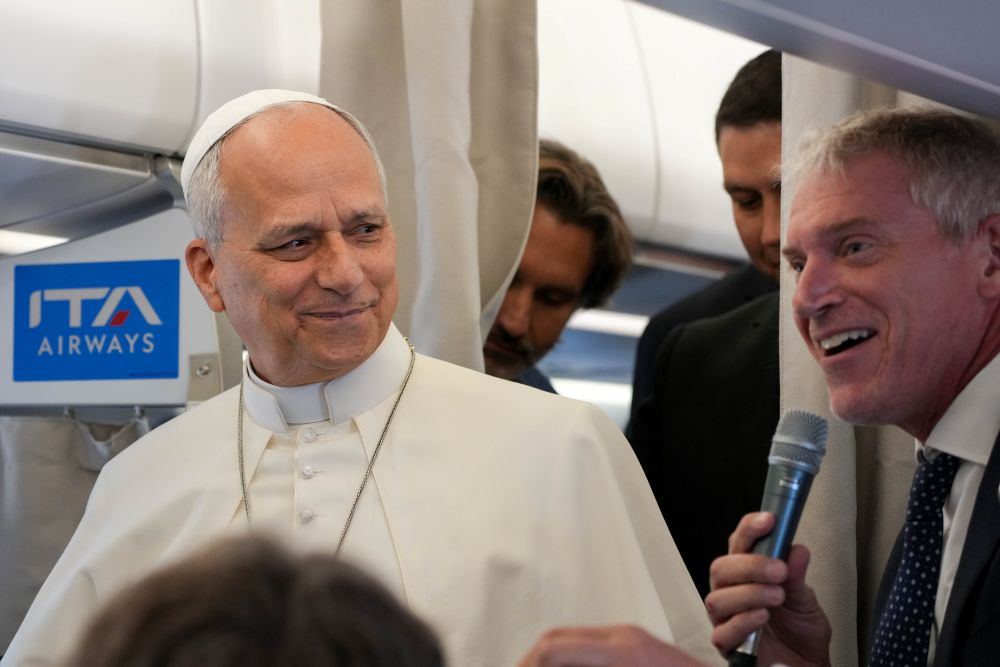
Pope Leo XIV looks on as Matteo Bruni, head of the Vatican press hall, speaks to journalists aboard the papal flight from Rome to Paris Sept. 25, 2026, at the start of his apostolic journey to France and visit to UNESCO. (CNS/Lola Gomez)
Álvarado began her new role Nov. 1, but several Vatican communications decisions in recent weeks suggest the revolution in the Vatican communications department was already underway.
When Leo was hospitalized for surgery to remove a malignant lung tumor, for example, he announced the procedure himself in St. Peter's Square, and subsequent Vatican communiqués were unusually explicit about the pope's cancer diagnosis. And after the Chicago Sun-Times reported that Leo had requested a mail-in ballot for the U.S. midterm elections, the Vatican confirmed the story, even leaning into the moment to state that the pope "expresses his belief in the right and the duty of citizens to participate in democratic processes."
Those moments may point to a changing approach to Vatican communications heralded by Álvarado, who in a recent interview said her new job is to "offer transparency to the world in terms of how the church is dealing with things."
Nov. 2 was her first official engagement with the Vatican press corps, a briefing on the pope's 12-day trip through South America, and it already offered a glimpse into what could be a radical change in how the Vatican and the figure of the pope engage with the world's media.
Papal pre-travel press briefings are typically routine affairs conducted by the director of the Vatican press office, Matteo Bruni, who lays out the trip's agenda and logistics for journalists. This time, however, Álvarado sat alongside him. After introducing herself, she turned the briefing over to Bruni, saying, "You won't hear from me for the rest of the time."
Yet Álvarado did speak up, often, during the Q&A portion of the briefing, weighing in to comment on the pope's health, his outlook for the trip and even the manner in which he will deliver the trip's 36 planned speeches.
Advertisement
Leo, who typically sticks to his written remarks when delivering speeches, will often go "off the cuff" during the trip due to his comfort with Spanish, she said, "He's going to give you a lot of improvised texts to work with." She also said that the pope's "stamina is fantastic" in response to a question about the pope's health and added that Leo "is so excited."
"He personally confirmed this trip with no changes," she said.
Whereas the Vatican has distanced itself from recognizing the "spokesperson" title informally applied to the director of the Vatican press office — the press office director under Pope Benedict XVI said his role was not to "explain the pope's thinking" — Álvarado's form of speaking at the press briefing suggest a greater willingness to share information about the pope directly on his behalf.
That may reflect a closer line to Leo, who has been reluctant to speak with the press and has given only one major interview since his election in May 2025.
At the Nov. 3 briefing, Álvarado read a message she said the pope had asked her to share with journalists ahead of the trip, asking them to help communicate "the wonderful way that the church is expressed in Latin America through its diverse people and cultures."
Journalists have not been able to expect a direct line from the pope to the director of the press office since the lay Opus Dei numerary Joaquín Navarro-Valls occupied the role under Pope John Paul II, with whom he had a close personal relationship. Álvarado's arrival, it seems, could open a door for the world's media to receive more information directly from the pope.
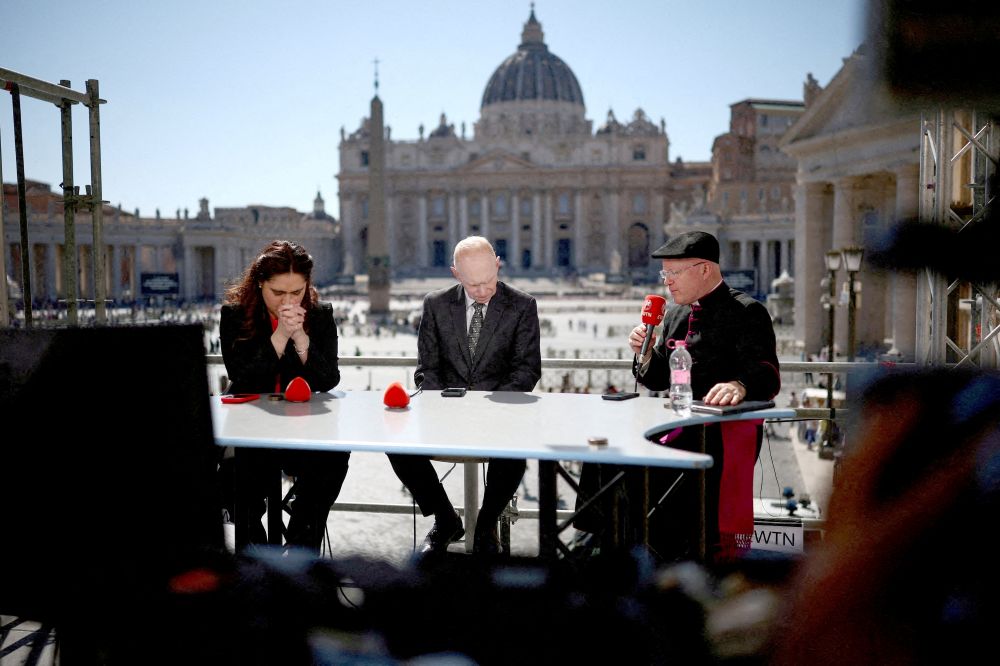
Maria Montserrat "Montse" Álvarado, president and chief operating officer of EWTN News; Matthew Bunson, vice president and editorial director of EWTN; and Msgr. Roger Landry, national director of the Pontifical Mission Societies USA, pray during a live broadcast near St. Peter's Square at the Vatican May 1, 2025. (OSV News/Reuters/Guglielmo Mangiapane)
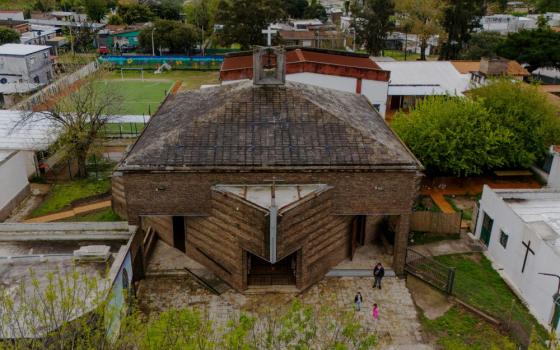
Yet her more open candor may have also shown why the Vatican has historically taken a cautious approach to communications. In the pre-trip briefing, Álvarado had referenced a visit Leo will make to the parish of Our Lady of Guadalupe in Casavalle, Uruguay, and later made a joke about a hypothetical papal visit to her native Mexico: "When we go, I'll be the first to announce it!"
Several Mexican news outlets, as well as the head of government of Mexico City — where the world-famous Marian shrine to Our Lady of Guadalupe is located — misinterpreted the remarks as confirmation that the pope would travel to Mexico. Bruni, the press office director, later issued a clarification saying the briefing had included no announcement of a trip to Mexico.
Leo's Nov. 6-17 tour of South America will be Álvarado's first international trip with the papal entourage, and coming only five days after taking the reins of the Vatican's communications infrastructure it will be a proving ground for the new prefect.
Though her appointment came as a surprise to the Curia and to Álvarado herself, her first briefing also offered a window into what drew her to accept her new role and, perhaps, why Leo offered it to her in the first place.
"Everyone needs to hear the message of Jesus Christ, and that is part of who Pope Leo is," she said in response to a question on why the pope is traveling to secular Uruguay. "That's very much a part of where my heart is and why I said yes to this job."
The National Catholic Reporter's Rome Bureau is made possible in part by the generosity of Joan and Bob McGrath.