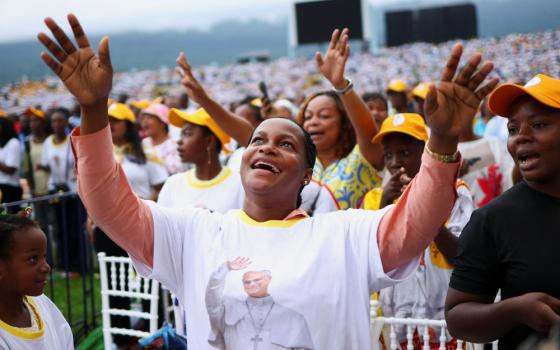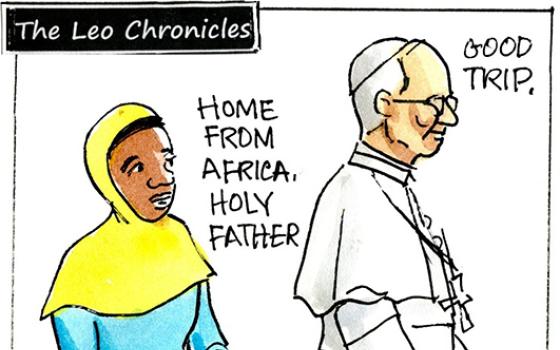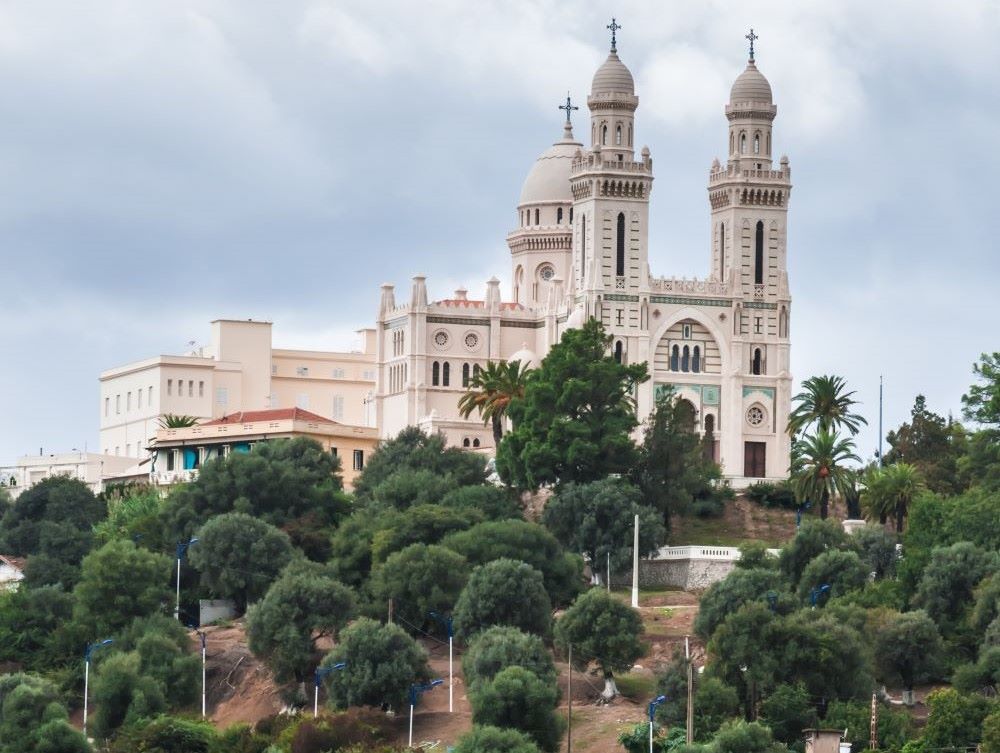
The Basilica of St. Augustine stands near the ancient ruins of Hippo Regius, now Annaba, Algeria. Pope Leo XIV is expected to visit the archaeological site of Hippo and meet with members of the Augustinian community during his upcoming trip to North Africa. (Wikimedia Commons/CC BY-SA 4.0/Alioueche Mokhtar)

Join the Conversation
Send your thoughts to Letters to the Editor. Learn more
St. Augustine was famously reluctant to become a priest. He later became the bishop of Hippo, in modern-day Algeria, taking up a role that would cement the African saint as a doctor of the church and a foundational influence in modern Western thought.
It's precisely for that reason that Pope Leo XIV, in one of the first destinations of his young pontificate, has chosen to travel to North Africa.
The pope will touch down in Algeria on April 13 to kick off a four-nation tour of the African continent. One of his first stops will be a daylong visit to Annaba, the site of ancient Hippo. There, Leo, the first Augustinian pope, will reaffirm the Augustinian roots that have become central to his identity as pope and a model for his leadership of the church.
Introducing himself to the world for the first time as pope, Leo described himself as a "son of St. Augustine," and he quoted the African saint who said, "With you I am a Christian, and for you I am a bishop." The Augustinian imprint on Leo's psyche is evident, with the pope frequently quoting him in his speeches.
Though the third international journey of his pontificate, Leo's Africa trip is the first to emerge entirely of his own volition. The pope's first international trip to Turkey and Lebanon had been largely planned for Pope Francis, and his second international trip, a daylong visit to Monaco, came after longstanding invitations for a papal visit to the principality dating to the pontificate of Pope Benedict XVI.
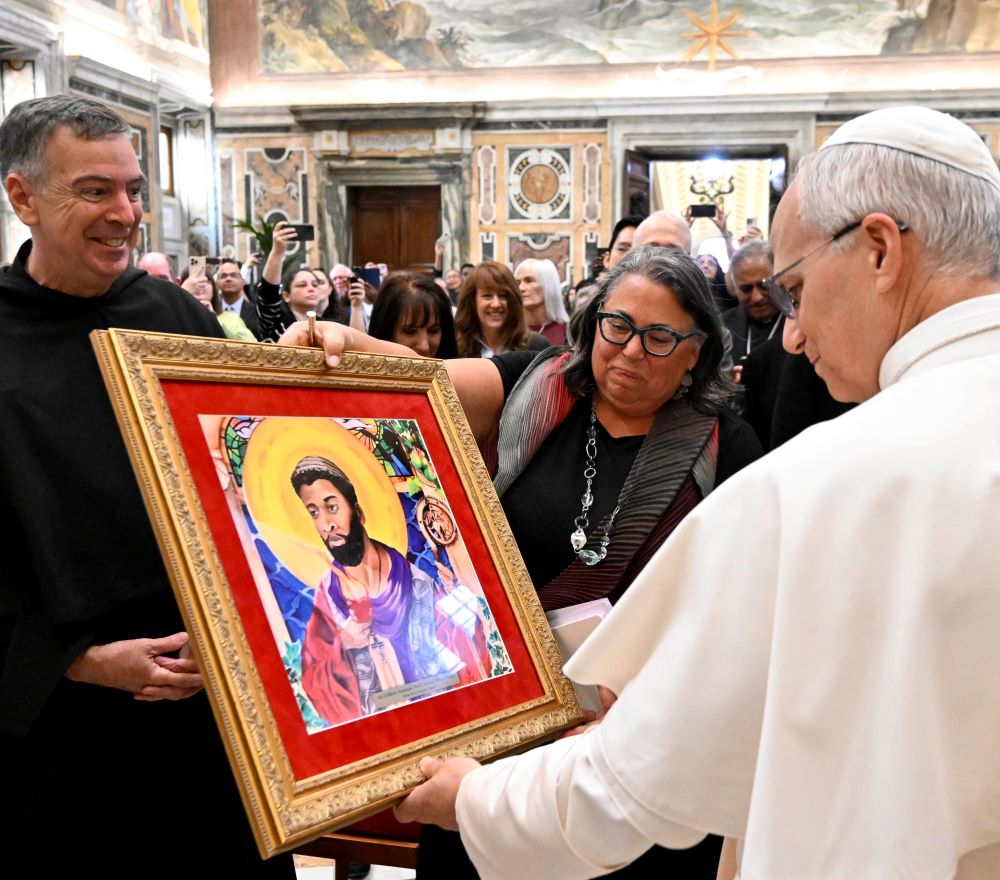
Pope Leo XIV receives a copy of a painting of St. Augustine called "An Unlikely Aquilegia: North African Saint of Hippo" from Michele Pistone, founder and faculty director of the Mother Cabrini Institute on Immigration at Villanova University, during an audience at the Vatican Oct. 2, 2025. Fr. Joseph Farrell, prior general of the Augustinians, looks on. (CNS/Vatican Media)
That the first stop on the first distinctly Leo papal trip is to a place with so much personal history for the pope — the leader of the worldwide Augustinian religious order for 12 years before becoming a bishop — reaffirms the saint's role in how he sees his pontificate.
The trip shows "Leo deepening his own commitment to his Augustinian roots, giving great honor and homage to Augustine: who he was, who he is for him now and for his leadership," said Augustinian Fr. Kevin De Prinzio, assistant general for the Order of St. Augustine based in Rome.
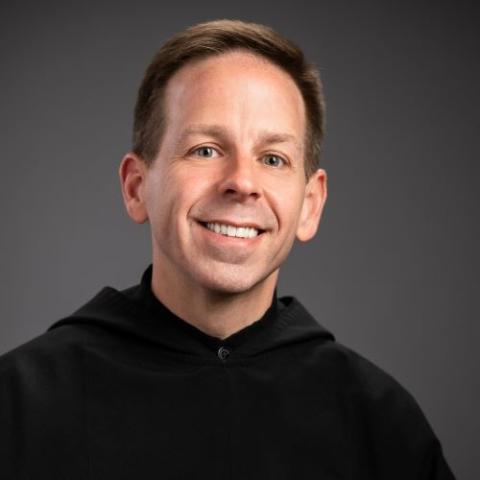
Augustinian Fr. Kevin De Prinzio is assistant general for the Order of St. Augustine based in Rome. (Courtesy of Kevin De Prinzio)
"On that very earth is where Augustine wrote the Confessions, the City of God, De Trinitate, our own rule, reflected on his own life, his baptism, lived in community, served the people of God, sat in dialogue with people, encountered difference, worked toward unity — all things that are very important to Leo and are ongoing needs of the church and the world right now," De Prinzio told the National Catholic Reporter.
In his sermons, Augustine recounts his resistance to entering the church's hierarchy, writing: "I did everything I could to assure my salvation in a lowly position and not to incur the grave risks of a high one." Leo likewise did not pursue the papacy. He had talked about planning his retirement and was convinced that an American could not be elected pope.
And as a reluctant shepherd, Leo has plenty to draw on from Augustine's example. Both were tasked with holding together a church that crept toward divisions.
In the fourth century, Augustine's "number one concern was really about fostering unity and communion," De Prinzio said. In particular, the saint was active in combatting the divisive heresy of Donatism, which held that the church's pastors had to be morally faultless in order to validly minister the sacraments.
"It may not be Donatism that we're dealing with today, but Augustine was a bridge-builder and Leo sees himself also as a bridge-builder," De Prinzio said, "so going back to Africa, to Hippo, is really him enacting what is important to him in a symbolic gesture."
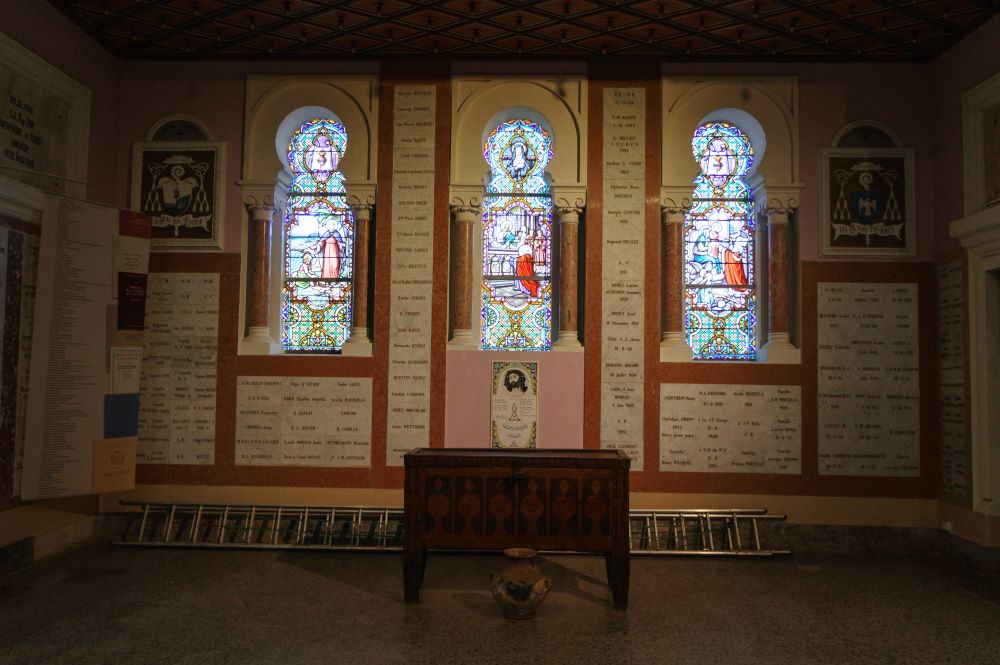
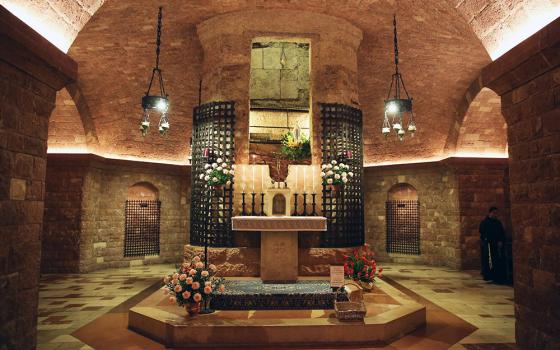
Inside the Basilica of St. Augustine in Annaba, Algeria (Wikimedia Commons/CC BY-SA 2.0/Dan Sloan)
Discussing the prospect of his Africa trip in December, Leo said he wanted to visit the sites associated with St. Augustine, but also to continue the work of "building bridges between the Christian world and the Muslim world."
St. Augustine, he said then, "helps a great deal as a bridge, because in Algeria he is very much respected as a son of the homeland."
The African saint came up in turbulent times for the church. Christianity went from the object of persecution in the Roman empire to the official state religion in his lifetime. Augustine also had to speak out against various and oftentimes competing strains of Christianity that emerged in North Africa, sometimes violently, within the still-young religion.
As a result, Augustine called for people to unify "by a common agreement as to the objects of their love," urging Christians and non-Christians alike to band together in pursuit of the common good.
Perhaps in that spirit, Leo has made unity a central element of his pontificate, returning to the theme of unity time and time again as pope.
In Africa, Leo will have a powerful platform to issue calls for unity. Relations between Christians and Muslims have been strained in Algeria, which is more than 99% Muslim. In 2022, the Algerian government shut down the Catholic charity agency Caritas Algeria.
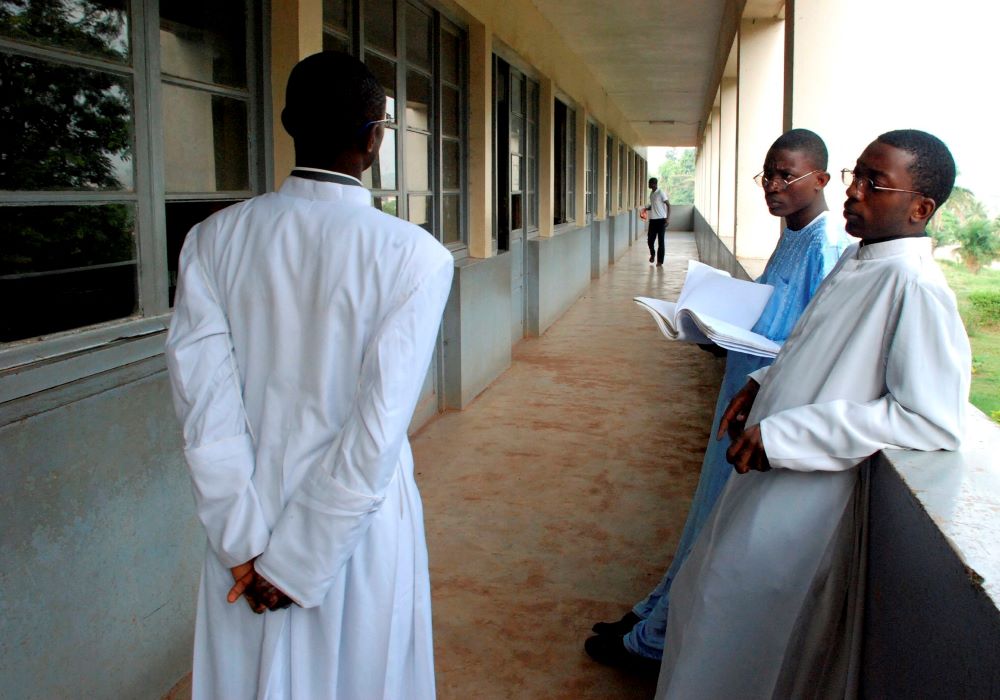
Teachers gather in a file photo at the minor seminary of St. Therese of Mvolye in Yaoundé, Cameroon. Pope Leo will travel across 11 cities, 18 flights and a total of more than 11,000 miles during his first apostolic trip to Africa April 13-23. (OSV News/Galbe.Com/Saabi/Galbe)
In Cameroon, the pope will travel to the northwest city of Bamenda, where feelings of marginalization among the Anglophone population have resulted in violence and calls for the English-speaking communities to separate from the primarily Francophone national government. Angola, meanwhile, is still repairing its national identity following the 27-year civil war which ended in 2002, and Equatorial Guinea will be thinking about how to position itself for a change in leadership as its president, in power since 1979, approaches 84 years old.
Though the work of the Augustinian order in Algeria is small — only three friars live in Annaba to tend to the Basilica of St. Augustine — the pope will meet with the Augustinian community. Pope Francis, the first Jesuit pope, met with the Jesuit community in whichever country he traveled to.
While patterns in Leo's travel are still taking shape, future trips to Spain and potentially Peru could include meetings with those countries' sizable Augustinian communities.
But in choosing to begin his papal travels by returning to the ancient ruins at Hippo, Leo is pointing to the foundations of his own papacy: a vision of the church shaped by Augustine that is rooted in unity and committed to building bridges.
The National Catholic Reporter's Rome Bureau is made possible in part by the generosity of Joan and Bob McGrath.
Advertisement