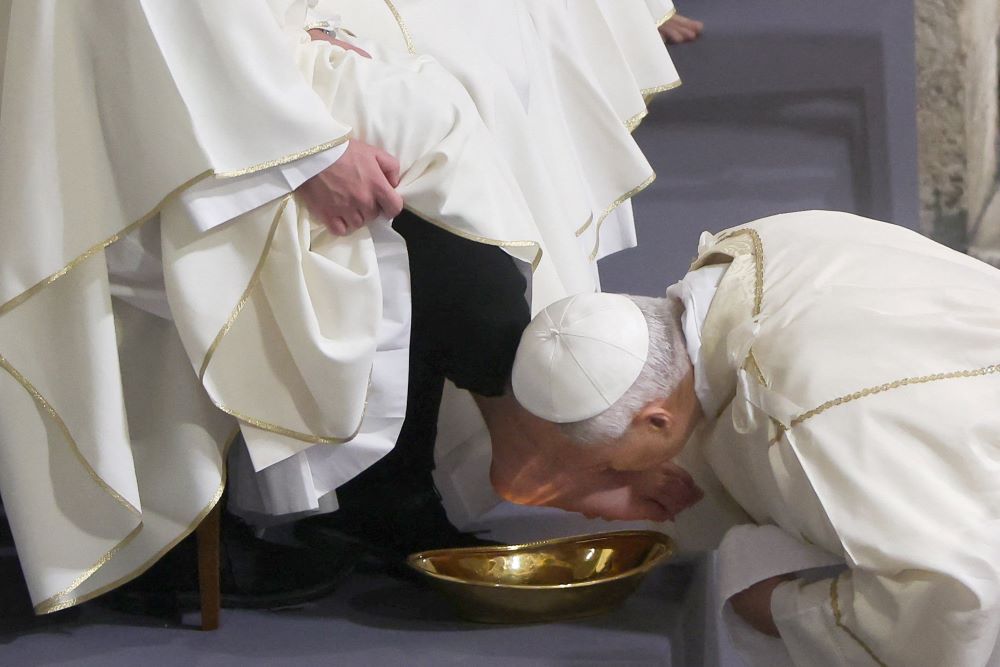
Pope Leo XIV kisses the foot of a clergyman after washing it as he celebrates the Holy Thursday Mass of the Lord's Supper in the Basilica of St. John Lateran at Vatican April 2, 2026. (OSV News/Reuters/Vincenzo Livieri)

Join the Conversation
Send your thoughts to Letters to the Editor. Learn more
Pope Leo XIV's first Holy Thursday celebration looked strikingly similar to that of popes from the pre-Francis era, departing from Pope Francis' practice of visiting a prison for the washing of feet and instead returning the rite to the cathedral of Rome.
After 12 years in which the trailblazing Francis chose to celebrate the Mass of the Lord's Supper in prisons, washing the feet of incarcerated people, women and non-Catholics, Leo opted to open the Easter Triduum in the Basilica of St. John Lateran and to wash the feet of 12 priests from the Diocese of Rome, 11 of whom he had ordained last year.
"We tend to consider ourselves powerful when we dominate, victorious when we destroy our equals, great when we are feared," the pope said in his homily. Yet in washing the feet of his disciples "as true God and true man, Christ offers us the example of self-giving, service and love."
"As humanity is brought to its knees by so many acts of brutality, let us too kneel down as brothers and sisters alongside the oppressed," he continued.
The practice of beginning the Easter Triduum, considered the most sacred period in the Christian calendar, in Rome's cathedral underscores the pope's role as bishop of Rome.
'As humanity is brought to its knees by so many acts of brutality, let us too kneel down as brothers and sisters alongside the oppressed.'
—Pope Leo XIV
And by washing the feet of priests, Leo highlighted the theological connection of Holy Thursday as the institution of the Eucharist and the ministerial priesthood — "the intrinsic bond between these two sacraments reveals the perfect self-gift of Jesus," the pope said.
That emphasis can be read as a sign of encouragement for priests from the pope, especially as reports and studies point to the potential for burnout and dissatisfaction among members of the clergy who Francis at times chastised for being overly rigid.
Leo has been keen to show his attentiveness to the role and needs of priests. His prayer intention for the month of April is "for priests in crisis." Francis for several years did not include priests among his public monthly intentions. Leo also selected Franciscan Fr. Francesco Patton, former superior of Franciscan order in the Middle East, to write the meditations for the Way of the Cross service at Rome's Colosseum April 3. Previous popes had entrusted laypeople and members of marginalized groups with that task.
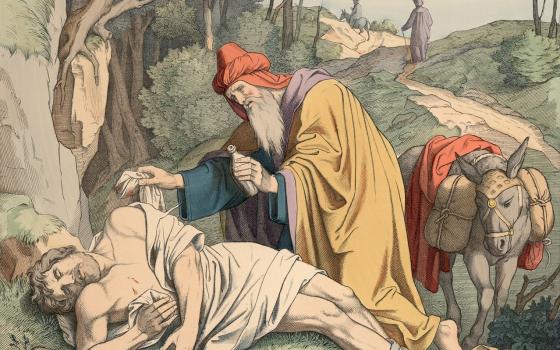
Washing the feet of priests had been a regular practice since 1985, when St. John Paul II took up the custom. Prior to that, the Polish pope and his predecessor, Pope Paul VI, had washed the feet of laymen. Pope Benedict XVI washed the feet of laymen in 2006 and 2007, but did so to groups of priests from 2008-2012.
Francis, though, continued the practice from his time as archbishop of Buenos Aires of celebrating Holy Thursday Mass in a prison. Just two weeks into his pontificate, the pope broke with previous papal protocol by celebrating Holy Thursday Mass at a juvenile detention facility. In a papal first, he included women and non-Catholics in the rite.
That gesture came full circle when Francis washed the feet of 12 women at a women's prison in 2024, the last year he celebrated the rite and the first time a pope had washed the feet of women exclusively.

Pope Leo XIV swings the censer near the altar as he celebrates the Holy Thursday Mass of the Lord's Supper in the Basilica of St. John Lateran at the Vatican April 2, 2026. (OSV News/Reuters/Vincenzo Livieri)
Some Catholics raised concern that Francis' gesture could suggest opening the door to admitting women to the priesthood, given that the washing of the feet is linked to Jesus' institution of the priesthood.
While the Vatican provided no explanation for Leo's decision to return the rite to its previous form, Leo's rhetoric makes it difficult to cast the act as an assertion of a privileged place for the clergy in the life of the church.
Advertisement
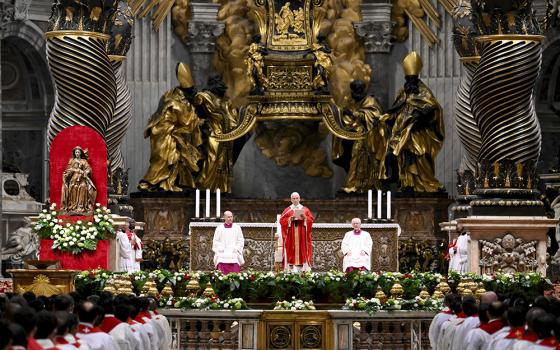
Earlier in the day, the pope celebrated the Chrism Mass in St. Peter's Basilica; at the service, a bishop blesses the three holy oils to be used in sacraments throughout a diocese. Although the homily for that Mass is typically directed toward priests, Leo expanded his comments to reflect on the Christian mission at large.
"Throughout history, mission has not infrequently been distorted by a desire for domination, entirely foreign to the way of Jesus Christ," said the pope, who had spent more than two decades of his priestly ministry as a missionary in Peru. Condemning all kinds of "abuse of power," Leo said "the great missionaries bear witnesses to quiet, unobtrusive approaches, whose method is the sharing of life, selfless service, the renunciation of any calculated strategy, dialogue and respect."
And in his general audience the day before Holy Thursday, Leo reflected on the role of the laity in the church as articulated in the Lumen Gentium, the Second Vatican Council's dogmatic constitution of the church.
"By virtue of Baptism, the lay faithful participate in the very priesthood of Christ," he said, stating that bringing the Kingdom of God into all aspects of the world "is possible only through the contribution, service and witness of the laity."
The National Catholic Reporter's Rome Bureau is made possible in part by the generosity of Joan and Bob McGrath.