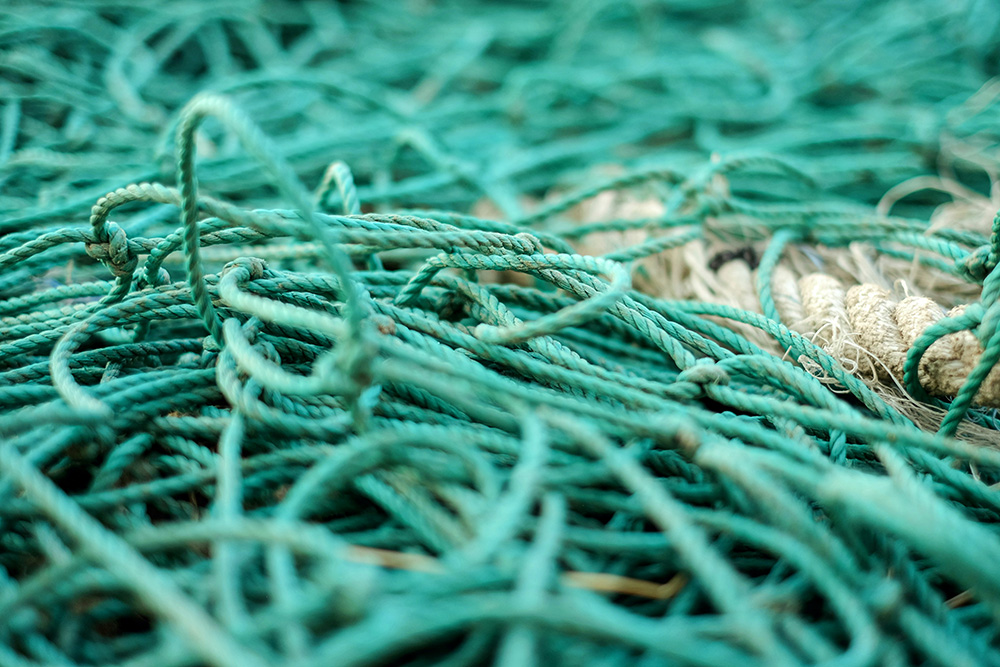
A fishing net in Sokcho, Gangwon-do, South Korea (Unsplash/Eric Barbeau)

by Sr. Fabiola Seon Choi
Join the Conversation
Send your thoughts to Letters to the Editor. Learn more
The small fishing town where I reside is a place where the grandeur of nature meets the quiet sorrow of a declining community. Nestled between majestic mountains and the deep blue sea, this town was once a vibrant hub of South Korea's fishing industry. However, the relentless grip of the climate crisis has led to a drastic decline in fish stocks, forcing many to abandon the sea that once sustained them.
As the local economy withered, the younger generation fled to the cities in search of a future, leaving behind an aging population and a palpable sense of stagnation. Today, the population has plummeted by approximately 35% from its peak.
I arrived here a few years ago, moving from the fast-paced, glittering heart of South Korea to this somewhat neglected corner of the country. Despite its faded glory, I have come to love this town deeply. There is a raw, unpretentious beauty in its landscapes. During the summer, it momentarily pulses with life as tourists flock to its beaches, but for the rest of the year, it remains a peaceful place of reflection.
My life is centered in the heart of the town, where the market, the bank and the local grocery stores shape daily existence. From this center, a mere 10-minute walk leads to the vast, open sea.
It was on these walks toward the water, passing through the marketplace, that I began to notice the growing presence of migrant workers. In this shrinking fishing village, foreign faces have become part of the landscape.
Advertisement
As someone who naturally reaches out to strangers, I began to offer simple greetings. However, I soon realized there was a clear barrier between us. Their Korean was limited, barely enough for basic work communication. Most of them were migrant fishers who had come to Korea under the E-10 Coastal Crew visa.
Choosing the E-10 visa is rarely a matter of preference; it is a choice born of necessity. The fishing industry is one of the most shunned sectors by native Koreans, characterized by what many call "3D" work — dirty, dangerous, and difficult. Because of this labor shortage, the gates are wider for migrant workers. The language requirements are lower than for manufacturing jobs, and because the work happens in the isolation of the sea, the need for complex social communication is often secondary to physical stamina and safety.
For these workers, the E-10 visa represents a second-best option — a way to bypass the long wait times of other visas and start earning money immediately to support their families back home.
Witnessing their isolation, I felt a stir in my heart. As a religious sister, I asked myself: "What can I do for these neighbors who are physically among us but socially invisible?" Following a period of prayerful discernment and with the gracious support of my parish, I began a weekly Korean language volunteer program. Slowly, the migrant workers living near the church began to gather. They came with weary bodies. Among them were those with valid visas and others who, through various hardships, had fallen into undocumented status.
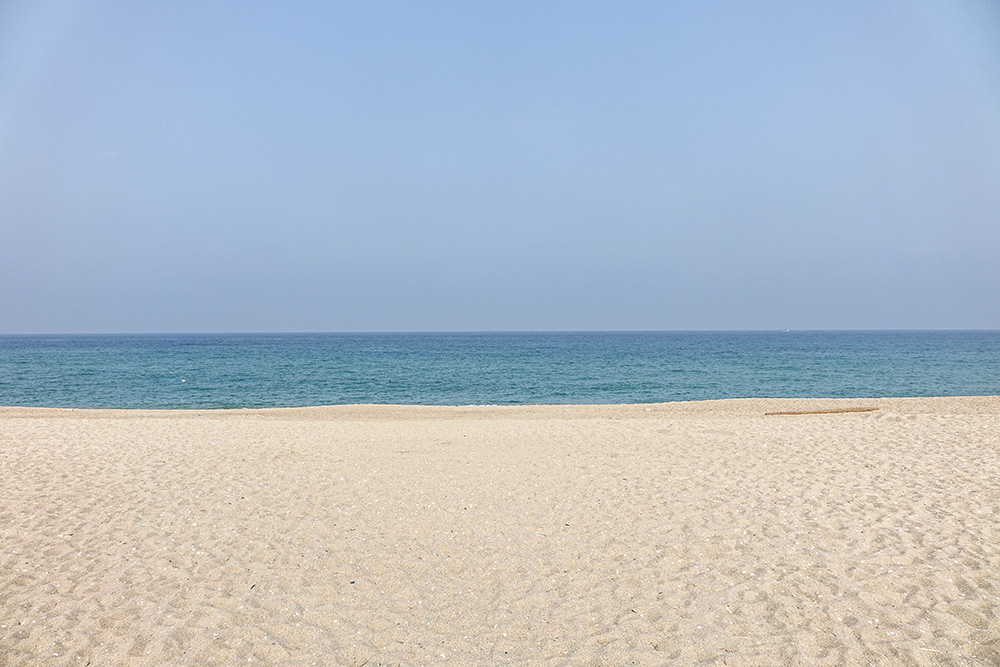
A beach at Gangneung, Gangwon-do, South Korea (Wikimedia Commons/Choe Kwangmo)
As our meetings progressed, I encountered an unexpected reality: Many of them were not particularly enthusiastic about learning Korean. Initially, I was puzzled. Wouldn't life in Korea be easier if they mastered the language?
My confusion, however, soon turned into a somber realization as I reflected on Korea's migration policies. The current Employment Permit System is designed for efficiency and control, not for the dignity of the person. It is a system centered on the employer, treating migrant workers as a temporary, revolving door of labor.
The "short-term rotation policy" ensures that young, healthy workers stay for exactly four years and 10 months before they are sent back, only to be replaced by a new batch of labor. The system intentionally discourages "settling down."
When a human being is viewed as a disposable tool — a gear in the economic machine to be used and then discarded — the motivation to learn the language of that society naturally diminishes. Why master the nuances of a culture that has already decided you do not belong?
It is a profound irony that South Korean society is now utterly dependent on these very people. From primary industries like fishing and agriculture to construction, logistics and caregiving, migrant labor is the invisible backbone of our national infrastructure. Yet, while we rely on their hands, we keep our hearts closed. We want their labor, but we do not want the people. We treat them as "necessary objects" rather than "fellow human beings," a tendency that deeply worries me.
We usually meet on Saturday evenings. They arrive carrying the crushing fatigue of a week's labor. We begin our lessons by praying the Hail Mary in their native language — Vietnamese. As I look into their bloodshot eyes, their calloused hands and their exhausted faces, I see the faces of beloved sons and daughters.
I am pained by the reality that they live in a foreign land without the respect they deserve. I feel a sense of frustration at my own inability to change the structural injustices that keep them on the margins.
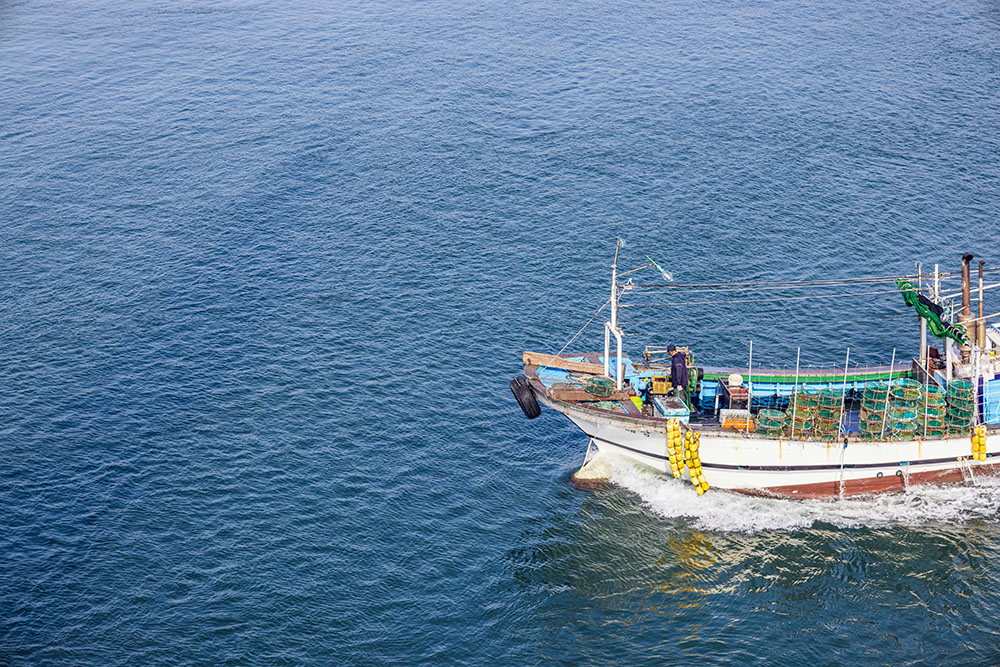
A South Korean fishing vessel on the water (Unsplash/Photos of Korea)
However, a deeper transformation was happening within me. I had initially approached this task with a sense of mission — a desire to "help" those less fortunate. But in the presence of their purity, their warmth and their genuine humility, I realized that I was the one being comforted. While I initially set out with the intention of offering help, I soon realized that I was actually the one receiving strength and comfort from them. This encounter taught me that they are not mere objects of charity, but fellow human beings who reflect the divine image as much as I do, sharing an identical dignity.
I recognize now that my South Korean citizenship and the comforts it affords are not rewards for my own merit. They are gifts given to me freely — a grace I did not earn. I feel a profound responsibility to return these gifts to those who were not given the same. This encounter is not marked by grand achievements or dramatic events; it is a quiet journey of staying awake to the movements of the Holy Spirit.
Humans are inherently relational beings. We grow and find the completion of our lives only through our relationships with others. I have come to believe that my own dignity can only be guaranteed when the rights and dignity of the suffering are respected. If we allow a system to treat one person as disposable, we diminish the humanity of us all.
Today, many of my fellow Sisters of Notre Dame and other religious across the Korean church are walking with migrant workers in rural villages and small towns. They are busy resolving unpaid wages, assisting with workplace changes, and accompanying the sick to hospitals, responding to the cries of the marginalized. I hope that one day, my own voice can grow louder in solidarity with them.
I dream of a world where our standard is not the border on a map, but the depth of human suffering. A world where we do not ask, "Where are you from?" but rather, "Where does it hurt?"