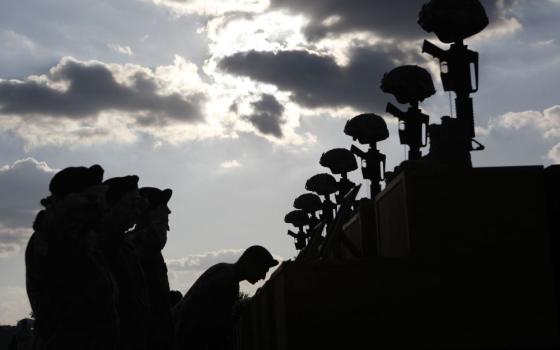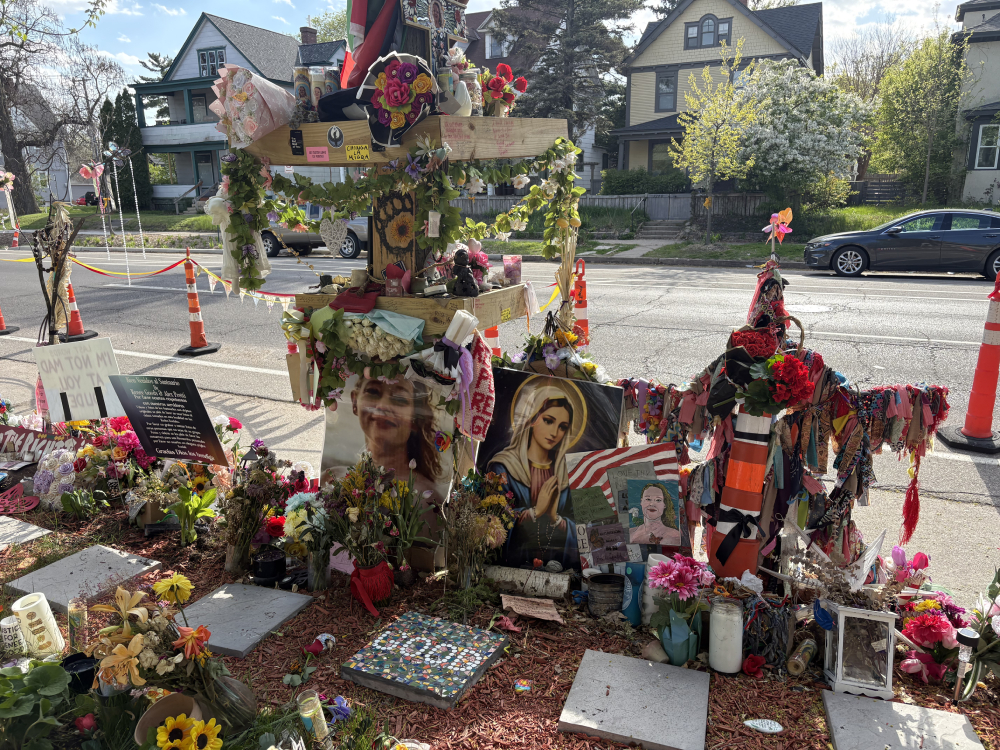
The memorial site at the location where Renée Good was shot by an ICE agent on January 7, 2026. (NCR Photo/Camillo Barone)

Join the Conversation
Send your thoughts to Letters to the Editor. Learn more
In the months after the January Operation Metro Surge activities in the Twin Cities, the emergency itself began to recede. The visible signs of crisis became less constant. Fewer checkpoints were discussed in parish corridors. Fewer urgent messages arrived each hour. Yet for Catholic parish leaders in Minneapolis and St. Paul, the movement away from immediate crisis marked the beginning of the process of healing.
Across parishes, priests, lay leaders and volunteers described a shift from emergency response toward sustained accompaniment. But many also said that healing has not followed a simple trajectory. Fear remains present, attendance patterns have changed and for some families, the consequences of what happened continue daily.
At Saint Thomas More Catholic Community in St. Paul — the only Jesuit parish in the state of Minnesota — Jesuit Fr. RJ Fichtinger had already spent nearly a decade serving the community before the events of January
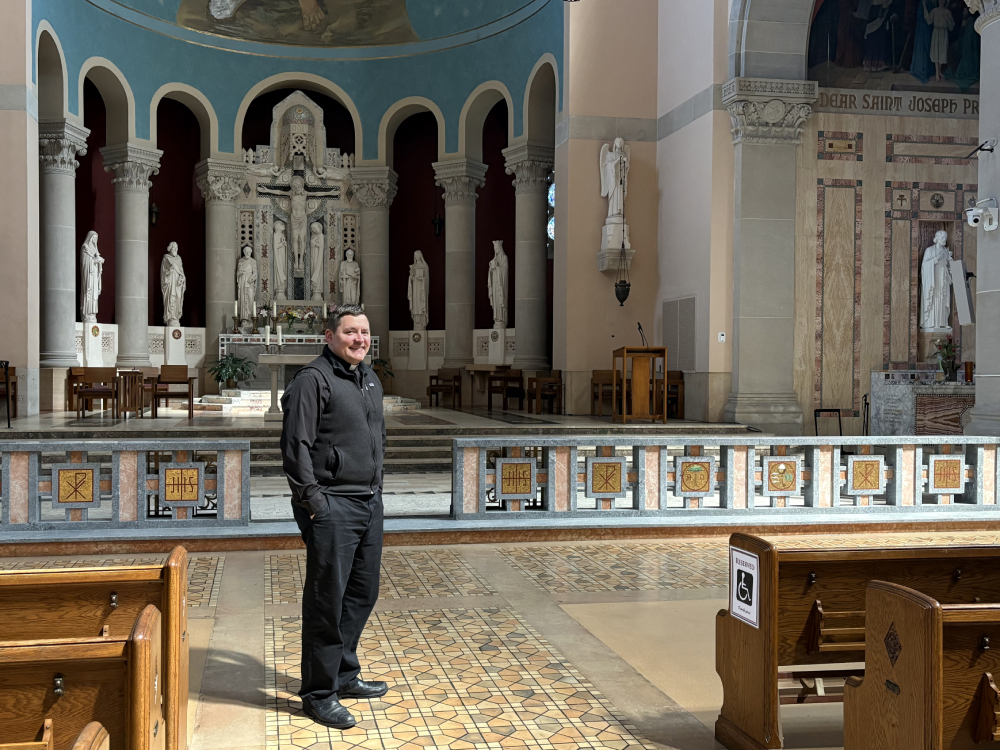
Jesuit Fr. RJ Fichtinger, pastor at Saint Thomas More Catholic Community in St. Paul, the only Jesuit parish in the state of Minnesota, May 7. (NCR Photo/Camillo Barone)
Before the increased deployment of federal immigration agents in the area, he said there had already been signs that parishioners were becoming more attentive to immigration concerns and broader national debates. Parish volunteers had begun strengthening immigrant advocacy work and direct assistance even before the events unfolded.
"The spirit was moving," he told the National Catholic Reporter on May 7.
The parish organized itself into different teams: direct family support, education, advocacy and practical assistance. Looking back, Fichtinger said there was awareness of rising tensions in national discussions surrounding immigrants, but not of the scale of what followed. "Could we have predicted this? No."
What emerged during the height of the crisis was a system of immediate responses. Parishioners stood outside schools during pickup and drop-off hours. Volunteers delivered groceries to households reluctant to leave their homes. Additional ministers were trained to bring Communion to families staying indoors.
"This is regardless of immigration status," Fichtinger said. "This is just a culture of fear that had been created."
Fichtinger said he remembers one particular homily during the period of greatest tension. "I gave a homily that weekend, where I just dragged a chair and stretched a chair and I just said: 'Church, I'm tired. We're all tired,'" he recalled.
"I don't know that anything I said was profound or memorable, but the act of acknowledging the strain that people were feeling at that time, by addressing the reality of people's lived experiences, and regardless of what your political views were, the tenor of the violence being done to our community was being felt by everyone."
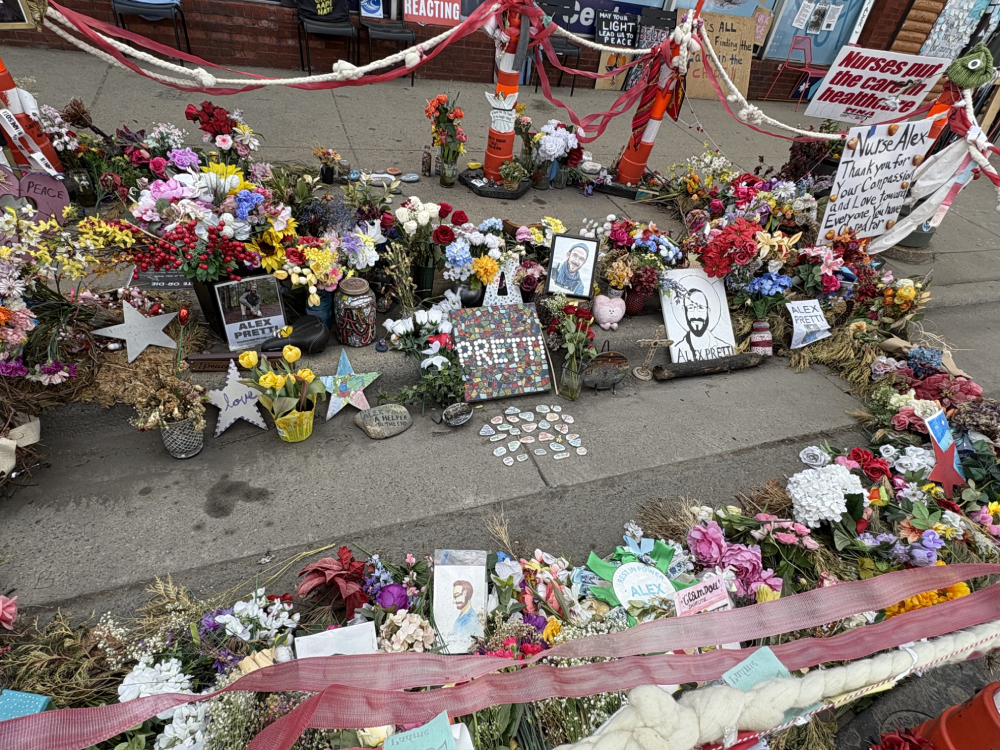
The memorial site at the location where Alex Pretti was shot by an ICE agent on January 24, 2026. (NCR Photo/Camillo Barone)
For Julie Madden, director of peace and social justice ministry at St. Joan of Arc Church in South Minneapolis, the period immediately following the operation resembled triage emergency medicine more than long-term recovery.
For 26 years Madden has led social justice work at the parish. She described to NCR the first eight weeks of intense activity by U.S Immigration and Customs Enforcement and the Customs and Border Protection as a period dominated by immediate intervention. The days became cycles of phone calls and messages. Some came from people seeking help. Others came from volunteers trying to provide it.
"All day, all I did was respond to emails and phone calls from people who were desperate and needed assistance or accompaniment of some kind, or I was helping people who were desperate to give assistance and accompaniment."
As she described the period, Madden paused and became emotional. Months later, she said, her community may still not fully understand the effects of what happened.
"We have not had sufficient time to really sit with what this has done to our people and to our neighbors and to our city," she said.
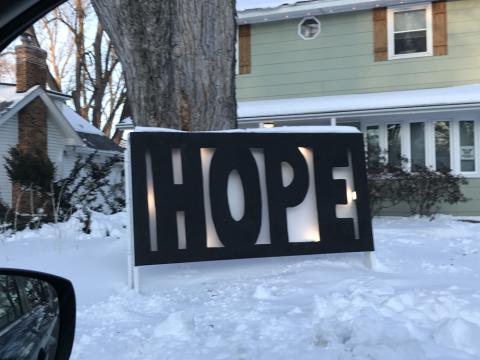
A sign outside of a house in the St. Joan of Arc parish neighborhood in South Minneapolis, later used by the St. Joan of Arc community in the Good Friday service, January 2026. (Courtesy of Pam Kremer)
Among the lessons she identified was the role of the church as a public voice. During Sunday services, she said parish leadership believed clarity mattered and still does. "The prophetic voice of the church was so important. The clarity of the church was so important," she said.
For some volunteers, assistance involved practical tasks that carried unexpected emotional burdens. For instance, Madden recalled the experience of one woman transporting children. The volunteer later told her that she "did not take a deep breath from the time she picked up the children that she was driving until she dropped them off at night."
"One of the other things we learned is that we will not ask who is our neighbor anymore. We did not need to have things figured out or solved. We did not need to have the answer to things. We just stepped in," she said.
A lay leader within the Archdiocese of St. Paul and Minneapolis, who requested anonymity because of security concerns, said changes remain visible throughout the Twin Cities.
"We have seen a lot of fear, a lot of apprehension," the person said. "We certainly have seen a drop in our attendance to services, our attendance to just the events or the programs that we have at our parish."
The fear, the lay leader said, extends to this day beyond immigration status itself, noting that concern has extended across different communities.
Advertisement
The emergency phase may have ended, but within many parishes across Minneapolis and St. Paul, leaders said the work of healing has only begun. For some families, parish leaders said healing remains difficult because the crisis did not entirely end.
"In one family we worked with, the dad was deported and is not in this country anymore," Fichtinger said. "And so that family, every day, has to deal with the reality that they've been broken up."
"How do we get past what has been inflicted on people? Healing is not about if you're safe now, but demanding and experiencing restoration and justice. Healing is knitting a community back together," Madden said.