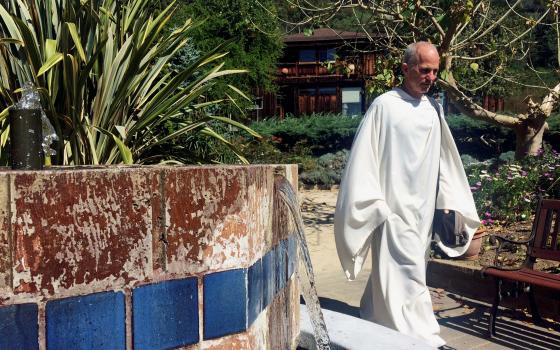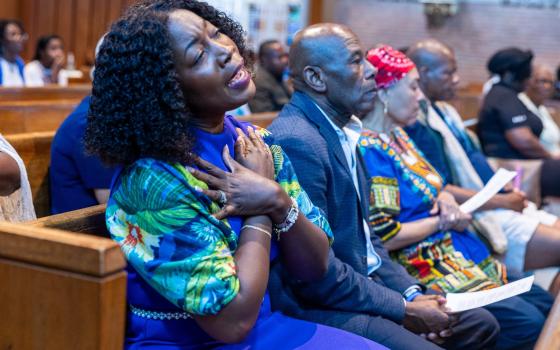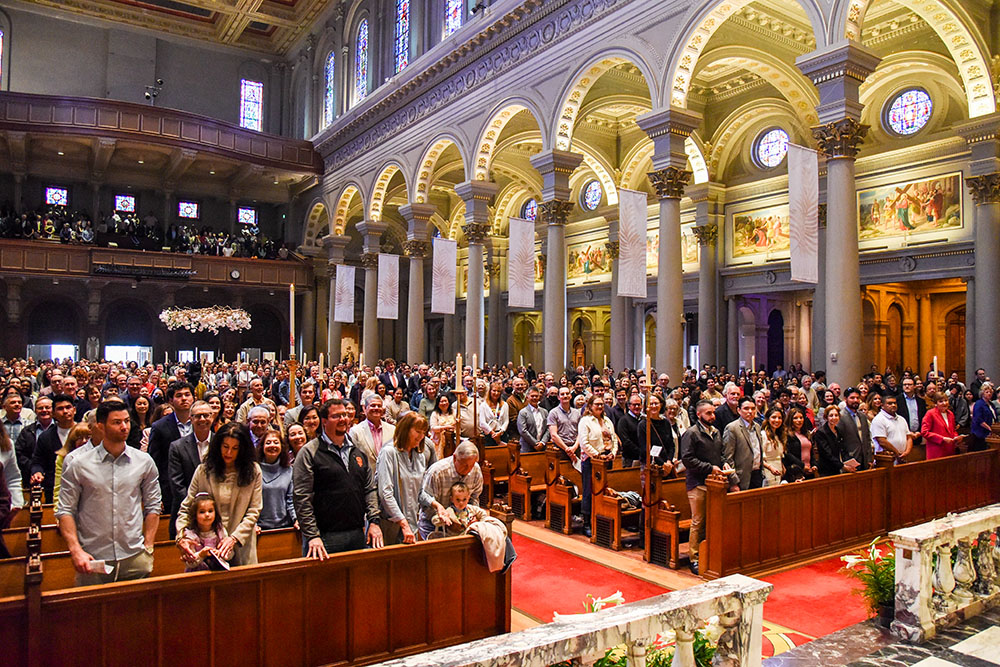
The congregation of St. Ignatius Parish in San Francisco during Easter 2025 (Courtesy of Nano Visser)

Join the Conversation
Send your thoughts to Letters to the Editor. Learn more
The change has come in stages, but its effect is now visible in courtrooms, parish halls and family homes across the city. In a matter of months, San Francisco's immigration court system has been reduced to a fraction of its former capacity, while new federal strategies have made it harder for asylum seekers to pursue their cases.
In a little over a year, the city's two immigration courts saw their judge count fall dramatically — from 21 at the start of 2025 to only two by March 2026.
The reduction follows a wave of firings, retirements and transfers that has left one of the busiest immigration courts in the country with a backlog exceeding 118,000 cases, according to Transactional Records Access Clearinghouse at Syracuse University. The nonprofit news site Mission Local has reported that cases that once moved slowly over months are now expected to take even longer, with some already scheduled years into the future.
For attorneys, local clergy and immigrant families, the consequences are immediate.
St. Ignatius Parish, located near the University of San Francisco, has supported three immigrant families for five years. The families come from the Caribbean and South America, and arrived through different paths, including crossing the Darién Gap, a highly dangerous 60-mile-long jungle path on the border between Panama and Colombia.
"There's no way that I can read the papers without the lens of these three families," said Jesuit Fr. Greg Bonfiglio, pastor of St. Ignatius. "They make all that's happening with the U.S. immigration system right now personal."
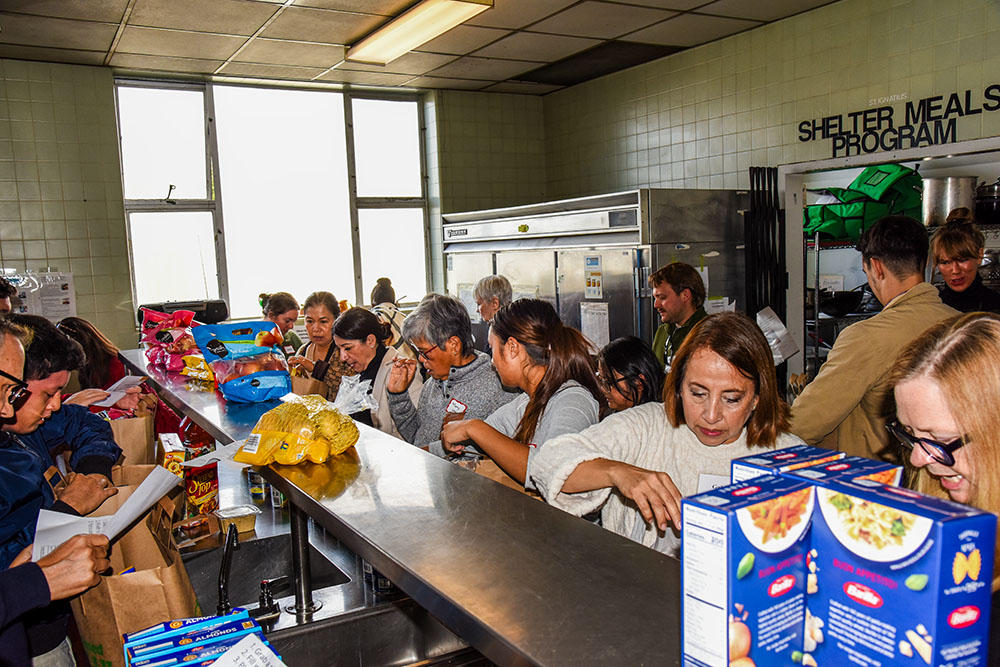
Parishioners of St. Ignatius Parish in San Francisco assemble Thanksgiving baskets on Sunday, November 16, 2025, for Catholic Charities to share with local families in need. (Courtesy of Nano Visser)
Bonfiglio said the Jesuit parish's involvement grew out of earlier engagement with migrants at the U.S.-Mexico border. The parish's support includes housing assistance, community integration and spiritual life. The children were baptized in the parish and attend Catholic schools, and the families participate regularly in parish activities.
"We broke the news [to them] that all this work and hope that they've invested in this process, trusting that the United States of America would do right by them, is coming to naught, and they're fearful. The message to every child is that you belong, that every person has dignity," he said. "We're telling these families that, in fact, they may not belong here, and that the dignity that baptism acknowledges is not what they're experiencing in our immigration system. That contrast is just unbearable."
According to Bill Ong Hing, a law professor at the University of San Francisco and the founding director of the university's Immigration and Deportation Defense Clinic, the reduction in judges is part of a broader effort.
"The federal strategy is to close down the opportunity to apply for asylum," he said.
Many of the judges who were removed had relatively high asylum approval rates, he said. Their departure has coincided with new legal tactics aimed at limiting access to asylum.
Advertisement
One such tactic is the use of "motions to pretermit," which ask judges to deny asylum applications on the grounds that applicants could seek protection in a third country. Hing said countries such as Honduras, Paraguay and Uganda have been cited in these cases.
Another approach has involved arresting asylum seekers at preliminary hearings, arguing that they are not lawfully present in the United States. This created fear among applicants, some of whom have stopped attending hearings or withdrawn their cases.
The consequences of these strategies are visible in the low number of immigrants showing up to court, such as 800 people not showing up one recent week in San Francisco, Milli Atkinson, director of the Immigrant Legal Defense Program at the San Francisco Bar Association, told Mission Local. Failure to appear at a hearing can result in an automatic deportation order, known as an in absentia removal.
San Francisco attorney James Byrne, who has been following the cases of two of the families connected to St. Ignatius, said there is currently an injunction preventing arrests at court hearings. But he noted that uncertainty remains.
"I don't know how much that's filtered out into the [immigrant] community," Byrne said.
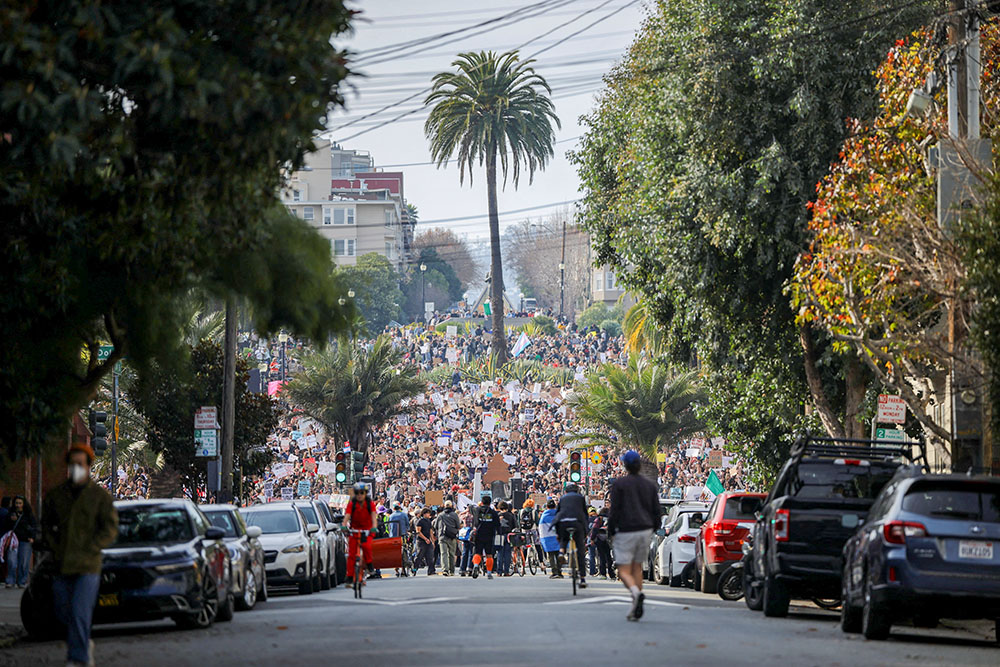
People take part in an "ICE Out" protest at Mission Dolores Park in San Francisco Jan. 30, 2026. (OSV News/Reuters/Carlos Barria)
The absence of judges has changed how proceedings are conducted. Remote hearings have become more common as courts attempt to manage the workload with limited staff, and for asylum seekers, the delays and procedural changes can mean years of uncertainty.
At the same time, the planned closure of San Francisco's main immigration court facilities is expected to further strain the system.
St. Ignatius declared itself a sanctuary parish in 2017, after discussion within the community. Bonfiglio said the decision was not political.
"It was important in San Francisco and in the local church to make a public statement. I don't think the sanctuary status really protects us from anything at this point. The sanctuary status helps us declare to be clear for ourselves who we are as a Catholic Christian community, that we will do our best to welcome the stranger as the Gospel commands us to do," he said.
Hing, who advised St. Ignatius on its sanctuary status, confirmed that sanctuary designations do not prevent federal enforcement actions.
"If ICE wants to, ICE can go into a church," he said, noting that previous federal guidance discouraging such actions has been rescinded.
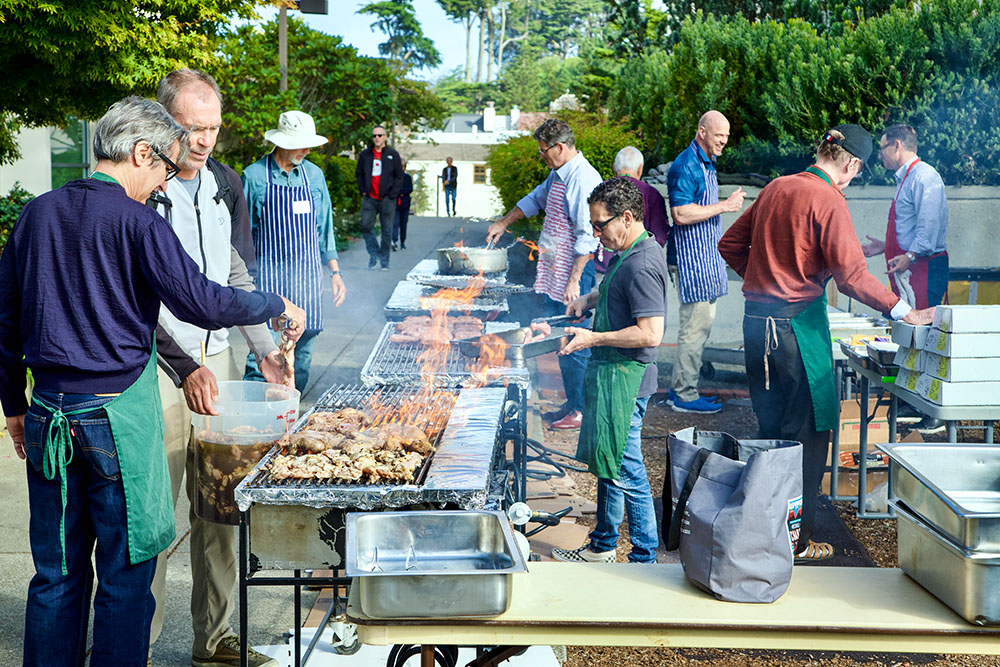
Parishioners of St. Ignatius Parish in San Francisco at a "Home4Dinner" event, a community social and spiritual gathering to foster mutual support and belonging, in October 2023. (Courtesy of Nano Visser)
Despite this, Hing said that churches "can play a big role in the resistance that is necessary to bring about change."
"I think that things are going to be still bad for some time, and I don't think that the Supreme Court is going to be very helpful in what's been happening in terms of Trump being able to fire judges, to control immigration judges, to arrest people," Hing said.
For the families supported by St. Ignatius, the legal path remains narrow. Their cases are being pursued through asylum claims, which require demonstrating a well-founded fear of persecution in their home countries. Byrne said factors such as a Catholic community integration or time spent in the U.S. are not central to asylum decisions.
With options in the U.S. looking uncertain, Bonfiglio said he has begun reaching out to Jesuit networks abroad. The goal is to identify places where the families could relocate safely in a worst-case scenario, without being separated.
"I'm in contact with Jesuits in Canada and in Colombia," he said. "Hoping to make connections."