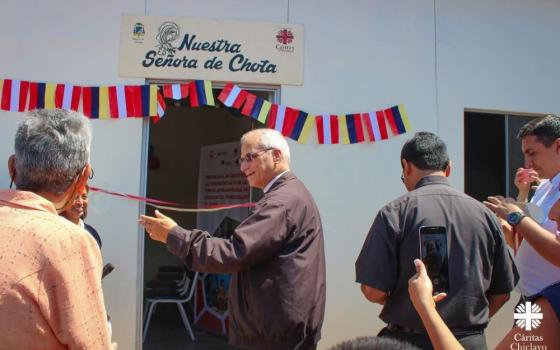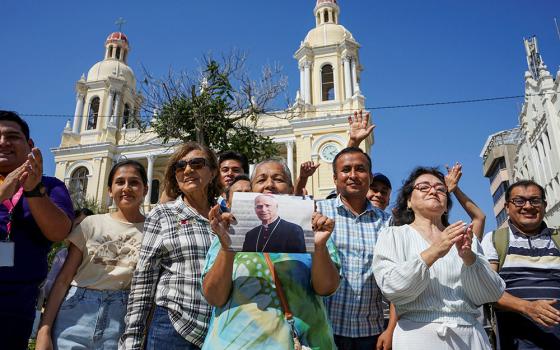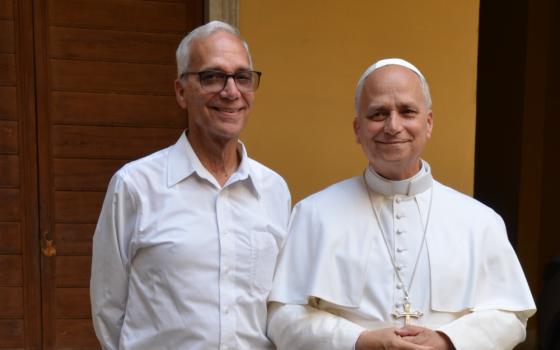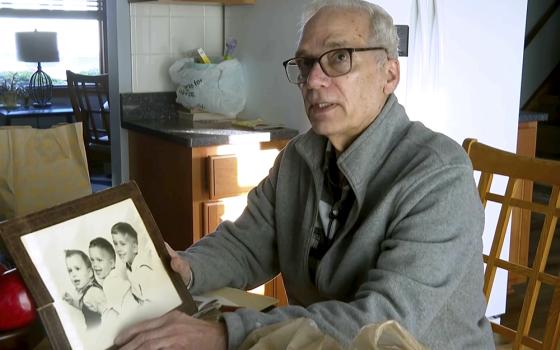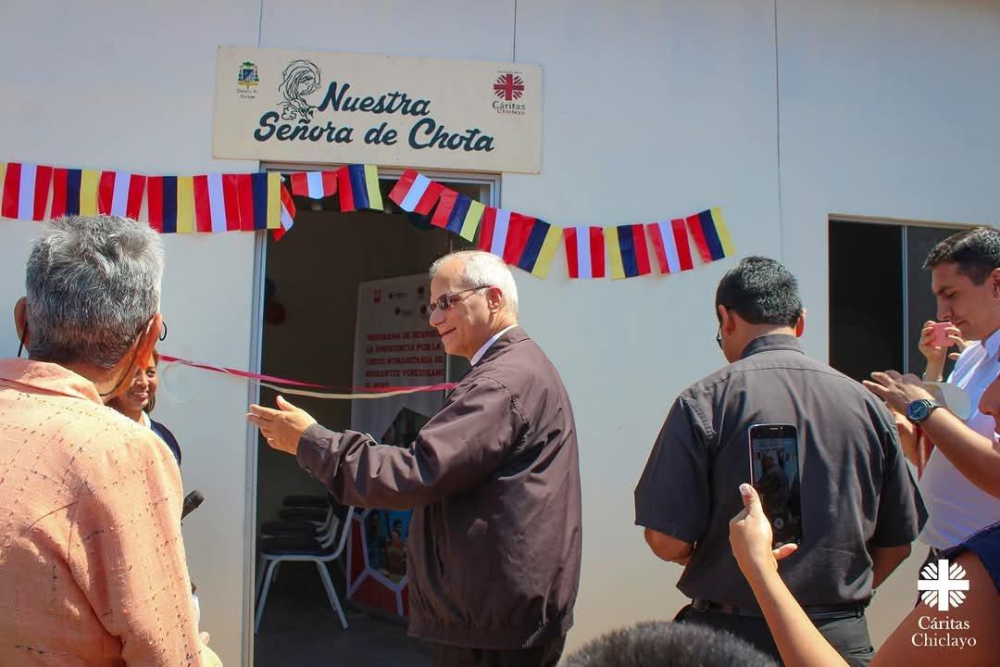
Then-Bishop Robert Prevost, of Chiclayo, Peru, today Pope Leo XIV, is featured ministering to his flock in this undated photo. (OSV News/Courtesy of Caritas Chiclayo/Janina Sesa)
Join the Conversation
Send your thoughts to Letters to the Editor. Learn more
Editor's note: This story appears as part of the profile series unpacking the background of Pope Leo XIV: Looking for Leo in History. Other installments look at the future pope's time in Peru as a young missionary, the theological context that formed him, his upbringing in Chicago and his work in the Chiclayo Diocese.
What began as a quiet, methodical but slow-moving pontificate was jolted awake when Pope Leo XIV called the treatment of immigrants in the United States under the Trump administration "inhuman" in response to questions from reporters.
Since that moment four months after being elected pope, Leo has repeatedly shown himself willing to stick his neck out and speak with particular force in defense of migrants — two of his trips outside of Rome, to Spain's Canary Islands and the Italian island of Lampedusa, have been explicitly tied to drawing attention to the plight of migrants.
But before placing himself firmly within the church's tradition of migrant advocacy, strongly reinvigorated by his predecessor Pope Francis, Leo confronted his own migration crisis in the rural diocese of Chiclayo in northern Peru where he was a bishop from 2014 to 2023.
By 2017, following years of food shortages, lack of medical supplies and hyperinflation, 1.5 million Venezuelans had fled their country and traveled to neighboring nations, often on foot, in pursuit of a better life. After passing through Colombia and Ecuador, thousands of migrants reached Chiclayo en route to the Peruvian capital of Lima, and some opted to stay throughout the surrounding region of Lambayeque.
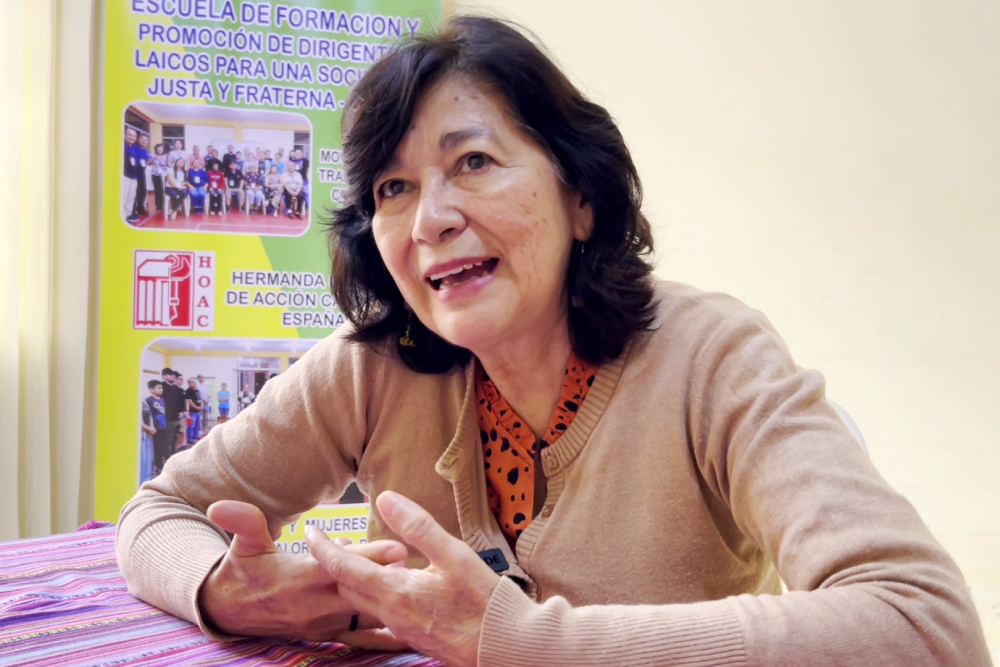
Yolanda Díaz, coordinator of the Chiclayo Diocese's commission on human mobility, speaks with NCR during an interview in Chiclayo, Peru, in August 2025. (NCR photo/Justin McLellan)
After a large wave of arrivals in 2017, groups of migrants stood out in Chiclayo, a city of approximately 700,000. Various volunteers with the local diocese told the National Catholic Reporter that when migrant families sleeping in the city's central square became a mainstay, the church realized it was beyond time to act.
At the time, the diocese already had a human mobility and trafficking ministry, which primarily accompanied women in prostitution and organized campaigns against human trafficking. But as more migrants arrived, Bishop Robert Prevost asked diocesan volunteers to broaden the ministry's work.
Yolanda Díaz, the coordinator of what became the diocese's human mobility commission, recalled that as a bishop, the future pope "didn't tell us, 'do this or do that,' but rather he told us to go and see what could be done."
The commission eventually brought together approximately 14 people, including lay volunteers and members of different religious congregations operating throughout the diocese, to ramp up its activities and engage with Chiclayo's migrant population more directly.
Listening to migrants and forging legal pathways
At the same time, the local Caritas, the diocese's charitable arm, was providing immediate relief to migrants who arrived in Chiclayo with virtually nothing, helping to arrange healthcare, provide food and find housing options.
Together, the commission and Caritas worked to identify approximately 30 leaders within the Venezuelan community who could act as go-betweens for the migrant community and the commission. The commission began by asking the representatives of the migrant community what the diocese could do to assist them.
"Counter to what we originally thought, which was that they were going to ask for food, for clothes and housing, they told us, 'first regularize our migratory situation, because we are living in fear,'" Díaz said.
Augusto Ramírez, the head of the commission's legalization efforts, told NCR that "a migrant with an irregular status cannot have access to work, cannot have access to housing, to healthcare, their kids do not have access to education."
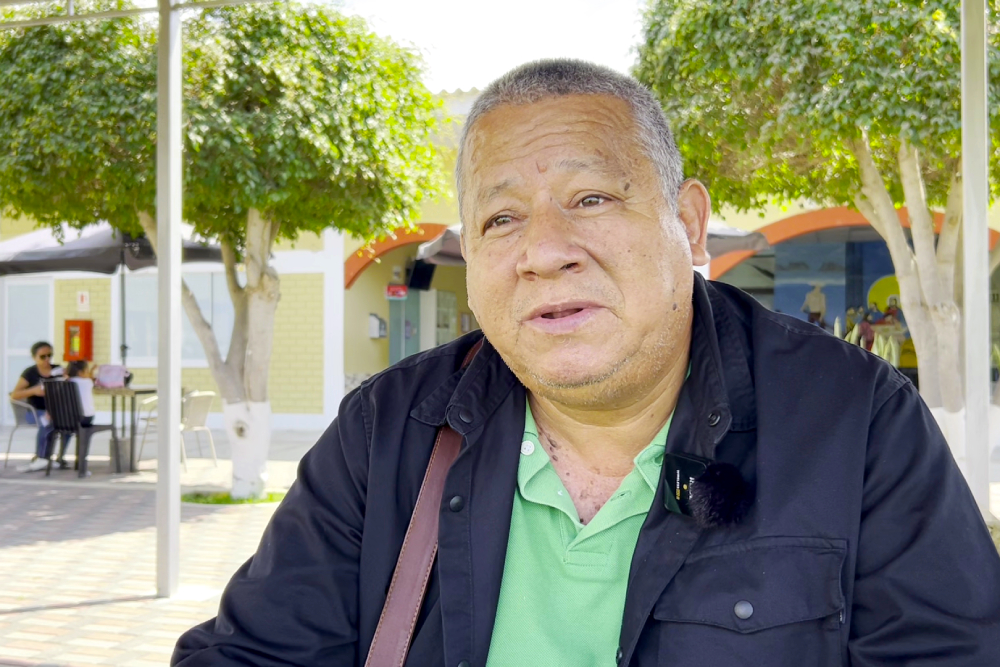
Augusto Ramírez, a member of the Chiclayo Diocese's commission on human mobility, speaks with NCR during an interview in Chiclayo, Peru, in August 2025. (NCR photo/Justin McLellan)
The commission relayed that information back to Prevost, who asked what he could do to help. Díaz recalled that the commission asked him to get in touch with the local immigration office directly.
Prevost called the head of the regional immigration office and asked them to work with the diocesan human mobility commission to provide information on how they could normalize the status for Chiclayo's migrants.
Eventually, the commission split the diocese into 14 zones and helped designate a representative among the migrant community within each zone, who they helped train to pass important information to their communities.
The commission and migrant leaders would organize meetings in each zone where representatives from the migration offices would come to provide information about how to normalize their migration status.
"We didn't have to go to the immigration [office], the immigration [office] came to us; that was all thanks to Prevost's efforts," Díaz said. "He acted as a mediator. He wasn't involved in every detail with us; he delegated things to us, trusted us, and did his part by making the connection with the authorities."
While representatives from the immigration office came to Chiclayo's migrant communities to provide information, migrants had to submit their paperwork in person at the branch of the Peruvian government's foreign affairs office in Trujillo, about four hours away by car.
Prevost reached out to the foreign affairs office and had them agree to set aside specific time windows to handle cases for migrants coming from Chiclayo. The commission then organized transport to take groups of migrants to Trujillo during those periods to file their claims.
Ramírez recalled that at the height of their efforts, buses took between 100-200 people to Trujillo up to three times a week where they received designated attention and were able to submit their documentation without waiting in line.
For those who had some official documents, such as a passport, members of the commission helped request temporary residence permits. For those with nothing, they helped file asylum claims.
In those appointments, asylum applicants were also given documents that allowed them to freely travel throughout the country and to get a job, which were important steps in fully normalizing their situation and integrating into Peruvian society.
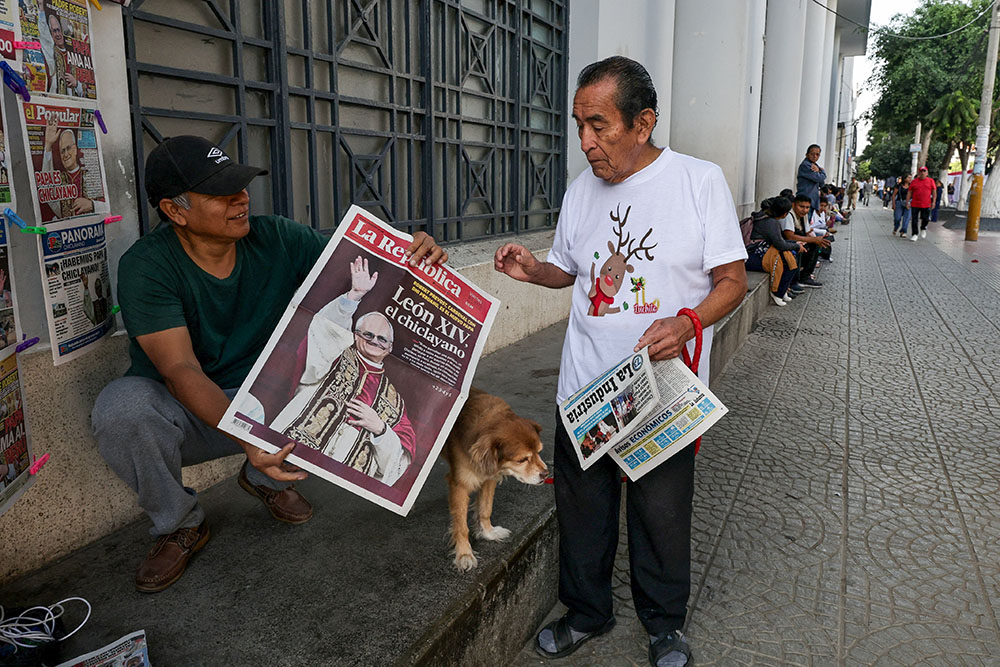
People hold newspapers in Chiclayo, Peru, May 9, 2025, reporting on the election of Pope Leo XIV, who is a dual U.S.-Peruvian citizen. (OSV News/Reuters/Sebastian Castaneda)
Yet the bureaucratic fees for submitting that paperwork, and the transportation to and from the appointments, was a large expense.
To help with those efforts, the human mobility commission began sending proposals to aid organizations, such as Save the Children and the German governmental development agency, GIZ, which Prevost signed partnerships with in order to fund the diocese's work on migration.
"The human mobility commission did not count with the resources to do these things because we are not an NGO, but these allies did, and through them we were able to put together projects to begin working on normalizing the migration [statuses] ourselves," Ramírez said. "Monsignor [Prevost] was very willing to do that. The bridges he was building made that possible, it allowed us to complete all those procedures and regularize their situation."
Though thousands of migrants would continue south toward Lima, Ramírez said that through the church's assistance many migrants in Chiclayo have been able to put together a stable life.
"Of the 4,000 or so families we still have in the Lambayeque region, many of them have a home, many of their children can study without a problem, many of them have access to the public healthcare system," he said.
A church working toward integration
Beyond accompanying migrants through the migration process, the commission also worked to integrate migrants into local community life and structures, such as the healthcare system.
Díaz, the commission coordinator, told NCR that many migrant women who were close to giving birth had been denied treatment at hospitals because they did not have identification showing their enrollment in the public healthcare system. The human mobility commission engaged with the region's governmental ombudsman office which intervened on their behalf and insisted that migrants must be given care.
The commission managed to get various hospitals' social assistance offices, which subsidizes treatment for poor Peruvians, to apply similar discounts to migrants who were not enrolled in the healthcare system. The remaining sums would be paid by the diocese, its charitable arm Caritas or another NGO liaising with the church, such as Save the Children.
Additionally, members of the human mobility commission underscored that more than supporting migrants through charitable efforts, Prevost supported migrants by being their public advocate.
Díaz recalled sharing with Prevost the comments members of the human mobility commission heard from locals in Chiclayo who called migrants lazy and accused them of using their children to beg since they did not want to work.
Advertisement
"In his homilies, [Prevost] would encourage us in our work. He would talk about mercy. He would say, 'I am a migrant,' and he would speak about it, giving witness to his own experience as a migrant," she told NCR. "He would describe what life was like for a migrant here and say how important it is that we speak out, that Jesus was a migrant, and we were happy because we had such strong support from him."
Ramírez, the other member of the commission, said that in some parts of the diocese the commission organized "sensibility campaigns" throughout the diocese where volunteers, along with migrants, would go into towns to clean the streets and pick up trash to show that they were active members of the community.
"The church, led by Prevost, looked far beyond welfare. It saw welfare as something to be coordinated with the state," he said. "The church was more concerned with the human element."
Among the migrant community, "some were [Catholic] faithful, some were nonbelievers, some were members of other churches," Diaz recalled.
"We weren't trying to convert people through our work, that wasn't our goal. Our goal was to stand with a people who were suffering, to ensure that their rights were respected, and if that served as a testimony to them of a church that reached out to them unconditionally — that was the testimony we wanted to share," she said. "I think Msgr. [Prevost] also shared that mentality."
The National Catholic Reporter's Rome Bureau is made possible in part by the generosity of Joan and Bob McGrath.