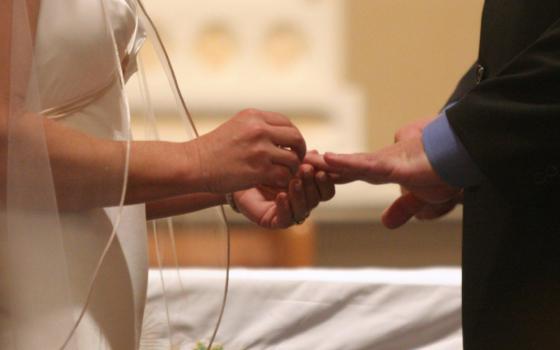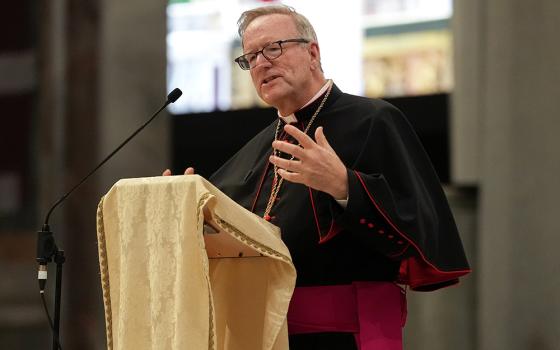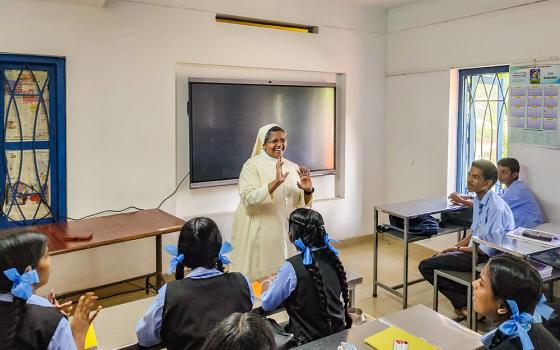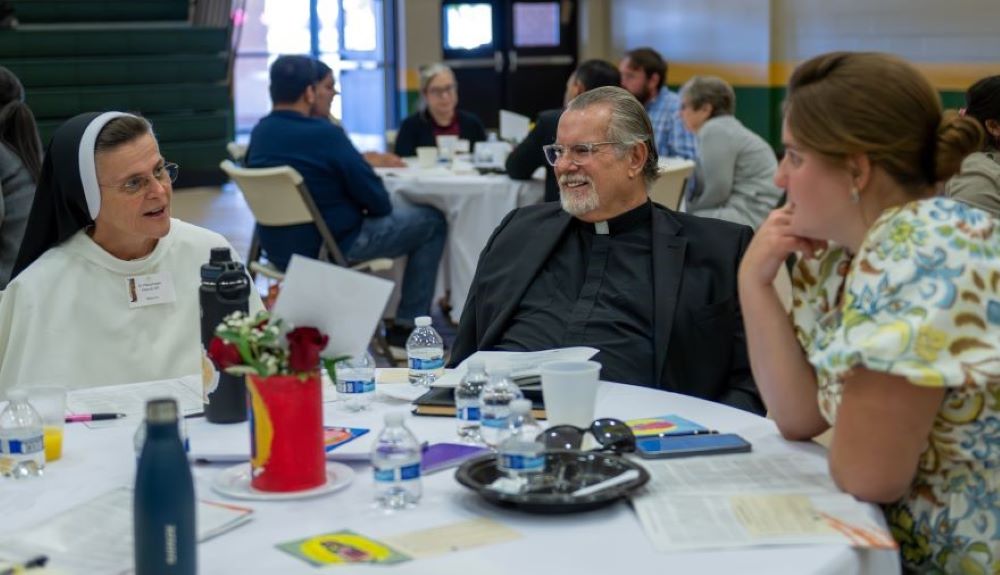
Lay Catholics and clergy take part in the synod of young adults of the Diocese of Phoenix with lay Catholics and clergy from the diocese in February 2026. The process started in November. (Courtesy of Phoenix Diocese/Brett Meister)

Join the Conversation
Send your thoughts to Letters to the Editor. Learn more
In the desert city of Phoenix, a structural shift is underway inside the Catholic Church, one that reflects a broader global initiative while testing its durability at the diocesan level.
The Diocese of Phoenix has established a permanent Office of Synodality and Planning, a move tied to the multiyear synod on synodality initiated by Pope Francis. The effort attempts to translate a global consultative process into a fixed work of the diocese.
"I wanted to make sure that we continued on with the worldwide synod, which had begun before I had even arrived," said Phoenix Bishop John Dolan.
The diocese does not claim to be the first and only in the U.S. to create such an office, but a review by the National Catholic Reporter did not find any other U.S. diocese that formalized synodality as a standing, permanent function.
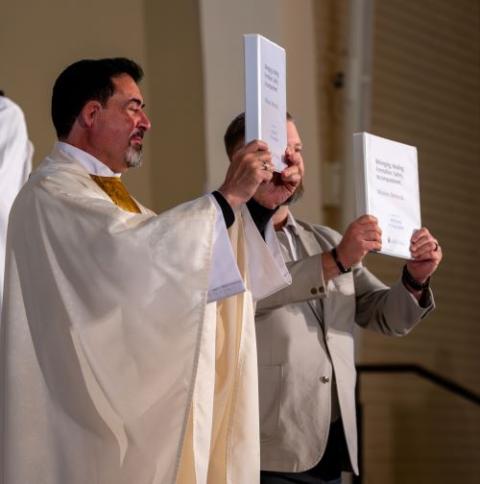
Fr. Carlos Gomez, chair of the presbyteral council at the Diocese of Phoenix, and Christoph Lohr, chair of the diocesan pastoral council, hold folders with the synodal report at the closing Mass of the synod of young adults in February. (Courtesy of Phoenix Diocese/Brett Meister)
The concept underlying the office — synodality — refers to a mode of governance and discernment within the church that emphasizes collective listening and consultation. While synods have existed since early Christianity, the contemporary emphasis stems from the Second Vatican Council and was expanded under Pope Francis through the global synod on synodality (2021-2024).
That process involved dioceses worldwide in structured listening sessions and consultations, with themes centered on participation, communion and mission. Dioceses across the world conducted listening sessions, producing syntheses that informed continental and Vatican-level discussions. In the U.S., tens of thousands participated in this synod, with its recurring themes including inclusion, transparency and the role of lay voices.
"One of the most exciting things for me is to be basically on the cutting edge of what it means to be a church in the 21st century," Fr. Charles Kieffer, the vicar for Synodality and Planning for the diocese, told NCR, "to be able to help convey a synodal culture to the diocese of Phoenix, both the clergy and the laity."
The office has already intersected with several diocesan departments. In preparation for the young adult synod, which ran from April 2025 to February 2026, representatives from the mental health ministry, evangelization, catechesis and Hispanic ministry participated in a preparatory commission. "Seeing those people in their departments begin to embrace synodality was a very rewarding thing," Kieffer said.
He said that some departments have already begun applying synodal methods internally.
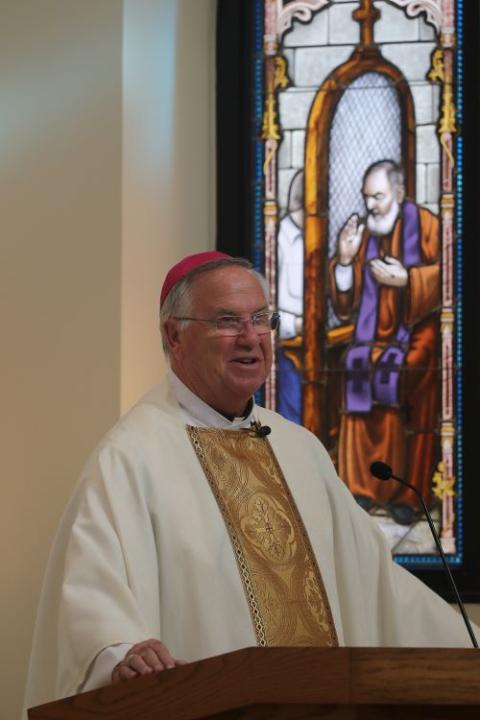
Phoenix Bishop John Dolan delivers the homily during Mass in the pastoral center chapel June 24, 2025, during the Catholic Media Conference in Phoenix. (OSV News/Bob Roller)
The diocese is now in a phase of review and potential implementation. The recommendations generated by the synod are being examined by the diocesan pastoral council, the priest council and administrative offices.
The diocese is attempting to shift from its typical way of making decisions toward what Dolan described as "methodology of the conversation in the Spirit," that emphasizes listening and discernment over debate or voting.
The shift has encountered some resistance, particularly among clergy, and Kieffer blames some media reports for that. "There were a number of media outlets and social media in particular that capitalized on the German synodal process and conflated that with the synod on synodality," he said. "The upshot was that these media folks presented synodality as this insidious type of program in the church to overturn the hierarchy."
Dolan said the Phoenix Diocese avoided ideological framing about its synodality efforts. "We were trying to not go conservative or liberal on this," he said. "We were just trying to open up the doors for a conversation."
The concept of synodality has often been used by Catholic conservative groups to attack Francis' papacy and its reforms. A book titled The Trojan Horse in the Catholic Church began circulating this winter among Catholic priests and bishops across the U.S. It presents synodality as a concealed effort to alter the church's structure and teaching. The book is distributed by the ultra-conservative activist group Catholics for Catholics and with a preface written by the leading adversary of Pope Francis, Cardinal Gerhard Müller.
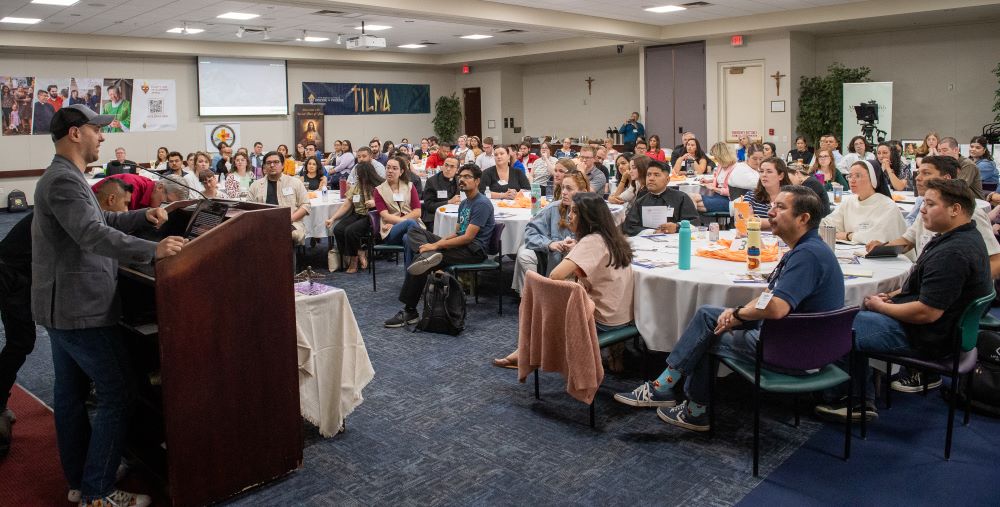
Catholic influencer José Manuel de Urquidi gives a keynote address on synodality to participants at a young adult facilitators' training session at the Phoenix Pastoral Center in April 2025. (Courtesy of Phoenix Diocese/Brett Meister)
Phoenix Auxiliary Bishop Peter Dai Bui, who helps the diocesan Office of Synodality, received a copy. In an op-ed published by NCR, Bui argued that the book mischaracterizes the nature of synodality itself. Bui pointed to a model of Catholic authority rooted in service, saying that "the bishop who listens is not a weaker bishop. He is a more Christlike one."
Phoenix's initiative intersects with broader patterns of polarization within the U.S. Catholic Church. Robert Bordone, who serves on the executive committee of the Paulist Fathers' Communion Project said that "people are aware that polarization has entered our church in the U.S., and I think the fact that people are aware of this is actually a hopeful sign."
"My observation is that leaders within the church are hungry for resources on how to address polarization, on how to de-escalate and on how to create opportunities for dialogue."
He sees a permanent diocesan office on synodality as significant. "Just hearing about a permanent office is encouraging," he said.
He said practical constraints may limit some dioceses from formalizing a synod approach. "One big challenge or barrier would be around just resources," he said. "I think the danger is that dioceses might do this just to check the box or start initiatives, but not make the investment in building capacity."
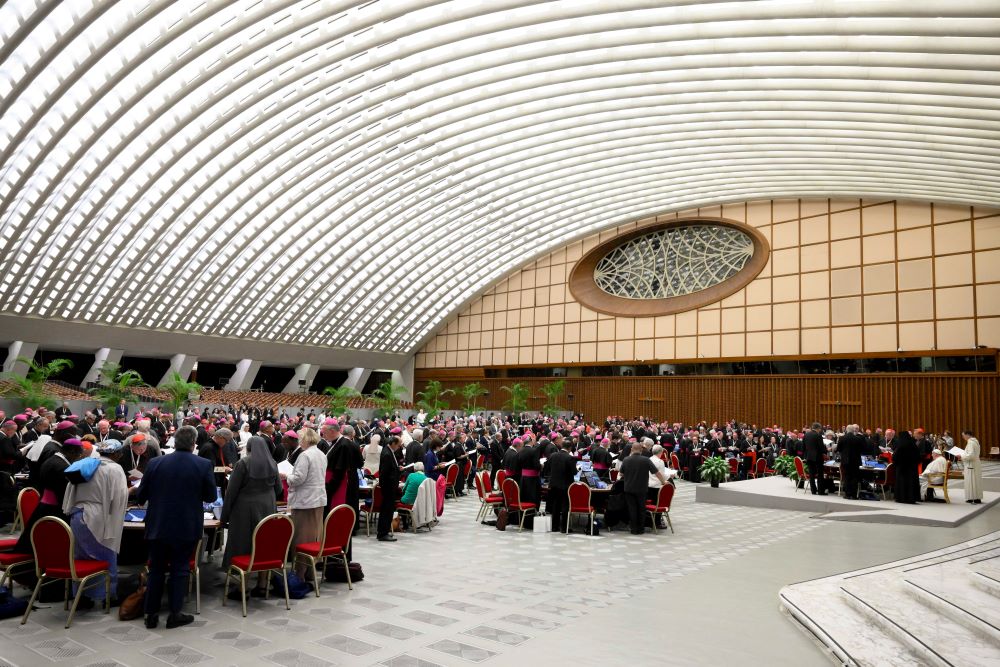
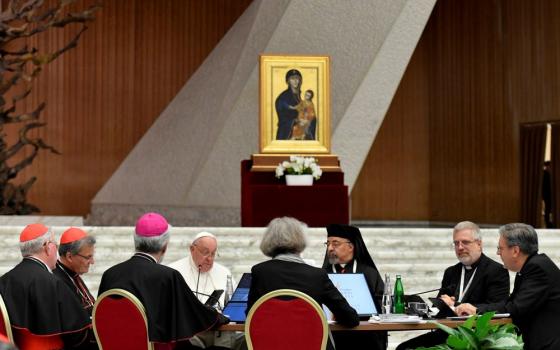
Pope Francis and members of the Synod of Bishops on synodality offer a prayer of thanks to God after the synod's final working session Oct. 26, 2024, in the Paul VI Audience Hall at the Vatican. (CNS/Vatican Media)
Dolan described the statement on the protection of immigrants that the U.S. Bishops' Conference issued in November as an example of synodality.
"We weren't voting. We were discussing, we were trying to anticipate how we might be able to frame a response," he said.
Dolan acknowledged that such efforts remain limited and partial, shaped by the diversity of the church across regions.
"The Rust Belt and the Bible Belt and the Southwestern churches, we tend to be slightly different in the way in which we approach the Gospel and politics," he said.
Dolan described synodality as a gradual shift in how church decisions are approached, with ongoing dialogue replacing unilateral statements as the primary mode of engaging with Catholics.
For Bui, the question of polarization and synodality is ultimately theological. He said the role of the Holy Spirit must ultimately be the unifying principle. "It is the Holy Spirit who has guided us to the Council of Jerusalem, the Council of Nicaea, the Second Vatican Council through the ups and downs of history," he said. "And it has guided us well."
Advertisement