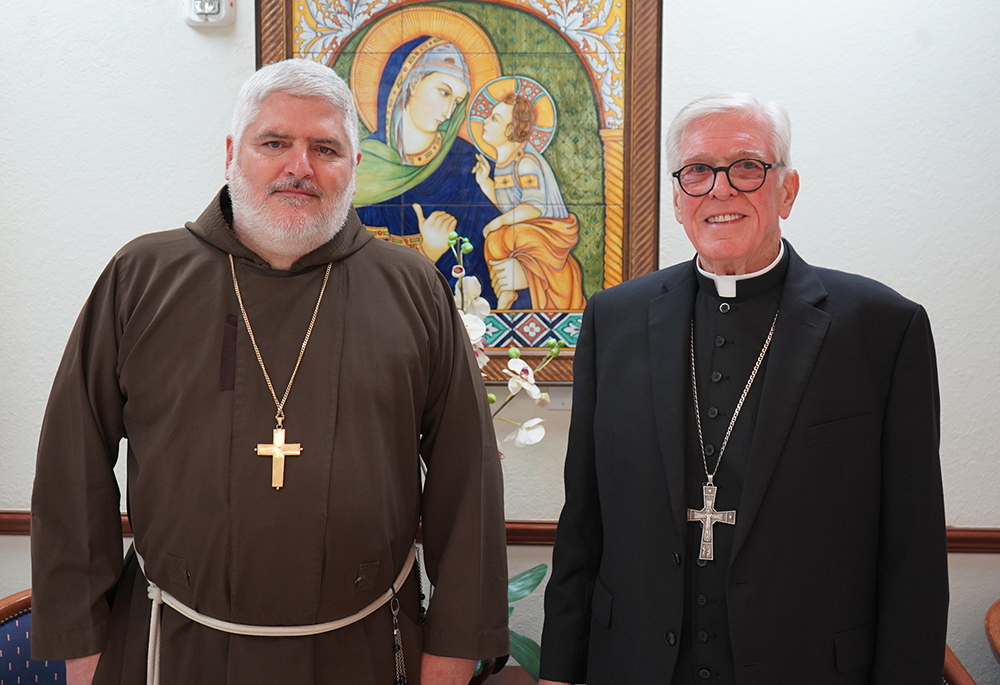
Fr. Emilio Biosca Agüero, a Capuchin Franciscan missionary who served in Cuba and Papua New Guinea, and Bishop Frank J. Dewane of Venice, Florida, pose for a photo in Venice May 13, 2026, after it was announced that Pope Leo XIV has accepted the resignation of Dewane, 76, who had led the southwest Florida diocese since 2006, and appointed Biosca as the new bishop of Venice. (OSV News/Courtesy of Diocese of Venice)

Join the Conversation
Send your thoughts to Letters to the Editor. Learn more
Pope Leo XIV named the Capuchin pastor of a predominantly immigrant parish in Washington, D.C., that has faced recent federal immigration crackdowns, as the next bishop of Venice, Florida, sending another Catholic leader vocal in the defense of migrants to President Donald Trump's adopted home state.
Capuchin Fr. Emilio Biosca Agüero has been selected as Venice's third bishop, a diplomatic representative of the Holy See announced May 13. He will replace Bishop Frank Dewane who has led the diocese of nearly 240,000 Catholics along Florida's Gulf Coast for two decades.
Biosca's installation Mass will take place July 11 at Epiphany Cathedral in Venice.
One of seven children of Cuban immigrant parents, Biosca, 61, has served since 2019 as pastor of the Shrine of the Sacred Heart, a century-old parish in a Latino community two miles north of the White House. The parish community is more than 90% immigrants, primarily from El Salvador and Central America, with others from Brazil and Vietnam.
Sacred Heart has been the subject of turmoil from the Trump administration's immigration crackdown. Last fall, the Associated Press reported more than 40 of its parishioners had been detained or deported since August. The crackdown led some Catholics to stop attending Mass in person or leaving their homes.
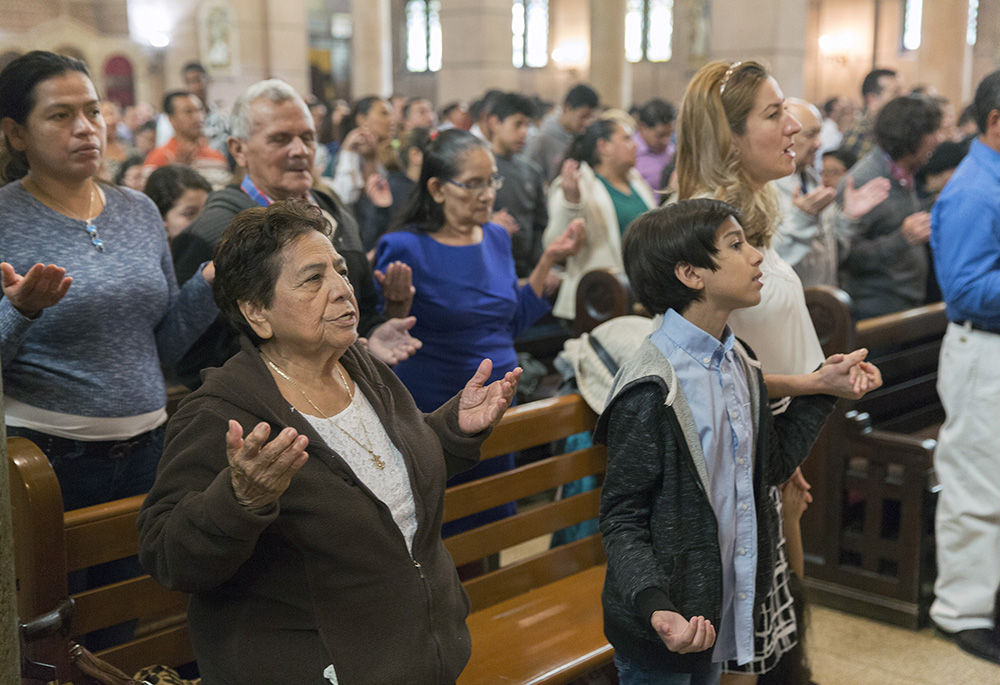
Worshippers recite the Lord's Prayer during an Oct. 14, 2018, Mass at the Shrine of the Sacred Heart in Washington, celebrating the canonization of St. Oscar Romero. Around 800 people, mostly immigrants, attended the Mass and a parish celebration afterward. (CNS/Catholic Standard/Jaclyn Lippelmann)
"About half the people are afraid to come," Biosca told the AP at the time, adding later enforcement targeting his parish "became very unbearable."
During his introductory press conference in Venice, the Capuchin friar said "the situation at Sacred Heart of Washington is a big concern right now."
In a statement, Washington Cardinal Robert McElroy called Biosca "one of the finest pastors in the Archdiocese of Washington" who has made the Sacred Heart parish "a true haven of compassion."
"A skilled administrative leader and a defender of his flock, he has been unswerving in reaching out to the poor and the marginalized, and the undocumented. He is also a bridgebuilder who reaches across the boundaries of polarization to forge real solidarity in the family of God," McElroy said.
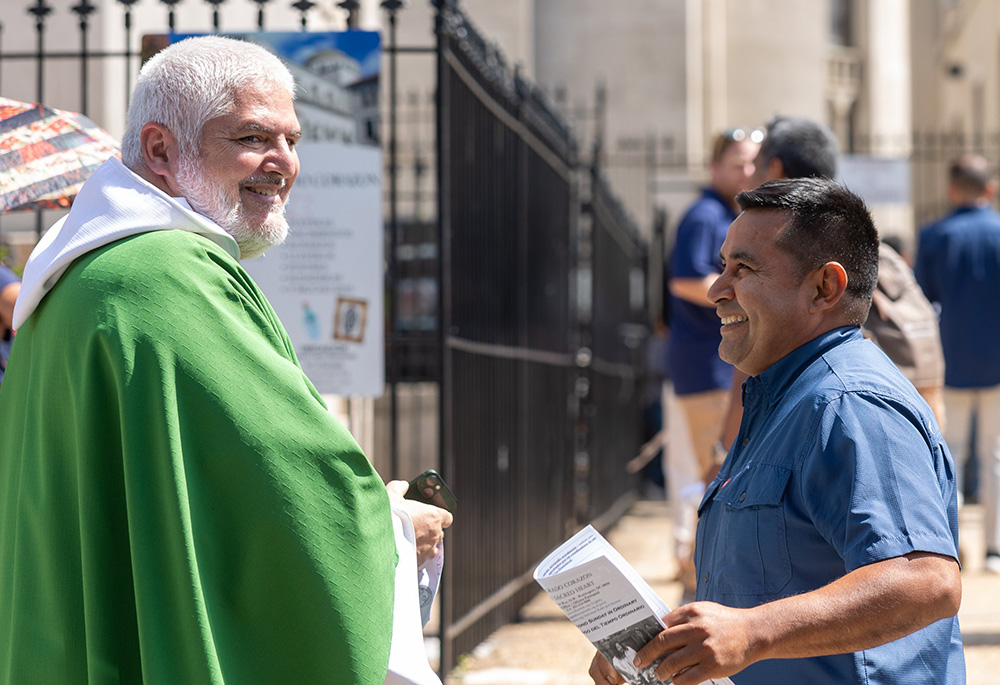
Fr. Emilio Biosca Agüero, then pastor of the Shrine of the Sacred Heart in Washington, smiles after celebrating Mass Sept. 1, 2025. It was announced May 13, 2026, that Pope Leo XIV has accepted the resignation of Bishop Frank J. Dewane of Venice, Florida, and named Biosca, 61, a Capuchin Franciscan missionary who served in Cuba and Papua New Guinea, as his successor. (OSV News/Catholic Standard/Mihoko Owada)
Biosca's arrival in Florida will come just a few months after Leo picked Manuel de Jesús Rodríguez as bishop of the Diocese of Palm Beach, an area which includes Trump's Mar-a-Lago club. Rodríguez, a priest of the Diocese of Brooklyn who was born in the Dominican Republic, has taken stands against the White House several times already, including when he rebuked Trump last month, posting on X a statement condemning the president's "disrespectful and violent" attacks on Leo last month.
Biosca, whose new diocese is about three hours west of Palm Beach, is the second cleric from the Washington Archdiocese who has spoken out against Trump's immigration crackdown to be selected as head of a diocese this month. On May 1, the pope named Auxiliary Bishop Evelio Menjivar-Ayala, an immigrant who entered the U.S. illegally, as bishop of the Diocese of Wheeling-Charleston, West Virginia.
Born in Virginia, Biosca was ordained in 1994 as a priest of the Capuchin Franciscan Friars province of St. Augustine in Pittsburgh. Like the pope, he has spent a large portion of his ministry as a missionary, beginning with a dozen years (1994-2006) in the Pacific island nation of Papua New Guinea, where he learned the Tok Pisin language while serving in multiple assignments. In 2007, his missionary work took him to Cuba, where he lived until coming to Washington.
At the press conference, where he spoke both English and Spanish, Biosca said that during his missionary experiences fellow Capuchins taught him to listen, learn and observe when first coming to a new place, an approach he intends to bring to Florida as well.
"I tried to find out the history of the place, as in Papua New Guinea, also the religious background, mentality of the people … the education, all the bits and pieces, the history, the culture that form the ground which you're going to be walking on and trying to evangelize. So it takes some time," he said.
Advertisement
When asked how he might continue his outreach to Hispanic Catholics in Florida, including those scared amid heightened immigration operations, he responded: "Well, I've been in the diocese for about one day." He added he intends to visit with parishes, as well as Spanish-speaking parishioners.
Formed in 1984, the Venice Diocese includes 61 parishes and eight missions and spans 10 counties and more than 9,000 square miles. The region in southwestern Florida has seen "tremendous growth" in population as well as diversity in the past 20 years, Dewane said. The retiring bishop said finding priests who can speak multiple languages is a rising priority.
"What I'm seeing is the need for evangelization," Biosca said, "… to proclaim the Gospel in a way that's joyful, a way that's positive, in a way that's well instructed so that the Gospel can take root again in this place, in this part of Florida."