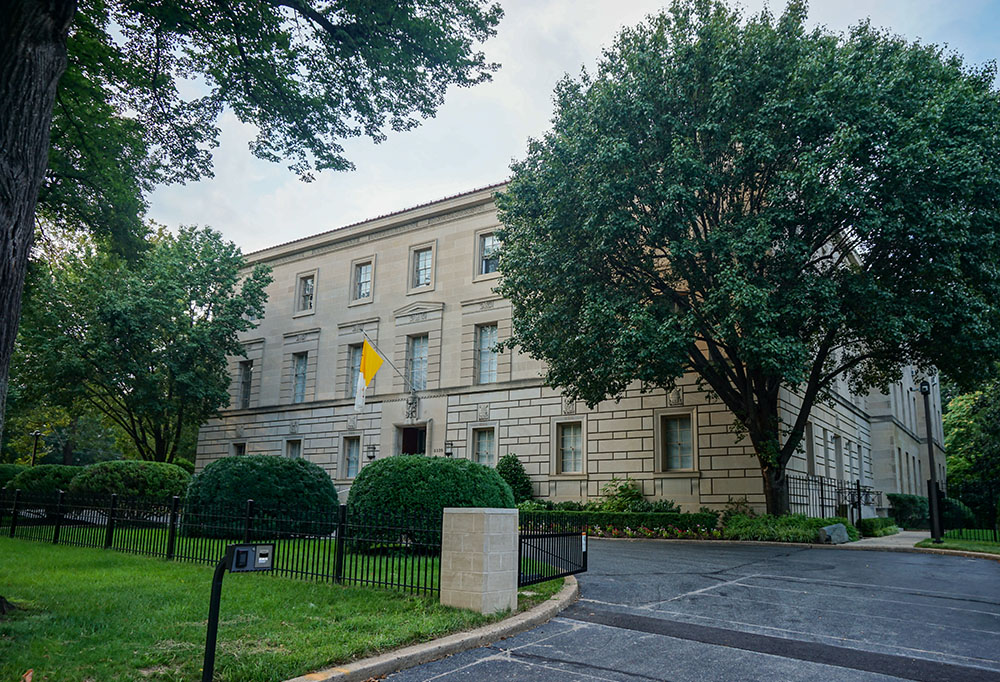
The Holy See's Apostolic Nunciature to the United States in Washington, D.C., is seen in a 2018 photo. (Wikimedia Commons/Michael Barera)

Join the Conversation
Send your thoughts to Letters to the Editor. Learn more
An apostolic nuncio is the diplomatic representative of the Holy See to a sovereign state or international organisation. Appointed directly by the pope, he serves as the Holy See's permanent envoy abroad and heads the apostolic nunciature, which is the ecclesiastical equivalent of a foreign embassy. In modern practice, a nuncio is usually an archbishop.
In the United States, Cardinal Christophe Pierre served as nuncio from 2016 until his retirement, at age 80, in March 2026. Like many nuncios, Pierre tended to keep a relatively low profile in his diplomatic work, with a notable exception coming this month, when reports Pentagon officials lectured him during a January meeting because of Pope Leo XIV's anti-war comments. (The Department of Defense confirmed a meeting had taken place at the Pentagon but said discussion was "respectful and reasonable.")
Former nuncio Archbishop Carlo Maria Viganò, who served from 2011 to 2016, is perhaps the most controversial recent U.S. nuncio, having caused a stir during Pope Francis' 2015 trip to the United States by arranging a meeting with anti-same-sex-marriage activist Kim Davis. Viganò's retirement was accepted the following year, and he then spent years criticizing Pope Francis and praising Donald Trump.
In March, Pope Leo XIV announced that Italian Archbishop Gabriele Giordano Caccia will serve as the nuncio to the United States, after having served as permanent observer of the Holy See to the United Nations in New York from 2019.
Advertisement
The term "nuncio" derives from the Latin nuntius, meaning messenger or envoy. Its continued use underscores the unique nature of papal diplomacy: The Holy See's envoys are both representatives of a state and church members with religious and juridical authority with global reach.
In essence, the apostolic nuncio stands at the intersection of church governance and international diplomacy. He is at once papal envoy, ambassador, political intermediary and ecclesiastical ruler — an office shaped as much by canon law as by diplomatic custom.
Though often described as the Vatican's ambassador, the nuncio formally represents the Holy See rather than Vatican City State. This distinction matters. The Holy See, as the juridical body of the Catholic Church's central government, conducts diplomatic relations independently of the territorial state created in 1929. The current secretary of state in charge of this work is Cardinal Pietro Parolin.
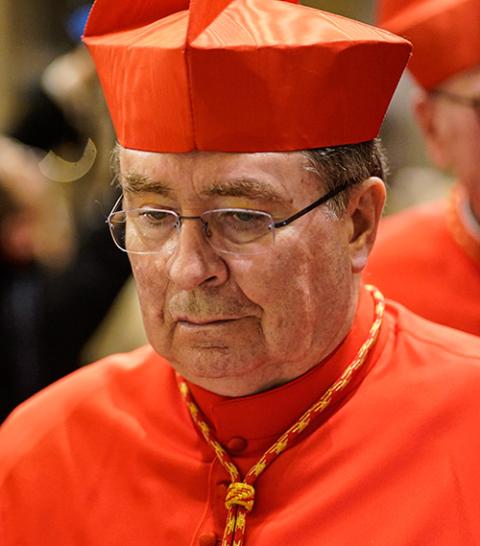
Cardinal Christophe Pierre, then nuncio to the United States, at St. Patrick's Cathedral in New York City Feb. 5, 2026 (OSV News/Gregory A. Shemitz)
A nuncio's job has diplomatic functions as well as responsibilities within the church.
Within the church, the nuncio's principal task is to strengthen ties between the Vatican and the local national bishops' conferences of the nation in which he serves. Canon 364 of the Code of Canon Law assigns him responsibility for reporting to Rome on the condition of the church in the country to which he is posted, assisting bishops in their work, and maintaining relations with the national bishops' conference.
Perhaps most crucially in terms of helping to implement the pope's agenda for the church, the nuncio also plays a central role in the appointment of bishops, gathering information on candidates and transmitting recommendations to the Holy See.
The nuncio may also assist in fostering relations between the Catholic Church and other Christian communities, non-Christian religions, and civil authorities where matters affecting the church arise.
When the nuncio is accredited to a state, his diplomatic duties broaden.
Canon 365 charges him with maintaining relations between the Holy See and civil authorities, managing questions involving church-state relations, and participating in the drafting or implementation of agreements. In such matters, he is expected to consult local bishops while keeping them informed of developments.