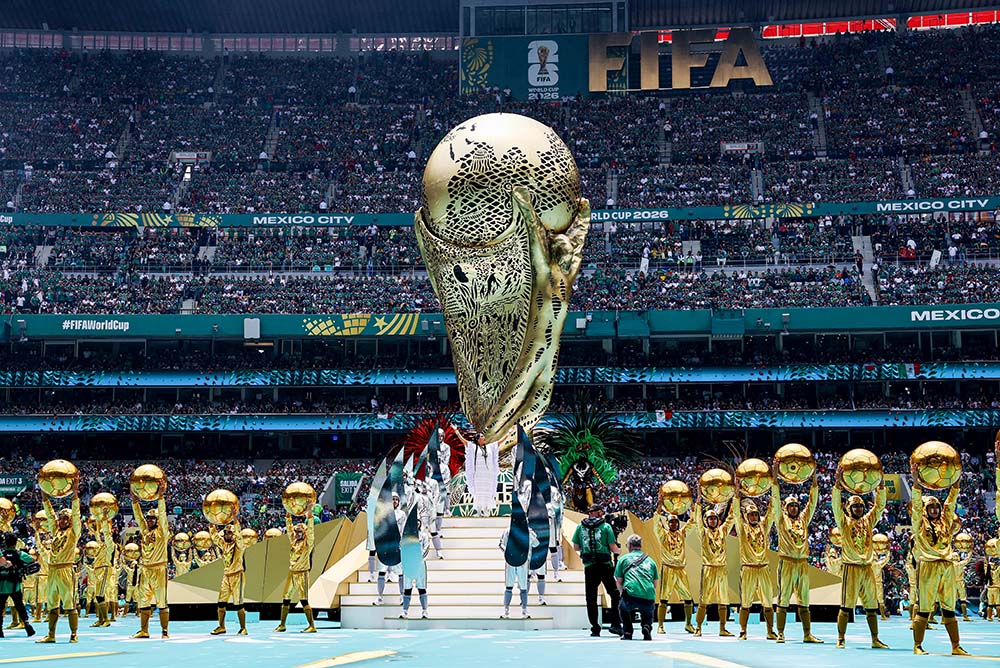
Performers are seen at Estadio Azteca, renamed Mexico City Stadium for the FIFA World Cup, during the opening ceremony June 11, 2026, before the match between Mexico and South Africa. (OSV News/Reuters/Kai Pfaffenbach)

by Rhina Guidos
Join the Conversation
Send your thoughts to Letters to the Editor. Learn more
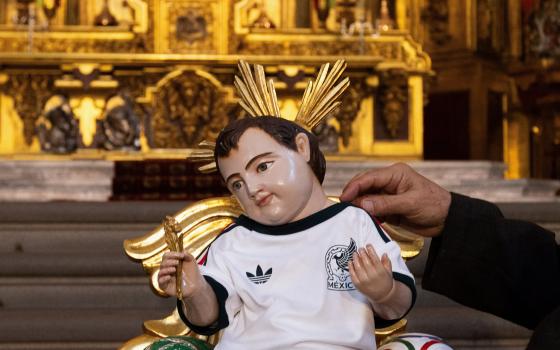
Such is Mexico's zeal for soccer during the World Cup that it marks the season by having the baby Jesus statue at the capital city's Metropolitan Cathedral don a tiny version of the national team's jersey. You can't go outdoors or indoors for long without hearing televisions blaring the latest match. And forget about going for a walk without bumping into a dog dressed in the Mexican team's green, white and red uniform.
Families of Mexico's more than 130,000 disappeared want the country to have that same obsession for those who are missing. Some families have found that support in the company of Catholic nuns, who have provided them with food, lodging, hugs, a listening ear, information about how to file a missing persons report, and accompaniment as they attempt to divert attention from FIFA's World Cup 2026 to the plight of the missing.
Months before the tournament, authorities reported that hundreds of bags with human remains were found within a 10-mile radius of Akron Stadium, Guadalajara's World Cup venue.
Comboni sisters, Franciscans, Carmelites, and Apostolics of the Sacred Heart are a few of the congregations spending time with families searching in common graves near one of the World Cup venues this summer, posting soccer-inspired photos featuring their missing loved ones wearing Mexico's team jersey, and pressuring the government to do more to find the disappeared.
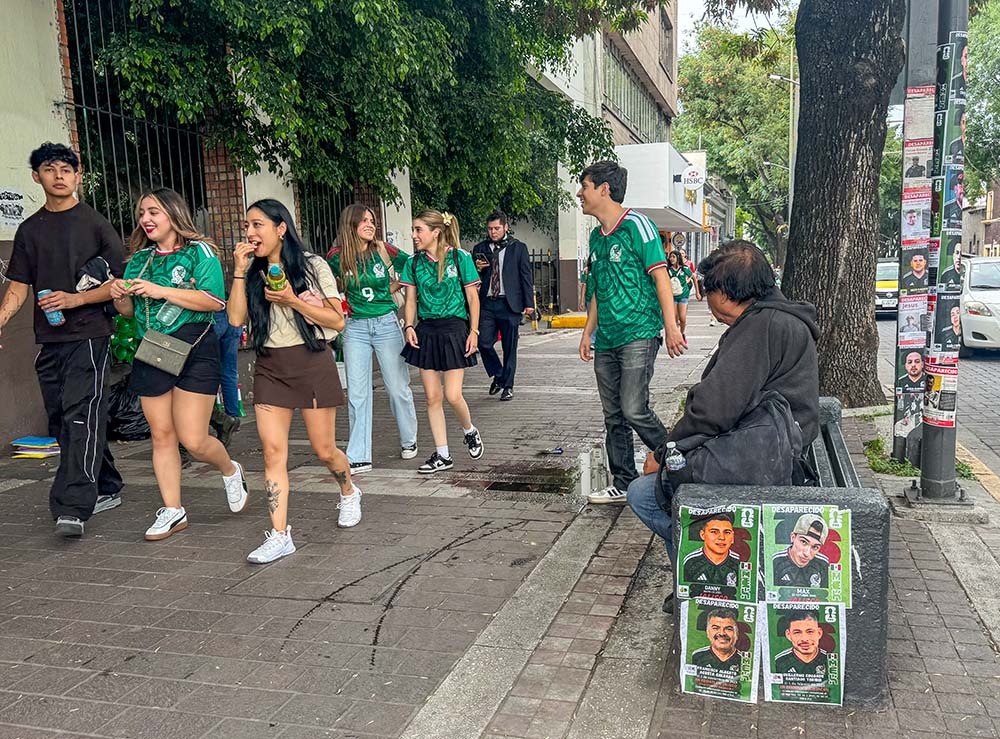
Soccer fans walk by a bench with photos of missing men July 4, 2026, in Guadalajara, Mexico. Families photoshopped the uniform of the Mexican soccer team on their loved ones to call attention to the missing. (GSR photo/Rhina Guidos)
Mexico — which has hosted the global tournament twice before — has prominently featured on metro cars and buses the slogan, "The ball has come home."
But families of the missing have a different slogan.
"When will our loved ones come home?" said Sr. María Dolores Ramírez Ramírez, of the Carmelites of the Sacred Heart, whose ministry serves families of the disappeared in Guadalajara, Mexico's second-largest city. Guadalajara, in the state of Jalisco, is considered the epicenter of the crisis. More than 16,000 of all disappearances have taken place in the state.
Some say cartels and organized crime syndicates are to blame. Some of the disappeared include migrants and young people who have been recruited but killed when they refused to join the criminal groups. Others are believed to be victims of human trafficking. The definition is broad, Sr. Clara Malo Castrillón, provincial of Mexico's Society of the Sacred Heart, told Global Sisters Report in October.
But a common factor is that many are poor, which makes it easier to dismiss the circumstances of their disappearance, Malo said.
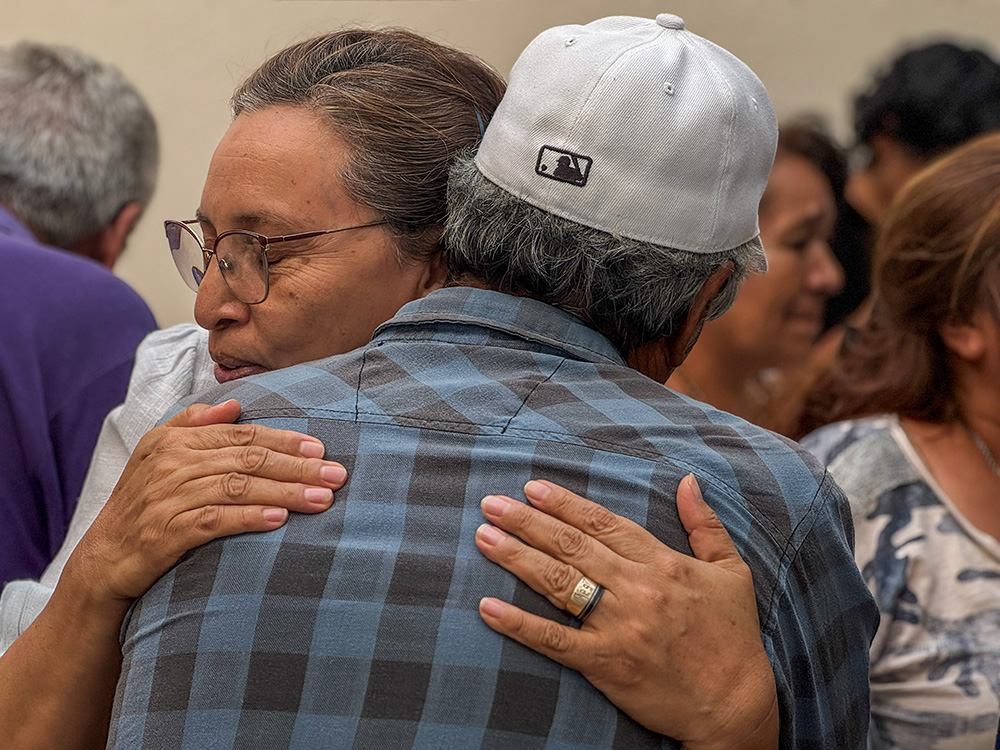
Sr. María Dolores Ramírez Ramírez, of the Carmelites of the Sacred Heart, hugs a father whose child is missing June 26, 2026, in Guadalajara, Mexico. (Courtesy of Casa Luisita)
"Some people say, 'I wonder what her son was involved in?' ", insinuating that the disappeared person must have been involved in illicit activities or nothing bad would have happened, said Sr. Maria Refugio Chávez Valle, a member of the Apostolics of the Heart of Jesus.
Like Ramírez, her ministry involves helping the women known as madres buscadoras, mothers who search, in Guadalajara. During the World Cup matches in the city, sisters have accompanied buscadoras to Masses offered for the missing and spent time with the women after they returned from peaceful demonstrations outside soccer venues where World Cup matches have taken place.
Chávez said she has seen their fatigue after spending hours posting flyers on city poles, hoping that amid the sea of international tourists and soccer fans, someone might recognize a face, offer a clue, or at the very least, look past the celebration of the World Cup and call on someone to do something about their pain.
"The world sees us celebrating, +134,000 Mexican families are still searching for their loved ones. And you? What are you doing to find them?" asked a banner placed July 8 at the base of the Angel of Independence, an iconic monument in the heart of Mexico City.
Advertisement
It's not that families of the disappeared want others to feel miserable, said Rosa Rivera, a mother of two missing sons in Guadalajara. But when that many people have vanished, it's wrong to close your eyes to it, and it's hard to be OK when a loved one is gone, she told GSR.
"It's hard to tell others you're in mourning when everyone wants to celebrate" the World Cup, she said.
But she has found comfort among the sisters and the group of buscadoras in Guadalajara, who know what a mother's pain for a missing child is like.
Recognizing what the families of the disappeared are feeling, the country's bishops published a statement June 25 as Mexico went wild when its team advanced to the tournament's final 16 and the voices of the families of the missing became muffled in the euphoria.
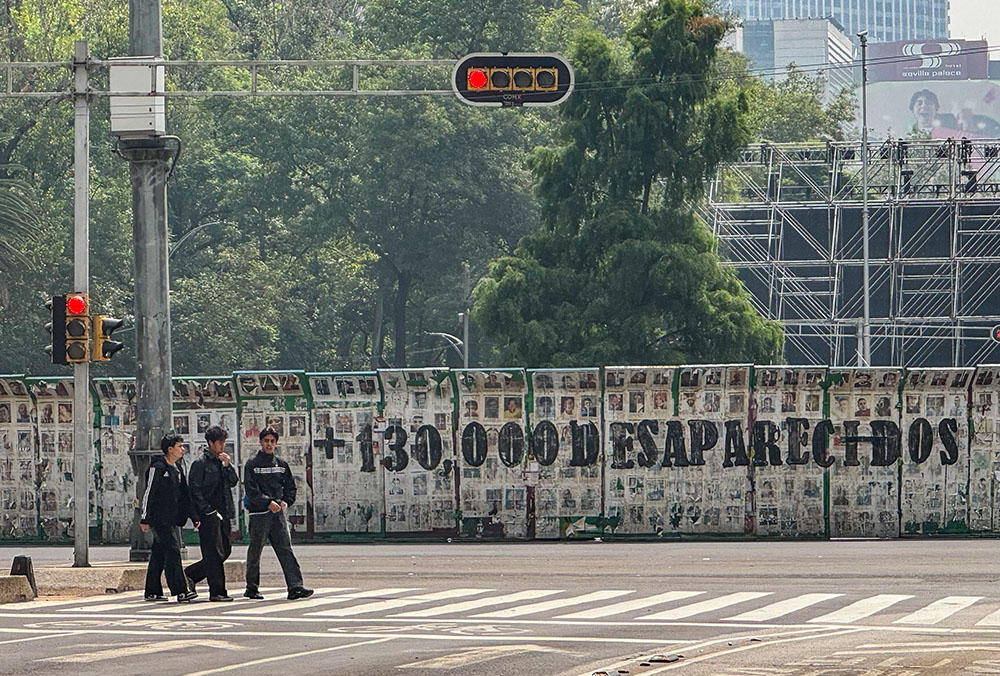
A group crosses Paseo de la Reforma in Mexico City July 6, 2026, near hundreds of photos of missing women, men and children, calling attention to the country's more than 130,000 disappeared. (GSR photo/Rhina Guidos)
"As Mexicans, we share the joys and hopes, as well as the sorrows and anxieties, of our people," the bishops wrote. "We are well aware of the efforts made by the madres buscadoras to bring to light — during the World Cup events — a wound that bleeds within our people: their missing children."
As the event wraps up July 19, supporters of the families, including sisters, say they want Mexico to be a global champion but not just in the world of soccer. Some are calling for a wider effort from the citizenry as well as the government in prioritizing the search for those who have vanished.
"Families of the disappeared say it's easy to organize something like the World Cup," Ramírez said. "But the real victory will be to have [their children] come home."