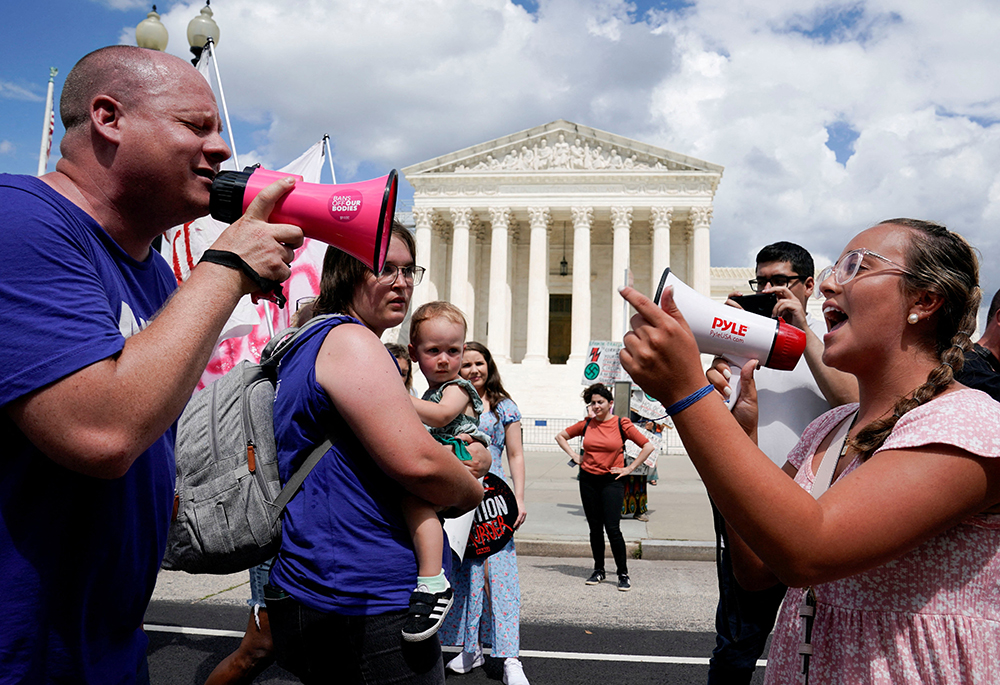
An anti-abortion activist and a supporter of legal abortion square off with megaphones in front of the U.S. Supreme Court in Washington June 24, 2023, the first anniversary the court's 2022 ruling in Dobbs v. Jackson Women's Health Organization. (OSV News/Reuters/Evelyn Hockstein)

Join the Conversation
Send your thoughts to Letters to the Editor. Learn more
If pressed for our views on abortion, most of us would struggle to be succinct. There are political edges to navigate, of course, but legal, medical, social and moral considerations as well. Rarely do our opinions lend themselves to single sentence answers, much less a simple checking of one of two boxes on a survey. For sociologists, this complexity presents a unique challenge.
"There are inherent limitations to survey research," Knoxville-based sociologist Tricia Bruce told the National Catholic Reporter. "You're forcing people to choose from among set categories that often don't capture the array of what people feel. You also don't really know what people mean."
Bruce decided to respond to this challenge by conducting interviews instead. Between the years 2019 and 2024 — before and after the Dobbs v. Jackson Women's Health Organization Supreme Court decision that overturned Roe v. Wade — she and her team interviewed nearly 300 randomly selected individuals. What they found was that when it comes to abortion attitudes, everyday Americans do not fall neatly into pro-life or pro-choice binaries. Rather, we turn to storytelling.
"Most people do not have pat articulations of their views on abortion," Bruce explained. "Most people are not advocates or activists or policy wonks or any of that. But what they do have is stories. They have stories about their own pregnancy or stories about their neighbor or stories about the abortion experience they had."
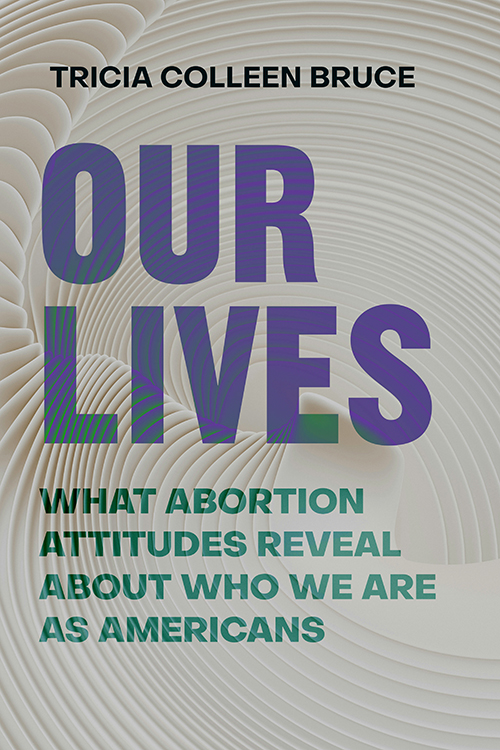
The results of Bruce's five years of research and analysis is now available in her newly released book, Our Lives: What Abortion Attitudes Reveal About Who We Are as Americans. In its pages, she uses the term "abortion imaginary" to reference the story we tell ourselves as a society about this complicated and emotionally charged subject.
The phrase is not strictly academic; it effectively captures the reality that when it comes to abortion, not everything we think we know is true. When left with gaps in our own experience or education, we fill in those gaps with our imagination: from the way we imagine someone who gets an abortion, to the way we imagine the procedure itself or what goes into an abortion decision.
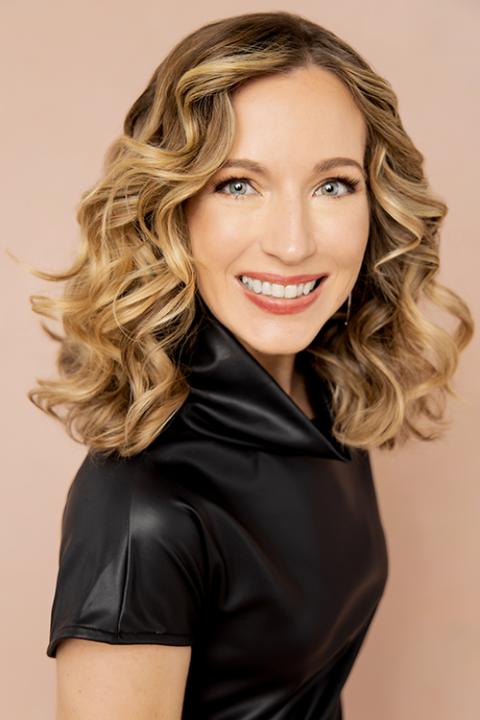
Tricia Bruce, in an undated photo (OSV News/Saray Taylor-Roman, Courtesy of Tricia Bruce)
"We don't talk about this a lot as a culture, or even in conversation with each other," Bruce points out, adding that we need more spaces where we can "grapple with and talk about the moral dimensions of our individual and collective and social lives. That helps us to then translate that into things like voting and citizenship and the way we treat our neighbors. … We don't have a moral space to grapple with this, but we're forced to figure out the legal part."
Because Bruce is a Catholic, and a fairly high profile one at that (Pope Francis appointed her as a consultant to the Vatican's General Secretariat of the Synod in 2024), there is sometimes an assumption that she is approaching her research with an agenda. She told NCR that a number of participants first sought assurance that the interview would be an unbiased space where they could be open and honest. Afterward, she said, a lot of the interviewees said thank you.
"People were deeply moved by the chance to sit down and be asked questions. … It created a space where someone could feel they could talk through [the topic of abortion] without being told what to think or say."
One notable theme that emerged throughout the interviews was the question of goodness. What makes a good person? A good society? What makes good parenting? A good childhood? In this way, the book becomes about much more than abortion.
Advertisement
"It's how we think about all these bigger questions that connect us to each other that are deeply social. Even these types of circumstances that might be understood or narrated as deeply individual are connected to all these other pieces," Bruce said.
So where do we go from here?
In this political hour, as Democratic and Republican parties both navigate internal tensions between different wings of their own parties, Bruce suggested it's a good time to revisit the language around the topic.
"I would love to not use the labels 'pro-life' and 'pro-choice,' " she said. "We assume that everyone means the same thing by them, and that they capture this neat and clean separation of views. Our research found that to be wholly untrue."
As the Dobbs decision pushes abortion legislation to more localized levels, Bruce sees opportunity for better conversations to emerge. "On a state by state basis, or even more local than that, it has to actually be figured out. And figuring it out is really hard. But that's what communities do."