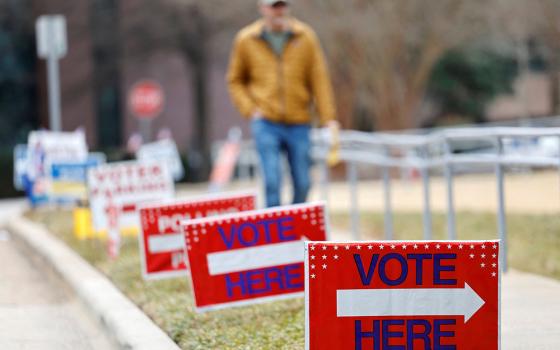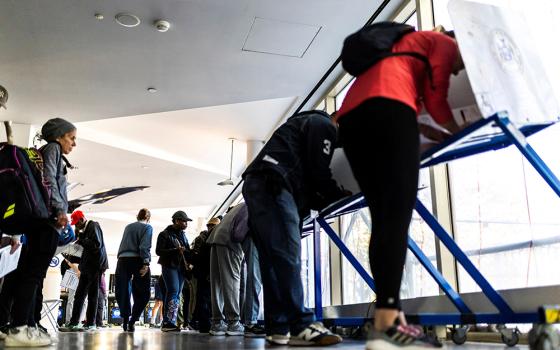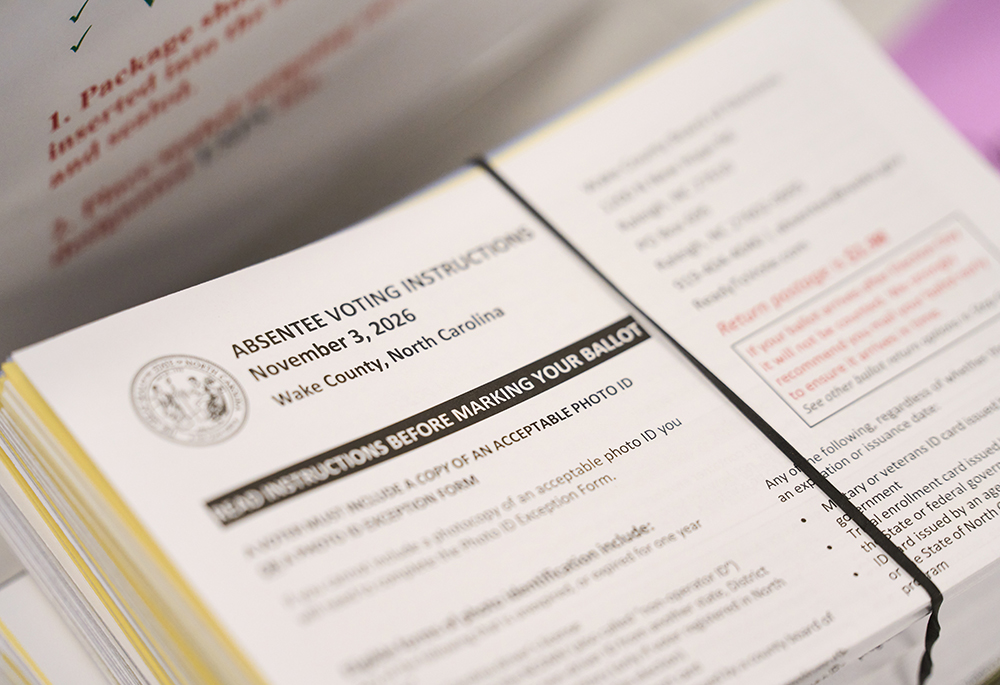
Absentee voting instructions for mail-in ballots are seen at the Wake County Board of Elections on Thursday, Sept. 3, 2026, in Raleigh, North Carolina. (AP photo/Matt Ramey)

Join the Conversation
Send your thoughts to Letters to the Editor. Learn more
The U.S. Supreme Court again handed President Donald Trump a major defeat this week, blocking a plan to involve the U.S. Postal Service in screening mail-in ballots. The vote was 7-2 and the court did not offer an opinion justifying its position, although the two dissenters, Justices Samuel Alito and Clarence Thomas, issued an eight-page statement explaining why they opposed the decision.
Because the majority did not give detailed reasons, we don't know precisely why they decided as they did. But one of the underreported briefs in the case came from the American Postal Workers Union. The Trump-appointed leadership of the Postal Service argued that his scheme would be easy to implement. The workers knew better and explained to the court how the president's proposals were completely unworkable.
As I have noted before, the court always sides with Trump when the issue is whether or not the president has control over the entire executive branch, the so-called "unitary executive" theory, but on other major cases, from tariffs to birthright citizenship and, now, voting procedures, the court has ruled against the president.
Unsurprisingly, the president was furious, especially because the three justices he appointed to the high court — Justices Neil Gorsuch, Brett Kavanaugh and Amy Coney Barrett — all joined the majority. "These are not the people I interviewed to serve on the United States Supreme Court," he posted on social media. "They are merely a shell of their original selves, a Court that is costing the United States Trillions of Dollars with shockingly bad rulings that are of such magnitude that it won't be easily possible for our Country to recover or heal." Physician, heal thyself!
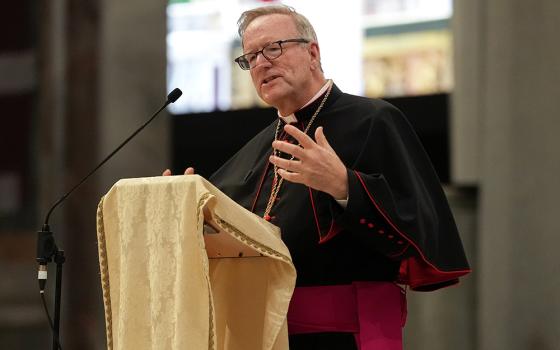
Before the decision was announced, Archbishop Thomas Wenski of Miami said at a press briefing that participating in elections is a key part of faithful citizenship. He, and the other panelists, noted that free and fair elections are essential to democracy, and worried that some naturalized U.S. citizens might be intimidated from voting if the Trump administration dispatches ICE agents to polling places.
"Every eligible voter should feel safe to vote, and every vote should get counted, regardless of who or what people vote for," said Joseph Tomás McKellar, executive director of Catholics in Communion, at the event. "The question this morning isn't about the church turning more liberal or conservative. That's the wrong frame. It's about how the church is returning to its roots, who these Catholics are, and why being Catholic in America increasingly means building brick by brick a civilization of love."
Advertisement
The magisterium has never endorsed democracy as an end in itself, only as a means to other desirable ends. As Pope Leo XIV wrote in Magnifica Humanitas, citing St. John Paul II's encyclical Centesimus Annus:
Saint John Paul II reiterated Pius XII's message that the Church values democracy insofar as it guarantees the effective participation of citizens, enables them to elect and peacefully replace their leaders and prevents power from being monopolized by small elite groups motivated by particular or ideological interests.
The three principal justifications for democracy the three popes cited — participation, the peaceful replacement of leaders, and the prevention of power being monopolized by a small elite group — all were undermined by Trump's efforts to interfere with the election, and interference that also happens to be unconstitutional. The U.S. Constitution clearly vests the power to conduct elections with the states and the Congress, not the president:
"The Times, Places and Manner of holding Elections for Senators and Representatives, shall be prescribed in each State by the Legislature thereof; but the Congress may at any time by Law make or alter such Regulations, except as to the Places of chusing Senators" (Article I, Section 4).
The fact that Trump lost at the Supreme Court, and at the hands of his own appointees, does not mean he will throw up his hands and let the midterm elections proceed without interference. At a press briefing at the White House, Attorney General Todd Blanche said, "The Supreme Court's decision today or yesterday doesn't affect ongoing criminal investigations into illegal voting, no."
The president has said before that he wished he had ordered the National Guard to seize the voting machines in the 2020 election. Archbishop Timothy Broglio of the Archdiocese of the Military spoke up earlier this year to confirm that soldiers could disobey unlawful orders. Sending troops to polling places would surely constitute an unlawful order.
Will Trump try something so outrageous? We don't know. But we do know that the bishops of the United States should at least hold some informal discussions about how they will react if the president tries to subvert our democracy. The bishops — and other civic leaders — should have a plan for how to respond.