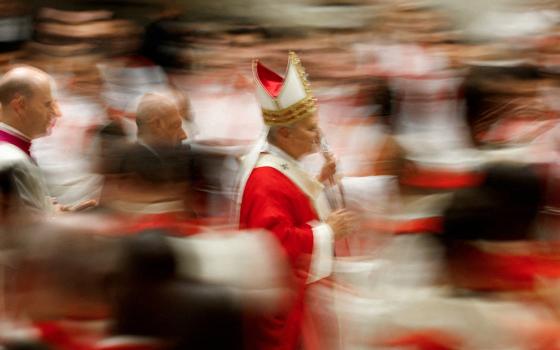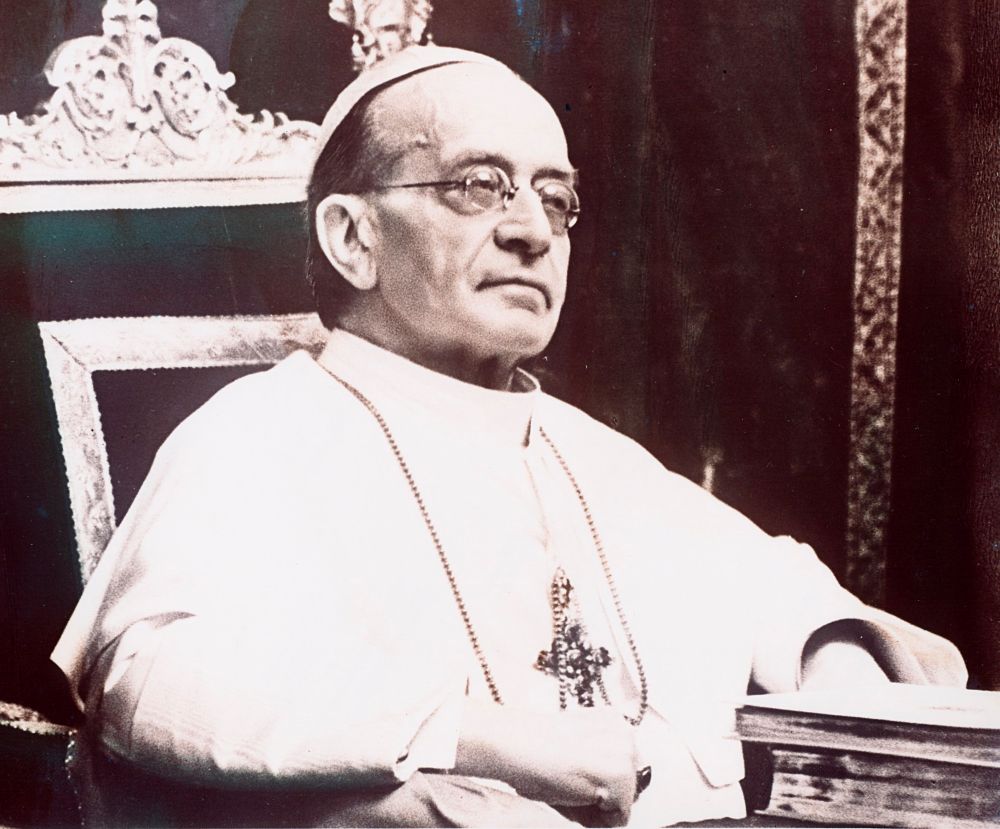
Pope Pius XI, who served as pope from 1922-1939, created World Mission Sunday in 1926. (CNS/L'Osservatore Romano)
by James H. Kroeger
Join the Conversation
Send your thoughts to Letters to the Editor. Learn more
For the past 100 years the church has been observing World Mission Day on the second to last Sunday of October. The purpose of the yearly WMD is to help all Catholics (laity, religious, ordained) appreciate the centrality of their mission vocation. Mission is not something the church "does," but rather what the church "is." Vatican II's Ad Gentes says it succinctly: "The pilgrim Church is missionary by her very nature." This message has been stressed annually by all popes, enhancing the WMD event with their messages, inspiration and insights. For WMD 2026, let's take a look at what the last nine popes have said and done to promote the church's missions.
Pope Pius XI (1922-1939)
It was this pope who established World Mission Day in 1926, responding to a request from the Society for the Propagation of the Faith. The very first worldwide celebration was held in 1927. The day is meant to unite Catholics across the globe in responding to their baptismal calling to spread the Gospel and support those communities where the church is young, materially poor, lacking vocations or even persecuted.
In his encyclical Rerum Ecclesiae (1926), which is widely considered the Magna Carta of modern Catholic mission, Pius XI urged bishops worldwide to foster local vocations and promote an Indigenous clergy and religious, rather than relying on foreign missionaries. This task would involve establishing local seminaries and houses of formation, all contributing to planting the church permanently within the local peoples and their cultures. A second encyclical by Pius XI, Rerum Orientalium (1928), focused on promoting missionary activity in the Eastern Catholic Rites.
Pope Pius XII (1939-1958)
This papacy occurred during the extremely difficult period of World War II. Probably the most problematic challenge was dealing with Hitler and his persecution of the Jewish people. Untold obstacles had to be addressed as the church sought to remain faithful to her mission. During his papacy Pius XII issued two mission encyclicals: Evangelii Praecones (1951) and Fidei Donum (1957).
Evangelii Praecones ("On Promotion of Catholic Missions") was issued on the 25th anniversary of Pius XI's Rerum Ecclesiae. Despite the interruptions of the Second World War, missionary endeavors achieved a great deal; these are mentioned in the encyclical, especially the growth of Indigenous clergy, religious and bishops. Fidei Donum brought a special emphasis on the church in Africa, especially since many countries there were becoming independent. The goal of mission was slowly but surely being achieved: the establishment firmly and permanently of the local church.
Pope John XXIII (1958-1963)
During his pontificate of less than five years, John XXIII issued eight encyclicals covering topics that included global peace, social justice, human dignity and church unity. He was known as "good Pope John" and is most remembered for convening the Second Vatican Council (1962-1965), which brought significant changes to the church and her mission.
The one specifically missionary encyclical from John XXIII bore the title Princeps Pastorum ("Prince of the Shepherds") (1959). Key emphases of this document centered on the promotion of a native local clergy, the need for self-reliance in local churches, respect for local cultures, and encouragement of laypeople to actively engage in the social mission of the church. Two other documents of John XXIII had deep missionary ramifications: Mater Et Magistra ("Christianity and Social Progress") (1961) spoke of addressing economic imbalances, poverty and the relationship between wealthy and developing nations; Pacem In Terris ("Peace on Earth") (1963) focused on human rights, world peace and international cooperation in the wake of the Cold War and the Cuban missile crisis.
Pope Paul VI (1963-1978)
Although Paul VI was not responsible for initiating the Second Vatican Council, he made a remarkable contribution by guiding three sessions and bringing the council to a successful conclusion. Several council documents contributed to a profound renewal of missionary activity, theology and approaches; they are Lumen Gentium, Gaudium Et Spes, Unitatis Redintegratio, Ad Gentes, Apostolicam Actuositatem and Nostra Aetate.
Undoubtedly, the greatest mission contribution of Paul VI was his 1975 apostolic exhortation, Evangelii Nuntiandi ("Evangelization in the Modern World"). This inspiring document renewed the church's missionary focus and cemented the principle that the church exists to evangelize. The document affirms "evangelizing all people constitutes the essential mission of the Church" and that evangelizing is "the grace and vocation proper to the Church." The document says: "For the Church, evangelizing means bringing the Good News into all strata of humanity."
Paul VI was the first pope to proclaim the World Mission Day Message on radio (Oct. 19, 1963, the Saturday before Mission Sunday). His WMD messages called for unity, peace and the evangelization of the modern world.
Pope John Paul I (1978)
Serving only for 33 days, John Paul I was the only pope in modern history who did not issue an annual World Mission Day message. He surprised everyone by choosing two names for his official title; his purpose was to indicate that he intended to continue the renewal fostered by Vatican II that was guided by Popes John XXIII and Paul VI. His affability, humility and contagious joy earned him the popular moniker, "the smiling pope."
Pope John Paul II (1978-2005)
Continuing the use of a double name, this pontiff served for over 26 years, making him the third longest-serving pope in church history. During his pontificate John Paul II issued over two dozen messages for World Mission Day. He consistently emphasized that evangelization is a fundamental duty for all Christians; he urged the faithful to support missionary efforts through a variety of initiatives, including prayer, personal engagement, respect for human dignity and youth involvement. Particularly in the 1990s, his messages spoke of a "new evangelization," designed to reawaken faith and involvement in traditionally Christian areas. His documents included 14 encyclicals, 15 apostolic exhortations, as well as numerous additional writings. His 1990 mission encyclical Redemptoris Missio ("On the Permanent Validity of the Church's Missionary Mandate") presents a comprehensive overview of contemporary evangelization; he starkly proclaims that "Mission is an issue of faith," for without faith no mission is possible!
Advertisement
Pope Benedict XVI (2005-2013)
In modern church history, Benedict is the first pope to resign; he died in 2022. During his pontificate he issued seven World Mission Day messages, striving to show the interconnected themes of Christian charity, Gospel proclamation, global ecclesial communion and involvement of the laity in mission. He did not write an encyclical specifically dedicated to the church's missionary activity. Also, in contrast to his predecessor, Benedict engaged in few international journeys.
Pope Francis (2013-2025)
Francis is a pope of many firsts, including the first to take the name Francis, first pope from the Americas and the first Jesuit pope. He issued 13 annual messages for World Mission Day from 2013-2025, exploring a variety of themes: having a missionary heart, witnessing to mercy, engaging young people, dynamic witnessing, having hearts on fire with feet on the move, being heralds of hope, and living in personal unity with Christ.
Undoubtedly, it was Francis' 2013 apostolic exhortation, Evangelii Gaudium ("The Joy of the Gospel") that marvelously elaborated his profound mission insights. He asserted that "missionary outreach is paradigmatic for all the Church's activity." He proclaimed: "Throughout the world, let us be 'permanently in a state of mission,' " and that the church must attempt "to put all things in a missionary key." All Christians, he wrote, must endeavor to become "missionary disciples." One could validly assert that Evangelii Gaudium is the contemporary handbook of missionary evangelization.
Pope Leo XIV (2025- )
Leo's first message for World Mission Day on Oct. 18, 2026, marks the 100th anniversary of this event; the theme of the message is: "One in Christ, United in Mission." Leo emphasizes that no baptized person is exempt from engagement in the church's mission; he highlights the need for reconciled communities and peaceful hearts to radiate Christ's message in a conflicted world. Leo also asserts that union with Christ lies at the heart of mission. Clearly, Leo's insights reflect his life experience as a missionary priest and bishop in Peru.
A missionary spirit also emerges from Leo's first encyclical, Magnifica Humanitas ("Magnificent Humanity"). It elaborates Catholic social teaching on topics such as the common good, solidarity, subsidiarity and social justice. The document notes the limits of artificial intelligence, because it lacks consciousness, empathy and moral judgment. Leo offers insightful missionary words to guide us: "The spirituality I wish to commend is that of the 'wise architect' who, driven by hope for the Kingdom of God, is committed to building the world for the common good."