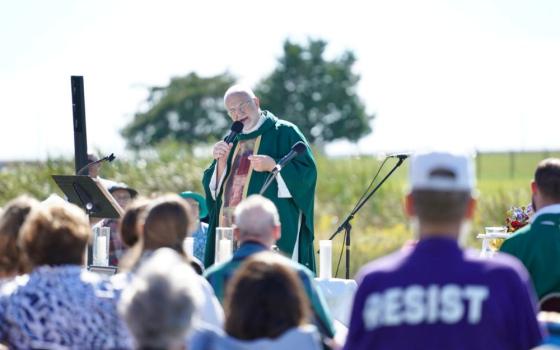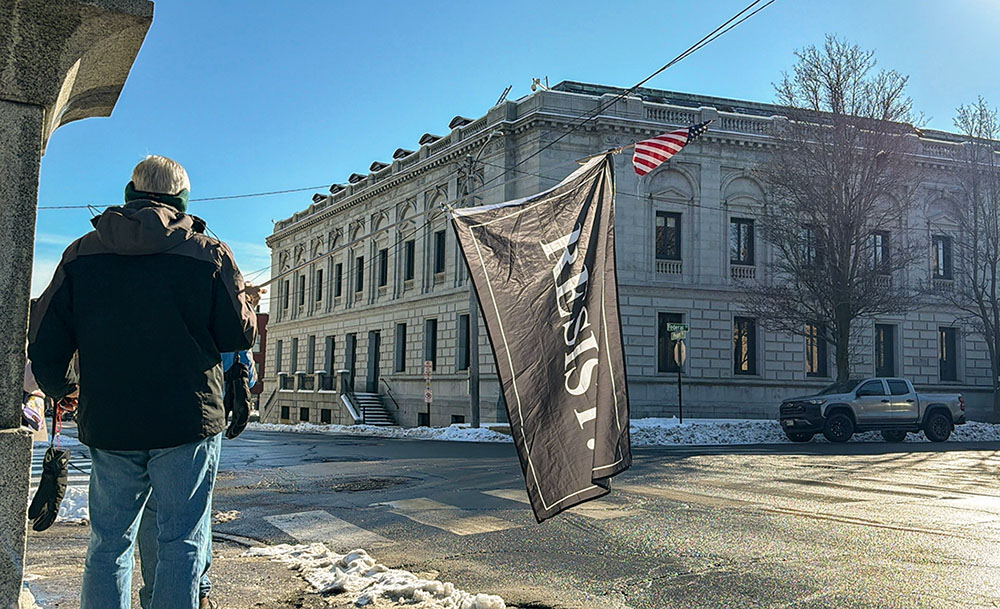
A protester holds a "Resist" flag in front of federal court in Portland, Maine, as Immigration and Customs Enforcement conduct operations in the state, Jan. 22, 2026. (AP/Rodrique Ngowi)
by Peter Daly
Join the Conversation
Send your thoughts to Letters to the Editor. Learn more
We are losing our civil liberties in Donald Trump's America. We are losing our democracy in Trump's America. We are losing our souls in Trump's America.
Trump is an existential threat to our democracy. But what can we do about it? What can I do about it? I have been giving this a lot of thought lately. The answers are obvious but not satisfying.
Our current crisis is not unlike the crises we faced in the late 1960s. Back then, there was deep division in the country. Construction workers attacked peace demonstrators. Police at the Democratic convention in Chicago in 1968 attacked demonstrators. There were frequent political assassinations, including the deaths of Martin Luther King Jr. and Bobby Kennedy. We were deeply divided over questions of race and war back then just as we are today. The civil rights movement and the Vietnam War presented stark questions of morality. Political polarization led to alienation and even despair.
People looked to religious leaders for direction. In those days, there was more trust in religious institutions. We had strong religious voices like King, the group Clergy and Laity Concerned About Vietnam, and others.
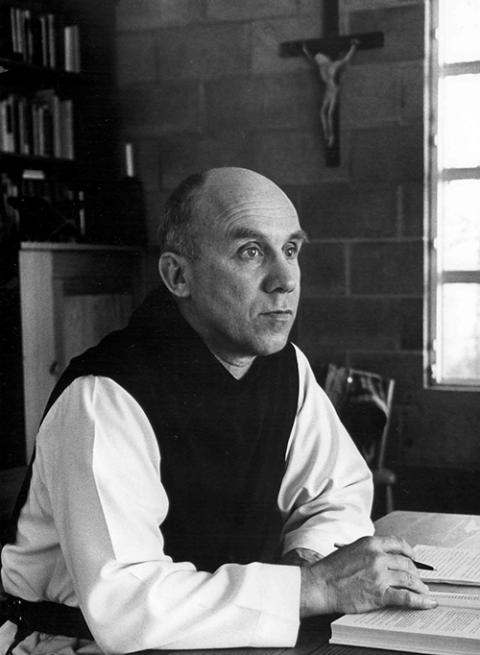
Trappist Fr. Thomas Merton in an undated photo (CNS/Merton Legacy Trust and the Thomas Merton Center at Bellarmine University)
One of those religious voices was the Trappist monk Thomas Merton. Not long before his death in 1968, Merton published a book of essays on the political and spiritual situation of his time titled Conjectures of a Guilty Bystander. He expressed the frustration that we feel today. The frustration of his inability, as a monk, to get directly involved in the great moral issues of his day. He was, after all, cloistered. What could he do in the cloister?
I know how he felt. I am 75 years old. I am a retired priest. I live on a pension in a priests' retirement home. My vision is impaired after a stroke. I no longer drive and have difficulty reading. I have no parish or pulpit. My energy is low. I walk very slowly. It takes me a long time to read or write anything. What can I do? Not much. But still, I can do something. Quite a lot.
I can write letters and emails to public officials, which I have done. I can donate to causes and candidates who will oppose this narcissistic madman in the White House. I can go to demonstrations like the "No Kings" rallies and marches. I can be a public witness in front of courthouses and public buildings, including the White House. I have the time and I have the money. I don't have the burdens of a parish or children.
Merton thought that before we could get involved publicly in social movements, we had to examine our motivations and purify our hearts. We had to be sure that we were not doing it for our own ego. We had to be sure that we were putting on the mind of Christ in what we were doing. A mind that could see good even in his enemies and faith in his opposition.
Merton also thought that we should use the voice that we were given. He had a fantastic platform. He was the best-known monk in the world and one of the best-known religious writers in the world. Merton had a substantial megaphone, even from the cloister.
There is much to be done. And much that I can do. Trump wants to drown out all other voices. We can't let him. We Christians need to point out that this imposter is not a Christian. He is anti-Christian.
Advertisement
Trump is arrogant. Jesus was humble.
Trump is a bully. Jesus was gentle.
Trump is obscenely rich and proud of it. Jesus was poor.
Trump is a liar. Jesus said that he came to bear witness to the truth.
Trump vilifies his enemies. Jesus saw good even in his enemies like the centurion.
The list goes on and on. The contrast between Trump and Jesus is stark. If we are serious about being the followers of Jesus, we cannot be the followers of Trump.
One more thing: forgiveness. Jesus told us to forgive 77 times seven times. Trump never forgives and never forgets.
We have a moral obligation, to the extent that we are able, to oppose Trump and the movement he leads. If we do not, we are in danger of losing something even greater than our democracy. We are in danger of losing our souls. And as Jesus asked, "What does it profit you to gain the whole world and suffer the loss of your soul?"
So where is the Catholic Church in the present moment?
There are some points of light. Our bishops spoke out mildly in favor of refugees and immigrants at their meeting in Baltimore last November. They have given stronger witnesses at the border with liturgies there.
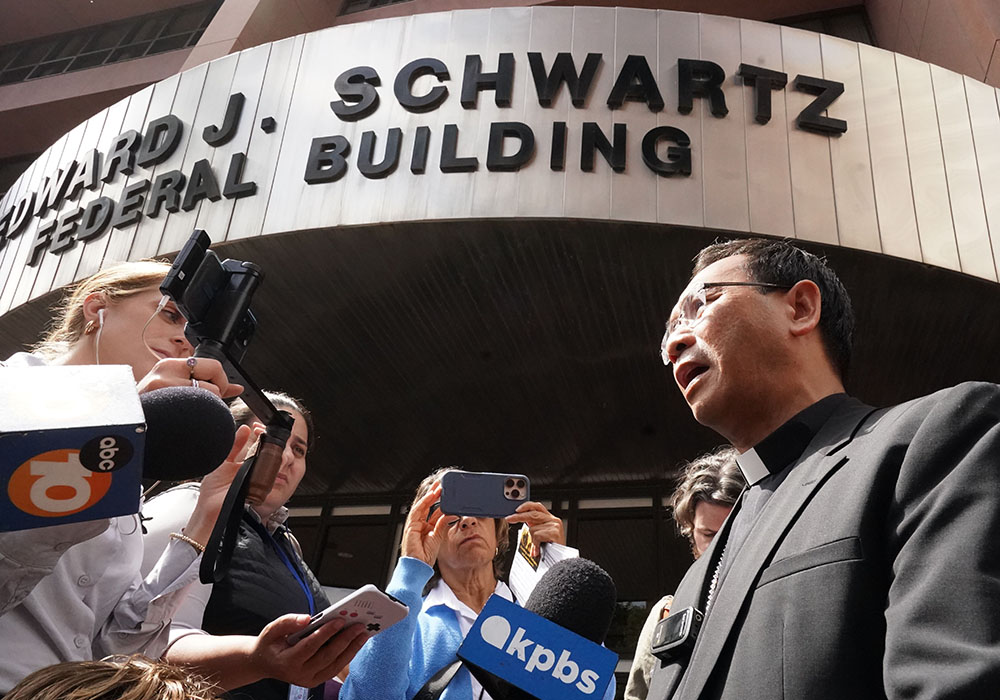
Bishop Michael Pham talks to reporters about his federal court visit to support immigrants at the Edward J. Schwartz Federal Building and U.S. Courthouse on World Refugee Day, June 20, 2025, in San Diego. (Chris Stone)
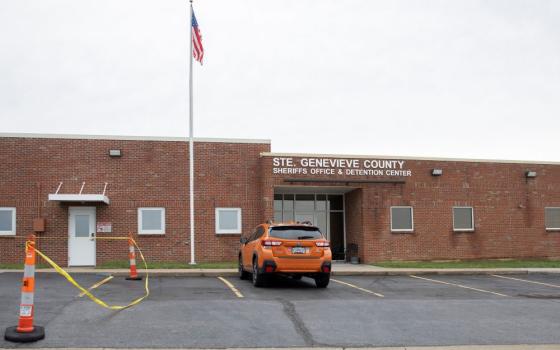
Bishops, including American cardinals, have lifted their voices in defense of immigrants and refugees in recent months. Bishops also have spoken out against the tactics of Immigration and Customs Enforcement, including the killings of Renee Good and Alex Pretti in Minneapolis.
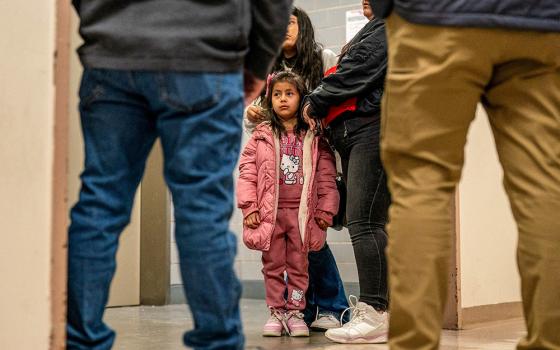
On the local level, many parishes have come to the aid of their immigrant neighbors. They are taking food to shut-in families who are afraid to come out of their homes because of ICE raids. Some white parishioners are walking immigrant black and brown children to school to give them and their parents protection against racial profiling.
Some dioceses have forbidden ICE entry to church property. Several dioceses, including my own, have started "accompaniment ministries" to accompany asylum seekers to their ICE check-ins and immigration court hearings.
So, what about me? Like Merton, I sometimes feel like a guilty bystander.
I am doing some things. But I could do more.
Back in the 1960s, we had priests and nuns arrested in civil rights demonstrations protesting the Vietnam War and racial injustice. They marched on Washington. They formed groups like Clergy and Laity Concerned About Vietnam.
Folks like me today, with no driver's license and bad eyesight, could just go and stand in front of the White House. Old people still have a voice and we have something more. We have experience.
What we must not do is despair. We must not remain silent. If we do nothing, then we will be "guilty bystanders."