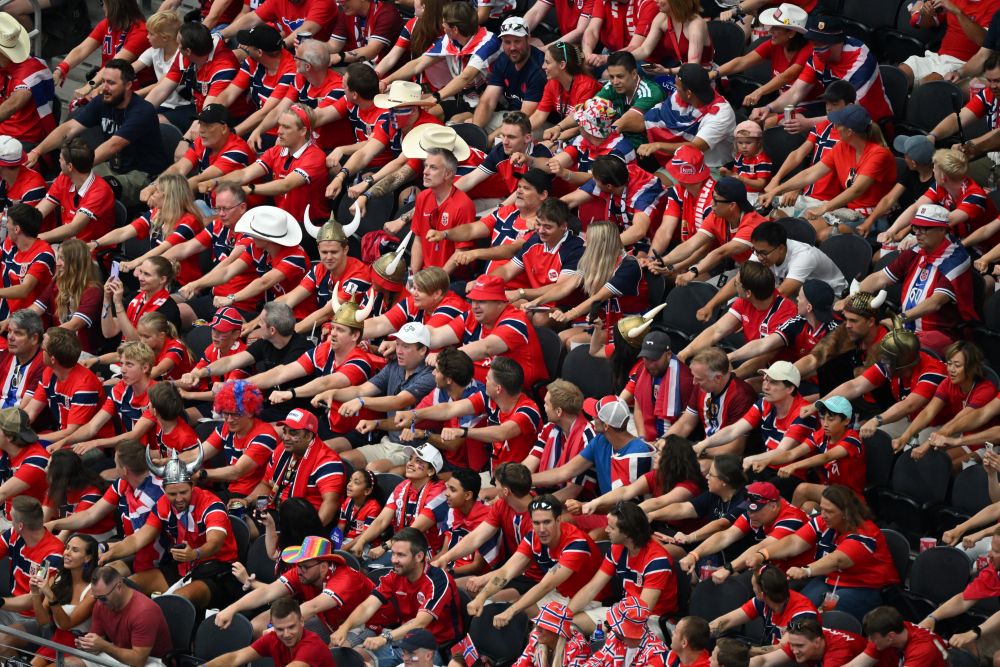
Norway fans perform a viking boat row before the World Cup round of 32 soccer match between Ivory Coast and Norway in Arlington, Texas, near Dallas June 30, 2026. (AP/Jessica Tobias)

by Michael O'Connell
Join the Conversation
Send your thoughts to Letters to the Editor. Learn more
This has been the largest World Cup ever, and when so many games are played in rapid succession, inevitably our memories of the matches start to blend together. While it can be hard to recall what happened in any given game, the scenes of fans celebrating en masse are unforgettable. Whether it's the Norwegian fans rowing, the Brazilian fans drumming, the Dutch fans marching behind their orange bus, the Japanese fans cleaning the stadium together or the Cape Verde fans capturing hearts, the lesson remains the same: The World Cup may consist of 48 national teams, but it is defined by the fans.
I was struck by this last week as I roadtripped with a couple college friends to Boston to watch England play Ghana. The match was a 0-0 snooze, but the experience was unforgettable because of the soccer-obsessed people at every step.
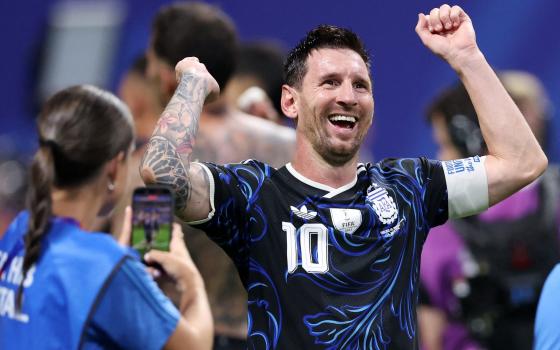
We spent the first night in Niagara Falls, watching Curaçao draw Ecuador on an Applebee's TV, alongside a small group of fellow fans decked out in jerseys representing the Netherlands, Brazil, Argentina and Croatia. The next night we went to a Liverpool bar in Cambridge, where the entire bar broke into song when Liverpool icon Mohamed Salah scored the goal that secured Egypt their first World Cup win. The following day we went to the Boston FIFA Fan Fest and saw Argentina's Leo Messi break the record for World Cup goals, surrounded by a few thousand people, almost all wearing Messi jerseys. The collective roar was deafening.
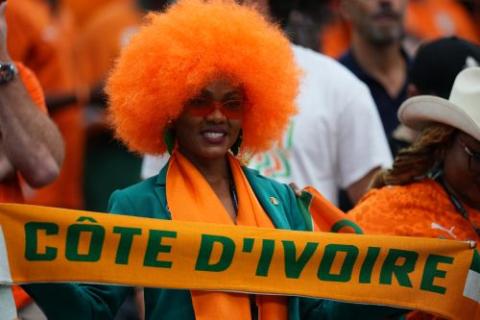
A fan supports the Ivory Coast team ahead of the World Cup round of 32 soccer match between Ivory Coast and Norway in Arlington, Texas, near Dallas, June 30, 2026. (AP/Julio Cortez)
We had arrived in Boston hoping to share the World Cup experience with the Scotland fans, who appeared to be having the world's best party in Boston for the better part of a week, bagpiping all over town, drinking the pubs dry and taking over Fenway Park. Their team had underperformed, but no one seemed to care. Unfortunately for us, the Scots had decamped for Miami right before we arrived.
Still, we found our fun. On the concourse before the match we saw fans of both Ghana and England decked out in kits and face paint, dancing and chanting. Twice we were brought to a full stop and encircled by crowds of England fans singing at a deafening volume: "Don't take me home/Please don't take me home/I just don't wanna go to work/I wanna stay here and drink all your beer/Please don't, please don't take me home!"
The game might have been forgettable, but the passion of the fans was not. I found myself thinking about how, during COVID-19, the Premier League had played matches without any fans in the stadiums. At the time, I'd never been to a soccer match in person, so I didn't fully understand the extent of what was missing. The players play the game, but the fans make the experience.
The pandemic left us with a world grappling with increased loneliness and social isolation. The World Cup obviously can't fix this entirely, but it can demonstrate the pleasures of connection and offer us spaces to come together in community. So as the knockout rounds continue, and team after team is sent packing, I'll be thinking about their fans as much as their players, grateful for the joyful witness they've brought to our country.
Advertisement