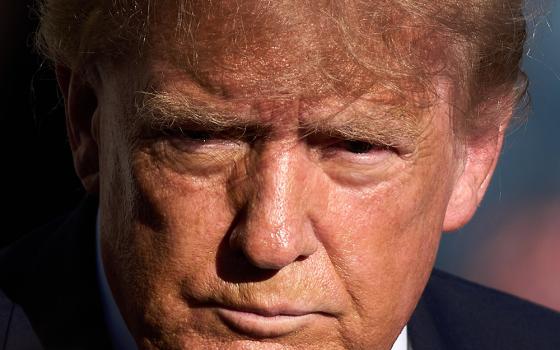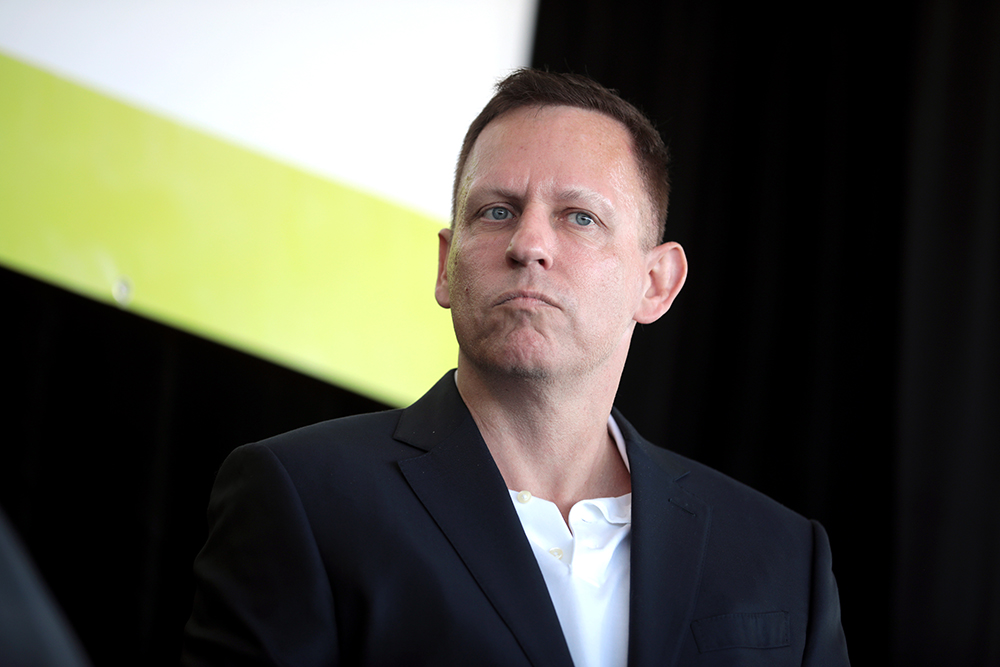
Peter Thiel speaks with attendees at the 2022 Converge Tech Summit in Scottsdale, Ariz. (Wikimedia Commons/Gage Skidmore)

by Brian Fraga
Staff Reporter
Join the Conversation
Send your thoughts to Letters to the Editor. Learn more
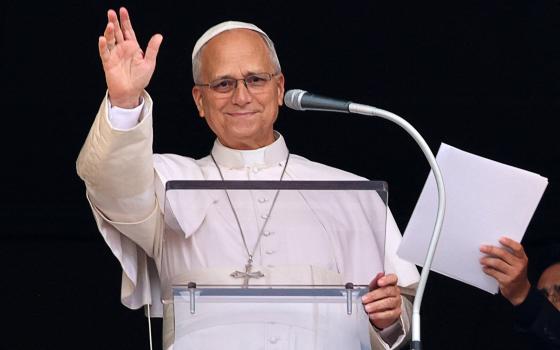
In the last two weeks, the billionaire venture tech capitalist Peter Thiel has accused Pope Leo XIV of being a Chinese communist agent and insinuated in the pages of a prominent interreligious journal that Pope Francis was an Antichrist figure.
Thiel, a co-founder of Palantir and PayPal who has risen to prominence as a conservative political activist, has articulated an apocalyptic worldview that he says is consistent with traditional Christian theology but that his critics say is more aligned with Cold War-era geopolitics.
His interest in end times theology was even lampooned in the recently completed 28th season of "South Park," where Thiel was portrayed as a biblical prophecy expert, equipped with his own theme song, who speaks on the end of days to an elementary school assembly.
Thiel's stated concerns that the Antichrist will be manifested by a one-world government or by Luddites who aim to stop or slow technological progress was a subtext in several provocative comments he made at the Aspen Ideas Festival in Colorado on June 30.
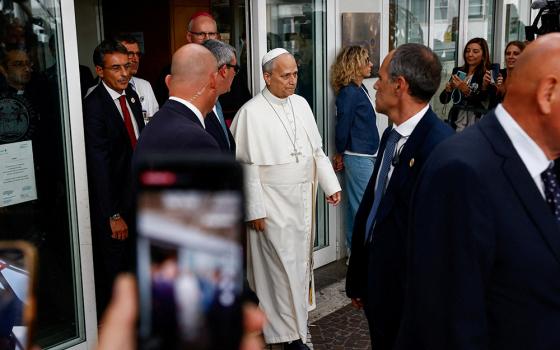
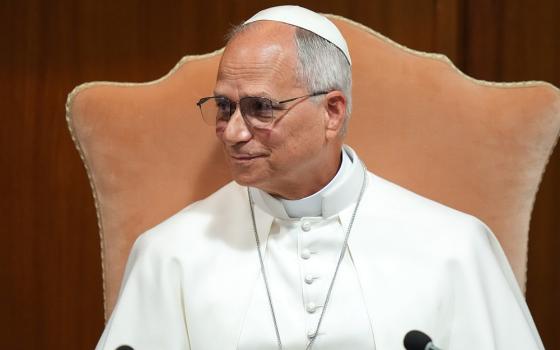
As reported by CNN, Thiel delivered a series of dire warnings and predictions about the future of artificial intelligence and the West, even accusing Pope Leo XIV of inadvertently serving as a "Chinese communist agent" because of the pontiff's calls for AI to be regulated.
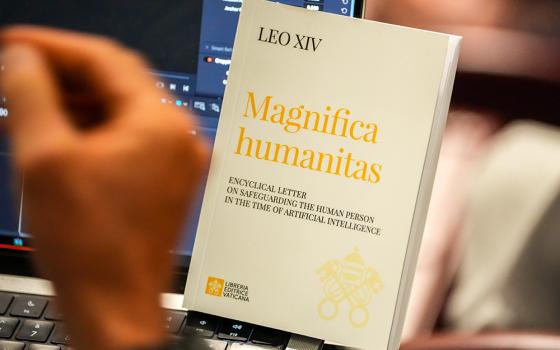
According to Thiel's logic, while Leo's recent encyclical on artificial intelligence, Magnifica Humanitas, may influence American policymakers, it is unlikely that Chinese leaders will heed the document's warnings.
Thiel argued that the encyclical threatens to slow down only one side of the "race between the U.S. and China" to advance AI. Leo, Thiel surmised, is thus "working for the Chinese Communists." CNN reported that the Aspen audience responded with laughter.
While it garnered chuckles, Thiel's comments about Leo revealed a Cold War mentality taken to a new intense level, said Massimo Faggioli, a theologian and church historian at Villanova University in Pennsylvania.
Advertisement
"It's the mentality of us being in a war, that whoever is not working with us is working for the enemy," Faggioli told National Catholic Reporter.
David Gibson, director of the Center on Religion and Culture at Fordham University in New York, said Thiel's comparison of the pope to a Chinese agent reveals how Thiel "feels about anyone who would dare to set any limits on what Peter Thiel wants."
"The idea offends his uber-libertarian sensibility so much that he reaches for the most overbearing, underhanded analogy he can find — an oppressive and omnipresent Chinese state aided by a sinister spy who you can't believe because they are obviously talking out both sides of their mouth," Gibson told NCR.
"The fact that the Chinese are actually running ahead of Thiel and the Americans in the race to anything-goes-AI may be what really offends him," Gibson added. "And the fact that Leo brings a moral frame and sensibility to Thiel's tech ethics clearly offends Thiel as well."
While Thiel, who is Protestant, does not owe the pope any obedience, his critiques "should be rooted in a reasonable assessment of Leo's actions," said Daniel Rober, the chairman of Catholic studies at Sacred Heart University in Fairfield, Connecticut.
"His Aspen remarks seemed designed more to provoke than engage," Rober told NCR. Rober added that Thiel's influence on Catholic figures such as Vice President JD Vance "ought to inspire more concern than Thiel's own thought."
Thiel helped launch Vance's political career. In 2022, Thiel donated $15 million to a pro-Vance super PAC while Vance was running for the U.S. Senate in Ohio.
Thiel is also Vance's former boss. Vance previously worked at Mithril Capital, an investment firm that Thiel co-founded. In his 2026 memoir, Communion, Vance credits Thiel as being a major figure in his spiritual journey that would lead him to entering the Catholic Church.
"Possibly the smartest person I'd ever met, he identified very openly as a Christian," Vance wrote.
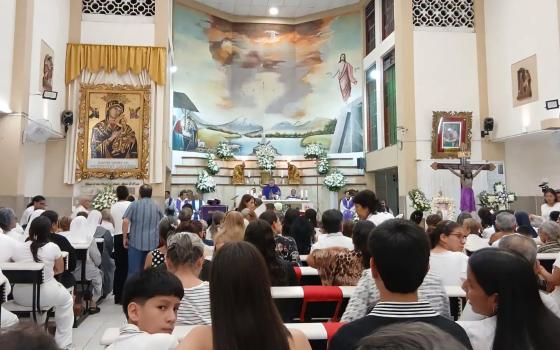
However, Thiel's forays into end-times theology have proven controversial. His four-day lecture series in March on the Antichrist — delivered just blocks away from the Vatican — garnered such pushback that the Catholic universities initially associated with it later denied all official involvement, the Associated Press reported.
Writing July 13 in First Things, the conservative interreligious journal, Thiel said that he did not travel to Rome "to try to be more Catholic than the pope," but that he hoped "even as a Protestant, to be more Catholic than the average Catholic."
In the First Things essay, titled "The Pope and the Antichrist," Thiel writes, "The Antichrist interests me for several reasons, mostly because nobody else is talking about it." Describing the present day as "our apocalyptic moment," Thiel portrays the late Pope Benedict XVI as a pontiff who had a healthy interest in eschatology.
At different points throughout the essay, Thiel seemingly denigrates the concepts of interreligious dialogue and world peace, and equates the figures of Pope Francis and progressive theologian Hans Küng as potential Antichrist figures, which prompted Faggioli to describe the essay as "extreme."
"It's an interesting article because [Thiel] is saying that he believes that this is a time for war, not for peace," Faggioli said. "He truly believes that we are in the end times. He truly believes that."
"It's clear that for Thiel the church has a place, which is to deal with the world as it is and make exclusivist claims to truth, letting eschatology work from the outside, rather than try to usher in a better world for everyone," Rober said.
Rober added that Thiel's view of the Antichrist appears to be rooted in midcentury anticommunist rhetoric, which he noted had a strong base in Catholicism in the age of the Iron Curtain.
"In the present, however, particularly as Popes Francis and Leo have shifted Catholic political rhetoric toward a consistent antiauthoritarian key, Thiel's ideas come across like so much scapegoating of the left in order to smooth the way for right-wing authoritarians," Rober said.
Writing in First Things, Thiel says that for the Christian, nothing lasts forever, "for this world has a beginning and an end."
"The apocalypse," Thiel wrote, "the revelation of all secrets and the end of all interpretations, arrives eventually."