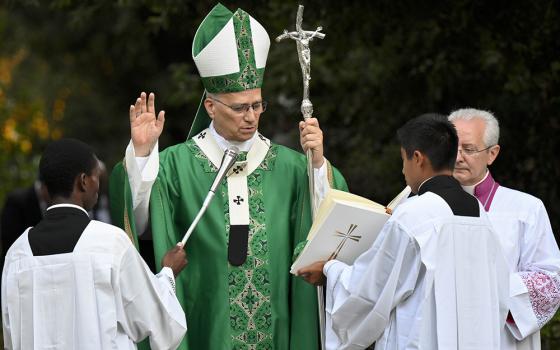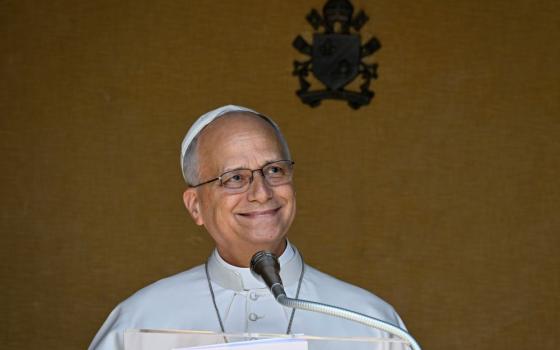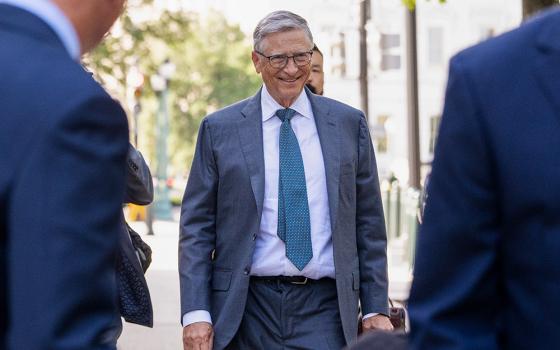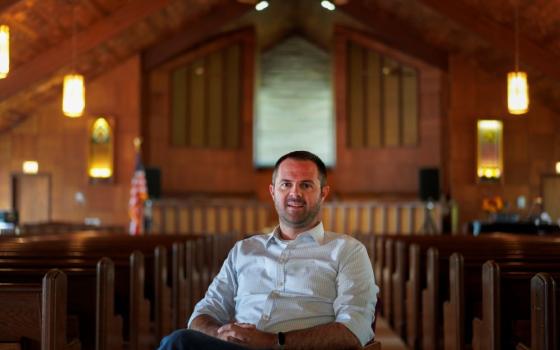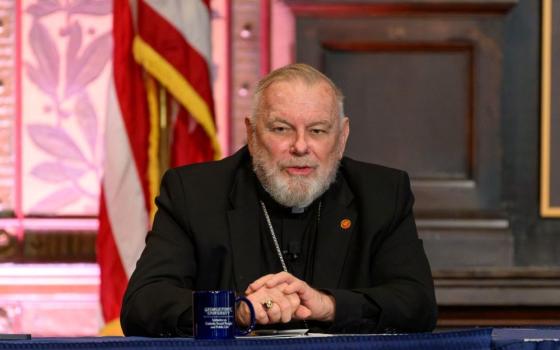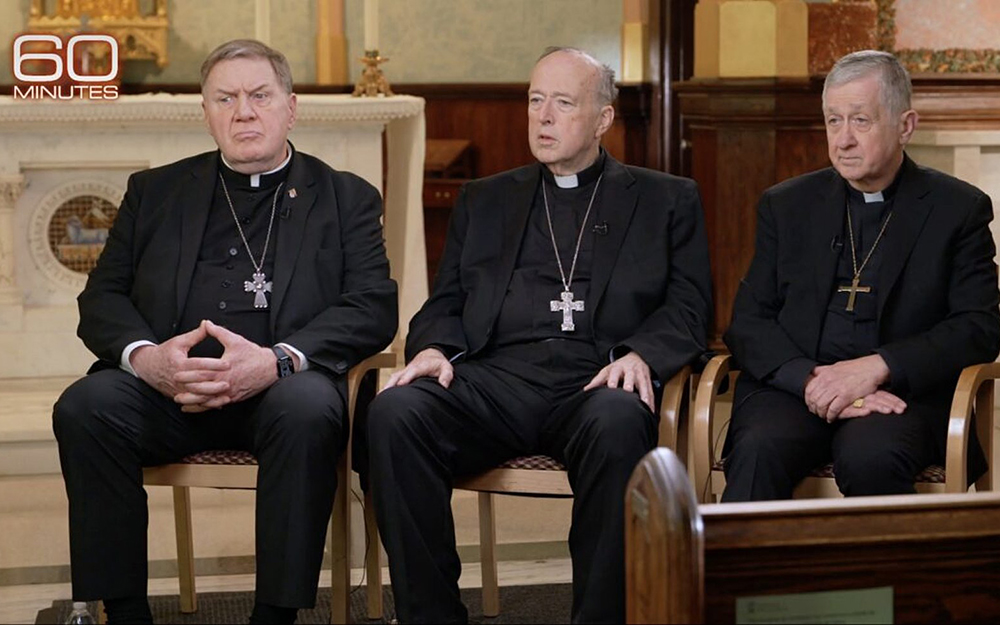
In a joint interview with CBS's Norah O'Donnell on "60 Minutes" April 12, 2026, Cardinals Joseph Tobin of Newark, N.J., Robert McElroy of Washington, and Blase Cupich of Chicago, began by giving their impressions of the first U.S. pope, Pope Leo XIV. (OSV News screenshot/Facebook)

Join the Conversation
Send your thoughts to Letters to the Editor. Learn more
In an unprecedented joint interview, the three U.S. cardinals who are currently leading archdioceses — Chicago Cardinal Blase Cupich, Washington, D.C. Cardinal Robert McElroy and Newark, New Jersey, Cardinal Joseph Tobin — spoke with CBS's Norah O'Donnell in a segment for "60 Minutes" last night. They forcefully echoed Pope Leo XIV's calls for peace and repeated his, and their own, distress about the Trump administration's anti-immigrant policies.
Key moments included O'Donnell asking about Iran "Is this a just war?" McElroy replied: "No, in the Catholic teaching this is not a just war. The Catholic faith teaches us there are certain prerequisites for a just war. You can't go for a variety of different aims. You have to have a focused aim, which is to restore justice and restore peace. That's it."
Tobin clarified the pope's role in addressing issues of world concern: "He's the pastor of the world. He's not a pundit. So the distinction is he's not going to pronounce on everything. But he's going to pronounce on what's important."
Asked how he would respond to someone who says they do not want to hear politics from the pulpit, Cupich rejoined: "I say fine. I want to preach the Gospel. God wants us to promote peace in the world — because his desire is that we be one human family." McElroy added, "What we're seeing as pastors is an enormous, profound level of human suffering. And that's what motivates us."
Advertisement
What shone through in the 20-minute segment is that there is no daylight between Leo and his three most prominent U.S. cardinals. They are going to amplify his teachings and concerns. They, like he, do not want to be painted as any kind of political opposition figure, but they, like he, believe the Gospel has important things to say about what kind of society we Catholics should fashion and when the U.S. government deviates from that vision, they won't be shy about speaking up.
It is also clear that the U.S. church has been liberated in a sense from a singular focus on the admittedly important issue of abortion by the Supreme Court's Dobbs decision. The ill-treatment of migrants offends our concern for human dignity. Put differently, our concern for the unborn and our concern for the undocumented is rooted in the same concern for those defined by society by the "un" before the adjective, by what they lack, not by the gift they represent. And our concern to defend human life reaches to Tehran as well as to the womb.
Also clear is the fact that many Catholics who joined the Republican Party out of their concern for the unborn have, with the rest of the party, fallen under the sway of President Donald Trump. Those Catholics need to do some soul-searching, just as Catholic Democrats need to do some soul-searching because of their party's continued indifference to the unborn.
It is a frustration of television that the segment compressed what was a 90-minute interview into a few minutes. The attention on the Borgo Laudato Si' at Castel Gandolfo was interesting, but I wish we had heard more from the cardinals.
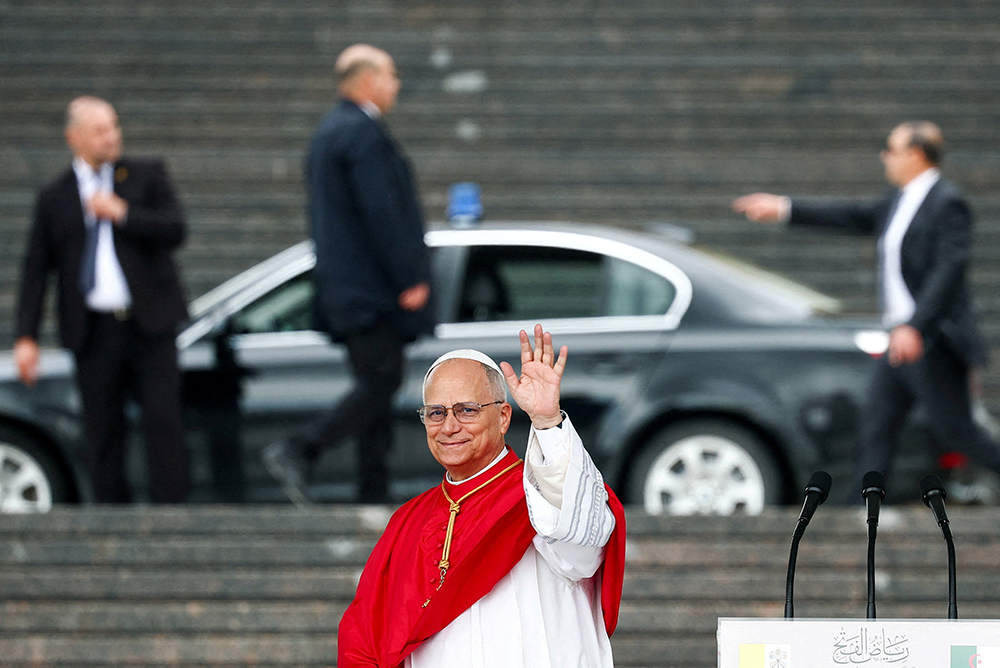
Pope Leo XIV waves following a speech at Maqam Echahid (Martyr's Memorial) in El Madania municipality in Algiers, Algeria, April 13, 2026. (OSV News/Guglielmo Mangiapane, pool via Reuters)
Some will complain that the cardinals are getting too involved in politics. Last week, on the poorly named "Prayerful Posse," EWTN's Raymond Arroyo questioned Leo's comments about the war in Iran. "What is the distinction between a pope calling for peace and a pope effectively rendering a moral verdict on this ongoing military conflict?" he asked. Later, Arroyo asked if the pope's urging people to contact their political representatives on behalf of peace "exceeded his charism?"
In reply, Fr. Gerald Murray, a canon lawyer and pastor of Holy Family parish in New York, noted: "That is the nub of the questions here Raymond. … It's not fair, in my opinion, to characterize just wars as acts of violence." Murray went on to assert, "The United States did not start attacking Iran because of any other significant reason than they're getting close to possessing nuclear weapons. Trump made that clear in his address to the nation the other day."
Setting aside the fact that the president's address was anything but clear in stating our intentions for beginning this war, the fact is that there is no conception of Catholic just war theory under which the U.S. attack on Iran was justified, as McElroy previously pointed out. (Whether Israel's war against Iran is just is a different, and more complicated, question.) Robert Royal, author and president of the Faith & Reason Institute in Washington, and the third member of Arroyo's posse, did raise an important question about when the threat of a rogue regime acquiring a nuclear weapon becomes existential. Just war theory needs to be developed to deal with this reality. In Iran, however, it is far from clear these attacks will do anything about that threat.
"What we're seeing as pastors is an enormous, profound level of human suffering. And that's what motivates us."
—Cardinal Robert McElroy
The relationship of religion to politics is always evolving but we Catholics have come to believe that politics is downstream from religion. The Gospel shapes our understanding of the human person, sets forth values that are essential to the flourishing of human beings and human societies and establishes the universal reach of those values. We believe that the church's bishops must teach what the church teaches, but that it is largely the laity's responsibility to apply that teaching to the circumstances of the world. There is always a role for prudential judgment in the application of the church's teaching but prudential judgment is not a "get-out-of-jail-free" card. That is the one of the problems with the "Prayerful Posse": When it is convenient to their politics, they insist on the definiteness and immutability of the church's teaching, but when that teaching is not convenient to their politics, they invoke prudential judgment. It doesn't work in this case because the just war arguments against the U.S attacks on Iran are so overwhelming.
Such careful distinctions between the religious, the ethical and the political are, unsurprisingly, lost on our president. Within minutes of the "60 Minutes" episode airing, he published a nasty attack on Leo.
The deeper problem with the criticisms of Leo, and one that the three cardinals hopefully will continue to address, is the degree to which Catholics in the United States no longer believe they should be docile to the teachings of the bishop of Rome. For many years, this lack of docility was found on the Catholic left, but throughout the pontificate of Francis, it is the Catholic right that has become dismissive of papal teaching. It is an unserious, self-satisfied posture, with no room for conversion or even personal growth. We all have much to learn from the bishop of Rome, on every topic and at all times. We are human. Of course there will be frictions and misunderstandings and even fundamental disagreements. Still, the almost casually adopted stance of dissent is unfruitful.
At one point in the interview, Tobin said, "I've had the privilege of working closely with four popes, very different people in a lot of ways. But each one in some way was the right one for that moment in time. I — I believe that — Pope Leo is the right man at this time."
I believe that too, and the strength of that belief rests in large part on being able to see how it is true of the current pope and his predecessors too. The church is more than three cardinals and more than four popes to be sure. But the mark of the Catholic and apostolic faith remains being in communion with the bishop of Rome. Seeing these three cardinal amigos amplify the pope's teaching in such forceful and vivid ways is a great blessing for our church and for our country.