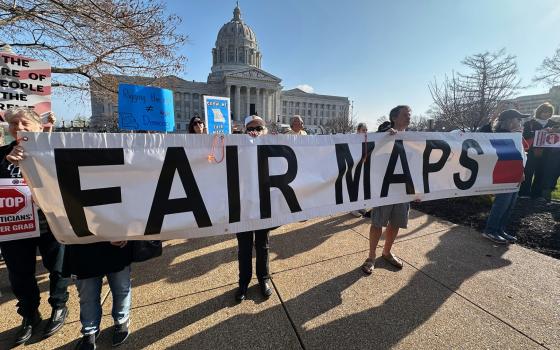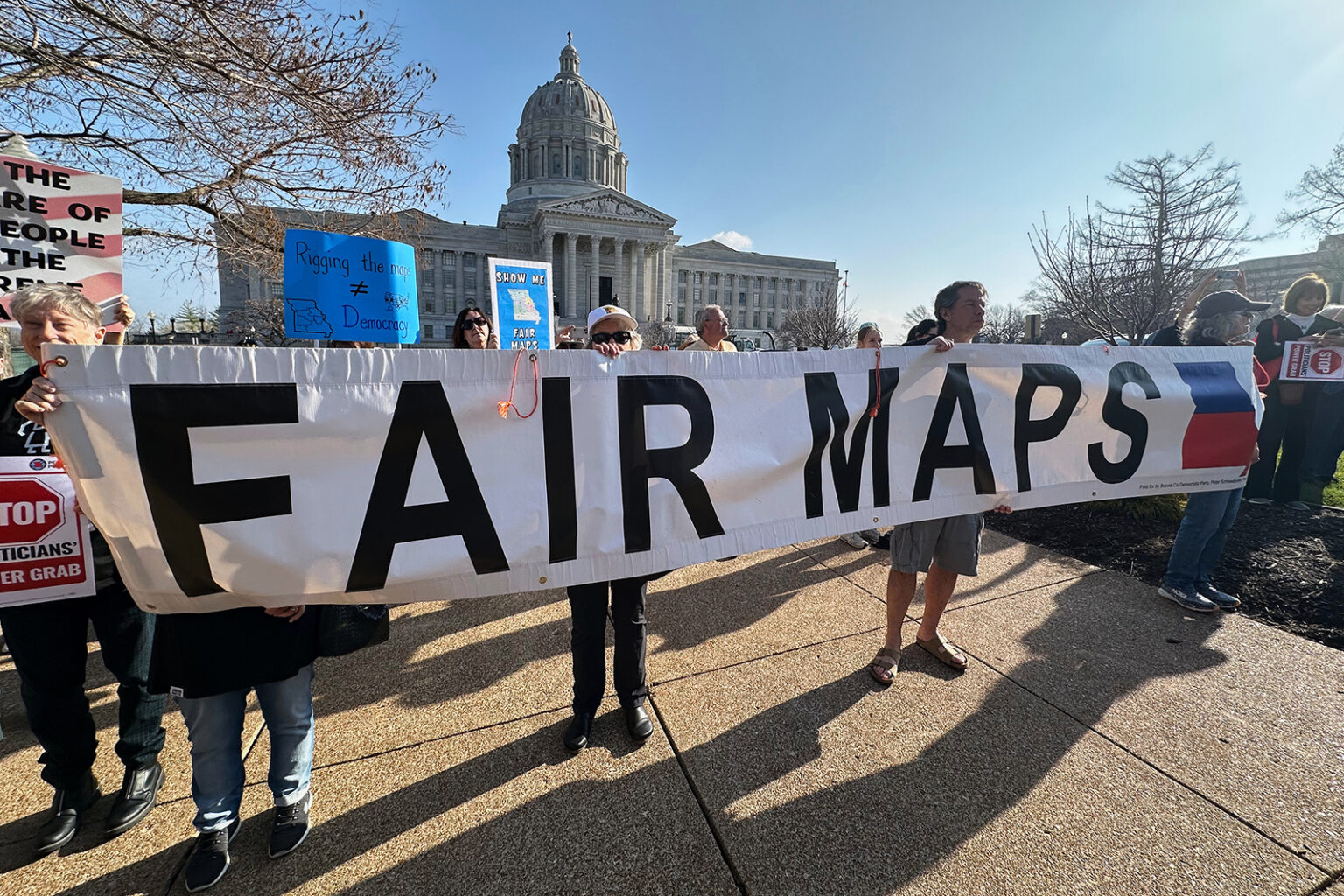
People opposed to new U.S. House districts passed by the Missouri General Assembly demonstrate outside the state Capitol in Jefferson City, Mo., on March 10, 2026. (AP/David A. Lieb)


Religion News Service
Join the Conversation
Send your thoughts to Letters to the Editor. Learn more
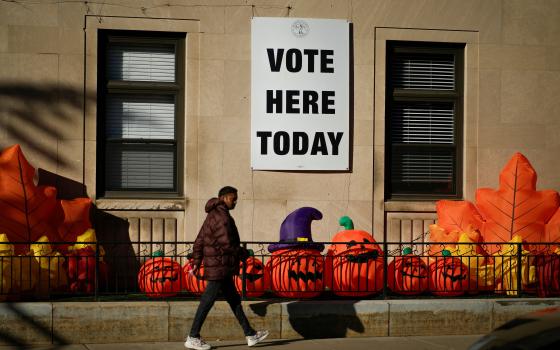
I am jealous of people who vote in swing districts and states, those political jurisdictions where both parties have a chance of winning. I have always lived in places like New York City, Washington, D.C., and parts of California where the vote is rarely close.
In such places, voting can seem to be a waste of time. Why bother?
This year, both parties worked hard to make the election irrelevant for most Americans.
In July, Republican leaders in Texas, at the direction of President Donald Trump, put in place a redistricting plan that would severely reduce the ability of Democrats to win elections by packing Democrats into a few districts and making sure that Republicans have majorities in as many districts as possible.
Such partisan gerrymandering is legal, according to the U.S. Supreme Court, even when it is Black voters who are sliced and diced to reduce the power of their vote.
But once Texas Republicans let loose the virus of partisan gerrymandering, it immediately infected other states. California Democrats redistricted their state to give them an advantage, countering in part the Republican advantage in Texas.
Republicans responded with more gerrymandering in Florida, Alabama, Louisiana, Ohio, North Carolina and Tennessee. All told, more than 24 million potential voters will be in new House districts for the midterms, according to AP.
Only a handful of states, including Virginia and Missouri, had state supreme courts that struck down attempts at partisan gerrymandering as illegal.
Advertisement
In a democracy, voters are supposed to pick their politicians, but with gerrymandering, politicians are allowed to pick their voters.
Partisan gerrymandering has reached absurd lengths and must stop.
Because of voter pressure, about eight states, including California, have independent, nonpartisan commissions to do redistricting, but these commissions were often tossed aside in this year's partisan wars unless the courts stepped in.
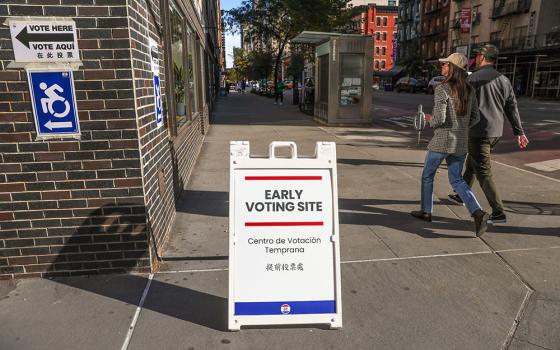
Gerrymandering and political deals to protect incumbents have resulted in most House districts being noncompetitive. The Cook Political Report estimates that there are only about 17 “toss up” House seats in this year's election, as of Oct. 27. An additional 16 lean Democratic and 17 lean Republican. If you do not live in one of these districts, the temptation is to stay home and not vote. Why bother?
Our nation' s founders fought and died in the American Revolution for the right to vote. Others fled oppression to come to a country where they could vote. In the last century, women and Blacks marched and demonstrated at great risk for the right to vote.
To not vote is to disrespect those who fought for our right to vote, to shirk our moral duty. While I wish I lived in a swing district, I will still vote even if it does not make a difference, because it is my duty as a citizen and a person of faith. Voting is a sacred right, but it also is a sacred duty.