Newly elected members of the 120th Congress gather for a group photo on the steps of the House of Representatives at the Capitol in Washington, Thursday, Nov. 12, 2026. (AP/J. Scott Applewhite)


Religion News Service
Join the Conversation
Send your thoughts to Letters to the Editor. Learn more
As the U.S. Catholic bishops meet in Baltimore this week, they must recognize that a blue wave has washed over the country. Will they learn to surf this wave, or will they continue to build sandcastles on the beach?
The bishops have traditionally been perceived as pro-Republican because their position on abortion was aligned with the Republican Party. Pro-choice Democrats were banned from Catholic colleges and even denied Communion by some bishops. Republican politicians, on the other hand, were feted even if they disagreed with Catholic social doctrine as long as they were anti-abortion.
The bishops' priority was overturning Roe v Wade, the 1973 U.S. Supreme Court decision that legalized abortion across the country. To do that, the Republicans needed to get more conservative justices appointed to the court.
As a result, there was pressure on Catholic bishops to ignore the failings of Republican candidates, as long as they were anti-abortion, and to badmouth Democratic candidates who were pro-choice even if they agreed with the church on other issues.
In this political strategy they were closely aligned with white evangelical conservatives who opposed abortion but also opposed many other issues the bishops cared about, like immigration, civil rights, healthcare and programs for the poor.
This strategy of making abortion the preeminent issue for the bishops worked. Republican presidents and a Republican Senate packed the Supreme Court with enough conservative justices to overturn Roe in the 2022 decision, Dobbs v. Jackson Women's Health Organization.
The bishops won. But the price they paid was the alienation of Democrats and many women. Their position on LGBTQ+ issues also put them at odds with LGBTQ+ people and college-educated liberals.
The Dobbs decision did not outlaw abortion; it returned the issue to the states, where blue states made abortion easy and red states produced mixed results.
Almost every time the abortion issue was put before the voters, the pro-choice side won. The bishops soon found the pollsters were right: the people are not with them. Not even Catholics. According to Pew Research Center, 57% of Catholics believe abortion should be legal in all or most cases.
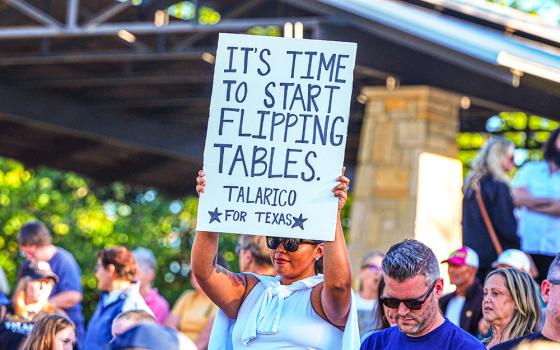
And in the few states where abortion was restricted, women were often able to get medication for chemical abortion through the mail. And some states like Texas, which were very anti-abortion, are now under new management.
The Dobbs decision appears to have been a Pyrrhic victory.
The bishops had correctly argued that abortion was made legal through judicial fiat. The people had no say in the matter. But now, in state after state, the people and their legislatures are voting down abortion restrictions. The bishops are losing because they failed to get the American people on their side.
President Donald Trump feels that with the overturning of Roe, he has fulfilled his promise and is now done. The Trump administration appears unwilling to act to restrict abortion by mail or anything else. On the national level, even before the midterms, the Republicans were unwilling to do anything significant on abortion. On the state level, the anti-abortion forces are losing.
Faced with the blue wave, the bishops need a new political strategy.
The bishops can continue to oppose abortion, but they can no longer treat pro-choice Democrats like lepers to be banned from contact with Catholics. Both sides must learn to agree to disagree and look for compromises.
Advertisement
An episcopal priority should be to protect healthcare personnel and institutions from being forced to do procedures contrary to their faiths. In almost all cases, we are not talking about emergency procedures. There is plenty of time to replace conscientious objectors with people and institutions that are willing to do the procedures.
Democrats should recognize that if they want to preserve their electoral gains, they need to compromise by respecting the religious views of all Americans. Forcing doctors and nurses to violate their consciences will turn middle America against the Democrats.
In addition, the bishops need to recognize that a frontal attack on abortion is not working. The better strategy is to support programs that provide women with a real choice. Most women have abortions because they cannot afford a baby.
This would change if free healthcare was provided to pregnant women and their children, if the minimum wage were increased, if women had decent jobs and daycare. There would also be fewer abortions if women had safe and effective birth control. These are programs supported by Democrats and opposed by Republicans.
In the real world, Democratic programs reduce the number of abortions; Republican stinginess increases them.
The bishops need a political strategy that works in the real world, not in a fantasy world where everyone follows their directions. Birth control should be recognized as the lesser of two evils. Republicans who oppose programs that help pregnant women cannot be called pro-life.
The blue wave from the midterm elections is a reality that calls for new thinking by the bishops. Their meeting in Baltimore is a good place to start.