(Unsplash/Aron Visuals)
by Louis J. Cameli
Join the Conversation
Send your thoughts to Letters to the Editor. Learn more
The philosopher Martin Heidegger spoke of human existence as Sein zum Tode, or "being towards death." In Heidegger's thought, our existence as human beings is both defined and limited by our mortality. Life is always moving toward an end.
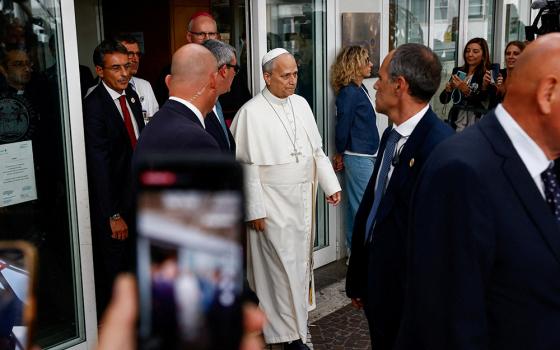
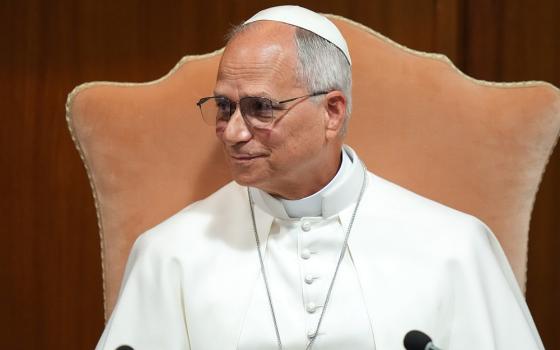
As artificial intelligence continues to widen the world of possibilities at breakneck speed, prompting Pope Leo XIV to issue caution with its use, it occurs to me that AI lacks something that is distinctively human: death.
Of course, humans are not the only beings subject to death. We share that with other animals and even with plants. What marks us distinctively is that we are conscious of moving toward our own individual death. This can lead to great fear and anxiety with an impending sense of loss; or, on our more constructive days, an urgency to meaningfully shape our lives in the time we have. In a secular and nontheistic context, that is that. We live, we die, we are finished, and all along the way we are conscious of this trajectory.
But a faith context leads to a very different take on mortality. The Second Vatican Council's Gaudium Et Spes addresses the mystery of death, beginning with a sober account of our experience of mortality: "Not only is man tormented by pain and by the advancing deterioration of his body, but even more so by a dread of perpetual extinction." (Gaudium Et Spes, 18).
Then, a paradox emerges. Precisely in this experience of intense limitation, we find ourselves before the limitless. Gaudium Et Spes explains:
He rightly follows the intuition of his heart when he abhors and repudiates the utter ruin and total disappearance of his own person. He rebels against death because he bears in himself an eternal seed which cannot be reduced to sheer matter.
When we confront the real limits of our human condition, we can begin to engage our infinite aspirations. We are both conscious of our mortality and, at the same time, haunted by the sense that there must be more.
Advertisement
All this provides access to that mystery that beckons us to a relationship of communion beyond our mortal limitations and that even surpasses our aspirations. Knowing death this way redirects our understanding of ourselves, our world and our future. The hallmark of conscious mortality births a wisdom that can never be artificially constructed.
The imminence of death, our Sein zum Tode existence, accompanies us across our lifetime. Johannes Baptist Metz describes this as a "poverty of spirit," a spiritual foundation for surrender into the infinite mystery that beckons us. The alternative is to flee from who we are and deny our mortality, but that flight results only in a haunting anxiety.
It is uniquely human to grapple with death, dread, tension, yearning and mystery. This grappling is what impels the creativity of literature, music and art. It is the human foundation of our spiritual journey. Only we can know these things and know them from the inside.
AI can know many things, but it cannot know what we poor mortal beings know. Without the existential dread of a future death, there can be no ecstasy, no surrender, no true immersion in infinite love. We learn and know from hard-earned experiences of mortal limitation in ways that no machine can replicate.
In Magnifica Humanitas, Pope Leo doesn't issue a total condemnation of artificial intelligence — after all, AI introduces important medical and scientific possibilities, among other things — but rather urges moderation that holds to the sacredness of humanity. If it is possible to set up effective guardrails, AI could perhaps be a tool that releases us from some of the grunt work of our lives. Perhaps at its best AI could help us go more directly to the business of being human, of pursuing truth that offers us something to live for, even to die for.