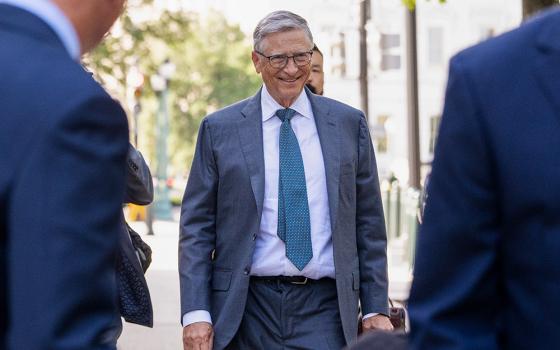
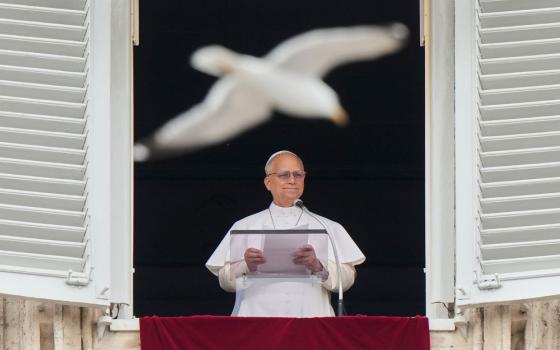
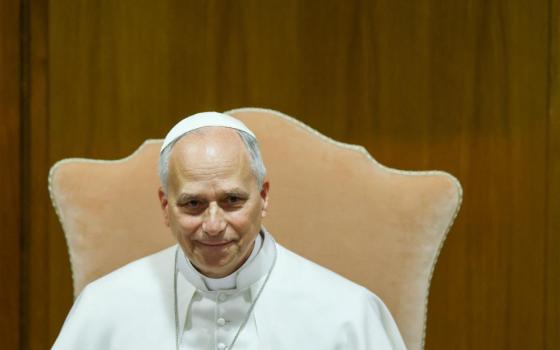
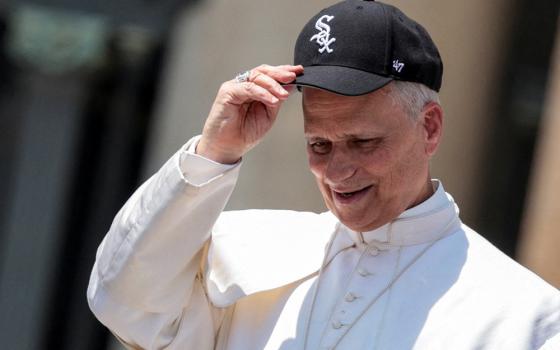
Leo was No. 18 on the magazine's "New Establishment list" which identifies "people who have defined the moment — from the Information Age to the dot-com bubble, the financial crisis to the social media tidal wave."
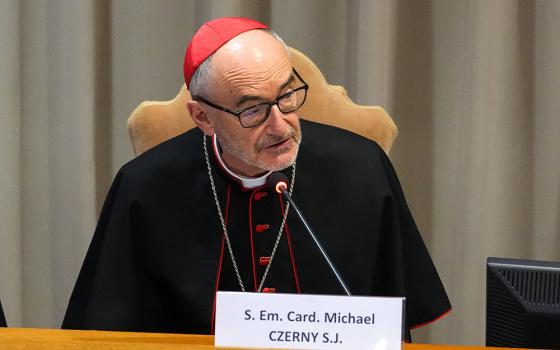
Pope Leo XIV's alma mater has named the former head of the Vatican's social justice office, Cardinal Michael Czerny, as the inaugural recipient of a sustainability award honoring Leo's advocacy on caring for creation.
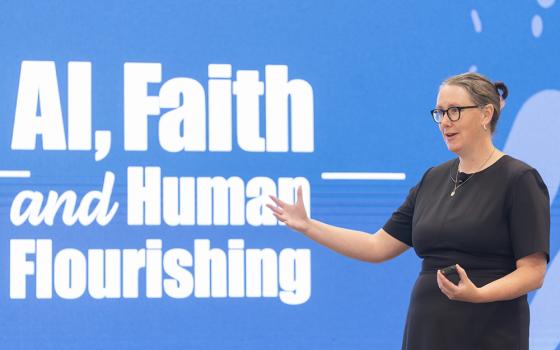
The papal encyclical Magnifica Humanitas was a focal point of a Sept. 9 public dialogue on "AI, Catholic Social Teaching, and Pope Leo's Invitation to Dialogue with the World" at Georgetown University.
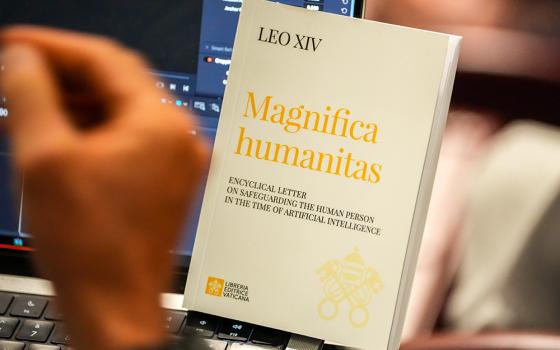
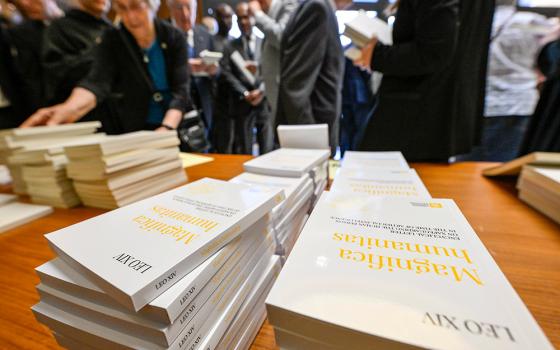
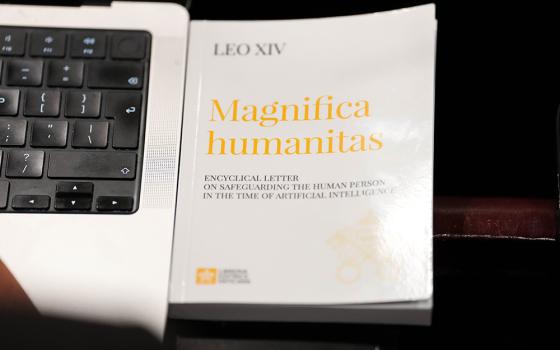
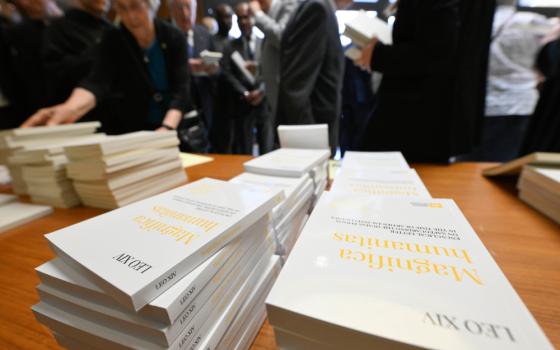
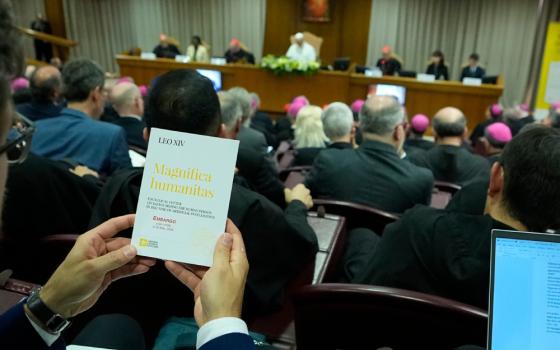
Three months after the release of Pope Leo XIV's encyclical on artificial intelligence, Magnifica Humanitas continues to gain traction among tech leaders and policymakers alike.
Leo has defined the terms of the debate. The central question is whether the U.S. will develop AI with little regard for responsibility or whether accountability will be an essential component of AI innovation.
University of Notre Dame philosophy professor Meghan Sullivan remains "guardedly optimistic" about what AI will mean down the road on campus, for churches and for the world.
In Magnifica Humanitas Pope Leo XIV warned against reducing people to "data and performance." All metrics, even those designed to measure happiness or flourishing, run that risk, argues Anthony Ahrens.
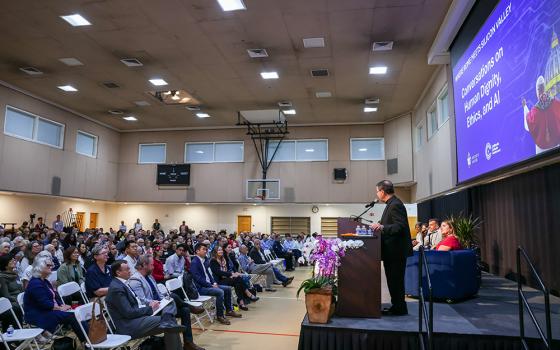
San Jose Bishop Oscar Cantú told NCR that local church officials have been having conversations with those in the tech industry who are developing the AI tools that have the potential to reshape the global economy.
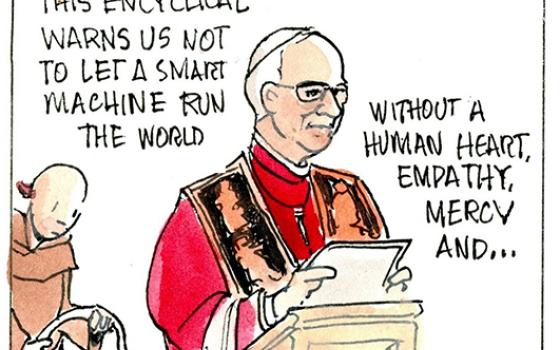
Technology, detached from ethics and responsibility, will make wartime decisions about life and death more rapid and impersonal, the pope writes in the final chapter of Magnifica Humanitas.
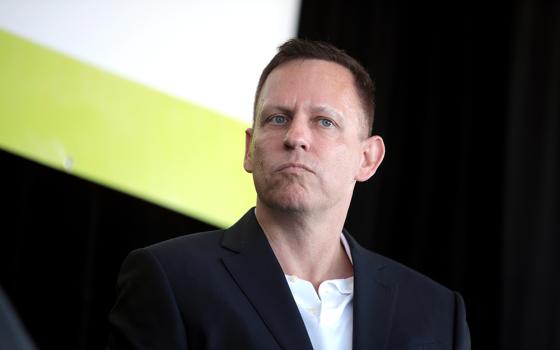
In the last two weeks, venture tech capitalist Peter Thiel has accused Pope Leo XIV of being a Chinese communist agent because of his teaching on AI, and has insinuated that Pope Francis was an Antichrist figure.
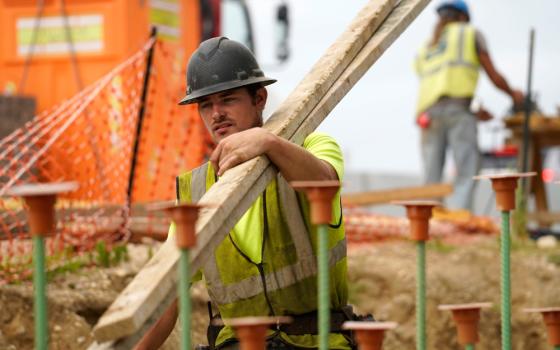
"Catholic social teaching has always emphasized the protection of workers, so it is no surprise that Leo gives space in his encyclical to the impact of robots and AI on workers," writes Thomas Reese.
Fr. Tom Reese continues his analysis of Magnifica Humanitas with Chapter 3, in which Pope Leo XIV applies Catholic social teaching to modern digital technology, arguing that AI should respect human dignity.
Magnifica Humanitas is the most significant map for healing that the papacy has ever placed in the hands of the Black Catholic community, writes Jesuit Fr. Patrick Saint-Jean.
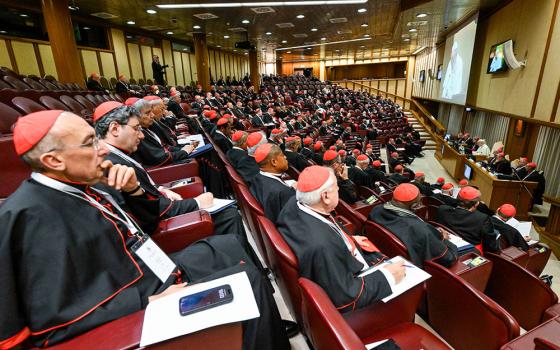
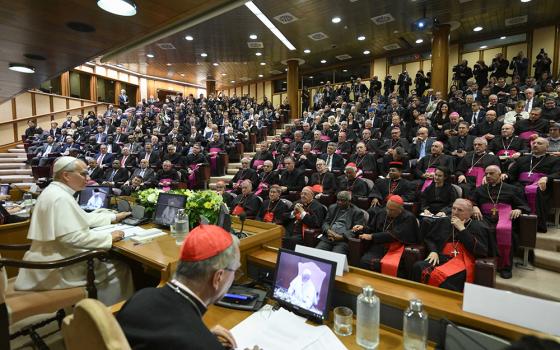
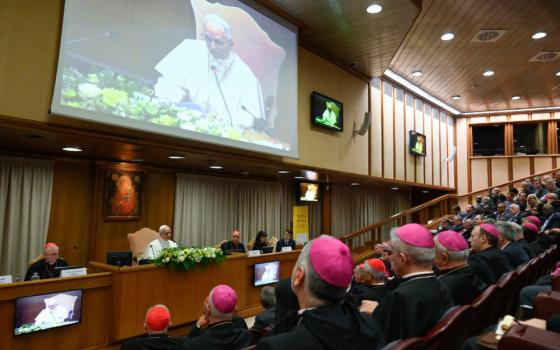
The Vatican released the official schedule of the June 26-27 extraordinary consistory, giving a glimpse into some of the topics and major issues that will be discussed by Pope Leo XIV and the College of Cardinals.
"Catholic social teaching is not a collection of eternal principles that can be applied in every historical context," writes Jesuit Fr. Thomas Reese. "It evolves in dialogue with the times."
"Magnifica Humanitas is ultimately asking for one very simple, yet very difficult result: conversion. And Leo is not directing his message only to tech giants, think tanks or legislatures. He wants conversion from us."
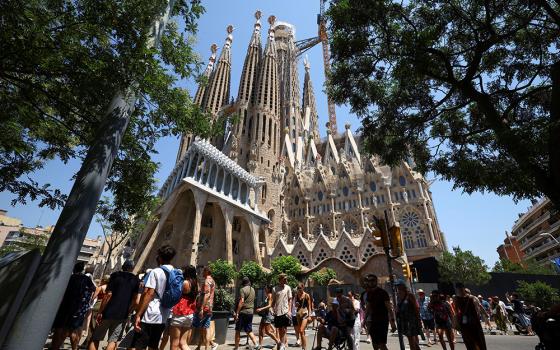
Visiting Sagrada Familia provides Leo with the perfect opportunity to expand on his first major teaching document. In fact, the basilica is a physical demonstration of Leo's essential message," Vanessa R. Corcoran writes.
What does it mean to be human in the age of artificial intelligence? The answer Magnifica Humanitas gives — remain — is too small for the tradition it invokes and for the moment it addresses, says Sr. Ilia Delio.
At the forefront of educators' minds — and at the center of hearts — must be the recognition that schooling is a sacred setting in which much more than grades, credentials and career prep are at stake.
"I think it's a positive step, but it's a very limited step, especially when dealing with something that's so complicated and complex in a single paragraph," said Fr. Bryan Massingale.
In Magnifica Humanitas Leo rejects technocratic paradigms that seek to overcome all human limitation, while at the same time criticizing tech's exacerbation of injustice, moral theologian Daniel Daly writes.
We are all still digesting Pope Leo XIV's first encyclical Magnifica Humanitas and wondering what difference it will make. What are the next steps in implementing the vision of Catholic social doctrine?
In Magnifica Humanitas, Pope Leo said, "Technology has the power to heal, connect, educate and protect our common home; but it can also divide, exclude and generate new forms of injustice."
In Magnifica Humanitas, Pope Leo XIV has spoken about war, peace, technology and human dignity with the clarity this moment demands. Catholics should now ask what it means to say that just war theory is "outdated."
"This teaching document draws from and supports a more fundamental Christian doctrine: the inherent goodness of creation generally and our own materiality in particular," writes Daniel P. Horan.
As we witness the rise of AI and the spread of violence and hatred across the globe, we can draw wisdom from both a fictional wizard and a very real pope.
"I think he wants the church to purify itself to be able to be an effective counter-witness to the negative dynamics you see in the world," one leader told NCR.
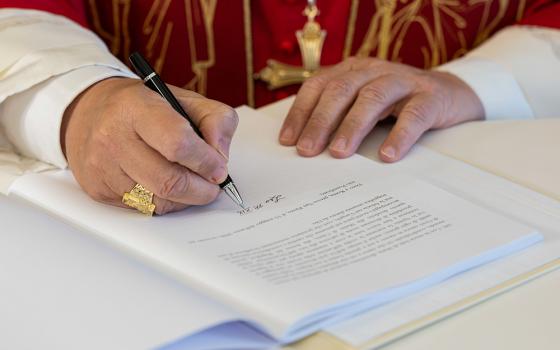
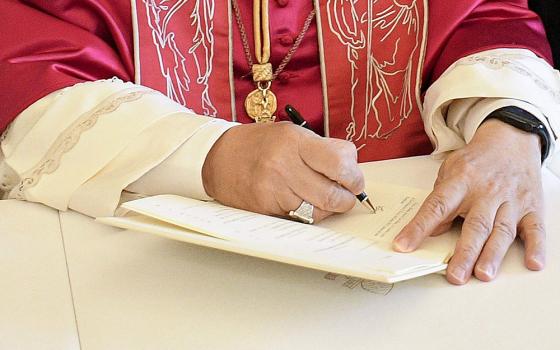
The highly anticipated text, signed by the pope on May 15 and released May 25, invokes the wisdom of the Church's social teaching as a framework for shaping AI amid rapid technological advances, a fractured global landscape and accelerating threats to human life and dignity.
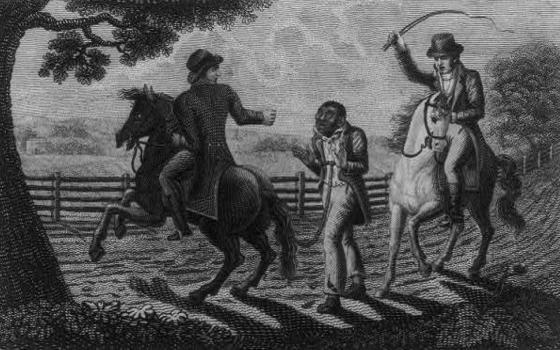
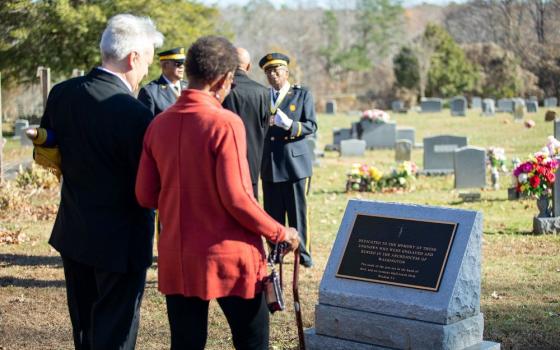
The church's delayed moral development on the issue of slavery constitutes "a wound in Christian memory, one from which we cannot consider ourselves detached," Leo XIV wrote in Magnifica Humanitas.
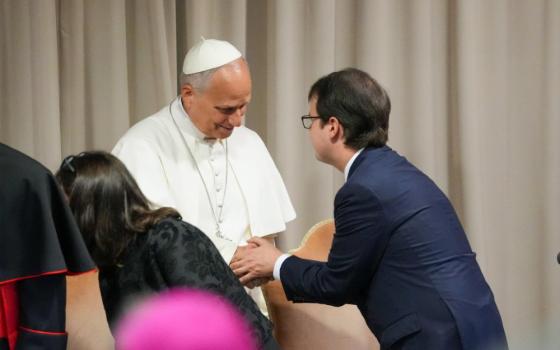
Leo and 33-year-old atheist tech leader Christopher Olah made an unlikely duo in championing a partnership between the Catholic Church and the tech industry to develop safeguards for the precarious development of AI.
Pope Leo XIV's first encyclical points to our anthropological vocation grounded in the revelation of Jesus Christ, our ability to collaborate with our creator God and our capacity for belief in that which we cannot see.
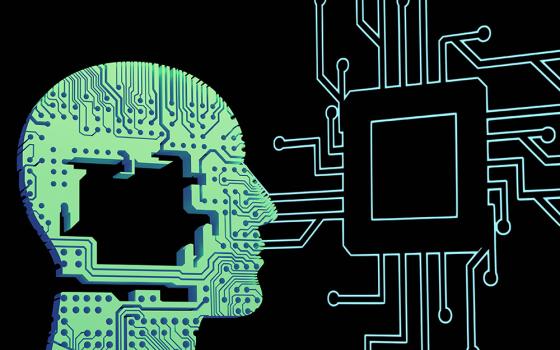
Pope Leo XIV has issued a sweeping manifesto about safeguarding humanity in the era of artificial intelligence, examining the many social areas that the technology is fundamentally reshaping.
In Magnifica Humanitas, Pope Leo shares several practical ideas for ordinary Catholics concerned about the future of humanity in light of rapid changes related to artificial intelligence.
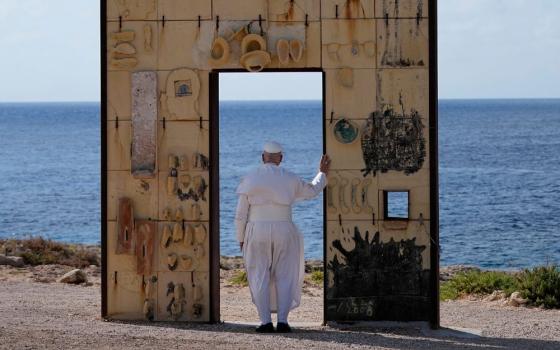
Past popes have apologized for the trans-Atlantic slave trade, but none have publicly acknowledged the role their predecessors played in giving European sovereigns explicit authority to subjugate and enslave "infidels."
In Magnifica Humanitas, Leo argues Catholic social teaching can help us know how to deal with emerging technologies and their potential for disruption.
In Magnifica Humanitas, the pope says just war theory is "outdated," condemns lethal AI weapons and asks pardon for the church's delayed condemnation of slavery.
Anthropic "has really staked their position as the ethical AI company, saying no to the U.S. government when it comes to lethal autonomous weapon systems … and against mass surveillance of Americans," said one expert.
Catholic labor historians see parallels between Magnifica Humanitas, Pope Leo XIV's upcoming encyclical on protecting the human person in the age of AI, and his 19th century predecessor's landmark encyclical Rerum Novarum.
Pope Leo XIV will personally present his first major teaching document on AI's ethical challenges alongside the co-founder of the AI research company that recently thrust into a public clash with the Trump administration.
"This very spiritual malaise of many young people reminds us that we are not the sum of what we have, nor matter randomly assembled in a mute cosmos," the pope said May 14. "We are a desire, not an algorithm."