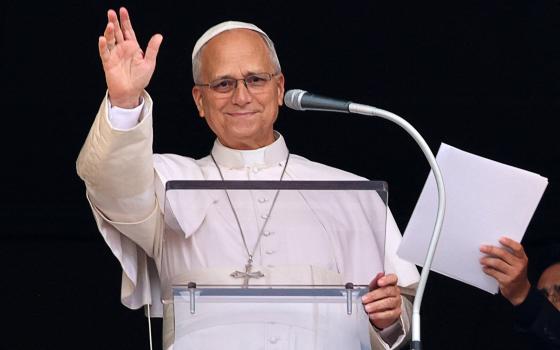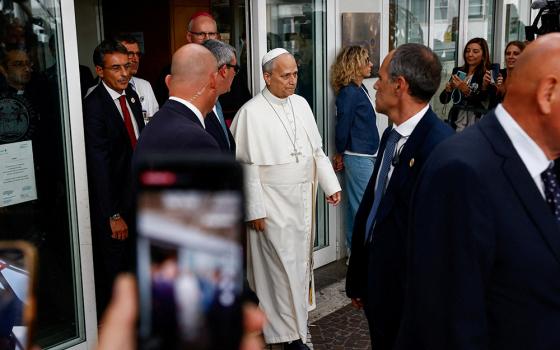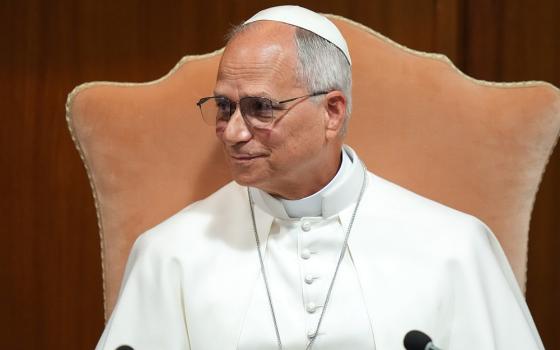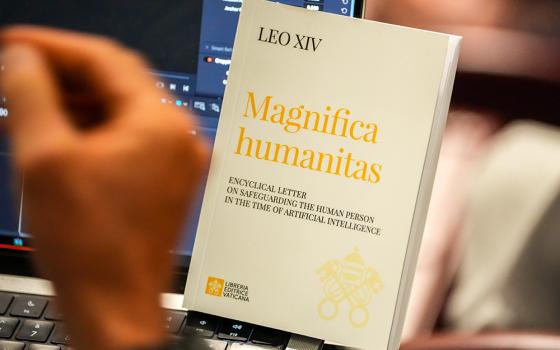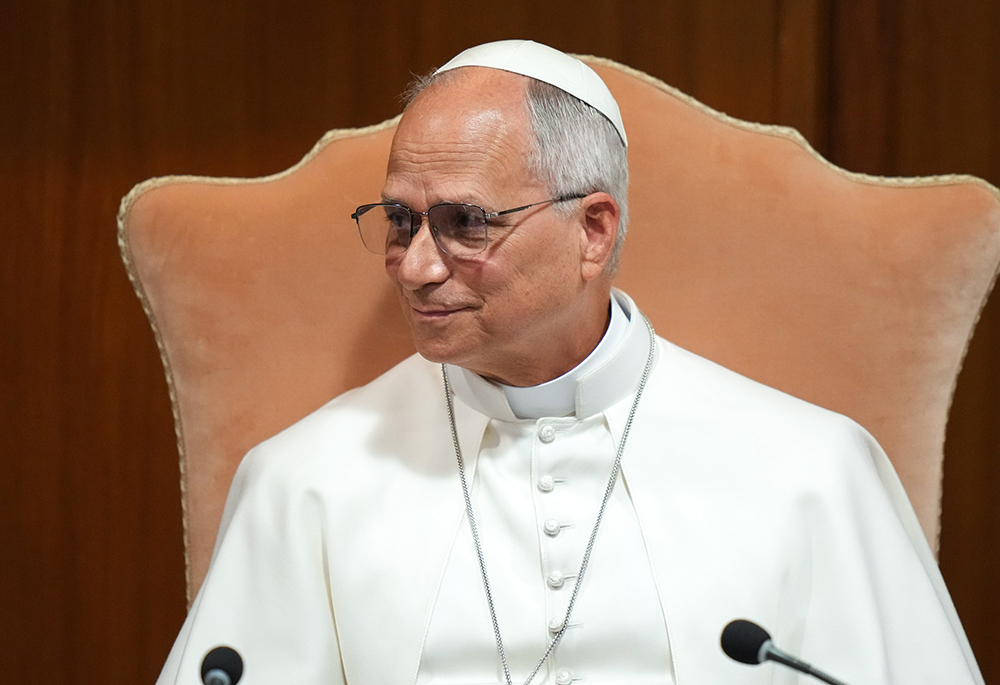
Pope Leo XIV attends a presentation of his encyclical "Magnifica Humanitas: On Safeguarding the Human Person in the Time of Artificial Intelligence" at the Synod Hall at the Vatican May 25, 2026. (CNS photo/Lola Gomez)
Join the Conversation
Send your thoughts to Letters to the Editor. Learn more
Pope Leo XIV has joined a roster of tech executives and political power brokers named among the world's most influential people by Vanity Fair magazine.
The pontiff was placed at 18th on the magazine's "New Establishment list" which, since 1994, has "identified the people who have defined the moment — from the Information Age to the dot-com bubble, the financial crisis to the social media tidal wave."
The list's top four spots were occupied by tech executives who have played leading roles in the development of artificial intelligence: OpenAI's Sam Altman, Anthropic's Dario Amodei, Tesla and SpaceX head Elon Musk and Nvidia chief executive Jensen Huang.
By contrast, the magazine cited how Leo, dubbed "His Holiness the Humanist" had declared in his encyclical Magnifica Humanitas on humanity in the age of AI "that technology should serve us, not the other way around."
Vanity Fair, which claims to exclude heads of state for consideration on its list but seems to have made an exception for the pope (who is the head of Vatican City), wrote that never before "have the stakes of individual influence felt so high" and said the list is not "a ranking of net worth or follower count but a measure of hard power."
Leo's write-up in Vanity Fair included reference to his advocacy for the poor as a missionary in Peru, his crackdown on a group of schismatic Catholics as pope and divergence from the Trump administration on the United States' war in Iran.
"An American pope who prizes the dignity of immigrants and opposes the concentration of economic power in the hands of a select few? He’s bound to get in a few dustups," wrote the magazine.
Advertisement
Fellow Catholics JD Vance, Marco Rubio and Alexandra Ocasio-Cortez came in ahead of the pope on the list at No. 6, 7 and 17, respectively. Those entries, along with Leo, were all projected to have a positive year ahead with the exception of Vance, who was cast as "one of the least popular figures in the entire Trump administration."
As pope, Leo has been set on inserting the church's voice into public debates over how artificial intelligence is developed and applied. Breaking with custom, the Vatican invited Anthropic co-founder Christopher Olah to Rome to participate in the launch of the pope's encyclical on AI, and Leo again waded into debates over AI regulation after his recent trip from France.
Concerns over catastrophic risk to humanity posed by AI are not "fake news" and "should be taken seriously," the pope said Sept. 28 in response to a question from National Catholic Reporter.
How extensively political leaders and technology executives will take up the pope's guidelines remains to be seen, but there have been signs that the document is making waves beyond the church.
Over the summer, Silicon Valley Congressman Ro Khanna (D-Ca.) sent letters to the CEOs of several tech companies in his district asking how they intend to align their technology with the pope's encyclical, and Microsoft founder Bill Gates wrote in a blog post that Leo's document "lays a strong foundation for the work that needs to be done."
The National Catholic Reporter's Rome Bureau is made possible in part by the generosity of Joan and Bob McGrath.