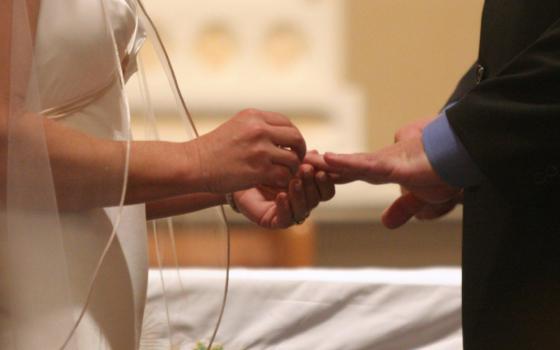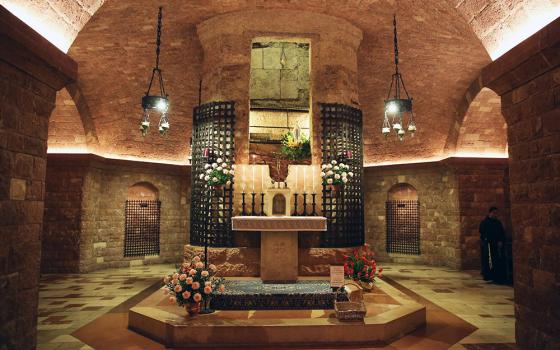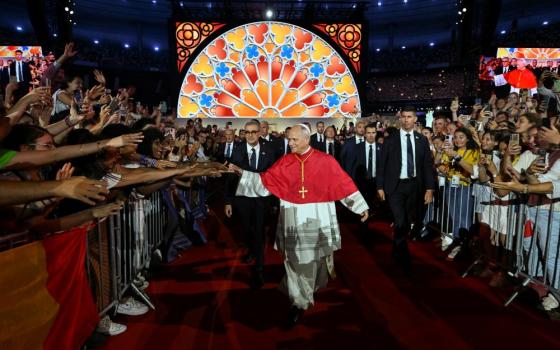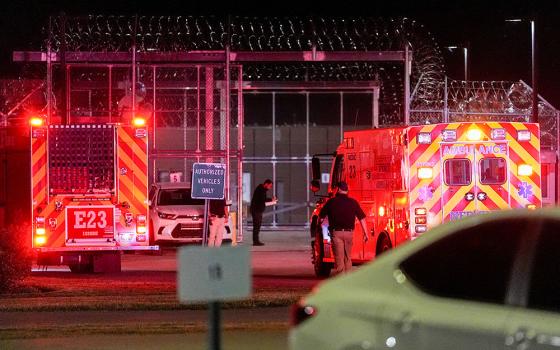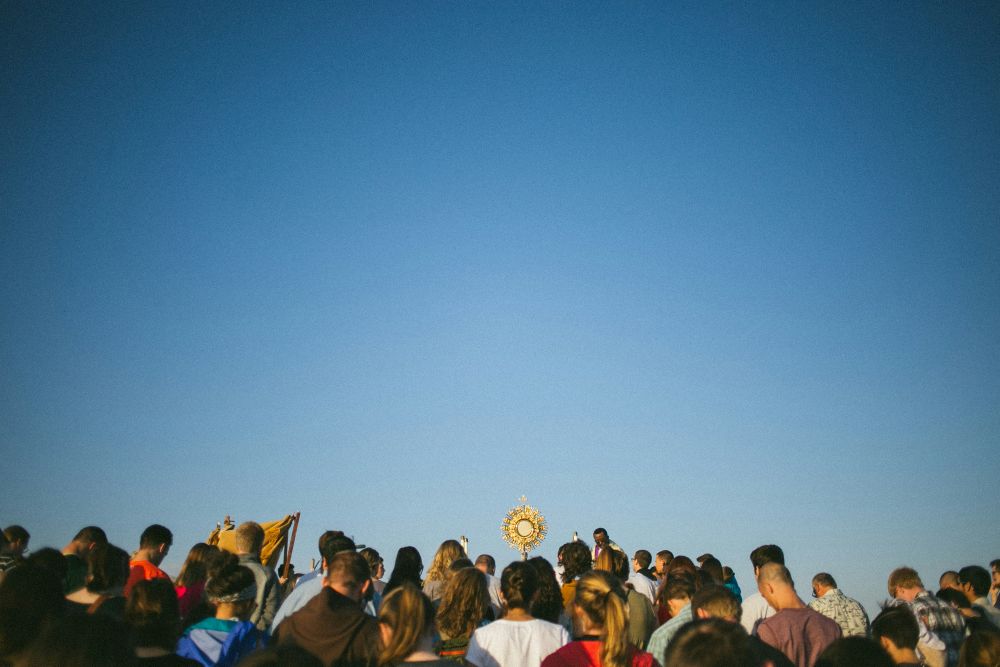
The solemnity of the Most Holy Body and Blood of Christ (also known as the feast of Corpus Christi) is observed on Sunday, June 7 this year. (Unsplash/Rachel Moore)

by Patrice Critchley-Menor
Join the Conversation
Send your thoughts to Letters to the Editor. Learn more
I saw Jesus on First Street last summer.
Road construction season had created several detours, and I found myself driving across East First Street for the first time in a long time. There, I saw a number of our unhoused neighbors gather outside the Union Gospel Mission, where they can find food, services and a caring staff. The intensity of my mixed reaction to the sight surprised me: It was painful to see brothers and sisters in such need, and yet I also felt joy because I knew I was seeing Jesus in each of them.
The solemnity of the Most Holy Body and Blood of Christ (also known as the feast of Corpus Christi) is observed on Sunday, June 7 this year. This celebration began several hundred years ago, at the behest of St. Thomas Aquinas, to affirm the real presence of Jesus in the Blessed Sacrament. For many years, this celebration included eucharistic processions with a priest carrying a monstrance through the streets, followed by many of the lay faithful, singing, praying and beautifully witnessing our love of Jesus. These were vibrant spectacles of tradition, faith and devotion.
This practice fell off after Vatican II, and for most of my adult life the only eucharistic procession I had ever seen was in "The Godfather Part II." I finally got the chance to not just witness but participate in one when our diocese celebrated its 125th anniversary in 2015. Streets were blocked off and hundreds of us walked with Jesus from the cathedral to downtown. People boarded buses from 100 miles away to join in, many wearing T-shirts or ball caps displaying their parish name. It was amazing.
Christ is everywhere if we have eyes to see him.
I love this return to our history and traditions. Joyfully gathering with other Catholics to lift up the sacrament we all love is very meaningful to me. And yet I wonder if we could integrate other elements of the Body of Christ on this holy day. Can we reimagine the tabernacle? Can we expand our image of the monstrance?
The questions aren't new, and there's no shortage of teachings on them. "If you cannot find Christ in the beggar at the church door, you will not find Him in the chalice," St. John of Chrysostom is believed to have said. St. Teresa of Calcutta implored us to look for "Jesus in distressing disguise." Popes John Paul II and Benedict XVI affirmed this theology. It has existed since the beginning of Christianity itself; it's not fringe.
Christ is everywhere if we have eyes to see him. Tabernacles today include jails, hospitals, detention centers, shelters for the unhoused. Monstrances are panhandlers, annoying uncles, people who have wronged us, children suffering from violence.
Several years ago, I traveled to West Africa with Catholic Relief Services. As I was leaving home, my kids shouted, "Bye, Mom! Encounter Christ!" And I did: From the children we played with to the women religious who house the girls escaping forced marriages, to the joy of a 6:30 a.m. Mass in Ouagadougou, Christ was everywhere.
My friend Deacon Paul Kipfstuhl, from the Diocese of Cleveland, says "We receive the body of Christ, to be the body of Christ, for the body of Christ." Once we receive Jesus, we are connected to all of humanity.
In October 2004, Pope St. John Paul II declared a Year of the Eucharist. He wrote in his apostolic letter Mane Nobiscum Domine:
The Eucharist is not merely an expression of communion in the Church's life; it is also a project of solidarity for all of humanity. In the celebration of the Eucharist the Church constantly renews her awareness of being a 'sign and instrument' not only of intimate union with God but also of the unity of the whole human race.
We must ask ourselves: What gifts have we been given by God, and how can we use them to serve the body of Christ in old ways and new?
Carrying the monstrance into the world is a start, but it doesn't have to be the end. We can bring Christ to our conversations about current events, reminding others of our belief that human dignity comes from knowing that we all belong to the body of Christ. Our processions can bring us to adore Christ in his most "distressing disguise."
Advertisement
An unexpected road construction detour brought me to Jesus last summer and reawakened me to the needs in our local community. Proximity changes us. We have all heard the words of Jesus describing the final judgement saying, "When you saw me hungry, you gave me food, thirsty and you gave me a drink, a stranger and you welcomed me."
We are impelled to a personal encounter of generosity with the hungry, thirsty, migrant Jesus who has fed us with His own body. This is the project of solidarity that St. John Paul talked about. These encounters bind the body of Christ together and break down the throwaway culture of apathy towards others. We cannot ignore the suffering of any member of the body of Christ once we encounter it.
On this solemnity, may we lessen the physical distance between ourselves and our neighbors on the margins, so we can truly discern the needs and our most loving response. In this way, we can receive the body of Christ, to be the body of Christ, for the body of Christ.