(Unsplash/Katja Ano)

by Sr. Mary M. McGlone
Join the Conversation
Send your thoughts to Letters to the Editor. Learn more
Putin invades Ukraine. Athletes drug themselves to gain the advantage over competitors. People lash out against immigrants, calling them invaders and criminals. Kids gang up on a child just to make them cry or run away.
Why do people do mean things? Perhaps they're selfish or need power or money to prop up their ego. Maybe they're jealous of their victim or they're seeking revenge. Sometimes bullying, racism and other -isms grow out of a poor self-concept: people needing to belittle someone different to make themselves feel adequate.
What bullies don't realize is that they are exposing the fact that their own weakness needs propping up. In the end, they reveal their sense of powerlessness, not their strength.
How different from what the image the Book of Wisdom gives us of God: "You have the care of all," "Your mastery of all things makes you lenient to all," "In those who know you, you rebuke temerity."
As today's psalm says, God abounds in kindness. This tells us that God stays on the move — as in the beginning, now and forever. Not only that, but God often acts in ways that we least expect.
The parables Jesus tells today make an interesting combination. We hear about an enemy trying to ruin another by prodigiously growing things.
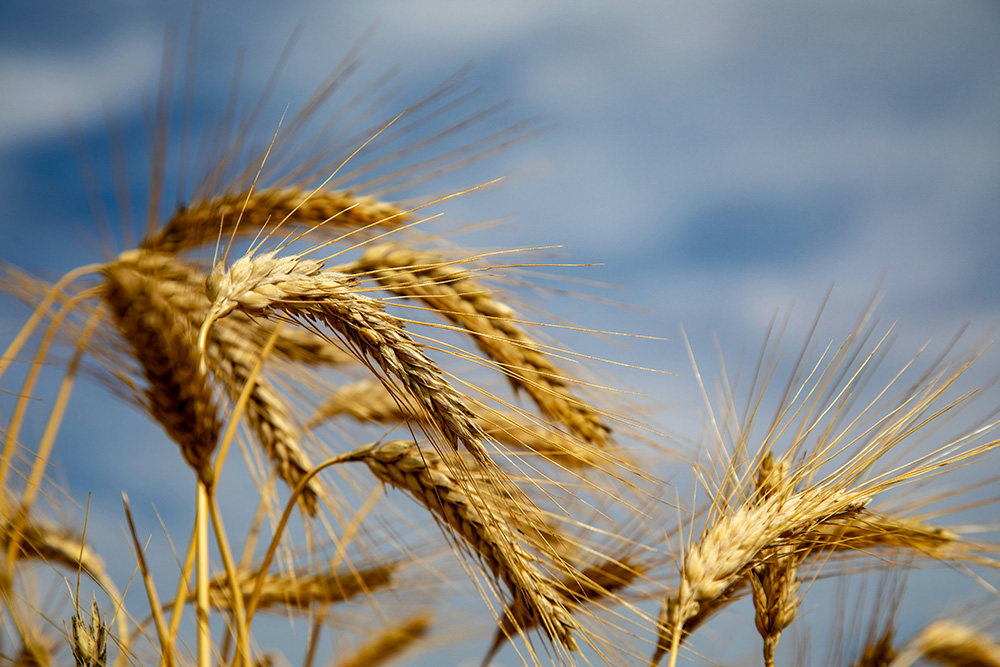
First, the weeds. The precise word Jesus used (zizanion) refers to darnel, a poisonous plant that looks very much like wheat when it begins to sprout. Jesus doesn't tell us why an "enemy" planted this noxious weed through the farmer's wheat field, only that it was done by an enemy.
Interestingly, the farmer won't get rid of the weeds. "Let them grow together until the harvest." The farmer's decision makes sense because the roots of the two plants are intertwined, so to pull up one would damage the other. Darnel's greatest threat to the wheat was that it competed for nutrients. When read as a parable, leaving the two together implied that the workers were not to judge what was wheat and what was weed. That judgment comes only at the harvest.
Jesus' second parable offers an odd follow-up to the first. What we may not realize is that the mustard plant would often be classified as a weed. Mustard plants can grow as high as 10 feet, produce up to 8,000 seeds, and inhibit the growth of other crops. The idea that a farmer would plant mustard was laughable, but effective as a symbol of prodigious expansion.
The third parable we hear refers to leaven and about 10.5 pounds of flour. The leaven, as in sourdough, came from leavened dough left from a previous batch of bread. As with the other two, the parable refers to the transformative power of something seemingly insignificant.
Advertisement
Jesus described the kingdom of heaven as a collaborative process. People do their part to channel a power beyond their control. They help direct the unstoppable power of life and growth that belongs to God. This takes us to Paul's words to the Romans.
Like the servants who might not distinguish wheat from weeds, Paul admits our inability to comprehend what God is doing among us. And like we heard from Wisdom, God has care of all: God truly cares about everyone and everything and wants to share divinity with it all. St. Augustine explained Paul's belief in the Spirit praying within us, saying, "You have made us for yourself, O Lord, and our hearts are restless until they rest in you."
Ultimately, the Spirit works to disquiet us, to keep us restless like seeds and leaven that are impelled to grow, to burst into life. As in the parable of the wheat and the weeds, we don't always know God's will. What we can be sure of is that there is a deep longing in us, and in all of creation, to be part of the process that leads to experiencing the kingdom of heaven among us.
What is ours to do in this process? First, we need to get in touch with our deepest longings — our desire for life-giving relationships with God, others and all of creation. No matter what weeds may try to choke the life out of it, this urge for life remains deep in us and in every living creature.
Once we begin to be in touch with where the Spirit is moving in us, we are meant to stay restless like leaven and irrepressible seeds. We will gradually learn that it's not ours to do the weeding, but rather to try to awaken or stir up the goodness in ourselves and others and contribute what we can to the bursting forth of the kingdom of heaven among us.