(Dreamstime/Shaiith)

by Sr. Mary M. McGlone
Join the Conversation
Send your thoughts to Letters to the Editor. Learn more
In 1966 (prehistory to some), Peter, Paul and Mary recorded "Pack Up Your Sorrows," a song that Jesus could have been singing on the road to Emmaus. The composers, Richard Fariña and Pauline Marden, urge people to pack up their sorrows, promising, "You would lose them, I know how to use them, give them all to me."
Luke's Emmaus story opens with two disciples who left Jerusalem on the third day after Jesus' death. As in the song, they'd seen "too many bad times, too many sad times." So, even after hearing their women friends report the angel's proclamation that Jesus was alive, they set off walking in the shadows of their disillusionment. Then the stranger caught up with them.
This much reflects the song, but Luke was no folk singer. He structured this narrative on the model of his community's celebration of the Eucharist.
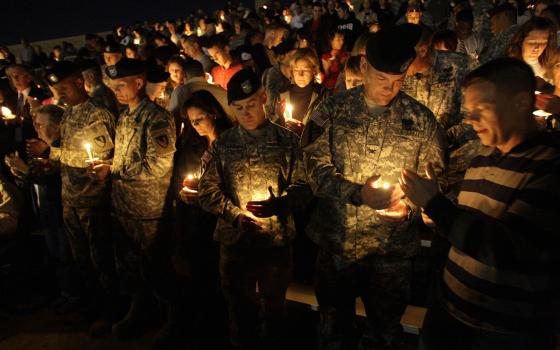
Luke opens the story with the two disciples conversing and debating about all that had happened and how their hopes had been dashed when Jesus was arrested and killed. It's hard to imagine their sorrow. We might think of families who lose a member to war or the parents of a child caught in the crossfire. We could think of martyrs like the Rev. Martin Luther King, Archbishop Óscar Romero or Alexei Navalny, each of whom were murdered because of their commitment to their people. But nobody thought any of them was the Messiah. The grief of the Emmaus pilgrims went as deep as the human capacity for hope.
Jesus listened to them — perhaps in a synodal way, understanding their misery and allowing them to have their say before he shared his perception of the events. He took in their version of how the authorities got rid of Jesus, terminating his mission and putting on a gruesome spectacle to warn others who might take up his cause. Instead of the Messiah, they now understood Jesus as another John the Baptist and the other martyred prophets. Now he was dead — just like their hopes and faith in him.
Jesus listened to their sorrows. Then, frustrated as he had been so often with his disciples, he said, "O how foolish you are! How slow of heart!"
And once again he led them through the Scriptures, interpreting all they had seen from his vantage point. As he had time after time, he talked about a suffering Messiah, about God's solidarity with all victims. He invited them to share his faith perspective even though it seemed so far beyond their mentality.
Perhaps their mourning made them vulnerable to new insights, perhaps their hearts stored vague, unspoken echoes of Jesus' teachings. Perhaps the love and amazing insight they found through their conversation with Jesus led them to begin to grasp who he was and his message. What they knew for certain was that they wanted him to remain with them.
Advertisement
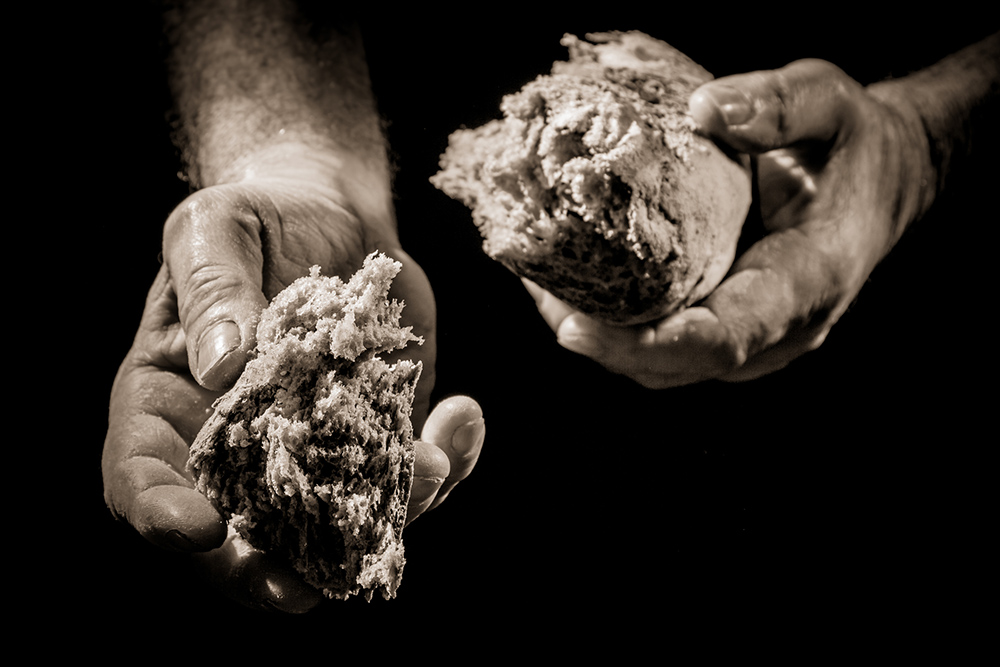
At the table, Jesus assumed the role of host. As he had so many times before, he "took the bread, blessed and broke it and gave it to them" as communion with him and one another.
With that, they realized who was with them. Even as he vanished, all they could think of doing was to run back to Jerusalem to tell the others. There they found out that others had had similar earth-shaking and mysterious experiences.
As we contemplate Luke's Emmaus liturgy, we have the opportunity to consider the potential of our own celebrations. The disciples' carrying the sorrows of the world was a type of penitential rite — begging to see God's mercy in the midst of tragedy. Vulnerable and profoundly honest, the travelers poured out their hearts, giving the risen Lord the opportunity to connect with them at the deepest level possible.
Then, in an extraordinary Liturgy of the Word, Christ opened the Scriptures to them. He explained how God receives sin and tragedy and creatively transforms them, opening the way to the grace of transformation and healing. As Jesus' perspective awakened them to a new understanding of life, they wanted more. They asked him to remain present with them.
We can imagine that when Jesus blessed the bread, he did it as he had at their last supper: after thanking God, he offered himself with the bread and offered them full communion with him in his way of living and dying for others. Accepting communion impelled them into an evangelizing mission.
This is the liturgy Luke suggests for us. We begin by bringing the world's tragedy to God, asking that divine mercy become active among us. We take in Christ's message, accept communion in him and join his mission. Like him, we bid others to let us share their sorrows so that together we can seek, receive and transmit God's transforming grace for the sake of the entire world.