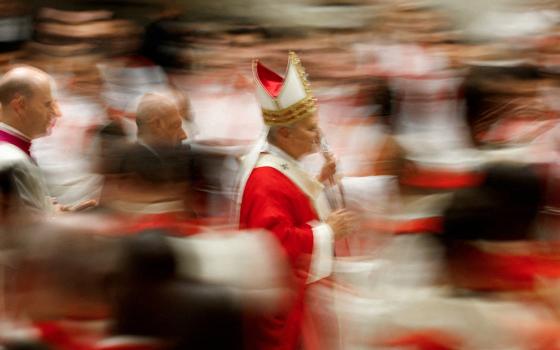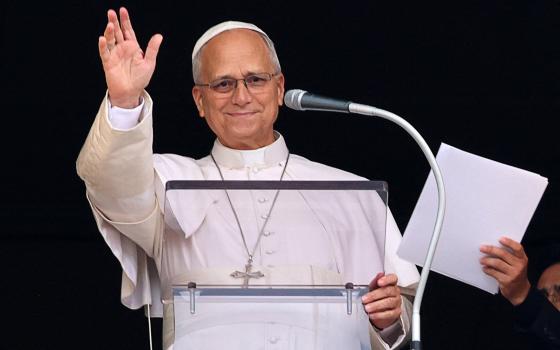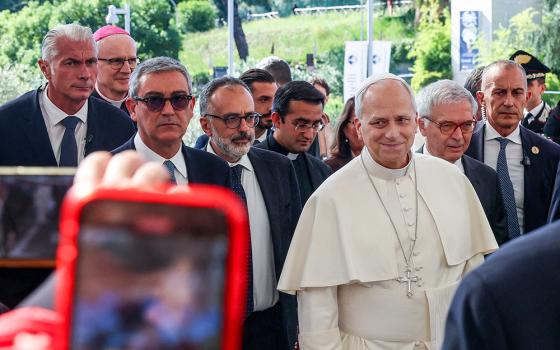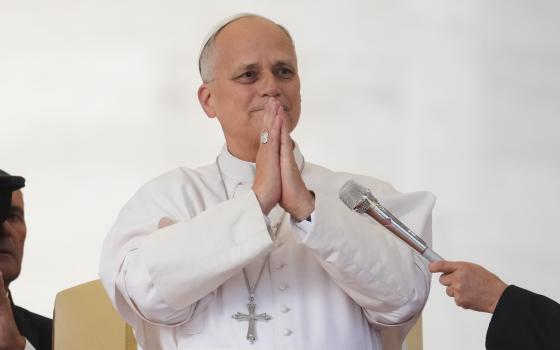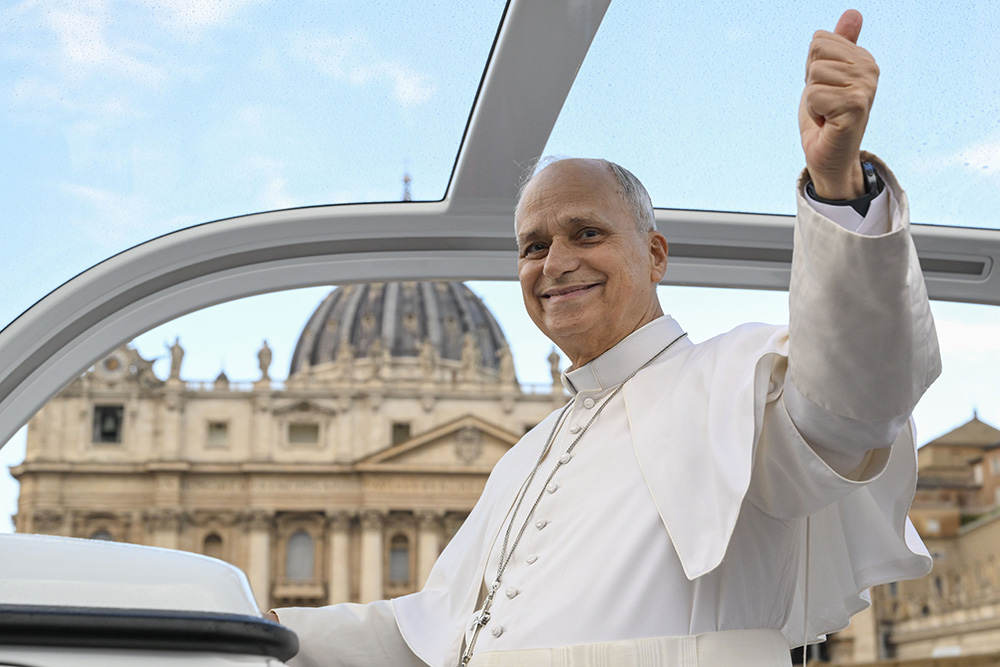
Pope Leo XIV gives the thumbs up as he arrives in his popemobile in St. Peter's Square at the Vatican, Oct. 21, 2026, to hold his first weekly general audience since cancer surgery on Oct. 13. (OSV News/Vatican Media/Simone Risoluti)

Join the Conversation
Send your thoughts to Letters to the Editor. Learn more
Pope Leo XIV's doctors said on Wednesday, Oct. 21, that his lung cancer did not spread beyond a malignant tumor that was removed during his operation. They stated, "No further treatment is necessary."
Eight days after Leo underwent surgery to remove the lower lobe of his right lung and extract a cancerous tumor, test results "confirmed that the tumor was a pulmonary adenocarcinoma and that the disease was localized," the pope's doctor and the surgeon who operated on him said in a statement. "A subsequent oncological evaluation confirmed that no further treatment is necessary."
The update appears to close a brief and turbulent chapter of Leo's pontificate that began Oct. 11 when he announced that he was undergoing surgery to remove a nodule, or small growth, that had been detected in his lung during routine medical tests. After a successful operation two days later, the pope spent four days in the hospital to recover before being discharged on Oct. 17 and appearing in St. Peter's Square the following day to pray the Angelus.
Despite Leo's strong public appearances on Sunday and at his general audience on Wednesday, serious questions over his condition remained after the surgery. Medical experts say biopsy results to determine the spread of cancer after a lung operation can take anywhere from seven to 14 days.
Doctors put those concerns to rest on Wednesday evening, announcing "histological reports and molecular biology test results on the tissue removed during the Holy Father's surgery were released" and showed that the cancer had not spread beyond the removed tumor.
Advertisement
Following the pope's surgery, Dr. Alexis Chidi, a thoracic surgeon at Memorial Sloan Kettering Cancer Center in New York, told National Catholic Reporter that doctors would examine the lung tissue and lymph nodes removed during surgery to determine continued treatment options.
"Based on that, the total size of the tumor, whether there's one or multiple, and whether there are any lymph nodes involved, that determines whether additional things like chemotherapy, immunotherapy or targeted therapy are necessary," she said.
For the pope, no further treatments were deemed necessary, suggesting that doctors do not suspect any further threats posed by cancer beyond the removed tumor.
Leo appeared active, energetic and spoke with a strong voice during his Wednesday general audience, indicating a strong recovery from the 71-year-old tennis-playing pontiff.
The pope's strong showing also buoyed hopes that his planned Nov. 6-17 trip through Uruguay, Argentina and Peru — thrown into jeopardy as a result of the surprise surgery and recovery timeline — would continue.
The surgeon who operated on the pope said that there were "no clinical reasons why this visit should not take place," in an Oct. 17 interview with Vatican News.
"The Holy Father has put his heart and soul into his recovery, as the most motivated people do after this kind of operation," said Dr. Stefano Margaritora, the surgeon.
The National Catholic Reporter's Rome Bureau is made possible in part by the generosity of Joan and Bob McGrath.