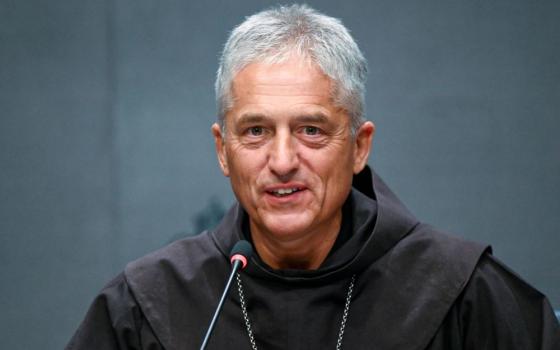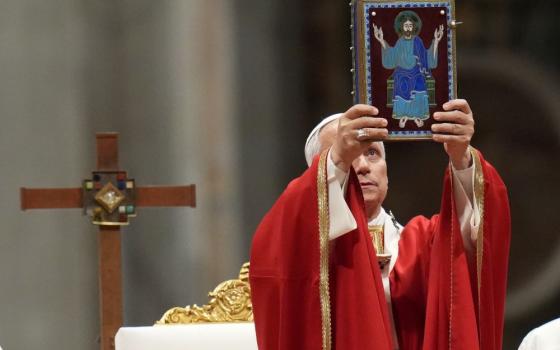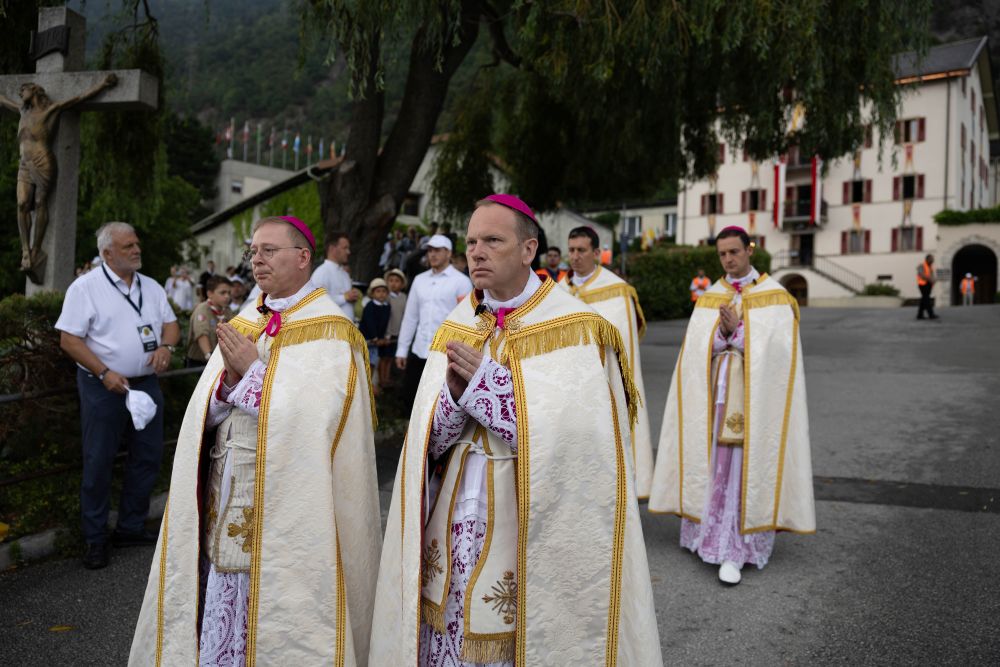
The four newly consecrated SSPX bishops process to the seminary courtyard after the July1 consecration outside St. Pius X seminary, in Écône, Switzerland, July 1, 2026. (Courtesy of Society of Saint Pius X)
Join the Conversation
Send your thoughts to Letters to the Editor. Learn more
Moments after swearing obedience to the Catholic Church, the pope and his legitimate successors, four priests were made bishops without papal approval in what Pope Leo XIV had warned would be a "schismatic act."
For months, tensions had been building between Rome and the Society of St. Pius X, an ultraconservative Catholic group known as the SSPX that rejects several church teachings and reforms it says have been tainted by modernity.
Those tensions came to a head July 1 in the rural Swiss Alps, when the SSPX consecrated four new bishops for the society on the grounds of its international seminary in Écône, despite repeated Vatican warnings that doing so without the pope's approval would result in excommunication for those involved.
Among the four priests was Fr. Michael Goldade of St. Marys, Kansas, home to a large SSPX community. Goldade is now director of the society's seminary in Dillwyn, Virginia, where nearly 100 seminarians are in formation, according to the society. The SSPX claims to have more than 750 priests worldwide and 1,500 members — including brothers, oblates and religious sisters — active in 77 countries.
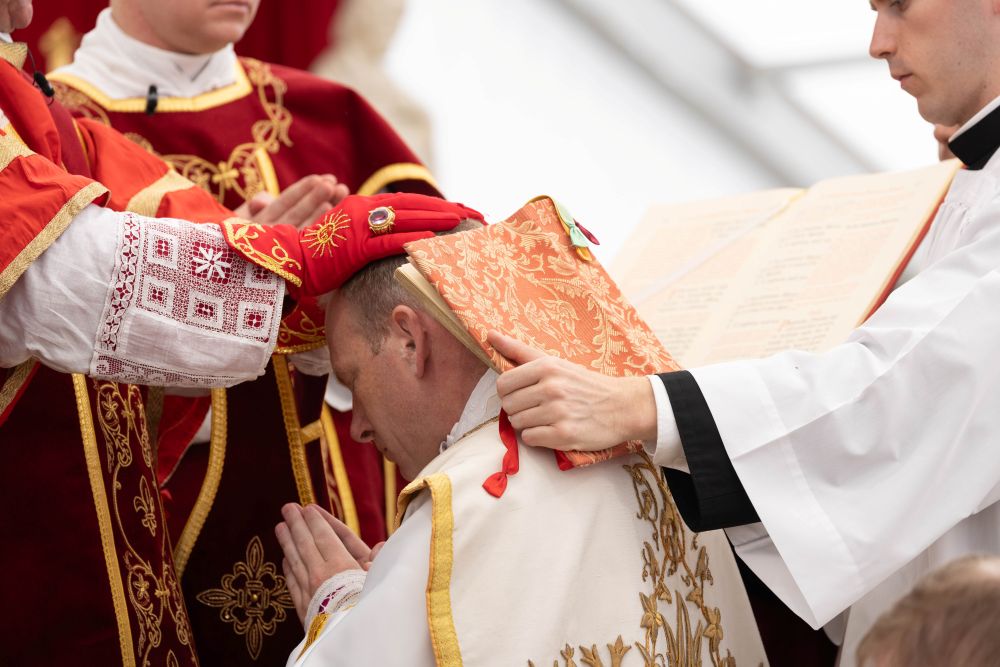
One of four new SSPX bishops is consecrated during a Mass outside St. Pius X seminary, in Écône, Switzerland, July 1, 2026. (Courtesy of Society of Saint Pius X)
Breaking months of public silence on the looming rupture, Pope Leo XIV said in the days before the consecrations that the church must "move on" if the SSPX followed through on its threat. He also sent a letter to the society's superior, published by the Vatican the day before the consecrations, urging the group to turn back from committing what he called a "sin of extreme gravity."
But Fr. Davide Pagliarani, superior general of the SSPX, said in his homily at the consecration Mass that the pope's appeal presented a "false dilemma" between the society's vision of the faith and its adherence to the church.
"No one can choose between faith and the church," he said. "We want the faith of the church in order to remain in the church, and we want the church within the faith, even if those opposed to us refuse to understand this."
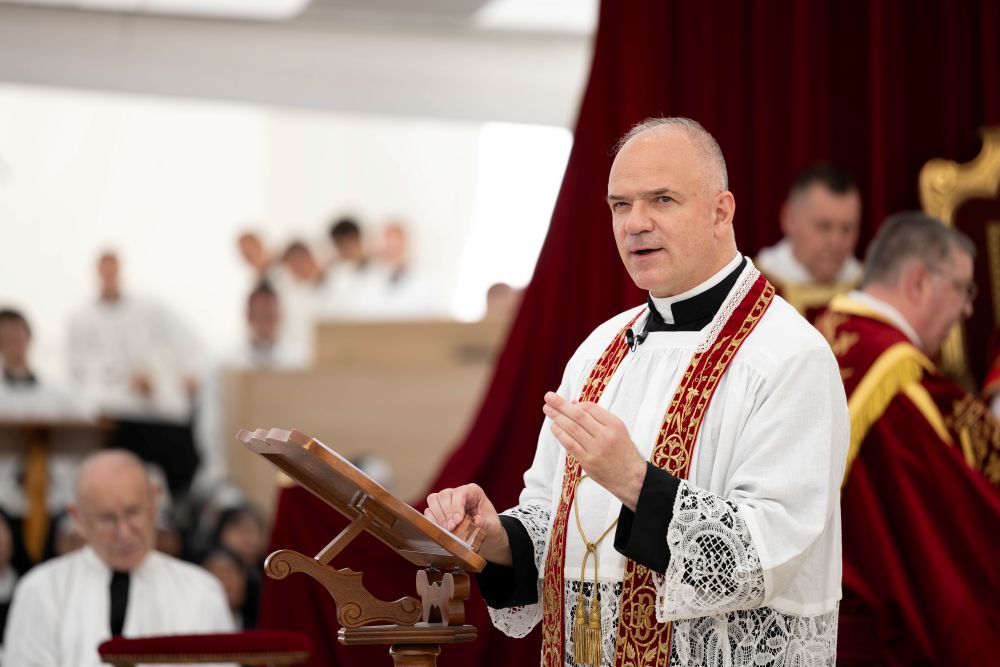
Fr. Davide Pagliarani, superior general of the Society of St. Pius X, gives the homily during a Mass in a tent outside the Society of St. Pius X seminary on July 1 in Écône, Switzerland. (Courtesy of Society of St. Pius X)
Organizers said some 16,600 adults attended the outdoor Mass outside the society's international seminary, nestled in the Swiss Alps. Many attendees brought young children, who were not included in that count.
A contained excitement bubbled among the crowd as attendees filtered onto the seminary grounds, chatting about their links to the society from disparate parts of the world before picking up bracelets with QR codes for cashless payments once inside, much akin to a music festival.
Families entering the grounds spoke to one another in English, German, French, Czech and Spanish. Even the day before the consecrations, the Swiss towns surrounding Écône were populated with attendees: priests stepping off tour buses in full cassocks, large families with children in veils and pilgrim groups with open breviaries on regional trains.
After a half-hour procession, the four priests sat before the altar and swore an oath to "forever be faithful and obedient" to the pope and to "combat and pursue, to the best of my power, heretics, schismatics, and those who rebel against our Holy Father the pope and his successors."
The presiding bishops, Alfonso de Galarreta and Bernard Fellay — both of whom were excommunicated in 1988 after being illicitly made bishops, a decision later lifted by Pope Benedict XVI — did not have a papal mandate, which is customarily read aloud during a bishop's consecration.
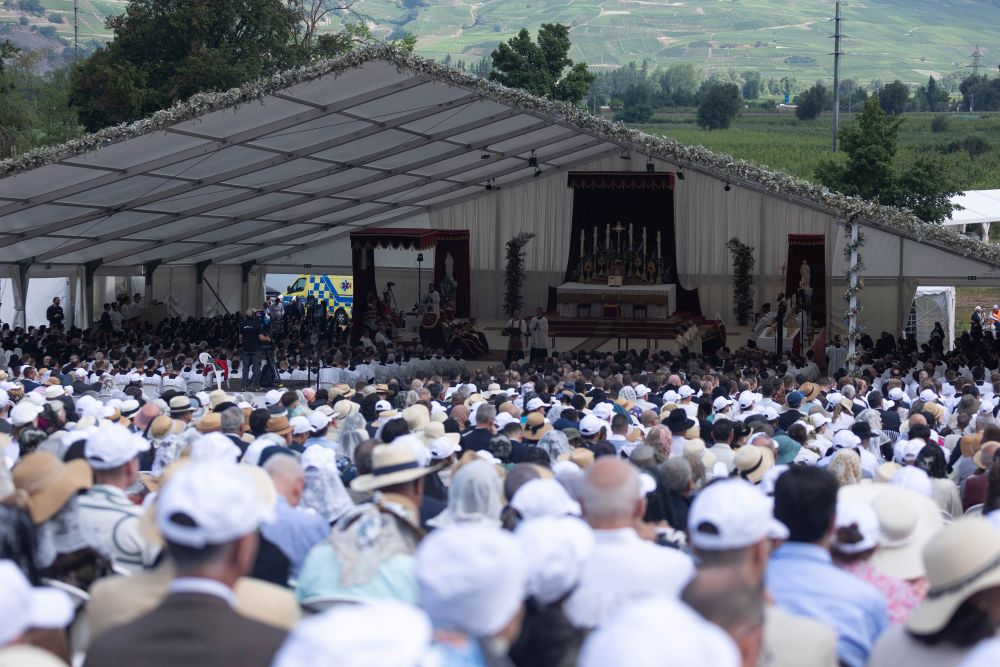
Organizers said some 16,600 adults attended the outdoor Mass outside St. Pius X seminary, in Econe, Switzerland, July 1, 2026. Many attendees brought young children, who were not included in that count.(Courtesy of Society of Saint Pius X)
At the point in the liturgy when the mandate would normally have been read, an assisting priest instead pronounced a statement justifying the consecrations.
"From the Second Vatican Council to the present day, the authorities of the church have been animated by a spirit that is contrary to that of the faith and have been acting against holy tradition," the assisting priest said. "Therefore before God we consider it a sacred duty toward the holy church, toward souls, to proceed with the consecration of bishops who are entirely faithful to her holy tradition and to her constant magisterium."
Though the four-hour Mass began in sunlight, with the crowd forming a sea of white caps printed with "Écône 2026" that were distributed at the entrance, clouds slowly gathered and darkened overhead as the ceremony reached its focal point. Screens showing the Mass flashed a warning: "Beware of imminent thunderstorm."
As the host was consecrated, a torrential downpour fell on the crowd and muddied the hillside while thunder roared and lightning flashed across the sky. The rain kept drizzling and subsided after some 20 minutes.
Advertisement
After receiving their miters, the new bishops walked through the crowd to give their blessing, holding out their gloved hands for the kneeling faithful to kiss their rings.
By the Mass' close, the sun had returned. The newly consecrated bishops processed uphill to the seminary courtyard, where they were met with applause by SSPX priests.
Despite the celebratory scene, a melancholy tinged the crowd, which was well aware of the consequences of what it had just witnessed.
"There is definitely some sadness that Rome is not happy about the situation, because it's so clear to us that this is not only a good thing but a holy act, and a necessary act," said Joseph Torzala, a Latin teacher at La Salette Academy, an all-boys SSPX boarding school in Illinois.
But rather than a "schismatic act," as the pope described it, Torzala told National Catholic Reporter that he sees the consecrations as "a statement to the world that all we want is to be Catholic."
"It's come to the point where that means we need more bishops so we get more bishops," he said. "I'm sure some will be souls that are scandalized, but for those that truly understand the situation I don't think it will change their faith one bit."
The National Catholic Reporter's Rome Bureau is made possible in part by the generosity of Joan and Bob McGrath.