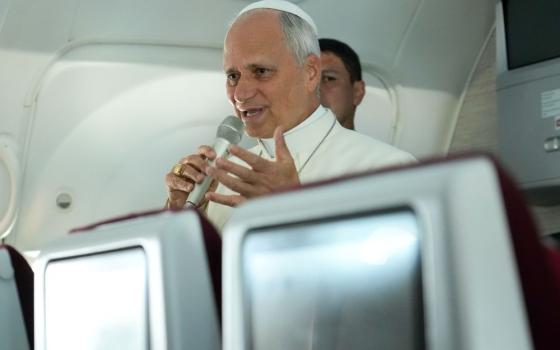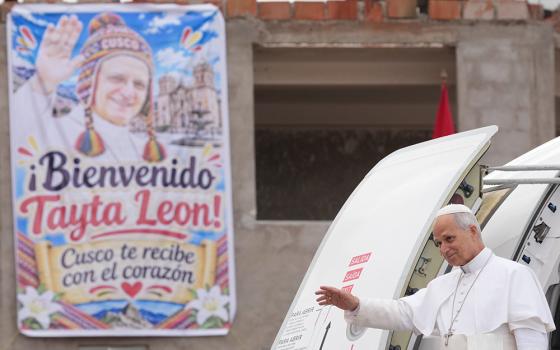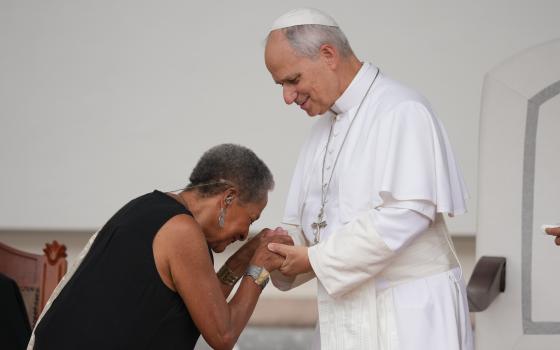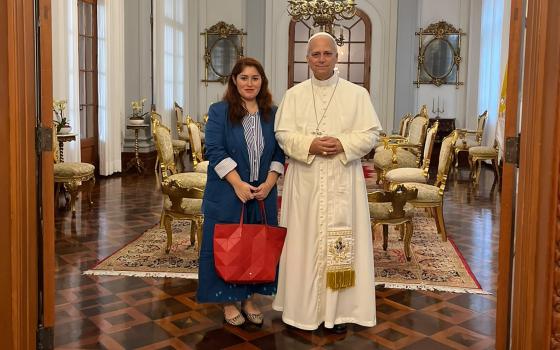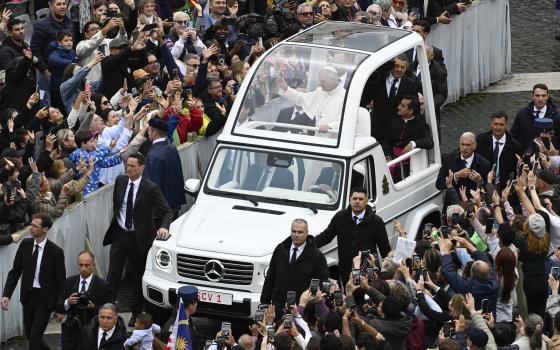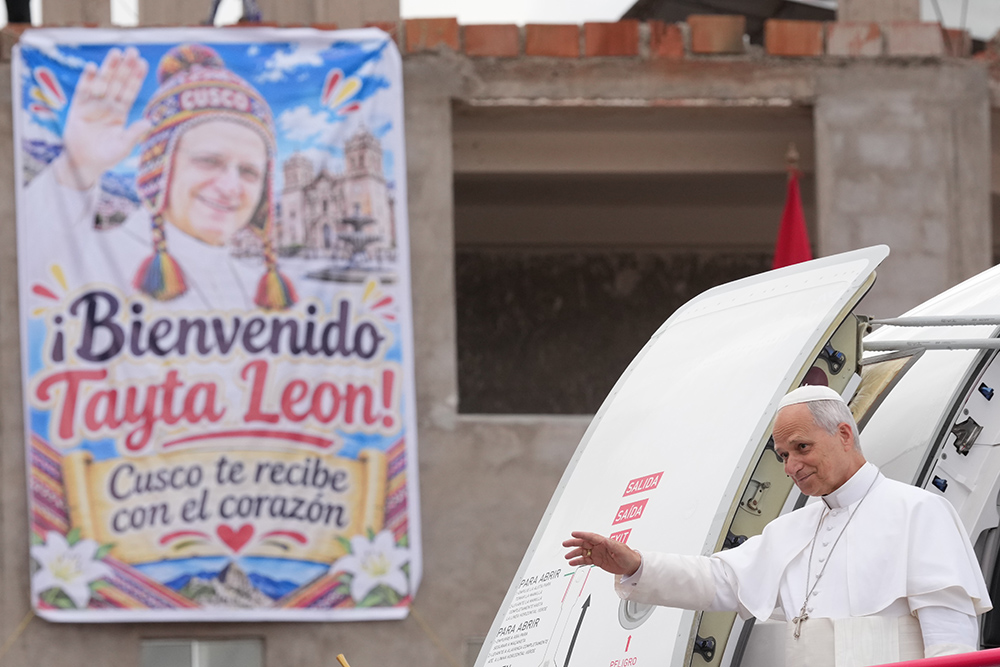
Pope Leo XIV arrives for a meeting with the faithful and representatives of popular devotion at Saqsaywaman National Archaeological Park in Cusco, Peru, on the 10th day of his 12-day apostolic journey to South America on Nov. 15, 2026. (AP Photo/Andrew Medichini)
Join the Conversation
Send your thoughts to Letters to the Editor. Learn more
Chicago may be bracing for the return of its native son, Pope Leo XIV, at an unknown future date, but anyone looking for the festivity and fanfare of a papal homecoming could find it last week in Peru during Leo's whirlwind trip through Latin America.
While the pope's 12-day marathon tour through Uruguay, Argentina and Peru was a show of his stamina, it also underscored a distinction which even the pope himself makes between the person of Robert Prevost, born and raised in the Windy City, and the pastor of the universal church who was formed in Peru.
Leo's Nov. 11-17 visit to the country that first received him as a missionary in 1985 carried a sentimentality rarely seen from the pope, and one which Pope Francis, who never returned to his native Argentina, had never experienced as the successor of Peter.
Across 18 speeches delivered over six days in Peru, Leo repeatedly highlighted his strong ties to the country where he served for more than 20 years as a missionary priest and bishop (cracking more than one joke about the good food he had enjoyed there) but he also reiterated on various occasions how the Peruvian church had informed his ministry as pope.
Advertisement
Formed as a pastor in Peru
In his last public address outside Chiclayo, the diocese he led for eight years, Leo recalled praying on the eve of his episcopal ordination for the intercession of St. Turibius, a 16th century Spanish saint who, like Leo, had been a foreigner sent to lead a diocese in Peru.
"That night I asked the Lord to teach me how to be a shepherd," he told the intimate crowd gathered at a shrine in the desert town of Zaña, in his former diocese. "Looking back on the years that have passed, I now understand that you have been part of God's answer to that prayer," he said, addressing the cheering audience.
As Leo traveled between events in Peru's arid coastal north, it was sometimes hard to imagine that a pope had emerged from such a landscape, where not even small plants can rise up from the firm, dusty soil. Yet it was there in Chiclayo, he said after his election, that "a faithful people accompanied its bishop" and helped teach him how to lead the church.
After arriving in Peru, Leo said that in looking back on his ministry there, "I recognize in those years a part of the journey through which the Lord was forming me as a shepherd." And on the flight back to Rome, he put it more plainly: His way of living out his faith had been "greatly affected — transformed, one might say — by Peru."
As the second consecutive pope elected with deep ministerial roots in Latin America, Leo's willingness to credit Peru so directly for the pastor he has become underscores the lasting contribution of the region to the universal church.
"Both Pope Francis and now Pope Leo understand the social conflicts of Latin America, they understand what incarnating the Gospel looks like, and they understand the conflicts that flow from that," said Michael Lee, director of the Francis & Ann Curran Center for American Catholic Studies at Fordham University. "These two Latin Americans — Americans — they understand better the context, and so you've seen a much more prophetic voice from Rome to speak to what is going on in Latin America and the realities of Latin America today."
An increased focus on environmental issues and the attention given to people in the Amazon region, which was the subject of a Vatican summit under Francis and to which Leo traveled on Nov. 16, represents a "huge shift" from the popes' most recent European predecessors, Lee told National Catholic Reporter.
The Latin American church has a history in liberation theology, whose "preferential option for the poor" drew criticism over its use of Marxist analysis. But Lee said the church's social concerns cannot be reduced to that older ideological dispute.
In Latin America, "you have a church that is now grappling with the issues of today," Lee said. "It's not communism, it's neoliberalism, it's climate change; it is dealing with Indigenous questions. Now with Leo it's even dealing with AI technology."
Leo addressed those realities throughout the trip. In secular Uruguay, he insisted on the need for universal healthcare. In Argentina, he said the economy must be "at the service of the people," as the government continues to pursue austerity measures that cut social programs. In Peru, he called for unity in a church and society marked by polarization and political instability.
The pope insisted on the flight back to Rome that "the message I want to convey is not political." Instead, Leo said he speaks of Magnifica Humanitas, a reference to his encyclical letter "safeguarding the human person in the time of artificial intelligence."
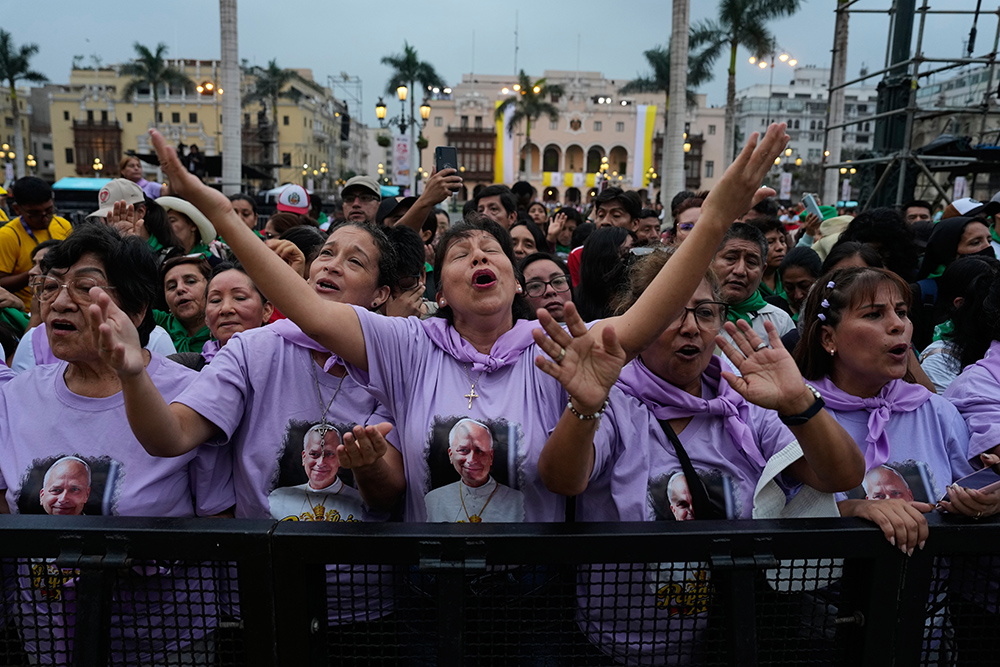
The faithful pray in Plaza de Armas as they await Pope Leo XIV's arrival at the archbishop's residence in Lima, Peru on Nov. 12, 2026. (AP Photo/Martin Mejia)
Learning from the poor
The pope's focus on a nonpolitical but still social message reflects the experience of the post-Vatican II Latin America church, said David Lantigua, director of the Cushwa Center for the Study of American Catholicism at the University of Notre Dame. The post-Vatican II focus for much of the church in the developed world centered on combatting the threats of secular modernity, "but in Latin America, the big issue, of course, was poverty," he said.
"The world of poverty is in a sense the context in which the Gospel is reread, so that is the starting point for theological reflection rather than the question of the unbeliever or the atheist," Lantigua told NCR.
Among those developments was a strengthened idea that church leaders must learn from the people they serve, a principle Francis highlighted in the 2013 "roadmap" for his pontificate, Evangelii Gaudium, and which Leo cited in his 2025 apostolic exhortation on love for the poor, Dilixi Te.
"I am convinced that the preferential choice for the poor is a source of extraordinary renewal both for the Church and for society," Leo wrote in that 2025 document.
"That is an influence of liberation theology: The poor are preachers of the Gospel," Lantigua said. He also noted that beyond the Latin American connection, both Francis and Leo share the vow of poverty they made as members of religious congregations: "I don't think that's accidental, that is actually really crucial for understanding who they are as pastors."
On his return flight to Rome, Leo acknowledged that in many ways he is a "gringo," jokingly referencing the term used by Latinos to refer to Caucasian North Americans. But he also referenced a newspaper article published before the conclave that elected him pope, and which very well may have upped his odds: "Prevost is the least American of the Americans."
Abby Strelow contributed reporting from Rome.
The National Catholic Reporter's Rome Bureau is made possible in part by the generosity of Joan and Bob McGrath.