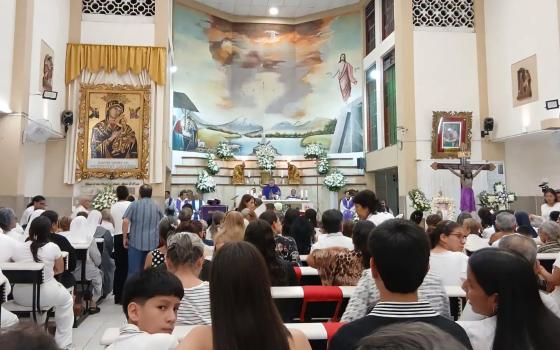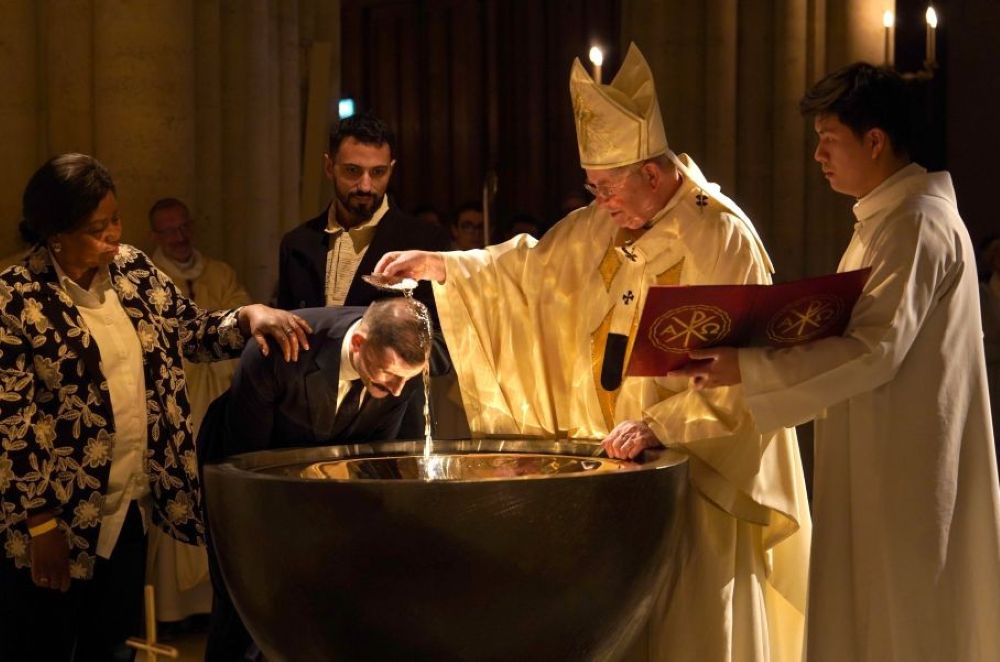
Paris Archbishop Laurent Ulrich baptizes an adult man in the baptismal font of Notre Dame Cathedral in Paris during Easter Vigil April 4, 2026. (OSV News/Courtesy Archdiocese of Paris/Liam Hoarau)

Join the Conversation
Send your thoughts to Letters to the Editor. Learn more
Catholicism in France has been in decline for decades, but Pope Leo XIV will encounter a very different challenge during his September visit to the nation long considered "the eldest daughter of the church," namely, how to respond to a surge of young people seeking to join its ranks.
Whether wavering or well-founded, the narrative of a Catholic revival has taken hold in France. Dioceses across the country are reckoning with how to accompany a new subset of Catholics that have a distinct vision of the faith and relationship with the church unlike that of the cradle Catholics they have previously known.
The numbers themselves tell a clear story of a surge in renewed Catholic interest.
Whereas government data showed a precipitous drop in the rate of French adults under 50 identifying as Catholic from 2009 to 2020 — from 43% to 25% — the French church has been bucking that trend in more recent years.
The number of adult baptisms in France hovered around 4,000 a year between 2015 and 2022. That number rose to 5,463 in 2023, then ballooned to 7,135 in 2024. By last year, it had shot up to 10,384, with the sharpest increase among adults 18 to 25.
That trend also extends across the Atlantic, where dioceses across the United States are registering record numbers of people joining the church. But some experts in both the U.S. and France see the surge in numbers as a symptom of growing populations with far fewer infant baptisms.
In other words, as increasingly large swaths of the population are being raised outside the church, even the trickle that do seek baptism later in life could prove statistically insignificant.
But whether the numbers are a statistical blip or the foretelling of a Catholic revival across the West, Leo appears eager to fan the flames of a renewed interest in Catholicism among young people today.
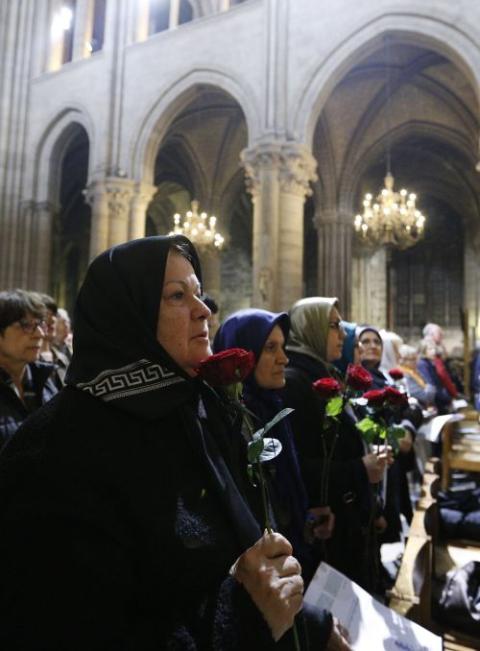
A file photo shows worshippers praying during Mass at Notre Dame Cathedral in Paris. (CNS/Paul Haring)
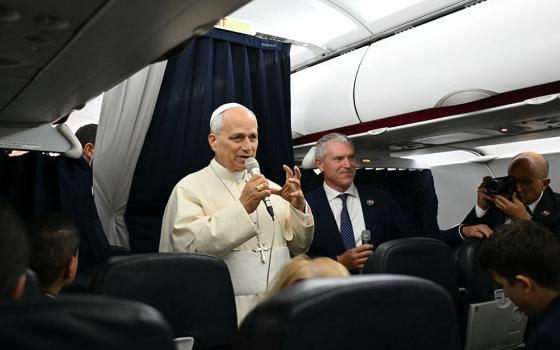
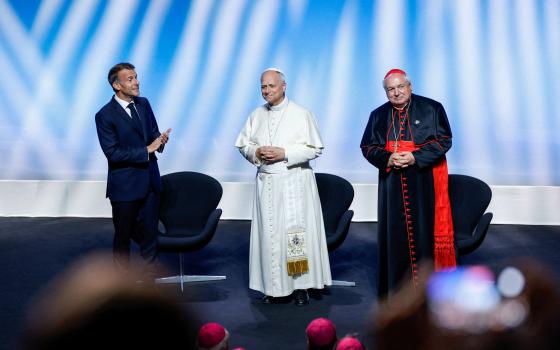
That conviction was made all the more clear when the Vatican announced that the pope will meet with catechumens, the term for people preparing to be received into the church, and newly baptized Catholics in Paris on Sept. 26. His apostolic journey to France Sept. 25-28 will include visits to Paris, Saint-Denis, Lourdes and Metz.
What the pope says to catechumens, and to the French church viewed as a potential precursor to a Western renewal of faith, will be telling of where the pope wants to lead the next generation of Catholics and shape their spirituality.
France's new Catholics seek doctrinal clarity
No singular reason can be attributed to explain the rise in adult baptisms across France.
A 2026 survey conducted by the French bishops' conference of 1,450 catechumens from 60 dioceses found that 40% of people seeking baptism were drawn to the church because they "went through a difficult time (illness, bereavement, etc.) that sparked a search for meaning." Other leading reasons included asking questions about the Christian faith, having a profound spiritual experience and being touched by the beauty of a religious site.
But the data is clear in showing that once in the church, new adult Catholics are solid in their practice: 90% of newly baptized Catholics surveyed reported attending Mass at least once a month.
Sr. Marie-Hélène Robert, a professor of theology and missiology at the Catholic University of Lyon and a Missionary Sister of Our Lady of the Apostles, told National Catholic Reporter that she sees most catechumens as emerging at the intersection of two cultural trends. First, she sees a renewed awareness of Christianity's historical roots in France, such as through the religious practice of a grandparent or a sense of pertaining to the country's Christian heritage, as well as a growing interest in faith among their peers, often amplified through social media.
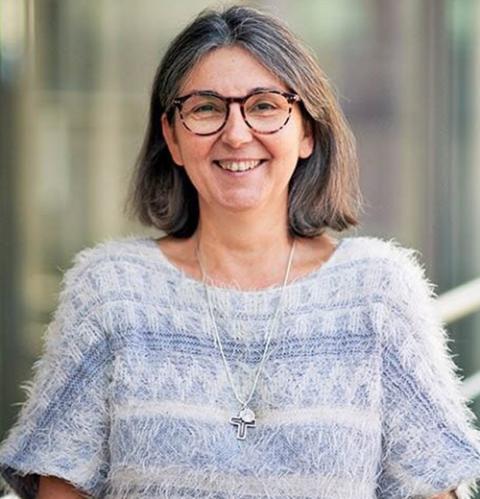
Sr. Marie-Hélène Robert, a Missionary Sister of Our Lady of the Apostles and professor at the Catholic University of Lyon (Courtesy of Marie-Hélène Robert)
But Robert, who also serves as a regular sponsor for people preparing to be received into the church, said that what drives catechumens' appeal to the faith appears different from that of past generations.
"In France, the social Gospel is no longer the dominant force," she said. For new Catholics, she said, "social activism isn't really their main issue. For them, it is more about the emotional aspect" of the faith. Namely, that means participating in spiritual activities such as attending Mass or adoration, and especially finding community among other Catholics.
An increased emphasis on the practice of faith life also translates into what new Catholics are asking from the church.
Young catechumens also seek out "very clear guidelines, which wasn't the case before: What should we do? What should we be living out?" Robert said. She recalled a 19-year-old catechumen who wanted to postpone receiving Communion at her baptism because she was in an unmarried relationship.
That mentality "is absolutely new," Robert said. "You did not see that among young people from traditionally Catholic families, but among young converts there is no question about it; that used to only be an issue in more traditionalist circles."
A sprawling 2026 consultation among clergy, catechumens and those who work with them across the Paris region found that "in a fluid society, catechumens are expecting clear and solid doctrinal and moral guidance" from the church."
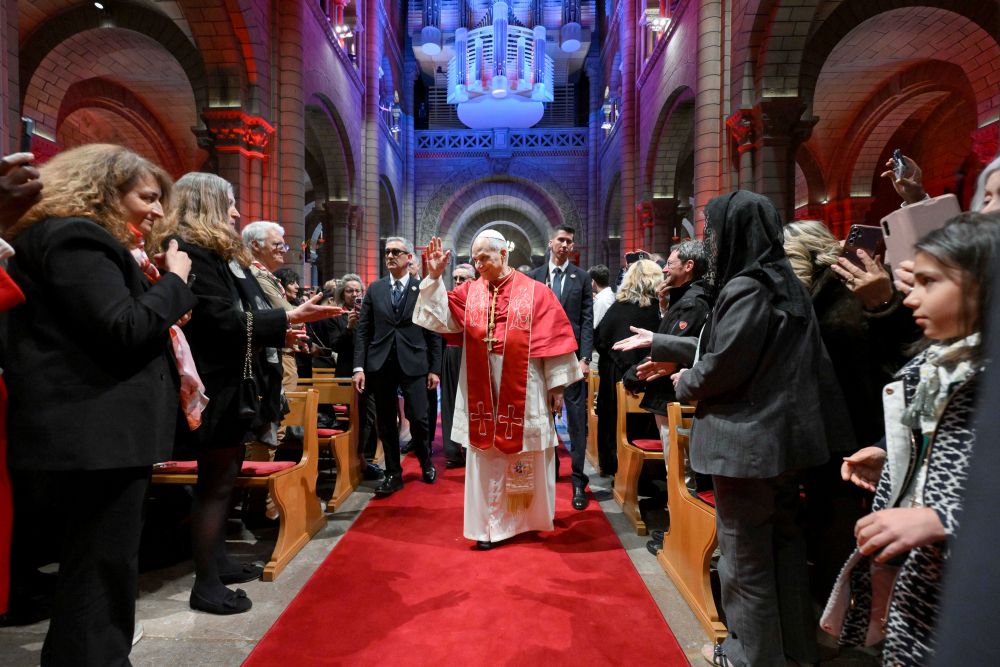
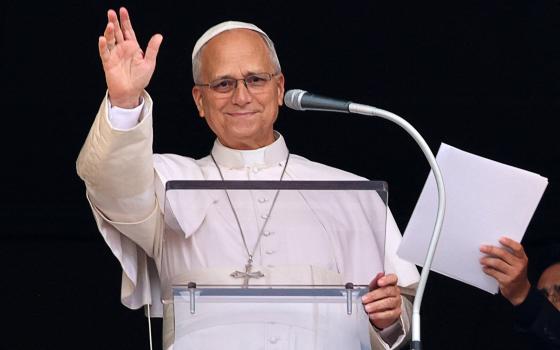
Pope Leo XIV arrives to lead a midday prayer with the Catholic community at the Cathedral of Our Lady of the Immaculate Conception of Monaco March 28, 2026. Leo will meet in Paris with catechumens and newly baptized Catholics on Sept. 26. (CNS/Vatican Media/Simone Risoluti)
Fr. Maximilien de la Martinière, secretary general of the Paris region's ecclesial assembly which produced that report, told NCR that "people who come to be baptized today are often more demanding when it comes to receiving doctrinal instruction."
"They want to know how to properly observe Lent. They are strict about attending Mass," he said.
But that doesn't mean new Catholics are intentionally seeking out more traditional Catholic communities, as has been suggested within more conservative pockets of the church.
"If someone wants to be baptized, they go to the place where they live," de la Martinière said. "At the start they don't know that there are different sensibilities. The issue at stake is much more about the 'welcome' rather than the sensibility."
Paris a model for the West?
To reckon with the opportunities and challenges the surge in conversions presents to the French church, the bishops from the greater Paris region launched a major consultation process on catechumens and the newly baptized in spring 2025, inspired by the Vatican's Synod of Bishops on synodality.
Dubbed the Ecclesial Provincial Assembly, the region-wide consultation sought to spur conversations in local churches on how the church welcomes, accompanies and transforms people interested in receiving the sacraments.
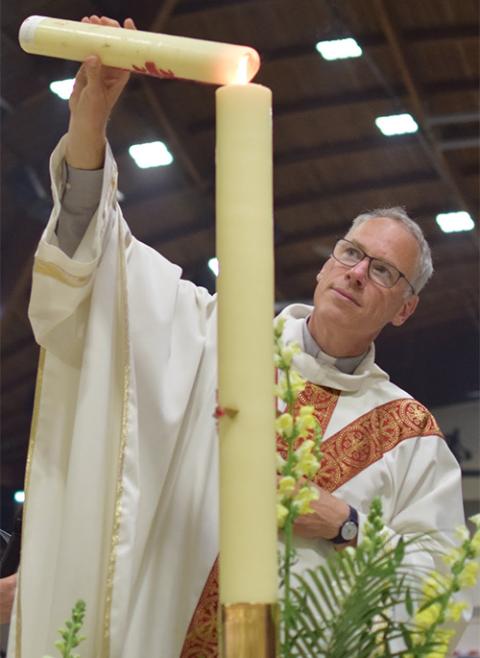
Fr. Maximilien de la Martinière (Courtesy of Maximilien de la Martinière)
An initial consultative phase drew input from some 50,000 people across the Paris region. Bishops, priests and newly baptized Catholics as well as those who accompanied them through their initiation into the church will meet in May 2027. The assembly will draft and vote on proposals for the region's bishops, to be approved by Rome and then distributed to the region's nine dioceses for application.
Catechumens, not yet baptized, will also participate in the assembly as observers but will not have voting privileges.
"The fact that this is a synodal process involving everyone means that everyone feels a stake in the outcome," de la Martinière said. "We are not just waiting for the final document, we are already in a culture of transformation."
The pope will meet with members of the assembly alongside French catechumens and newly baptized Catholics at the Catholic Institute of Paris on Sept. 26. De la Martinière expressed his hope that Leo will place a seal of approval on its work, since other churches with similar growing pains "are waiting for the results of our work so they can start their own projects."
Though written for the members of the assembly, the consultation's working document addressed itself to "those who feel drawn to this spirit of renewal sweeping through our Church." It proposed avenues that other churches can take up to conduct a wide consultation on the role of converts in a local context, improving the initiation process and better integrating new Catholics into communities.
New Catholics bring new challenge of integration
The distinct profile of young people approaching the church for the first time raises the challenge of integrating them into existing Catholic communities.
A 2024 guide on best practices for welcoming new catechumens into a community published by the Diocese of Nanterre, outside Paris, warned of a "cocoon effect" in parishes where newly baptized Catholics remain a closed group and do not integrate with the rest of the community.
Advertisement
In written comments to NCR, Bishop Matthieu Rougé of Nanterre said that developing a greater sense of fraternity and deepening each faith community's spiritual commitment are necessary to counteract that. He said that some new Catholics are surprised by the lack of welcome they experience in parishes and see only lax commitment to the faith from other congregants.
De la Martinière also remarked on the phenomenon of the "baptismal blues" that follow one's initiation into the church when, after months of receiving focused attention by their church community, "they must then become another parishioner among the others."
To beat those "baptismal blues," some church leaders are considering ideas that include small prayer groups meeting outside Mass and clear tracks for the newly baptized to become catechists or sacristans.
The church can also learn from the new converts, de la Martinière said.
With their zeal, the newly baptized are "shaking things up for the older generation because they’re encouraging them to question their practices and their beliefs," he said. "Since the older people are happy to see newcomers, they are ready to be shaken up. It makes them happy."
Rougé, the Nanterre bishop, wrote that one consequence of the increased presence of converts in the church "could be moving beyond the all-too-familiar internal tensions between conservatives and progressives."
"Through the uniqueness of their journeys and the intensity of their longing, catechumens and neophytes invite us to refocus intensely on what is essential: welcoming and proclaiming Jesus Christ," he wrote.
The National Catholic Reporter's Rome Bureau is made possible in part by the generosity of Joan and Bob McGrath.