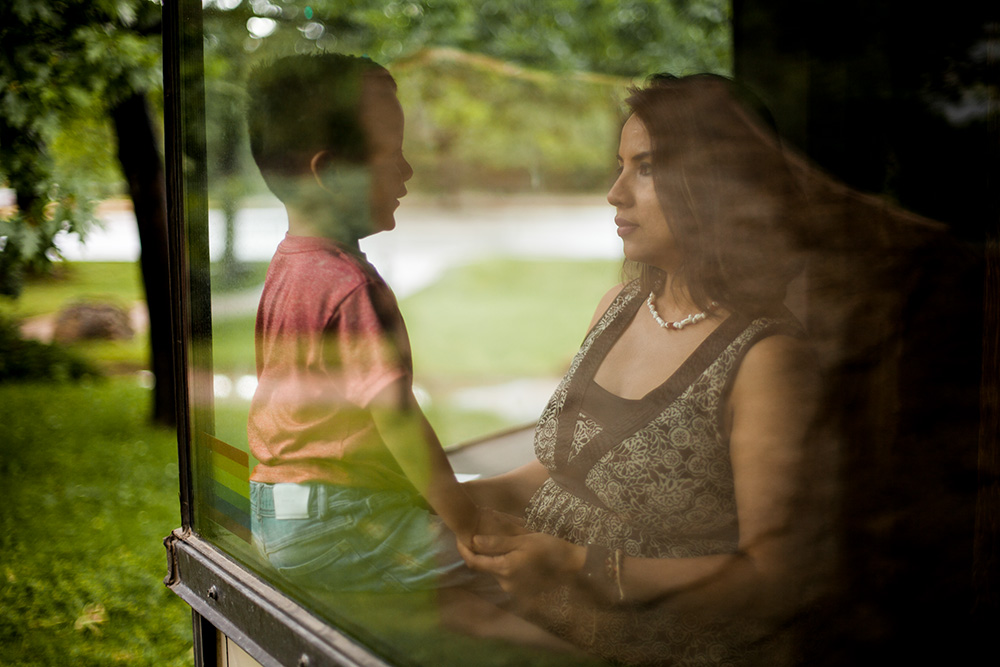
Ingrid Encalada Latorre and her son in sanctuary in Colorado in the documentary "Si Pudiera Quedarme" (PBS/Theo Rigby)
Join the Conversation
Send your thoughts to Letters to the Editor. Learn more
In one of the most compelling scenes in "Si Pudiera Quedarme" ("If I Could Stay"), a little girl watches her mother pack their belongings. The girl's wide eyes move from side to side as each object is carefully wrapped for the move from their home to sanctuary in a local church. There is no speaking, no voiceover; only the silent witness of a child taking in what has become her harsh reality.
The little girl is Luna, daughter of activist Jeanette Vizguerra, one of two women introduced to viewers in the documentary directed by Florencia Krochik and Theo Rigby. Over the course of nearly a decade, the film follows Vizguerra and Ingrid Encalada Latorre, undocumented and under constant threat of deportation, as they live in sanctuary and try to maintain the semblance of a normal life under the knowledge that if they step beyond the limits of the spaces they inhabit, U.S. Immigration and Customs Enforcement can detain them.
The directors invite us to pay close attention to the word sanctuary, as its meaning changes under the film's gaze. In fact, the legal definition in the United States remains unstable: Federal law still has no single statutory definition for a sanctuary jurisdiction, even though politicians continue to turn the word into a target. But under the compassionate eyes of the filmmakers, sanctuary becomes ministry as a community alters its life around the people it has promised to protect.
At just a little over an hour, the documentary can't hold every ordinary day, but it does offer something immigration stories have too often lacked: the grace of slow time.
The Rev. Alison Harrington, one of the pastors interviewed in the film, gives that ministry a lineage. Since 2009, Harrington has served as pastor of Southside Presbyterian Church in Tucson, Arizona. Southside Presbyterian was one of the churches that helped shape the sanctuary movement of the 1980s when congregations protected Central American refugees from deportation to almost certain death.
Harrington has written about sanctuary as part of a longer Christian tradition that includes biblical cities of refuge, churches that sheltered enslaved people and congregations that protected conscientious objectors. When she says, "Sanctuary is an act of resistance," it comes from a life lived in active ministry — and a history the film's central communities now inherit.
Vizguerra knows the cost of being a public witness. She speaks at immigration rallies, gives interviews to the media and addresses college students despite the risk, because staying silent would give others control over her story. Sanctuary, Vizguerra argues, is not a neighborly favor but a social justice. But throughout the course of the film, we see her come to terms with the heartbreaking understanding that the longer she remains in sanctuary, the less popular she becomes, as church members begin to question whether she is turning into a financial burden on the parish.
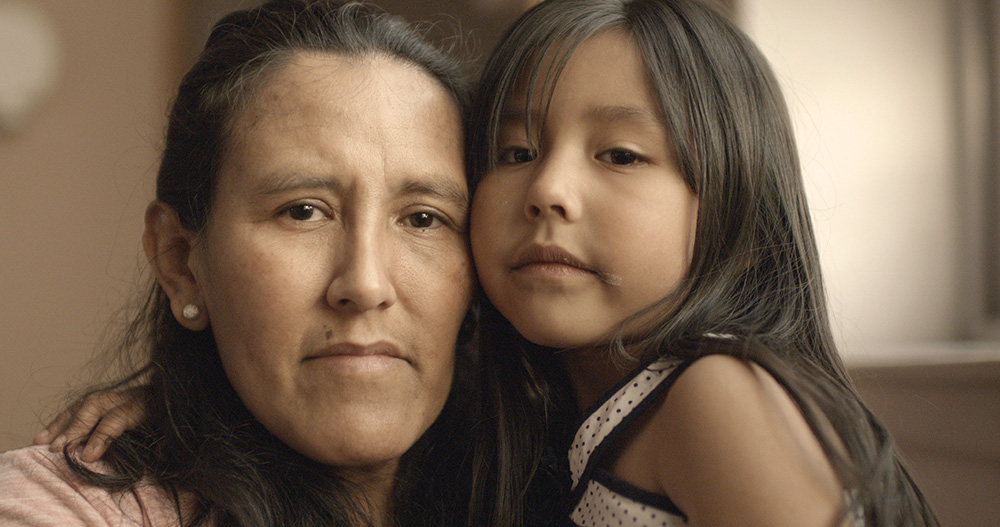
Jeanette Vizguerra and her daughter in the documentary "Si Pudiera Quedarme" (PBS/Theo Rigby)
The film contemplates the meaning of the American dream. In one scene, Latorre dons a T-shirt featuring the late pop singer Selena, and the image of the beloved Tejana singer feels like both a relic of immigrant success in this country and a harrowing reminder that their lives may end in tragedy at any time.
Latorre's story also shows how easily the law can turn survival into crime. In 2019, Colorado Gov. Jared Polis pardoned her from felony charges tied to a stolen Social Security number she had purchased so that she could find employment. The pardon eventually helped her reopen her immigration case and dream of leaving sanctuary after more than 800 days, during which time she became pregnant and gave birth to a daughter.
The depth of love among the community is movingly conveyed in scenes of Latorre's baby shower, thrown by parishioners and complete with pink cake and traditional Peruvian music. During one shot, the camera observes the party from outside the building, passersby oblivious to the tiny but rich world contained inside.
Advertisement
It is the women's children who become markers of time. We see Vizguerra's and Latorre's sons and daughters grow from babies and toddlers into teenagers who join rallies for immigration reform outside detention centers. Their activism is commendable but sobering: Do they even have a choice? Although sanctuary allows them not to be completely robbed of their childhood, they bear the weight of living as symbols and political figures in their communities.
Directors Krochik and Rigby use news footage and external views of their subjects carefully. At just a little over an hour, the documentary can't hold every ordinary day, but it does offer something immigration stories have too often lacked: the grace of slow time.
By the time we witness Vizguerra arrested by ICE in March 2025, the definition of sanctuary has evolved from a physical place into a network of women, pastors, neighbors and children committed to keeping one another alive. Vizguerra spent nine months at the GEO Immigration Detention Center in Aurora, Colorado, before a judge allowed her release on bond in December. When the credits roll, her American dream and the end of her story — like that of so many courageous undocumented mothers supported by faith communities — remain unfinished.
"Si Pudiera Quedarme" can be found on PBS stations, PBS.org and the PBS app.