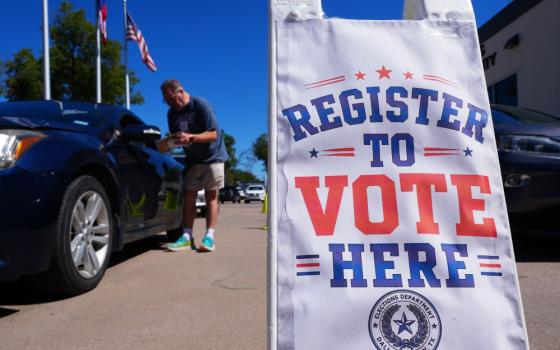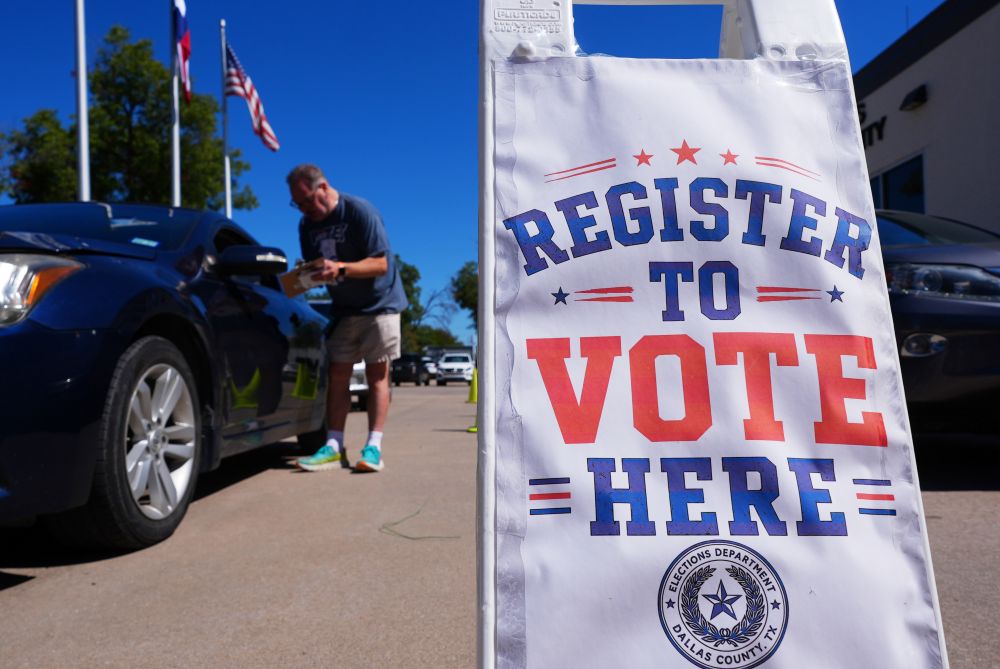
Volunteer Steven Marlin, left, helps a driver register to vote at a drive up location outside the Dallas County Elections Department in Dallas Monday, Oct. 5, 2026. (AP/LM Otero)
by Brian Fraga
Staff Reporter
Join the Conversation
Send your thoughts to Letters to the Editor. Learn more
At polling stations across the country, voters on Election Day might see Catholic priests, deacons and religious sisters providing a moral and pastoral presence as trained peacekeeping poll chaplains.
A handful of Catholic bishops in recent weeks have also been speaking out on the importance of voting, and dozens of Catholic and interfaith organizations are spearheading efforts to educate citizens about voting rights ahead of the Nov. 3 midterm elections.
"All this is rooted in the belief that everyone who can vote should feel safe to do so, and that every vote should count, because we believe that democracy is sacred," said Joseph Tomás McKellar, the executive director of Catholics in Communion, a coalition of more than 40 Catholic organizations that share a commitment to Catholic social teaching.
Catholic organizations and interfaith groups are preparing to respond to a myriad of potential challenges to voting rights, which run the gamut from county officials being pressured to not recognize election results to the Trump administration dispatching armed forces to polling sites.
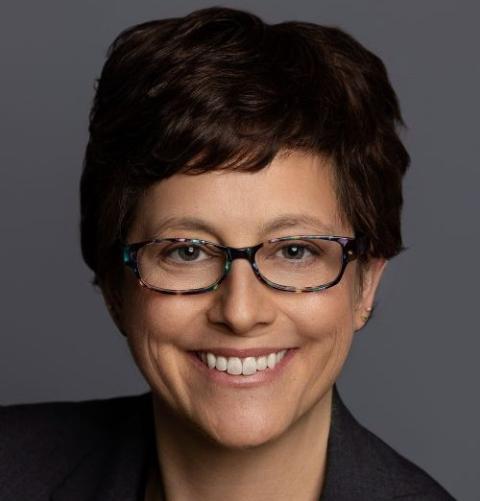
Laurie Carafone, executive director of Network Lobby for Catholic Social Justice (Courtesy of Network)
"Those are some of the things that we're very much aware of, and that we are preparing to respond in real time if those things do occur," said Laurie Carafone, the executive director of Network Lobby for Catholic Social Justice.
"In terms of Election Day itself, we're worried that elected officials who are serving this important role in our democracy will receive outside pressure to not carry out their work in a nonpartisan fair way," said Robert Christian, the director of strategy for Franciscan Action Network.
Christian told the National Catholic Reporter that Franciscan Action Network is recruiting election workers and poll chaplains, who serve a nonpartisan presence at polling places. They are trained to offer support to voters and election workers, and to de-escalate conflicts and other tense situations that may arise at polling stations.
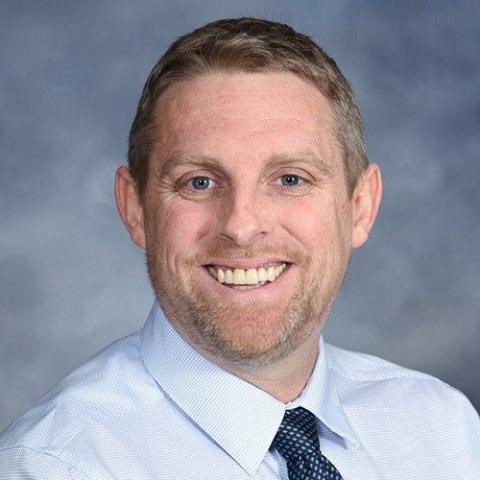
Robert Christian, director of strategy at Franciscan Action Network (Courtesy of Franciscan Action Network)
Christian said Franciscan Action Network, which is lobbying for federal legislation that would expand and protect voting rights, is also arranging meetings with local election officials to ensure that ballots are counted and election results are certified, no matter who wins.
"St. Francis is associated with peace," Christian said, "And we see democracy as intimately connected with peace. It's a way to resolve differences through a peaceful process, so making sure we have free, fair and peaceful elections is an important part of our work. And this transcends parties, it transcends ideology."
Through its See. Love. Vote. initiative, Network is aiming to mobilize and educate voters for the midterms. On the initiative's website, visitors can check their voter registration status and read resources that include a "voting plan" to ensure they know the location of their polling site and its hours of operation.
"The way we view this campaign, a nonpartisan campaign that focuses on voter education and engagement, is that this is part and parcel of voter protection," Carafone told NCR.
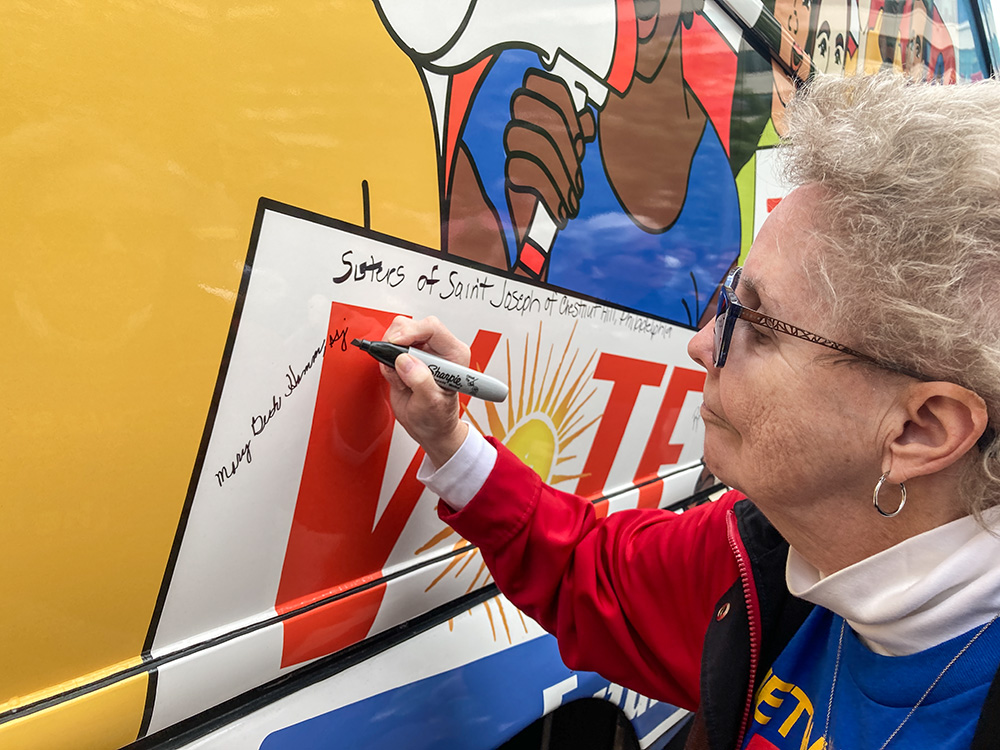
St. Joseph Sr. Mary Beth Hamm signs the bus at the Nuns on the Bus and Friends kickoff rally in Philadelphia Sept. 30. (NCR photo/Carol Zimmermann)
McKellar told NCR that his organization is also organizing several initiatives aimed at protecting voting rights, such as recruiting poll chaplains, arranging processions to the polls for people to cast their ballots together and staging prayer vigils at county election offices and state capitals.
"Democracy is not guaranteed," McKellar said. "Throughout history we've seen people in positions of power try to change the rules to hold on to power, and in this country and in other countries this is not the first time that it's happened.
"But it does beg the question," McKellar added: "What is the role of the church in both preventing and responding to what could become a civic and pastoral crisis in our country?"
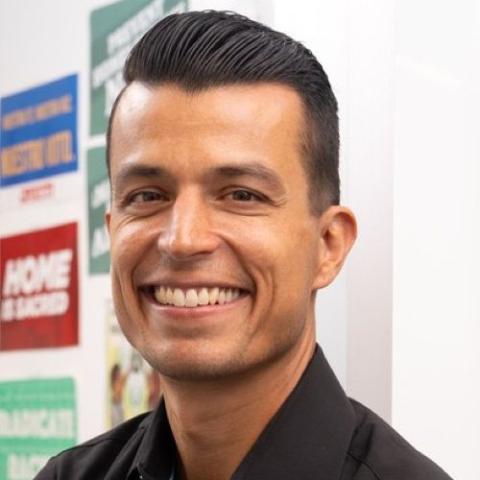
Joseph Tomas McKellar, executive director of Catholics in Communion (Courtesy of Catholics in Communion)
President Donald Trump, who has tried to use the power of his office to restrict mail-in voting, claiming without evidence that it is ridden with fraud, has not ruled out sending federal immigration agents to polling locations, a move that voting rights advocates fear would create a chilling effect.
Trump has also sent signals that raise questions as to whether his administration will recognize the election results if Republican candidates fare poorly, especially with polling that indicates majorities of Americans do not approve of Trump's handling of the economy or the U.S.-led war on Iran.
In January, the FBI raided election offices in Fulton County, Georgia, as Trump continued to falsely insist that the 2020 election was stolen from him. The Justice Department also plans to deploy 1,000 federal election monitors in the midterms, nearly double the amount that the department deployed during the 2024 election.
Those moves come against a backdrop of several states enacting new restrictive voting laws since the 2020 election and gerrymandering congressional districts to protect incumbents. In addition, some states in recent years have raised new barriers to voting, such as closing certain polling locations and narrowing the times when people can vote.
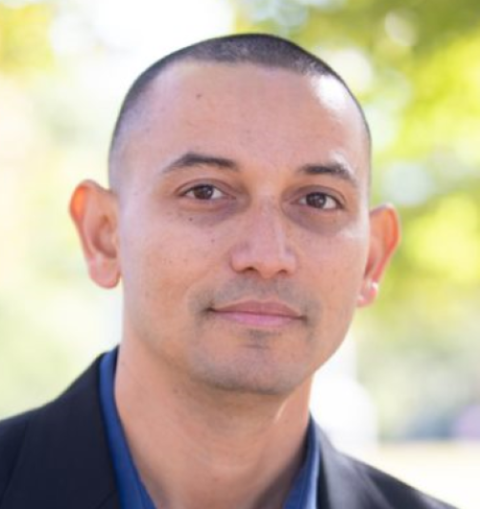
The Rev. Adam Russell Taylor, president of Sojourners (Courtesy of Sojourners)
"It's a combination of laws and policies that have been passed over the last 15 years," said the Rev. Adam Russell Taylor, an ordained Baptist minister and president of Sojourners, a progressive Christian organization dedicated to social justice activism.
Taylor told NCR that the U.S. Supreme Court's 2013 decision in Shelby County vs. Holder weakened the Voting Rights Act of 1965 and "opened the floodgates" for new voting restrictions, including stricter voter ID laws, as well as efforts to purge voter rolls and restrict early voting.
"It's a whole series of efforts to try in many cases to make it more difficult to vote, particularly in Black and brown communities," said Taylor, who accused the Trump administration of trying to deceive the American public about the security of elections.
"It's an overall climate and strategy to sow a great deal of uncertainty, fear and chaos into our elections as a way to deter certain communities and Americans from voting," Taylor said. "And we're doing everything we can to ensure that that's not successful, and that we can empower and support people to exercise their freedom to vote."
Taylor is a co-convener of Faiths United to Save Democracy, an interfaith coalition involved in voter protection efforts in several battleground states. The coalition is training poll chaplains and peacekeepers, educating congregations on voting rights and meeting with senior election officials in several states.
"It's all nonpartisan; it's not about trying to convince people to vote for a particular candidate. It's about trying to ensure they actually vote," Taylor said. "We think our democracy is stronger when we have much higher voter participation."
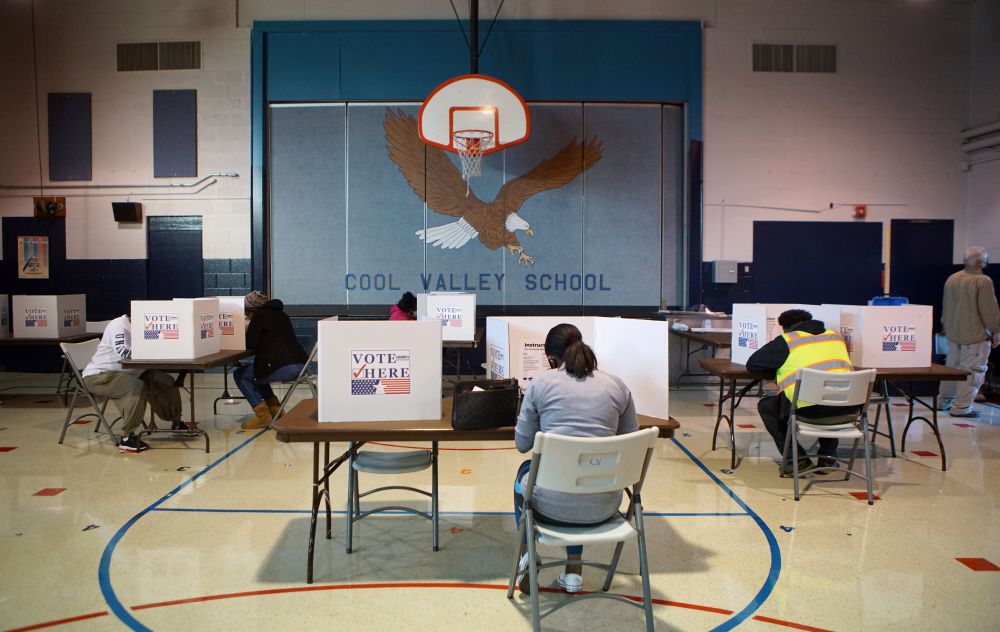
A file photo shows voters marking their ballots at a Ferguson, Mo., polling station on Election Day. (OSV News/Reuters/Lawrence Bryant)
McKellar, of Catholics in Communion, noted that the Catholic Church in the recent past has promoted democracy and decried attempts to undermine democratic norms in countries such as the Philippines, Nigeria, Venezuela and the Democratic Republic of the Congo.
"We're trying to help Catholics in the U.S. to situate this moment in a broader historic and geographic context," McKellar said, "so that Catholics can see the patterns of what has already happened and what we fear could happen, so that they're prepared to respond in a way that is faithful, that is nonpartisan, but that is also courageous, and that is public."
Advertisement
In Iowa, Catholics in Communion has partnered with Escucha Mi Voz, a faith-based, immigrant-led community organization which in recent weeks has been reaching out to Latinos throughout the state to ensure that they are registered to vote and that they have a plan to cast their ballots. Escucha Mi Voz has also been training clergy to be poll chaplains.
"The peaceful presence of collared clergy can help de-escalate situations, can de-escalate tense situations. It also puts potential bad actors, whether government or vigilante groups, to be on their best behavior when the eyes of the church community are watching," said David Goodner, the executive director of Escucha Mi Voz.
Goodner said that Escucha Mi Voz volunteers have also been encouraging people to vote early and have been meeting with county election auditors to ensure that every ballot is counted.
"People in power may try to hold onto their power," Goodner said, "but this is a democracy and we're going to continue to fight for it."