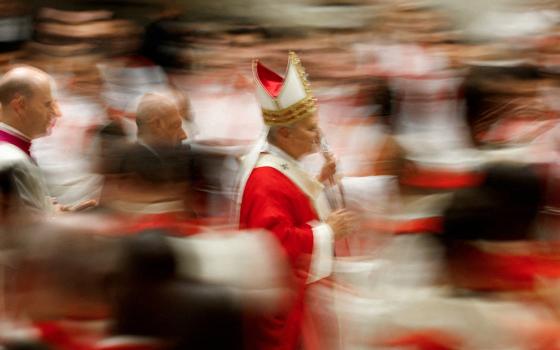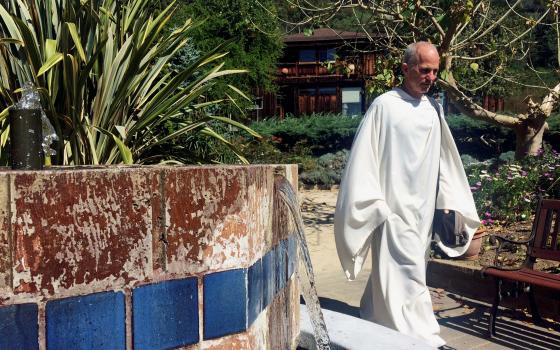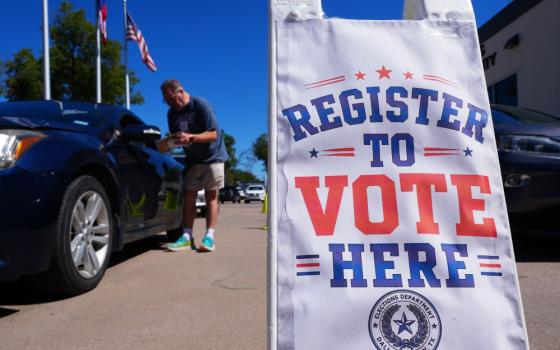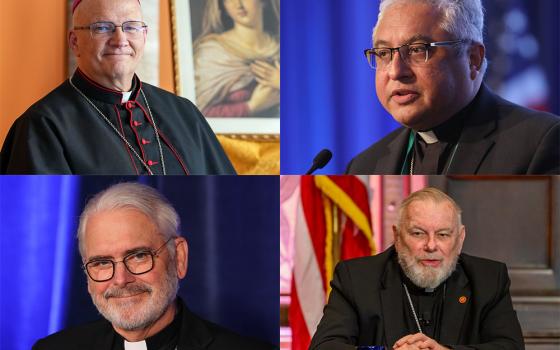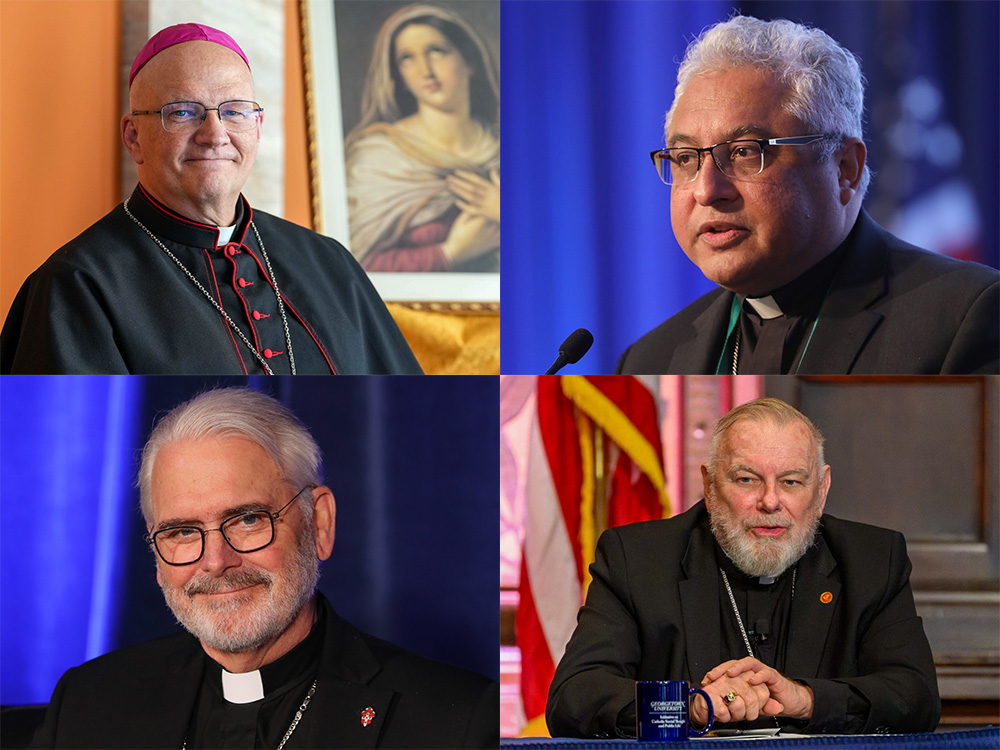
Clockwise from top left: Archbishop Edward Weisenburger of Detroit (CNS/Lola Gomez); Bishop Daniel Garcia of Austin, Texas (OSV News/Bob Roller); Archbishop Thomas Wenski of Miami (OSV News/Courtesy of Georgetown University/Rafael Suanes); Archbishop Paul Coakley of Oklahoma City (OSV News/Bob Roller)
by Brian Fraga
Staff Reporter
Join the Conversation
Send your thoughts to Letters to the Editor. Learn more
With the Nov. 3 midterm elections approaching, a handful of Catholic bishops have recently been speaking out about the importance of protecting voting rights.
In August, Bishop Daniel Garcia of Austin, Texas, issued a statement on the anniversary of the Voting Rights Act, which he said helped advance access to the ballot and "strengthened participation in our democracy."
Garcia, chairman of the U.S. Conference of Catholic Bishops' Subcommittee for the Promotion of Racial Justice and Reconciliation, said the country's bishops for decades have advocated for the right of citizens to "participate fully in public life, including the protection of voting rights."
"We encourage all citizens to exercise their right to vote and urge policymakers to safeguard voting rights and promote fair representation for all," Garcia said.
Oklahoma City Archbishop Paul Coakley, president of the U.S. Conference of Catholic Bishops, said in an Oct. 14 statement that voting is "both a right and a responsibility" for citizens in a representative democracy.
"In honoring this civic duty, it is important to ensure that citizens not face unnecessary delays or complications in registering or exercising their right to vote," Coakley said. "Together, we can contribute to the common good of our nation as faithful citizens by supporting free and fair elections."
Advertisement
During a recent theological symposium co-sponsored by Catholics in Communion, a coalition of Catholic organizations, Detroit Archbishop Joseph Weisenburger called on the church to be proactive in protecting voter rights, which he said were under threat.
In a recorded statement, Weisenburger added that the United States was at "a fraught and significant moment" in its history, with active attempts nationwide to gerrymander voting districts or suppress voter turnout in areas that may not be favorable to certain political candidates.
"The church," Weisenburger said, "is well within its theological mandate to be an instrument of actively seeking out voters and registering them to vote, especially in areas that are being targeted for voter suppression or where tactics of intimidation might be used to discourage voting."
At the same symposium, Cardinal Pablo Virgilio David of Kalookan, Philippines, said in a video statement that democracy is fragile, and that it requires participation, transparency and accountability.
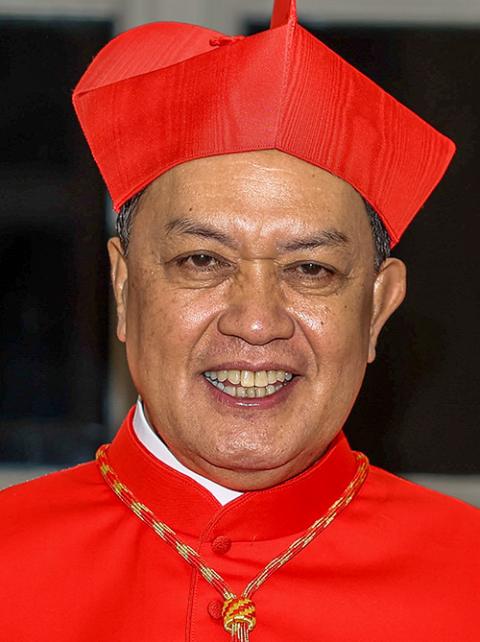
Cardinal Pablo Virgilio David of Kalookan, Philippines (CNS/Lola Gomez)
"If there is one lesson I would offer from the Philippine experience, it's this," said David: "Do not wait for democracy to collapse before defending it. Defend it while institutions are still functioning."
Joseph Tomás McKellar, executive director of Catholics in Communion, said Miami Archbishop Thomas Wenski attended the symposium, which drew around 1,000 people. At a press briefing in September, Wenski spoke on the importance of voting.
"We have to just keep on telling people in the pews to vote," Wenski said. "A significant percentage of American citizens who can vote don't vote, and we have to tell everybody that they have to be faithful citizens by exercising their right to vote."
David Goodner, executive director of Escucha Mi Voz, a faith-based, immigrant-led community organization in Iowa, told National Catholic Reporter that the state's Catholic bishops have been supportive of his organization's efforts in advocating for voting rights.
"The Iowa bishops have made it clear that voting is a sacred right, that we're called to be faithful citizens to help shape the moral character of society, and the powers that be cannot take that right away from us," Goodner said.
"So we're putting our faith into action,” he said, "and living up to the bishops' call by encouraging everybody, no matter what their political beliefs are, to go out and participate in the democratic process and to vote on the issues that matter most."