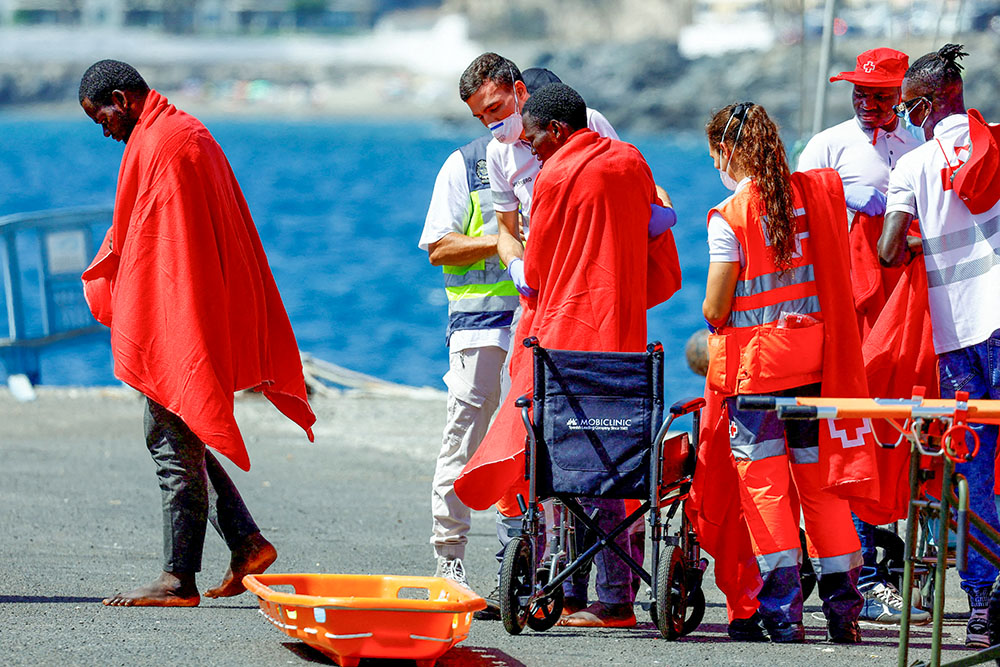
Migrants are treated by Red Cross volunteers after disembarking from a Spanish coast guard vessel at the port of Arguineguin, on the island of Gran Canaria, Spain, Aug. 28, 2024. (OSV News/Reuters/Borja Suarez)

Join the Conversation
Send your thoughts to Letters to the Editor. Learn more
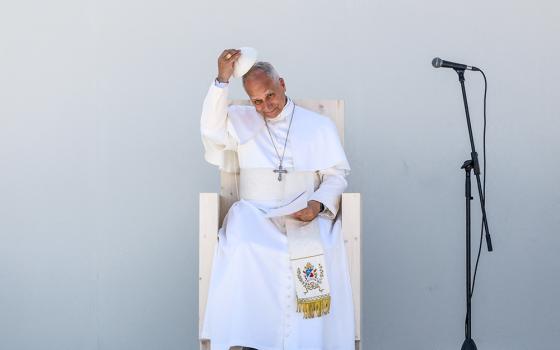
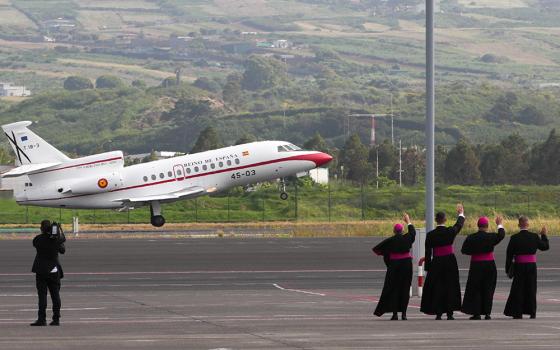
For his first major European visit since becoming pope just over a year ago, Pope Leo XIV chose to visit Spain, a country among the largest recipients of migrants entering Europe and where the national debate around migration has been dialed up to 10.
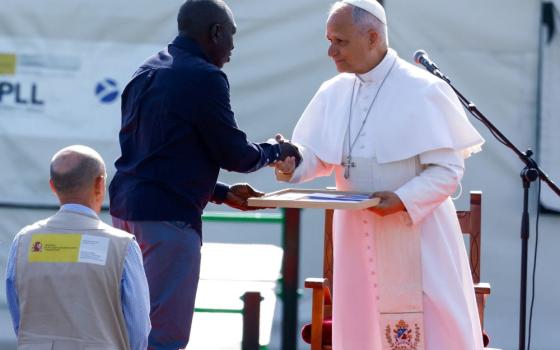
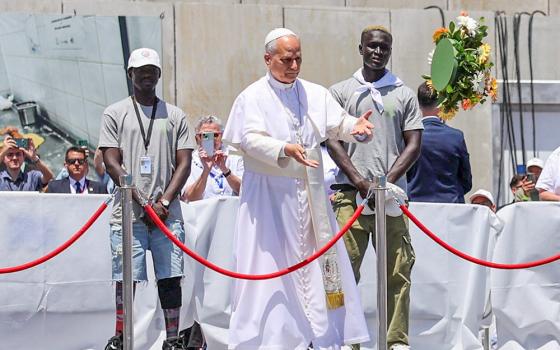
Although the topic of migration will take center stage during the pope's June 11-12 visit to Spain's Canary Islands — a major destination for migrants sailing to Europe from the shores of North Africa — Leo said in his address to the Spanish parliament in Madrid, "The tragic drama of migration also challenges the conscience of nations and the ethical foundation of the international order today." He called for legal pathways for migration and integration.
Spain's socialist-led government approved a decree to normalize the legal status of 500,000 undocumented migrants and asylum seekers in response to a citizen campaign that was backed by Spanish bishops.
Such moves, however, have sparked backlash from the leaders of Spain's growing anti-immigrant movement. Santiago Abascal, the Catholic leader of Spain's far-right Vox party who attended the pope's addresses at Spain's royal palace and the parliament, said ahead of the visit that he would not welcome a message to "accept a process of mass migration and the advancement of Islam in our society" coming from the pope.
At the same time, Leo had reportedly expressed his concern that politicians in Spain were instrumentalizing the church in order to "win the Catholic vote" in the country.
Advertisement
At the pope's prayer vigil for young people June 6, National Catholic Reporter spoke with Bishop Joseba Segura Etxezarraga of Bilbao in northern Spain about the church's role in Spain's migration debate.
This interview has been edited for clarity and length.
NCR: This is the first visit of a pope to Spain in 15 years. Why was migration chosen to be such a central theme of this visit and what does that choice say about Spain and Europe?
Segura: Migration is absolutely a central issue in Europe, just as it is in the United States right now, albeit for different reasons. Migration is completely transforming European politics: The more conservative Catholic parties have split on migration, and there is a political current right now in some parties that, on the one hand, upholds a Christian identity, yet is against migration.
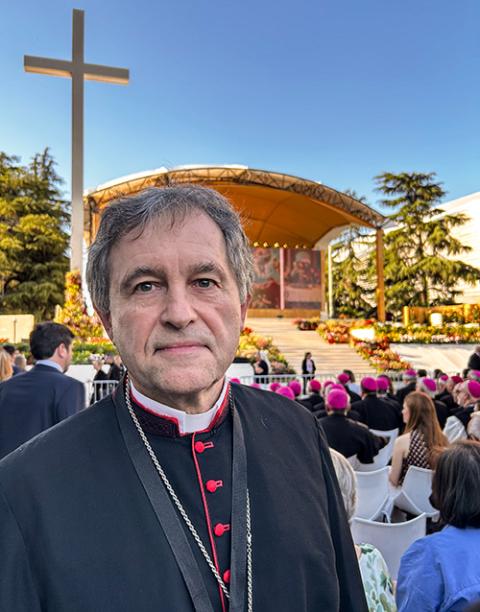
Bishop Joseba Segura Etxezarraga of Bilbao, Spain, at Pope Leo XIV's prayer vigil for young people in Madrid June 6, 2026 (NCR photo/Justin McLellan)
That leads to many complicated situations, such as in Spain, where the church will defend migration — regulated migration, reasonable migration — but we see here today politicians seated in the front row of this celebration that don't like this part of the church's message. And they are Christians, or at least they claim to be and act as if they are believers.
They lack an understanding that is fundamental to us: that all people have the same dignity and all people have the same right to find paths toward leading a dignified life. For us, that will always be a central element of the Gospel, but not everyone sees it that way, and, naturally in politics there is a deep division on this issue.
If the church's position on migration is clear, what can it do to get all of its members on the same page?
It probably won't be possible for everyone in the Catholic Church to think the same way politically on the issue of immigration because the church, by definition, is not a small sect or a small group. It is a faith and a Christian community that encompasses many different perspectives.
So, this is a central issue right now that is causing deep division, and it won't be easy to overcome this situation. But we're going to try to ensure that even within the church, despite differing sensibilities, we can all agree that it is very important to make sure that human dignity and respect for the human person take precedence over political beliefs. In some cases, it will be possible to do so, while with others it will be more difficult.
Just as in the United States, some Catholic political leaders in Spain have insinuated the church is engaged on the issue of migration in order to receive government funds. How do you respond to such a claim?
Spanish bishops and Spanish Catholic organizations are going to work with migrants, but not because they have any financial interest in doing so. They will do so with or without money. They will do it because, truly, the Christian heart is a heart that is always open.
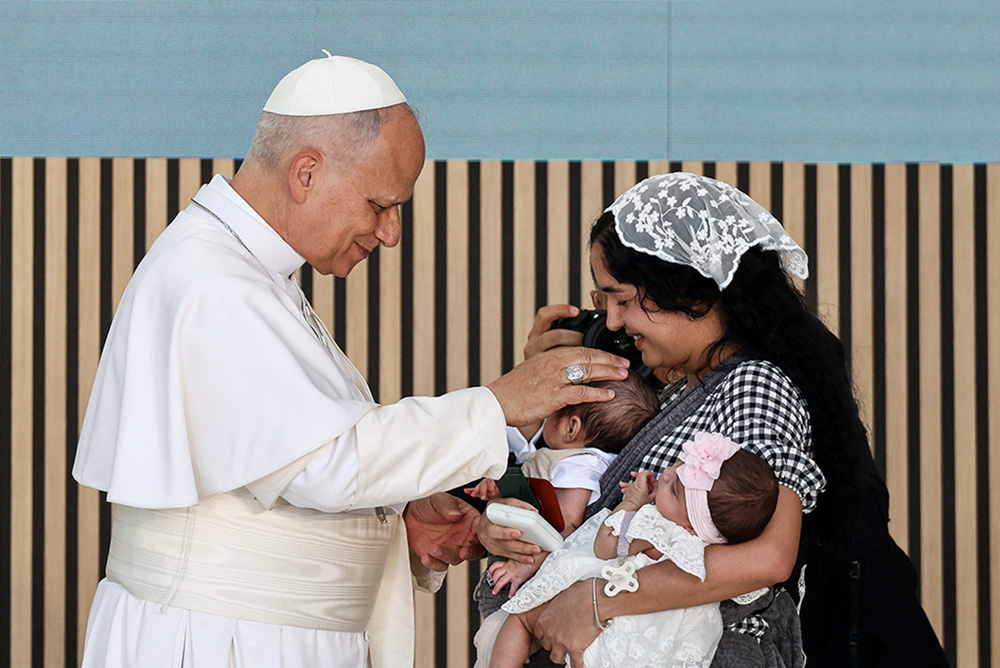
Pope Leo XIV meets with Niurka, a migrant woman from Cuba, and her children, during a meeting with staff and beneficiaries of "CEDIA 24 Horas Social Project," a Caritas center to support the homeless and financially vulnerable, in Madrid on June 6, 2026. (OSV News/Reuters/Yara Nardi)
Of course, we can also share some concerns regarding a form of migration that is unrestricted, we have to think about how to do things right, but we're never going to find genuine believers — who live their faith deeply, who read the Gospel, who know what Christ means and what he came to do for this world — who would actually say that migrants are a problem. Especially since, in Spain, migrants are making a very significant contribution to life and the national economy, and people in the financial sector know this perfectly well.
Some of the anti-immigrant rhetoric from Spain's political leaders has said that the arrival of Muslim Africans is a threat to "Catholic" Spain. Does the church think this is true?
To say that Spain is Catholic is a bit of a stretch, because there are many people in Spain who no longer consider themselves believers, or many who feel they have issues with the Catholic Church or even with the Christian faith and consider themselves agnostics or atheists. So we cannot equate a national identity with a religious identity, even though there is a very strong historical connection. But it is becoming increasingly clear that the distinction between the two must be respected.
I am convinced that this country — and the world in general at this moment — needs religion to become a force for peace. And although that certainly implies changes in identity, I believe that a Christian identity can be preserved in this territory that is very strong and need not be in competition with others or view them as a threat.
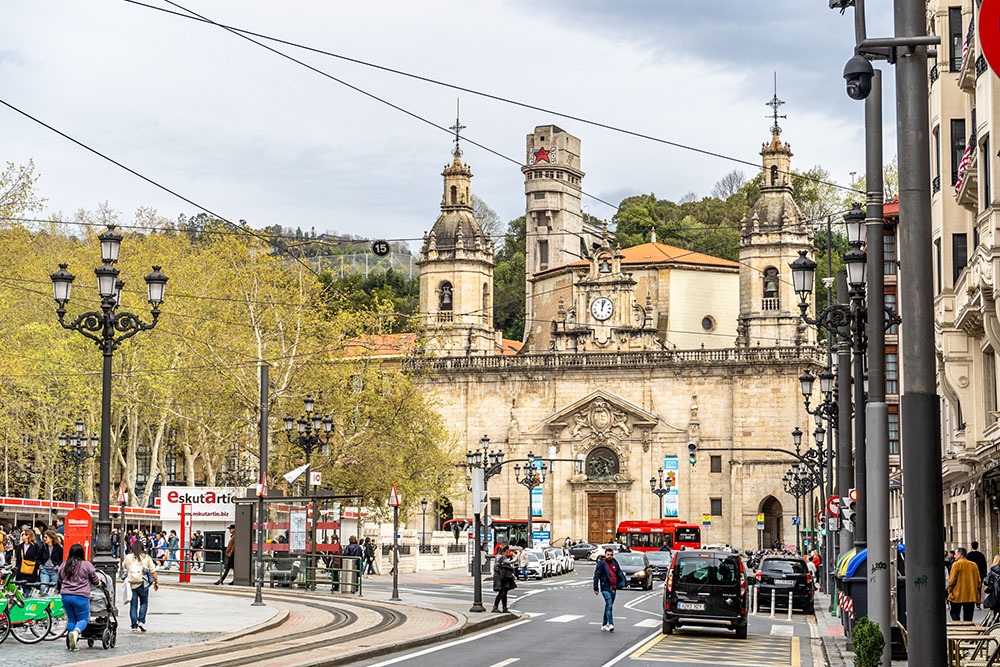
People and traffic are seen on a busy street in front of the Catholic Church of San Nicolas in Bilbao, Spain, March 28, 2024. (Dreamstime/Artem Stepanov)
We need to reflect on that: a closed, entrenched attitude against another religion that, in principle, can also be a force for peace in this world. We have to talk to them; we have to find ways to collaborate.
We are here at the pope's prayer vigil for youth. There is talk of a resurgence of religious faith among young people, in Spain and the United States, but reports have also shown a sharp rise in young Spaniards' opposition to receiving migrants. What is the church's role in this shift?
There is a somewhat defensive reaction among young people, in some sectors, to the issue of immigration. So, yes, it's true that this is happening. First, there is a greater religious sensitivity, there is greater openness, and, statistically, there are indeed young people who are voting more for or holding onto more conservative positions and convictions.
I believe that the Gospel is a message meant to encourage us to overcome fear and to have confidence that we will find ways for us to live together. Our historical identity is constantly changing — because all identities change — and we must also welcome newcomers. That is the church's message. It has always been, and it still is.
The National Catholic Reporter's Rome Bureau is made possible in part by the generosity of Joan and Bob McGrath.