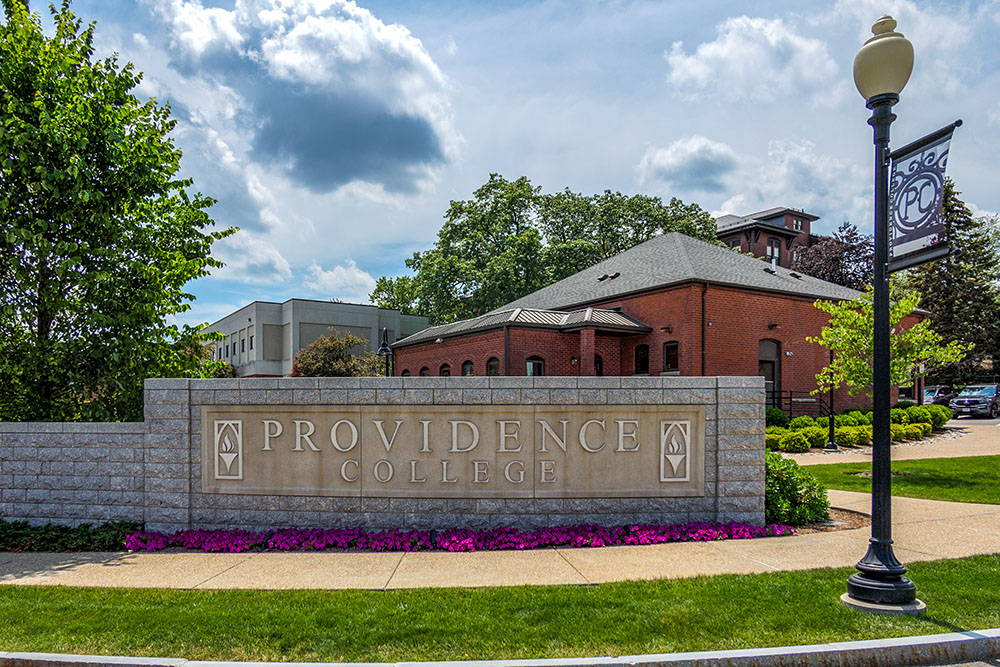
A sign for Providence College in Providence, Rhode Island (Wikimedia Commons/Kenneth C. Zirkel)

by Brian Fraga
Staff Reporter
Join the Conversation
Send your thoughts to Letters to the Editor. Learn more
Providence College has joined a growing number of Catholic colleges and universities that have reorganized their diversity, equity and inclusion offices under the umbrella of mission and ministry.
The move is also consistent with a nationwide trend; The Chronicle of Higher Education has reported that more than 200 American colleges and universities have redefined their DEI offices since 2025.
"The reorganization is the natural evolution of the shared efforts between two formerly distinct divisions. Dividing this important work between two divisions is counterproductive," Dominican Fr. Kenneth Sicard, the president of Providence College, wrote in a message to faculty on April 14.
Sicard also said that the majority of the work of the now-eliminated position of vice president of Institutional Diversity, Equity and Inclusion would be carried out by a new "institute" housed within the college's division of Mission and Ministry.
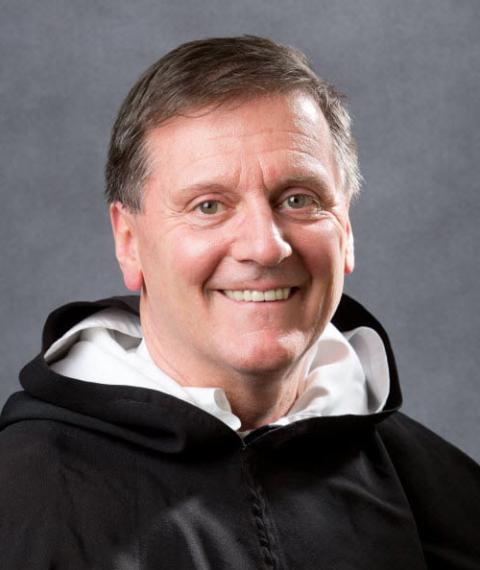
Dominican Fr. Kenneth Sicard (Courtesy of Providence College)
"At many institutions, the work of DEI was always part of their mission offices," Sicard wrote.
However, several faculty members and students have raised concerns about the move and the manner in which it was done. They have criticized the administration for a lack of transparency and communication and said they worry about what eliminating a cabinet-level DEI position will mean for minority students and those who identify as LGBTQ.
"There is no longer a person whose main focus is IDEI," said Maia Bailey, a biology professor who serves as chair of the faculty senate DEI committee. Sicard's assurances aside, Bailey told National Catholic Reporter that faculty are not sure where to send students in need of assistance that was previously provided by the Institutional Diversity, Equity and Inclusion office.
"It's still unclear where they'll go," Bailey said.
Jennifer Illuzzi, a history and classics professor who serves as president of the Providence College chapter of the American Association of University Professors, said she has mixed feelings about the changes.
"I understand the argument that they're making, which is that to be a truly Catholic university, we should be working for racial justice," Illuzzi said. "The issue I have is that I haven't really seen that happen in practice, so I'm a little skeptical of the claims that this'll be better.
"I think this is the same for students," Illuzzi said. "The head of Mission and Ministry is a white Dominican friar who is a lovely human being, but if I'm a student of color in a predominantly white institution, and I have something happen to me on campus, am I going to feel comfortable reporting it? I just wish [the administration] had been a little more thorough about explaining where you are supposed to go if you are a student facing issues."
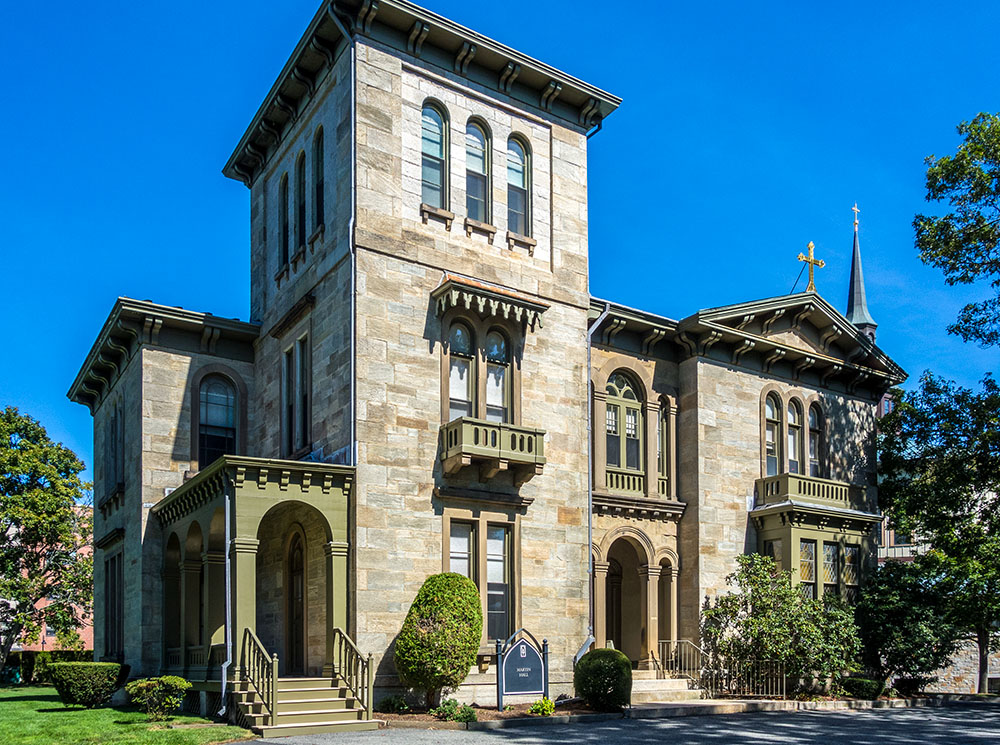
Martin Hall houses the Office of Mission and Ministry at Providence College in Providence, Rhode Island. (Wikimedia Commons/Kenneth C. Zirkel)
Edenilson Semedo, 20, a sophomore at Providence College majoring in computer science, told NCR that the administration's move to merge the Institutional Diversity, Equity and Inclusion position with Mission and Ministry was "a step in the wrong direction."
"I know a lot of people of color who are upset with this decision," said Semedo, who is of Cape Verdean descent.
"I don't think it was OK to take something away from the minority groups on campus at what is a predominant white institution," Semedo said. "I don't think they showed any care for us at all in making the decision."
In a prepared statement provided to NCR, Dominican Fr. Justin Brophy, the senior vice president of Mission and Ministry at Providence College, said that the decision to consolidate the work of Institutional Diversity, Equity and Inclusion under the office of Mission and Ministry puts the college's "concerns for justice and the common good on most firm ground."
"We have rooted our efforts to promote human flourishing in the saving Gospel of Jesus Christ which commands us to love one another," Brophy said. "It is our firm conviction that every human person is created in the image and likeness of God. This conviction is what animates our striving towards building a Beloved Community rooted in and ordered by love."
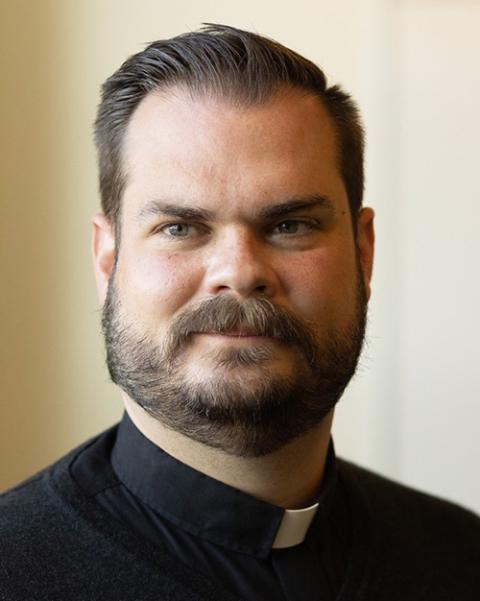
Dominican Fr. Justin Brophy (Courtesy of Providence College)
He said the new office will "work tirelessly to understand more deeply the concrete situations of those who experience marginality at Providence College."
An open letter signed by hundreds of students, addressed to Sicard, his cabinet and the college's board of trustees, said that the absolvement of the cabinet position of Institutional Diversity, Equity and Inclusion "is particularly harmful to students of color, LGBTQ+ students and other unrepresented students."
The students' letter said the now-former vice president of Institutional Diversity, Equity and Inclusion, Quincy Bevely, was the first Black man in 103 years to hold a cabinet-level position at Providence College and the first Black person in the college's history to hold such a prominent role in institutional decision-making. With his departure, the school's college cabinet no longer has any Black executives, The Boston Globe reported.
"We believe the loss of the VP role reflects a broader institutional exodus of faculty and staff of color," said the students' letter, which noted other recent departures that they said send a signal to students that "Providence College is not a place where diverse leadership can thrive."
The abrupt move is also the latest development in the Dominican college's often-fraught relationship with its LGBTQ student community. Christopher Arroyo, a philosophy professor who serves as a co-adviser to the LGBTQ student organization on campus, told NCR that he has often run into problems at the college when advocating for those students.
Advertisement
"Of all the times we ran into resistance and prohibition on doing something or saying something, that resistance always came from Mission and Ministry," said Arroyo, who added that the difficulties often stemmed from what he described as the traditionalist-leaning views of the Dominican friars on campus and their conservative views on gender and sexuality.
"I find it difficult to believe, if not impossible to believe, that this reorganization is going to mean positive fruitful developments for members of the LGBTQ+ community here. I just don't see it," Arroyo said.
Donna Carroll, president of the Association of Catholic Colleges and Universities, said in an email that senior mission officers and senior diversity officers are two of the newer appointments to the Catholic university cabinet and that they both focus on culture and belonging.
"At many places, the positions are still in 'formation' organizationally, and so, while you know what a provost does, or a [chief financial officers], these two positions can be different in scope and portfolio at different institutions — and are evolving," Carroll said.
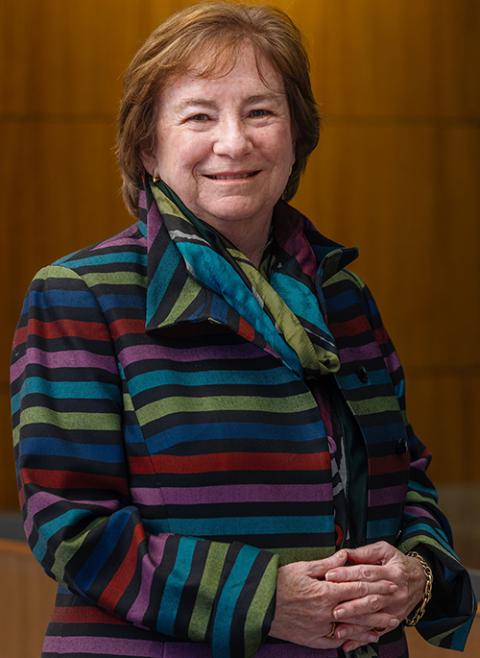
Donna Carroll (Courtesy of ACCU)
In the last year or so, Carroll added, more Catholic colleges and universities have been uniting their mission and diversity offices, partly in response to the political climate; the Trump administration has taken aim at DEI programs and threatened to withhold funding from institutions that do not adhere to its demands.
In his letter to faculty, Sicard said it was "worth recognizing the continued federal regulatory environment and enforcement activity involving DEI-related programs and initiatives." Higher education groups have recently sued the Trump administration for its executive order that threatens to strip federal contracts from colleges and other organizations over their DEI efforts.
Still, Carroll said that Catholic colleges and universities have realigned their DEI offices primarily "not as a defensive posture, but rather as a way of communicating that at a Catholic institution, DEI work is an important expression of mission."
"To be clear, this (re)organizing was happening in some Catholic institutions before the Trump administration, sometimes the result of financial and staffing constraints, more intentionally, to anchor DEI work in Gospel values and the tenets of Catholic social teaching," Carroll said.
Aligning mission and diversity offices, like any restructuring, is not without its tensions, Caroll added.
"If we work collaboratively to articulate a shared purpose and remain vigilant about resources," Carroll said, "this can be a mission-strengthening next step for Catholic higher education, one that builds capacity for cabinet voice and leadership."