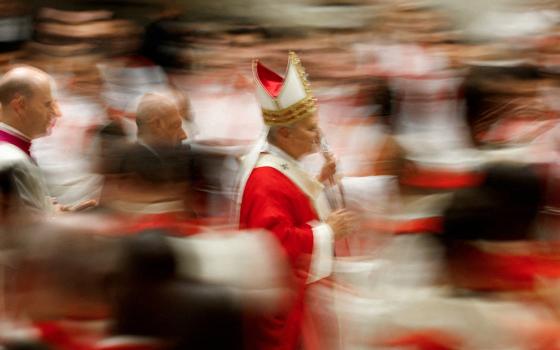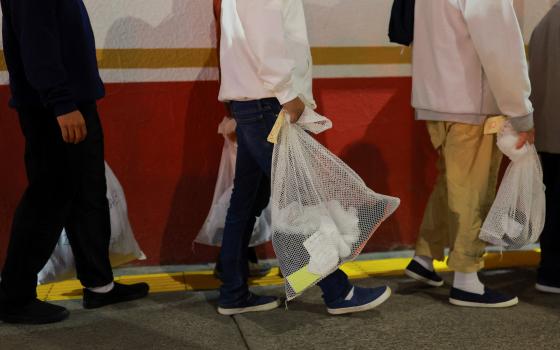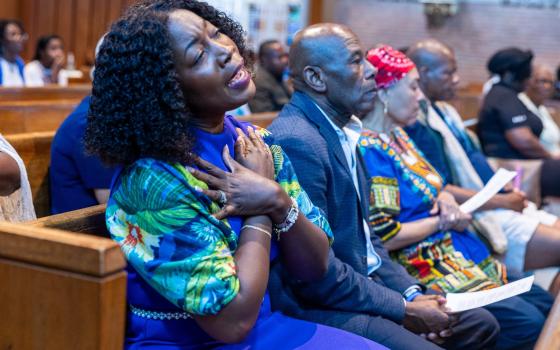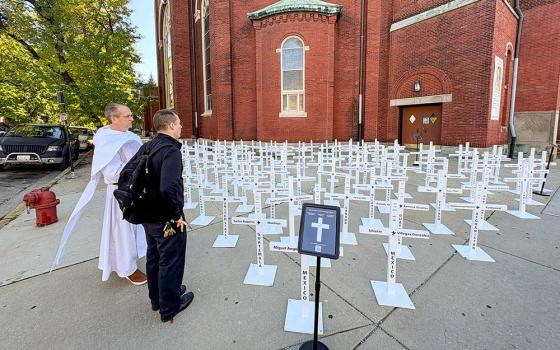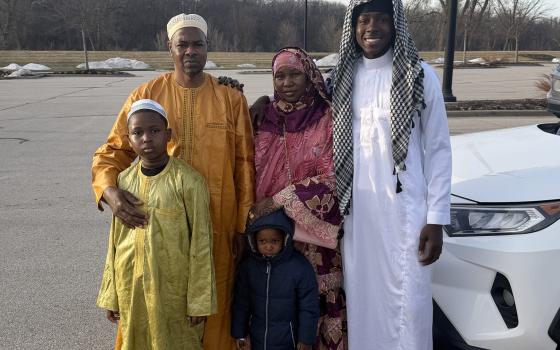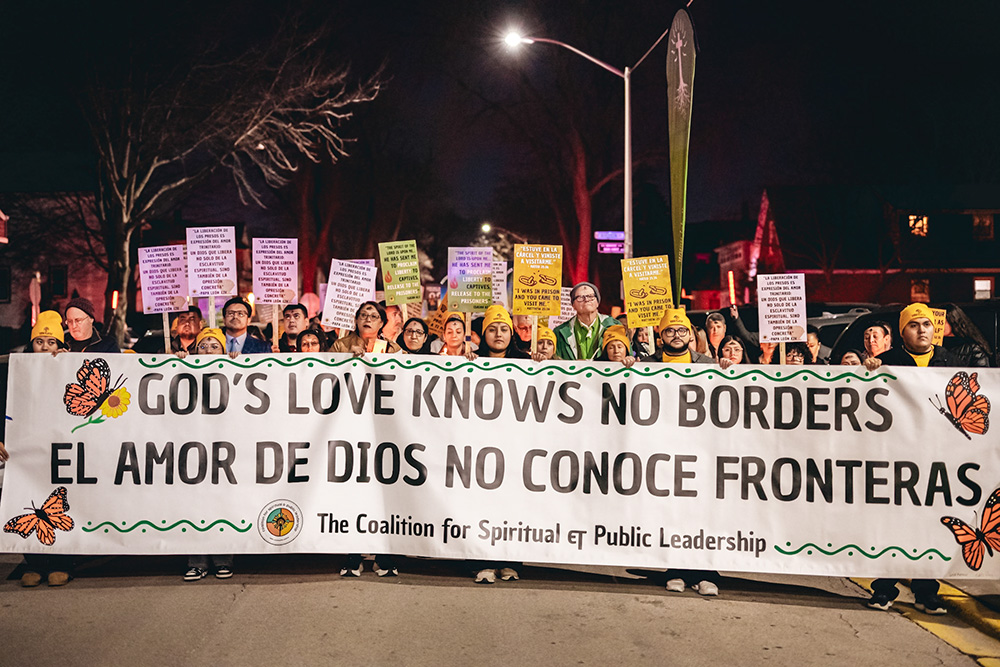
Chicago Catholics march in a procession in solidarity with ICE immigrant detainees after an outdoor Ash Wednesday Mass presided by Cardinal Blase Cupich of Chicago, Feb. 18, 2026. (Courtesy of Coalition for Spiritual and Public Leadership/Derek Carter)

Join the Conversation
Send your thoughts to Letters to the Editor. Learn more
A federal judge in Chicago has ordered immigration authorities to allow a Catholic organizing group and clergy access to an immigration detention center in Broadview, Illinois, during Holy Week, marking a sharp rebuke of the government's blanket restrictions on religious ministry inside the facility.
In a preliminary injunction issued March 31, U.S. District Judge Robert Gettleman found that the government's denial of access to the facility just outside Chicago likely violated federal religious freedom law and the First Amendment. The ruling grants, in part, a request from the Coalition for Spiritual and Public Leadership and several clergy members who sought to minister to detainees in the days leading up to Easter.
Michael Okinczyc-Cruz, the executive director and co-founder of the coalition, said that the Immigration and Customs Enforcement agency and the Department of Homeland Security are not appealing the judge's order and that clergy could enter the facility from this Holy Thursday through Easter Sunday in the afternoons.
The order centers on a narrow but urgent window: Holy Week, one of the most sacred periods in the Christian calendar. From April 2 through April 5, the government must permit the Chicago clergy to enter the Broadview facility to offer religious services to detainees who choose to participate.
"This is an incredibly important step in our ongoing struggle to affirm the divinity and the inherent worth and dignity of our immigrant siblings in communities at a time in which their humanity is being diminished, and at a time when dehumanization is so common and frequent," Okinczyc-Cruz told the National Catholic Reporter.
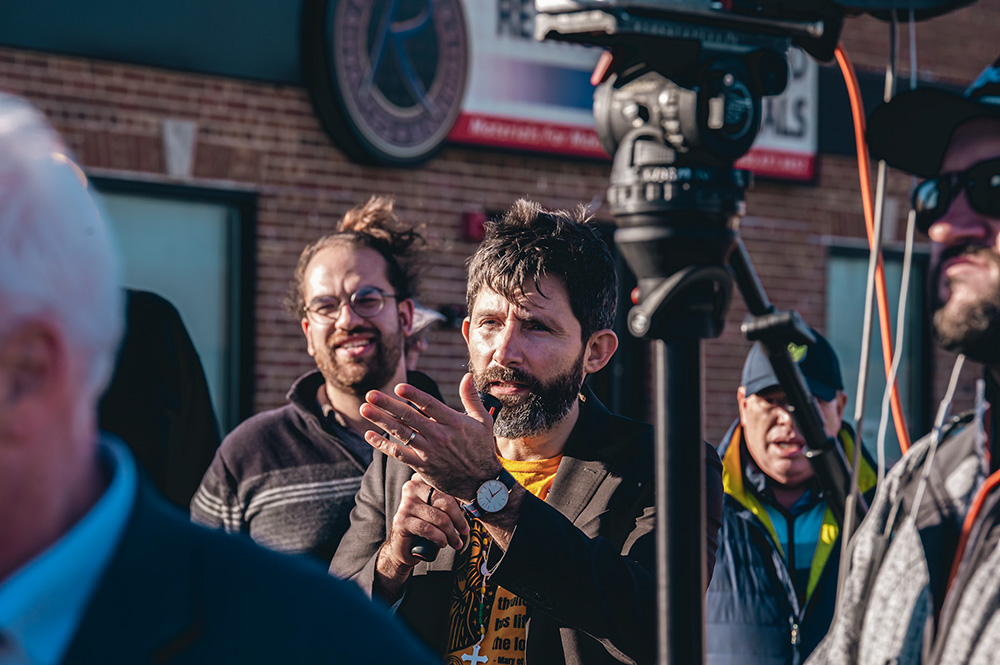
"To begin these pastoral visits on Holy Thursday, the day that marks the day that Jesus washed the feet of his disciples, and when Jesus was detained by Roman authorities, this is a very symbolically meaningful day to gain access to the Broadview ICE facility, so that members of our church, our ministers, can provide pastoral care to our immigrant siblings."
Beyond the immediate Holy Week access, the court pushed the parties toward a broader resolution. It directed them to "meet and confer" about ongoing religious ministry at the facility, including whether clergy may interact personally with detainees and pray outside the facility within view of those inside.
"The Coalition for Spiritual and Public Leadership stands in solidarity with immigrant communities, calling attention to their dignity, amplifying their voices, and advocating for compassionate and humane treatment," Jesuit Fr. David Inczauskis said in a statement.
"We will not stop until we have achieved our aim of providing pastoral care and Communion, especially at one of the holiest times of the year."
Advertisement
The ruling follows months of dispute over access to the ICE Broadview center, where the Chicago clergy say they had long been permitted to provide pastoral care before a sudden policy shift in 2025. According to the court, the government erected barriers — both physical and administrative — that effectively blocked prayer on the grounds and denied entry to clergy seeking to minister to migrants held inside.
The judge said this restriction amounted to a substantial burden on religious exercise under the Religious Freedom Restoration Act.
The court also emphasized the human stakes. Denying clergy access, the judge wrote, risks irreparable harm by violating fundamental religious freedoms. He cited longstanding Supreme Court precedent that even brief losses of First Amendment rights constitute serious injury.
On Feb. 13, following a separate court order, members of the coalition and clergy were granted entry to the Broadview facility to administer ashes and prayer services marking the start of Lent. The visit proceeded without disruption, Chicago clergy told NCR after their visit.
For the plaintiffs, the Holy Week order builds on that breakthrough. The Coalition for Spiritual and Public Leadership describes itself as a network of more than 55 parishes, universities and community groups working to address social injustice through grassroots organizing and faith-based action. Ministering to detained migrants — many of whom share ties to local congregations — is central to its mission.