(Unsplash/Vitor Monthay)

by Stephan Uttom Rozario
Join the Conversation
Send your thoughts to Letters to the Editor. Learn more
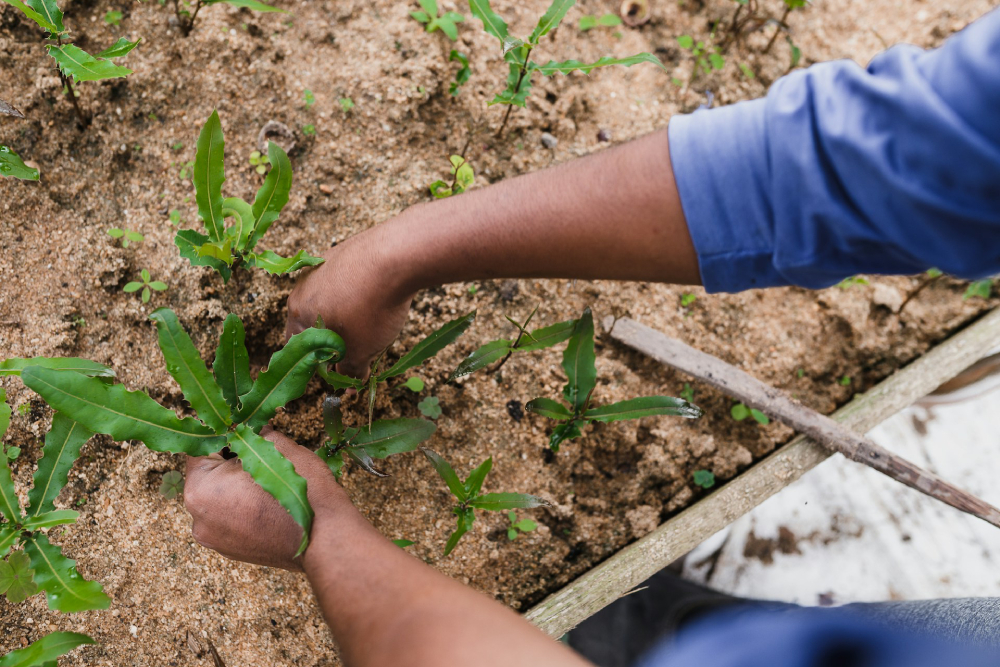
Nazrul Islam, a Muslim who lives in the Sunamganj district in Bangladesh, says Pope Francis' encyclical Laudato Si', on Care for Our Common Home inspired him to cultivate various vegetables and fruit trees on the empty land next to his house.
"About four years ago, Caritas workers made me listen to the pope's words, and connected this Laudato Si' with reality," he said.
Caritas Bangladesh, the international humanitarian aid and development organization of the Catholic Church, has encouraged residents in its work areas across the country to plant produce and garden naturally, without chemical fertilizers or pesticides.
(Unsplash/Priscilla Du Preez)
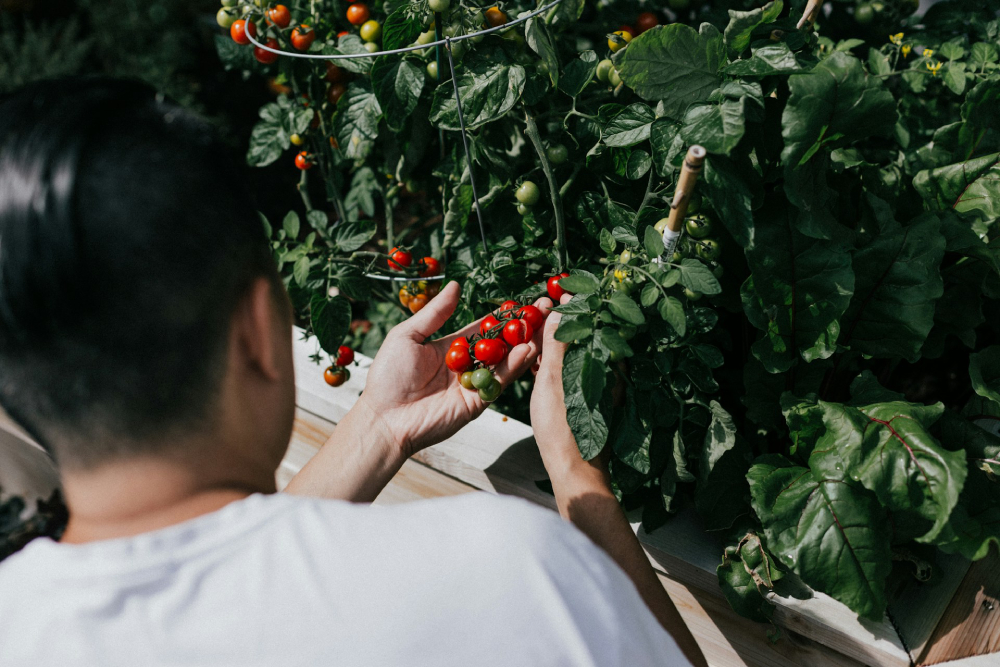
Now, Islam's family takes care of a small backyard garden. He said it not only meets his own food needs, but also it provides extra he gives to relatives for free, and he sells what's left in the local market.
“I can earn some money," he said, "which is useful for my family. At the same time, I am able to eat chemical-free fruits and vegetables.”
Thousands of people like him in the Sunamganj district and religious believers across Muslim-majority Bangladesh are now working to protect the environment, inspired by the teachings of Laudato Si' through the work of Caritas.
“We can tell roughly around two million people are directly or indirectly related to the Caritas Bangladesh," with around 5,500 employees and 200,000 direct beneficiaries in the country, said Daud Jibon Das, program director of Caritas Bangladesh.
"And all of them know well about Pope Francis' Laudato Si'. I believe they hold this message and influence the people around them to follow it so that they too protect the environment,” Das said.
Caritas is not the only church group in Bangladesh that has promoted the teachings of Laudato Si' in the decade since it was published.
Various Catholic places, institutions, associations and societies observe Laudato Si' Week with the world community every year in May. Activities have included things like distributing and planting trees and discussing Laudato Si' themes with staff, students and community members.

This is the logo for the ecumenical Season of Creation, which begins Sept. 1, the World Day of Prayer for the Care of Creation, and concludes Oct. 4, the feast of St. Francis of Assisi, patron saint of ecology. (CNS/Courtesy of Seasonofcreation.org)
The Season of Creation, a period of prayer and action for the care of God's creation celebrated by Christians worldwide, is observed from September 1 to October 4 every year. It's a time to reflect on the relationship with the environment, the planet and people’s role in protecting it, while also acknowledging God as the creator and sustainer of all life.
Saint Paul Catholic Church in the Mymensingh diocese observed the Season of Creation through praying and planting trees around the church campus and in the villages. Other churches in the country observe it similarly.
And priests work to inform the public and distribute leaflets about creation care during Christmas time.
The Justice and Peace Commission of the Bangladesh Catholic Bishops' Conference (CBCB) has organized nationwide leaflet distribution and public awareness seminars on topics like the responsibility to protect Mother Earth, and how protecting the Earth is also protecting ourselves. This has been organized regionally based on the dioceses and nationally in Dhaka, with politicians and leaders of other religions.
Advertisement
Bishop Gervas Rozario, president of the Justice and Peace Commission of the CBCB, and Holy Cross Fr. Liton Hubert Gomes, the secretary, have talked about Laudato Si' and protecting the environment in their writings and speeches during Laudato Si' Week and in Catholic magazines.
Rozario, vice-president of CBCB, said there is no other way to survive in this world than to protect the environment and stop this terrible trend of global temperature rise, which is predicted to increase by three degrees Celsius by the end of this century. The bishop encouraged everyone to work to protect God's creation as Christians.
Every year, the Bishops' Conference of Bangladesh writes to raise people's awareness of nature, environment and climate through a magazine called Chetanayan (Consciousness). The encyclical Laudato Si' has been translated into Bengali and distributed to every diocese and people of other religions.
The Catholic Church in the country has also joined a tree planting campaign by the Bangladesh government. Four hundred thousand Catholics have planted at least 400,000 trees. In addition, schools, colleges, organizations and associations run by the Catholic churches have planted large numbers of trees separately, all inspired by Laudato Si'.
Gomes believes environmental awareness among the people of Bangladesh has increased greatly in the past 10 years, and this has been possible because of Francis' letter.
"In addition to the church, we have associated Caritas Bangladesh, World Vision Bangladesh, various government agencies, schools and colleges and other institutions with us. As a result, there is a huge response among the people to Laudato Si' and protecting the environment," Gomes said.
"We will further expand the scope of work in the coming days," he said. "We especially need to make people aware of drinking water. Because now there is a shortage of drinking water day by day."