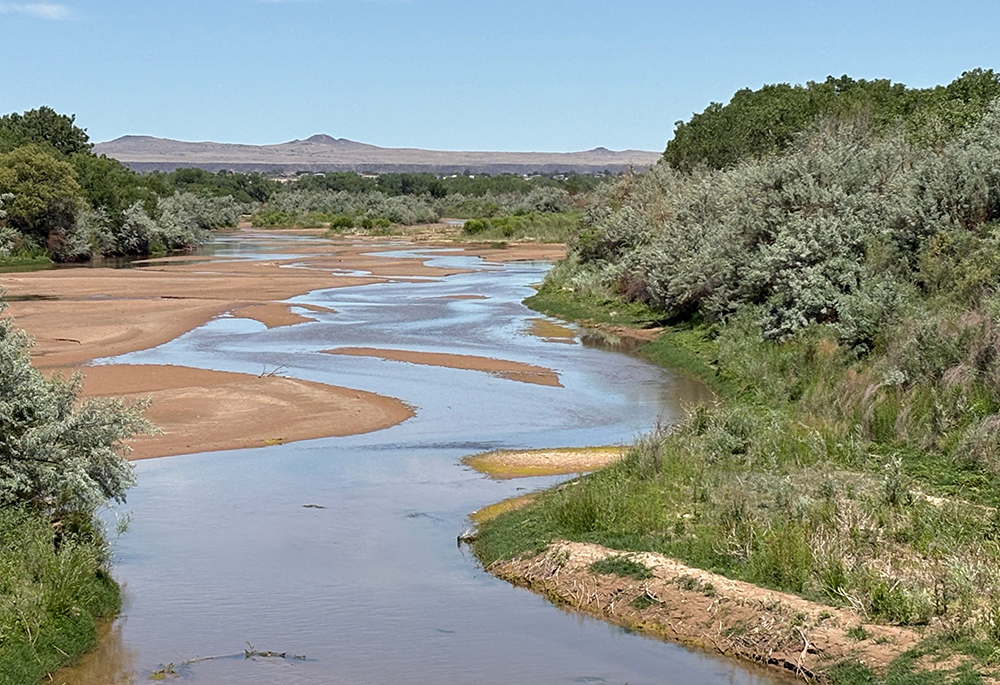
Sand bars develop along the Rio Grande as stretches of the river begin to dry in Albuquerque, New Mexico, on May 14, 2026. (AP photo/Susan Montoya Bryan)

Join the Conversation
Send your thoughts to Letters to the Editor. Learn more
In the desert, few resources are as precious as water, which has been in increasingly short supply in New Mexico where the Rio Grande River is running dry due to historic drought conditions.
Speaking to the state's water challenges, Santa Fe Archbishop John Wester called on political leaders to take decisive actions to ensure people, plants and animals there have access to water — "God's gift to us" — as climate change and pollution threaten its availability.
"We urge our political leaders and decision-makers to act with moral courage so that nuevomexicano, Indigenous, traditional, and rural communities have equitable and just water solutions," Wester wrote in a new pastoral letter on water issued Sept. 11.
"The Rio Grande gets smaller with each passing year, while those in fire zones in New Mexico fear floods and the destructive force of water. So, water, or the lack thereof, brings life and death, beginnings and endings.
"We must treasure this precious resource and channel it into life," he wrote.
The pastoral letter is titled "Uniting for Our Sacred Waters: Conversation and Action Around the Sacredness of Water." Wester issued it during the Season of Creation, a monthlong observation among Christians that this year carries the theme of "Immersion in Living Water." It is the second pastoral he has penned in the past five years, following a 2022 document on nuclear disarmament.
The state's long history in the development of nuclear weapons has exposed communities and ecosystems to nuclear contamination. That includes its water systems.
"For eight decades, the state's nuclear weapons laboratories have polluted waters with hazardous and radioactive materials," Wester wrote. "In many cases, we are just beginning to understand the extent of these dangerous pollutants."
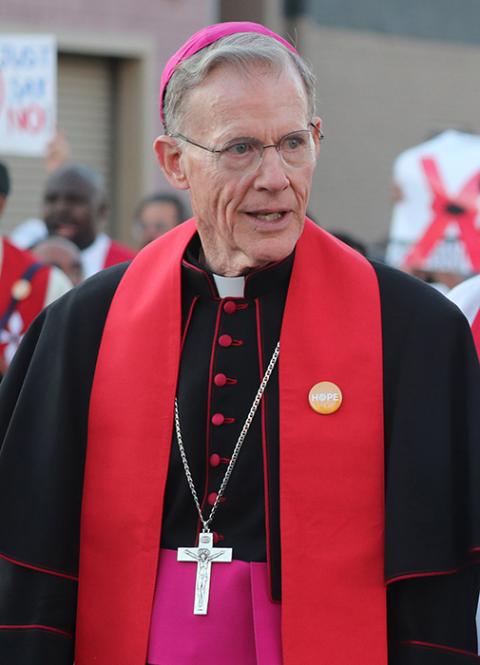
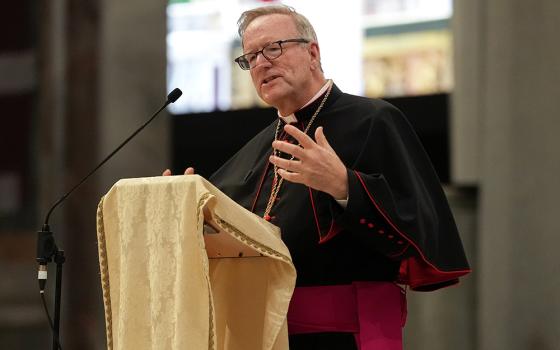
Archbishop John C. Wester of Santa Fe, New Mexico, is pictured during a march in El Paso, Texas, March 24, 2025, protesting the U.S. government's mass deportation program. (OSV News/Bob Roller)
Radioactive pollution from the Los Alamos National Laboratories has entered into the Rio Grande. So too have "forever chemicals" contaminated New Mexico waters from U.S. military sites.
The threat from nuclear toxins to water joins the strains placed on clean water supplies from drought conditions worsened by climate change.
The Rio Grande, the fifth-longest river in North America, is experiencing its worst drought in a century. More than 112 miles of the Middle Rio Grande, which runs through New Mexico, is dry, according to the Interstate Stream Commission. In early September, county officials released more than 600 million gallons of water from the Abiquiu Reservoir into the Middle Rio Grande to offer temporary relief to vegetation along its banks in the Albuquerque region.
The dire situation facing the Rio Grande is similar to that of the nearby Colorado River, where the Interior Department recently ordered steep water cuts. State officials project that climate change will lead to a 25% to 30% decrease in surface water availability by 2050.
"Our groundwater stores could have been a 'savings account' to help people through hot, dry times. Instead, we spent those waters believing they could be squandered without repercussions," Wester said. "Rather than caring for God's gift, we wasted it. Now, we must act quickly to protect those underground waters for future generations."
The lack of water in the river is part of a megadrought across the Southwest that is the worst in 1,200 years. Researchers estimate human-driven climate change — resulting from burning fossil fuels that release greenhouse gas emissions into the atmosphere — is responsible for 42% of the lack of moisture in the region's soil since 2000.
"Signs of climate change are obvious across our state," Wester wrote in the pastoral, citing dust storms, drying croplands and orchards, dying forests and depleted waterways. The consequences are felt not just on communities and ecosystems, he said, but in making "weary people's hearts and hopes for the future."
"Climate change, or climate disruption, is already causing hardship and harm in New Mexico," he said. "And its impact will continue to intensify, especially as our state and other regions of the world emit massive amounts of greenhouse gases through oil and gas development, war and conflict, industrial agriculture, and other industries."
The Santa Fe archbishop pressed political leaders to take actions to limit climate impacts and protect clean water access, and called for the prevention of new pollution. He added that polluters must be required to clean up contaminated sites.
"Our elected leaders must act with moral courage to protect our waters, communities, nature, and future generations," Wester said.
Copies of the pastoral were delivered to state officials and legislators, including Gov. Michelle Lujan Grisham, who is Catholic.
Advertisement
In the pastoral, Wester highlighted the centrality of water in Catholic life through its use in blessings when people enter a church, during the Eucharist, at funerals and in the sacrament of baptism. He noted water is referenced in Scripture 722 times and he cited messages from multiple popes, including Leo XIV and Francis, as well as numerous saints, including Francis of Assisi's praise of Sister Water in his "Canticle of the Creatures."
Wester also pointed to the idea of "water is life" held in Indigenous communities in New Mexico and elsewhere. In the introduction, he described one of his first pastoral visits as archbishop to Ohkay Owingeh Pueblo, where he blessed buckets of water drawn from the Rio Grande.
"There are a lot of catastrophes happening around the world, and there are a lot of people who have forgotten how to take care of the land and the water, and how to respect the land and the water," Talavi Cook, a member of the Pueblo of Ohkay Owingeh who is also Hopi and Diné, was quoted saying in the pastoral.
Wester said that each person holds "a moral and ethical responsibility to ensure everyone has clean water, including humans, plants, and animals." He invited everyone to join in a new solidarity to protect, steward and share sacred water as "an oasis for the good of all, not just the few."
"When you give water to your child, a neighbor, a friend, or someone in need — in a glass or through a cup of tea — remember you are engaged in the works of mercy," he wrote.
"Water is God's gift to us. It's finite. Less clean water is available to us now. It's painful to consider how we failed to steward God's gift. But we know better now. We do better now."