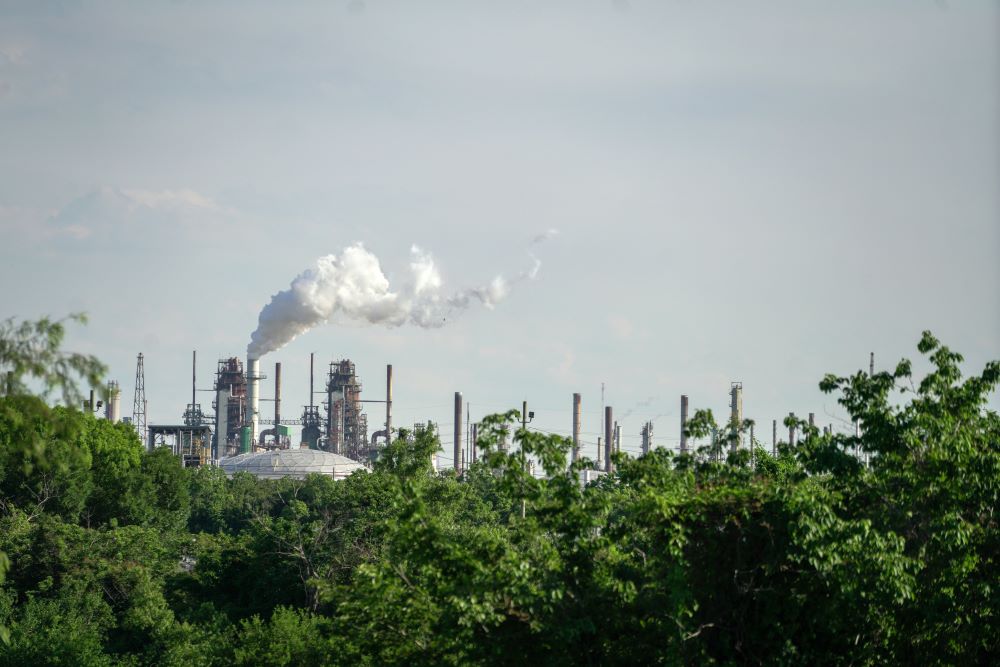
The ExxonMobil Baton Rouge Refinery in Baton Rouge, Louisiana, May 15, 2021 (OSV News/Reuters/Kathleen Flynn)

Join the Conversation
Send your thoughts to Letters to the Editor. Learn more
Days after the Trump administration revoked the central scientific finding underpinning federal regulations to combat climate change, a flurry of lawsuits were filed challenging the move.
In one case the lead plaintiff is Elena Venner, a young Catholic studying at California Polytechnic State University. The lawsuit bearing her name, Venner v. U.S. Environmental Protection Agency, alleges that by rescinding the 2009 "endangerment finding" the EPA has violated her and 17 other youth plaintiffs' constitutional rights to life, liberty and religious freedom.
"For me Catholicism is maintaining the dignity of all human life," the 21-year-old native of Colorado said in an interview with EarthBeat. "[In] Laudato Si', Pope Francis explains that protecting the environment and protecting human life, they're inseparable and we'll all interconnected.
"And so with the endangerment finding [repeal] and just with climate change in general, our environment is being degraded," Veneer said. "The conditions for basic life are dependent on maintaining a stable climate and access to clean air and water, and so when that isn't protected life isn't being protected."
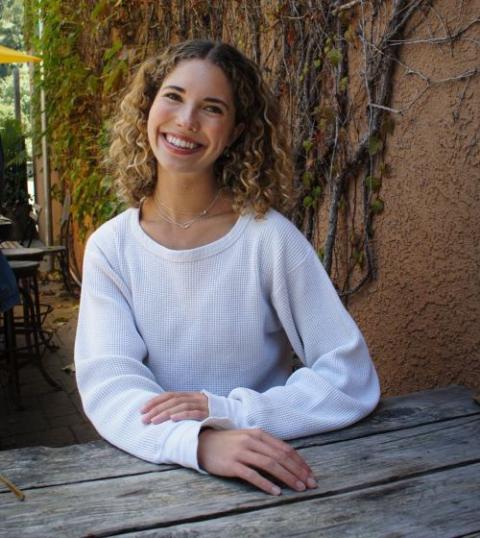
Elena Venner, a student at California Polytechnic State University, is the lead plaintiff in a lawsuit challenging the EPA's endangerment finding reversal. (Courtesy of Our Children's Trust)
The Trump administration announced Feb. 12 it had finalized its withdrawal of the endangerment finding, a scientific and legal determination that six greenhouse gases — among them carbon dioxide and methane — pose a danger to public health and welfare. At the time it was enacted, EPA examined the connection between greenhouse gas emissions and public health following a directive from the U.S. Supreme Court as part of its 2007 decision in Massachusetts v. EPA, which ruled greenhouse gas emissions are air pollutants subject to EPA regulation under the Clean Air Act.
Greenhouse gases are released from burning fossil fuels and are the primary driver of climate change. Beyond heating the planet, studies have linked methane, which contributes to ground-level ozone pollution, to pulmonary and respiratory issues. Studies also show increased levels of carbon dioxide exposure may result in a range of adverse health effects.
The EPA's reversal of the endangerment finding also eliminated vehicle emissions standards — the nation's largest source of greenhouse gas emissions — and stands to preclude regulations of emissions from power plants and other industrial sources.
In response, a coalition of 17 leading health and environmental organizations sued EPA and the Trump administration. Democrat-led states have also vowed to sue.
Venner v. EPA was filed Feb. 18 at the U.S. Court of Appeals for the D.C. Circuit by Public Justice and Our Children's Trust, a nonprofit public interest law firm that has represented youth clients in a series of federal and state lawsuits seeking legally binding policies to address climate change.
The suit alleges the rollback of the endangerment finding deliberately raises pollution levels, threatening the plaintiffs' present health and future lives. It also cites violations to the plaintiffs' Fifth Amendment rights to life and liberty — stating that increased pollution and rising temperatures endanger respiratory health and the ability to live safely, to form families and to take part in cultural practices. It also alleges the repeal violates the youths' First Amendment right to the free exercise of religion.
'It would be nice, I think, for our government to at least acknowledge that we are in this climate crisis and to start by not repealing what we already have.'
—Elena Venner
While prior cases filed by Our Children's Trust have seen youth plaintiffs raise religious or spiritual injury as part of Fifth Amendment claims, this is the first time that it has brought a religious freedom claim forward, said Julia Olson, chief legal counsel for Our Children's Trust.
The youth plaintiffs in Venner v. EPA represent various faith backgrounds and practices, she said, "and some of those are directly impacted by climate change and government's decision to permit all of the pollution, the greenhouse gas pollution, that's causing climate change."
Olson cited examples of extreme heat preventing a Muslim youth from fully practicing traditions during Ramadan; climate impacts making ancient, spiritually important locales, food sources and traditional medicines inaccessible to Indigenous young people; and excessive heat and poor air quality from wildfire smoke preventing an Orthodox Jewish young person walking to synagogue.
"I think this policy [of eliminating the endangerment finding] under this administration that purports to be friendly to religion is antithetical to religion and faith," Olson said.
Advertisement
In a statement to EarthBeat, EPA did not address questions about the youth lawsuit or its specific allegations of violating rights to religious freedom.
EPA said unlike prior administrations, the agency under the Trump administration "is committed to following the law exactly as it is written and as Congress intended — not as others might wish it to be."
After a review of the endangerment finding, the Clean Air Act and recent Supreme Court decisions (including Loper Bright Enterprises v. Raimondo and West Virginia v. EPA), EPA said it concluded that Congress did not give the agency authority under the Clean Air Act to regulate vehicle emissions standards to limit climate change.
"In the absence of such authority, the Endangerment Finding is not valid, and EPA cannot retain the regulations that resulted from it," EPA said in its statement.
The issue of whether greenhouse gases qualify as air pollutants is likely to be relitigated in the courts. The Supreme Court, by a 5-4 ruling in its 2007 Massachusetts decision, determined "without a doubt" carbon dioxide, methane and other greenhouse gases fall under the definition of an air pollutant under the Clean Air Act.
For Venner, applying to join the case presented an opportunity to try to do something about climate change. A fourth-year engineering student studying energy and power at Cal Poly, she wants to work on the clean energy transition in redesigning the nation's electrical system, especially through micro-grids.
Venner pointed to growing up in a Catholic family — her family are parishioners of Most Precious Blood Catholic Church in Lakewood, Colorado — that cared a lot about environmental issues and climate change. Her older brother, Nick, was part of the landmark Juliana v. USA that was ultimately dismissed nearly a decade after it was brought forward in 2015.
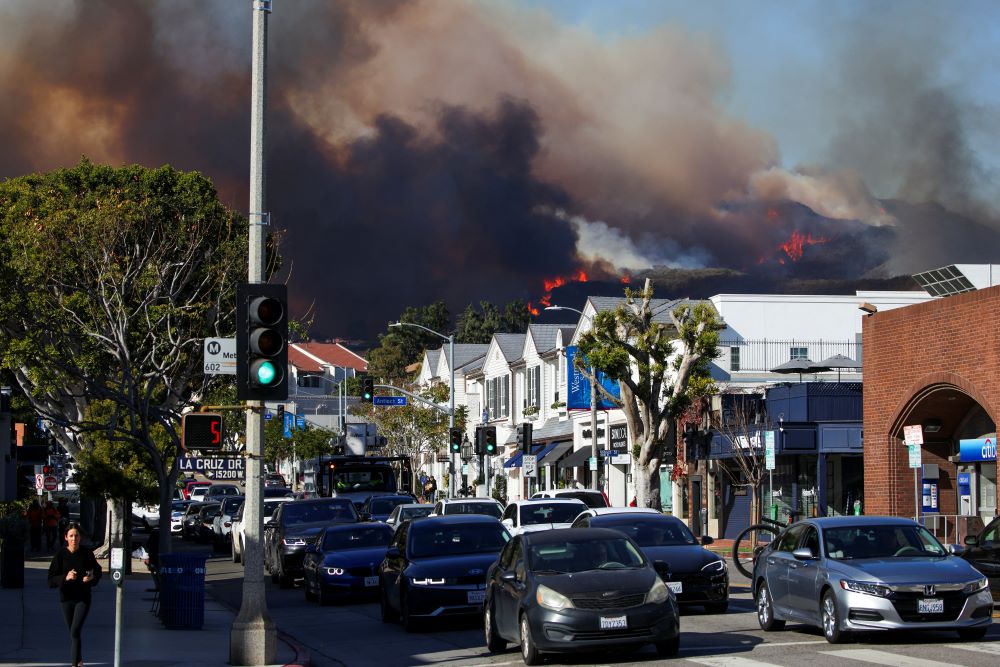
People evacuate as smoke rises from a wildfire burning near Pacific Palisades on the west side of Los Angeles during a weather-driven windstorm in Los Angeles Jan. 7, 2025. (OSV News/Reuters/Daniel Cole)
Elena Venner, who has asthma, recalls how wildfires exacerbated by climate change forced family in Colorado to evacuate their homes during the 2021 Marshall wildfire and friends to lose their homes from the Palisades and Eaton fires last year outside Los Angeles. Looking ahead, she worries how increased sea rise could affect coastal areas where she might choose to live. It has also given her pause about having children at some point.
"I think bringing life into this world is a really serious consideration, and that they should have a livable environment and as much of an opportunity to be happy and live the life that they want to as possible," she said.
"We're already in the state of climate change, just like beginning … seeing the effects. And so I just, I can't speak for the future, and I don't feel comfortable bringing another life into this uncertain situation that we're in."
The youth lawsuit remains in its early stages. At some point, the court will consolidate similar cases challenging the endangerment finding reversal and under one case name, usually the first filed. In this instance, that would be the case filed by the American Public Health Association. Olson said she anticipates Our Children's Trust will still stand to argue the claims around life and religious liberty while other groups lead statutory arguments.
Venner said it is "really disheartening" that the Trump administration is not supporting hers and future generations by eliminating federal regulations and policies aimed at limiting climate change.
"It would be nice, I think," she said, "for our government to at least acknowledge that we are in this climate crisis and to start by not repealing what we already have."