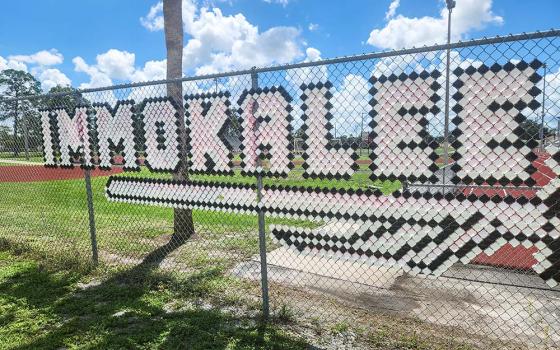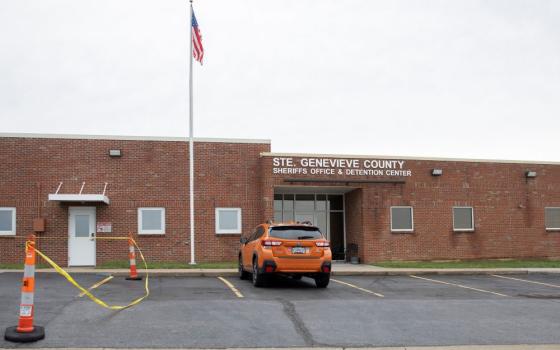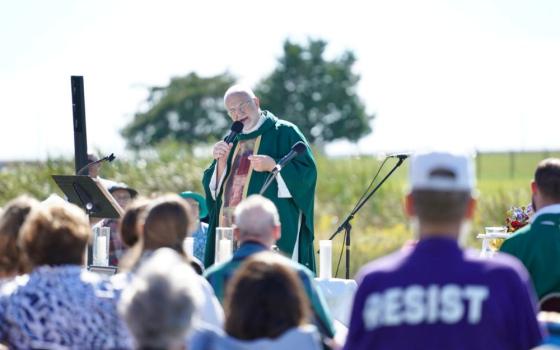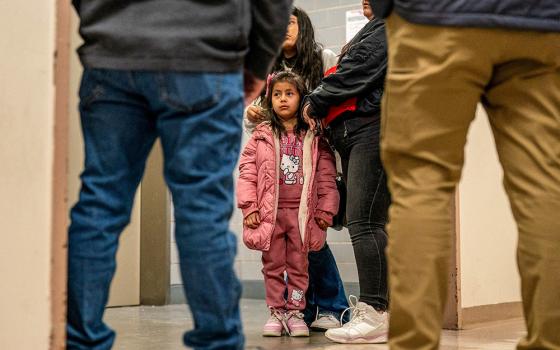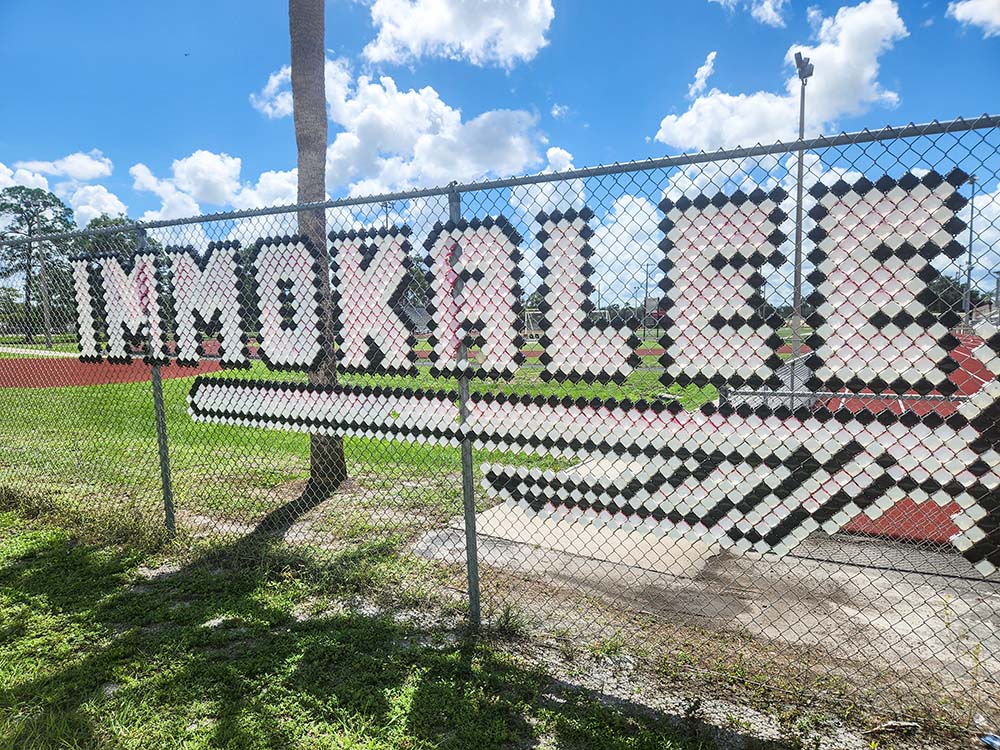
Outside of Immokalee High School in Immokalee, Fla. (GSR photo/Chris Herlinger)

Join the Conversation
Send your thoughts to Letters to the Editor. Learn more
No one would say that, even in normal times, the streets of Immokalee, Florida, were ever bustling most summer afternoons.
This is a town of about 25,000, after all, and even in the late summer days of September, the humid, thick, sticky inland air can make shirts, tops and pants stick to the skin, driving people inside for air-conditioned relief.
But these are not normal times.
The streets feel deserted. "For Rent" signs are a common sight around town. A community market where migrants from Haiti, Mexico and Central America would sell and shop on a Friday afternoon is hardly stirring. The old friends out in the midday shade enjoying a game of dominoes are gone.
"It's a ghost town now," said longtime resident Sr. Judy Dohner, a caseworker for Catholic Charities, based at Our Lady of Guadalupe Church. "You used to see people walking or biking around town. Now people can't get out."
Or won't get out.
Many residents are in hiding, particularly the Haitians who in recent years had found work and community in a town whose name means "My Home" in the Miccosukee and Seminole languages and is known for welcoming farmworkers who toil in the nearby large tomato fields.
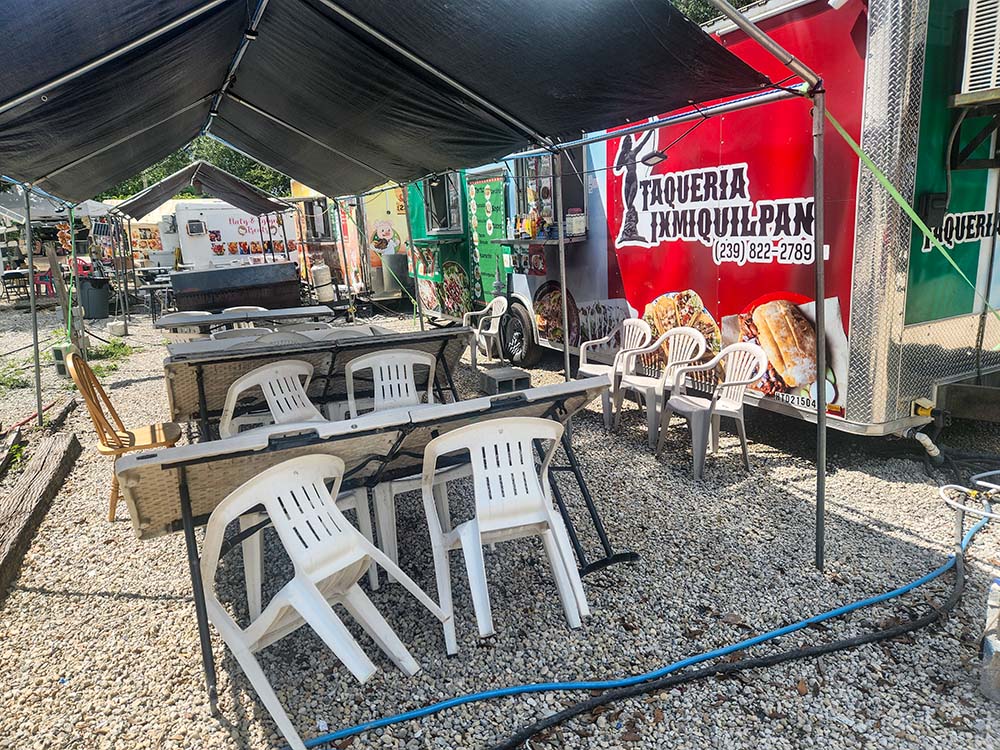
A local street market in Immokalee, Fla., would usually be bustling on a Friday afternoon, but not now because of fears of raids by ICE agents. (GSR photo/Chris Herlinger)
But the recent expiration of Temporary Protected Status, or TPS, has upended life for about 350,000 Haitians nationally and for the thousands of Haitians living in Immokalee.
The Haitians were allowed to live and work legally in the United States following a devastating 2010 earthquake and then, more recently, to stay in the wake of increasing gang violence and political instability following the 2021 assassination of Haitian President Jovenel Moïse.
But a Supreme Court ruling on June 25, 2026, affirmed the Trump administration's decision to terminate TPS as of July 27. The administration has said that TPS was never meant to be permanent and that conditions in Haiti had improved enough for people to return, an opinion disputed by human rights groups.
In a Sept. 21 report, Human Rights Watch noted that since the end of TPS, the U.S. has deported hundreds of Haitians, returning them to a country "where they face threats to their lives and safety and receive little to no support." Human Rights Watch urged Congress to reinstate TPS for Haitians.
"The United States is returning people, some with pending asylum claims, to a country that doesn't have the capacity to protect them from violence, let alone help them find food and shelter," said Nathalye Cotrino, senior Americas researcher at Human Rights Watch.
A key reason the end of Temporary Protected Status is hitting hard is because TPS had been extended numerous times since 2010, including during the first Trump administration, so Haitians assumed it would probably be extended again.
'This is home'
Amid this uncertainty, Haitians in Immokalee seek advice, counsel and support from Dohner, an American Sister of the Humility of Mary who speaks Haitian Creole and returned to Immokalee in 2018 after a 16-year ministry in Haiti.
What Dohner tells the Haitians is not necessarily what they want to hear: that they can "self-deport" — return to Haiti of their own accord — or risk being deported if they stay.
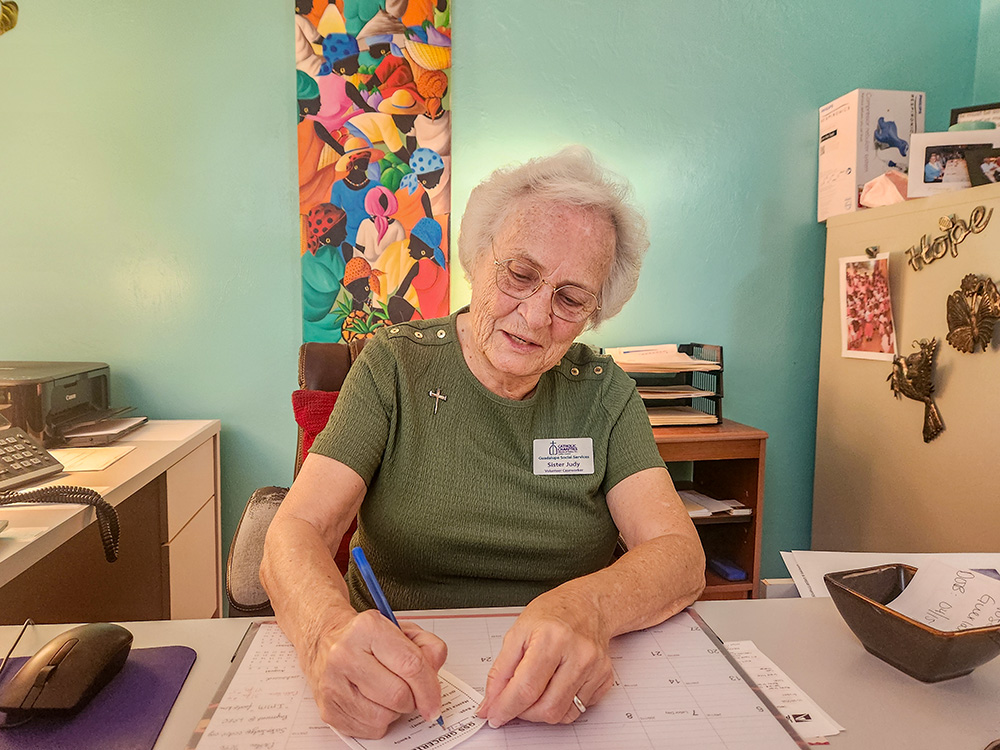
Humility of Mary Sr. Judy Dohner in her office at the Catholic Charities office in Immokalee, Fla. She meets Haitian clients here. (GSR photo/Chris Herlinger)
Few are self-deporting.
One 62-year-old Haitian woman recalls trauma, recounting a 1999 robbery of an office supply store where she worked in Haiti; four guns were held to her head as the robbers sought cash in a safe.
"Having a 2-year-old daughter at the time was when I started making preparations to leave my homeland," she told Global Sisters Report. "No security or safety. If Haiti was this violent and threatening in 1999, could you imagine how much worse conditions have gotten?"
"The news media fail to show the severity of the conditions of Haiti," the woman added. "It's not as simple as gun violence; women are raped and children are burned to death for the mother to watch."
The woman and her now 29-year-old daughter both lost health care jobs in Naples, Florida, when their protections ended in July. The mother had worked as a nurse's aide in a nursing home; her daughter was a licensed practical nurse.
Now, neither feels safe leaving home. It is not prison, they said, but at times it can feel that way.
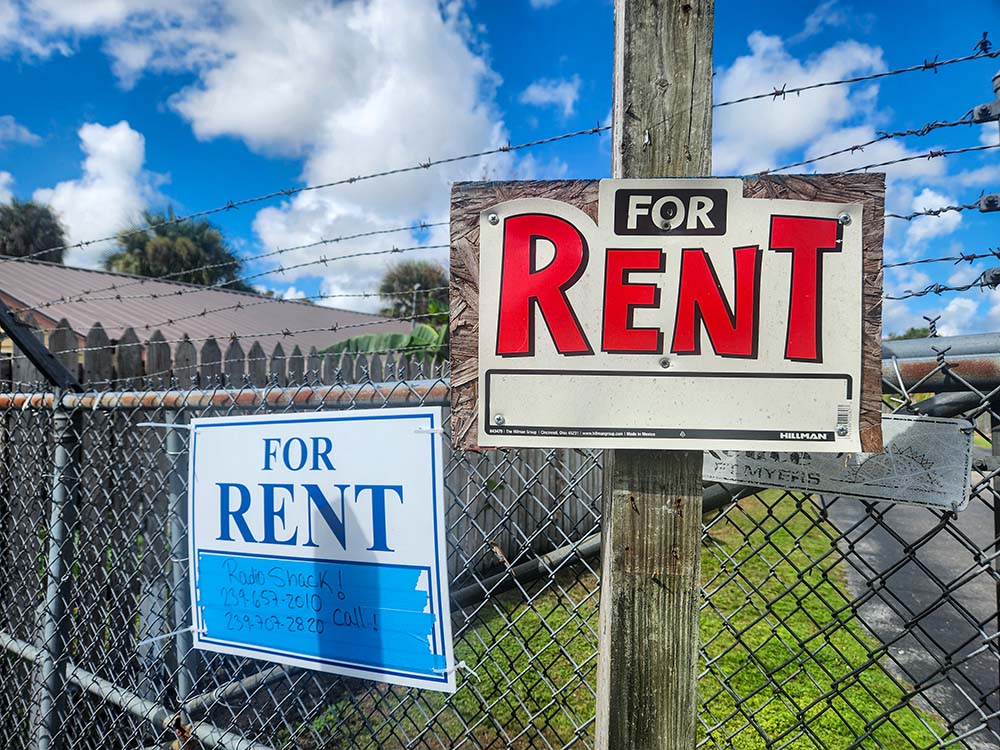
For rent signs are now a common sight in Immokalee, Fla. (GSR photo/Chris Herlinger)
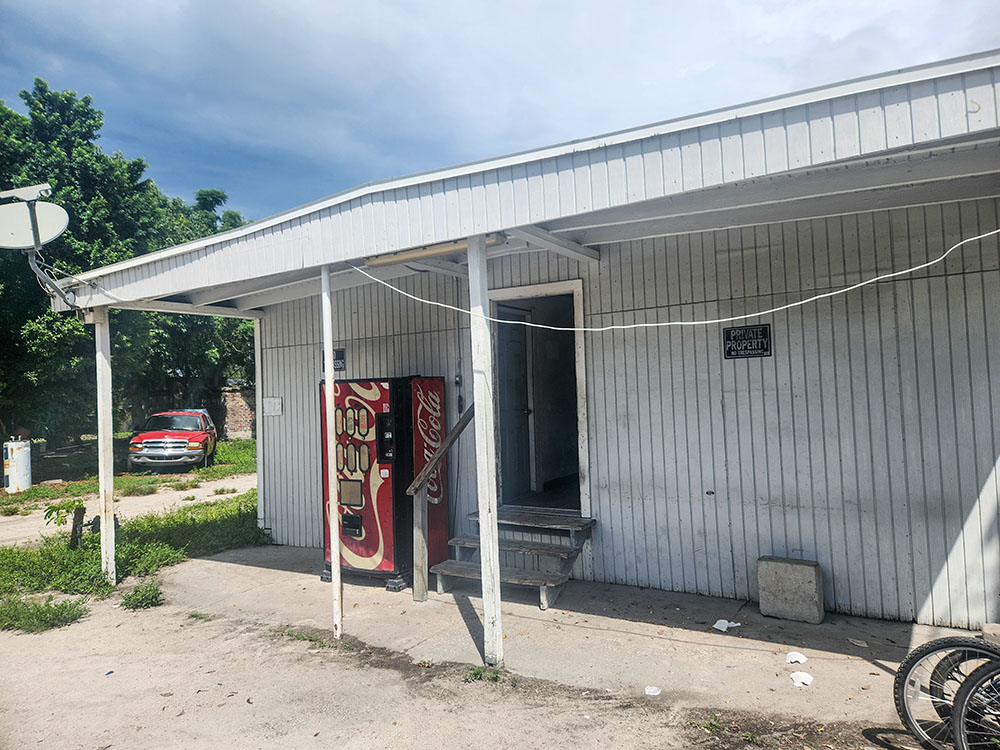
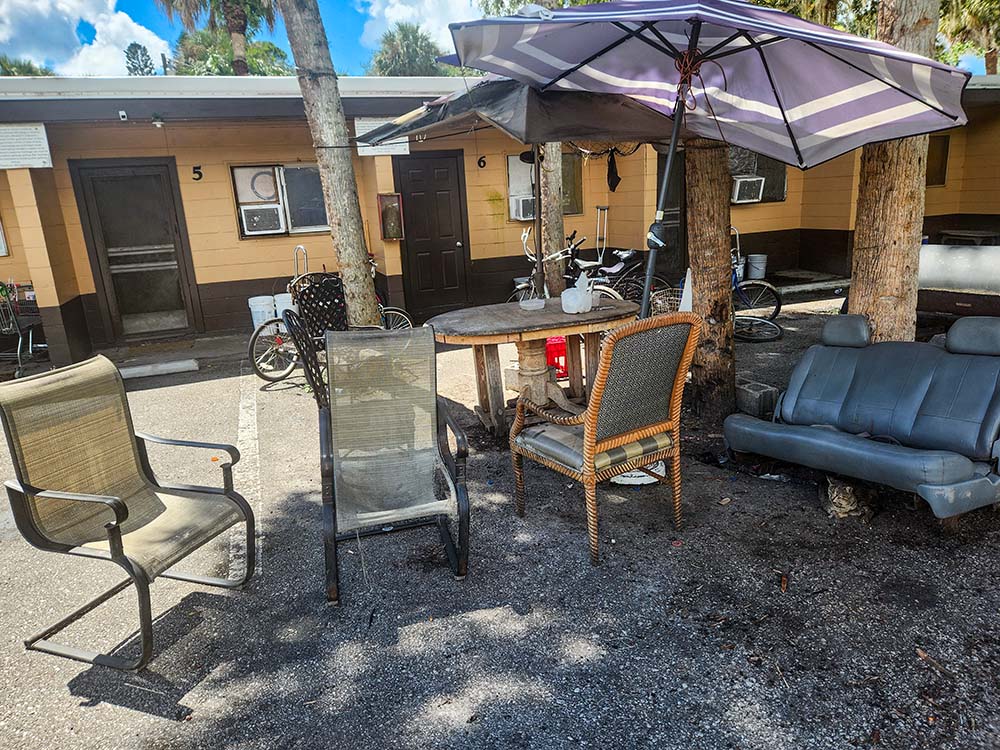
Outside a "flophouse" in Immokalee, Fla. This is where some farmworkers, including Haitians, typically reside. (GSR photo/Chris Herlinger)
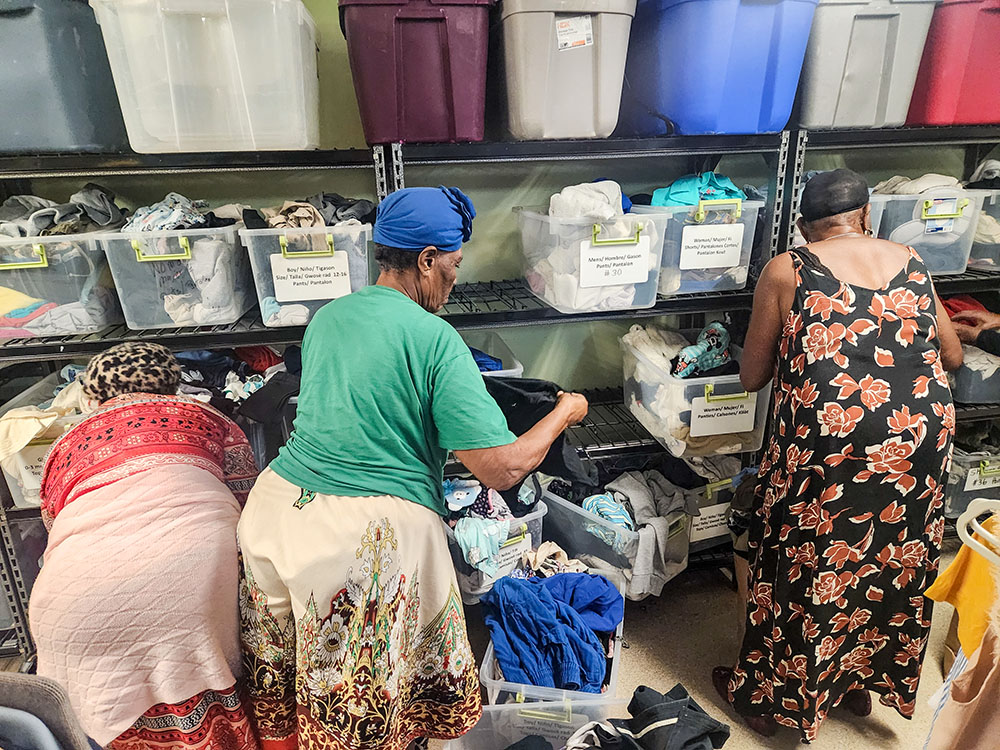
Haitian women sort through donated clothing at Catholic Charities in Immokalee, Fla. (GSR photo/Chris Herlinger)
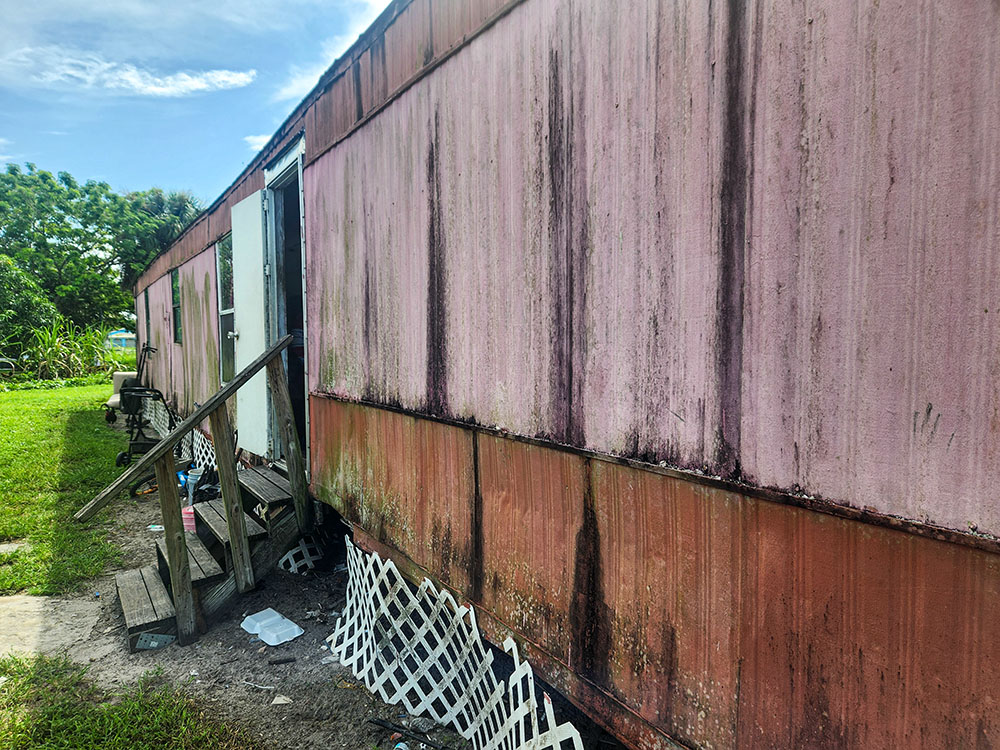
Trailer homes like this are typical residences for a Haitian family in Immokalee, Fla. (GSR photo/Chris Herlinger)
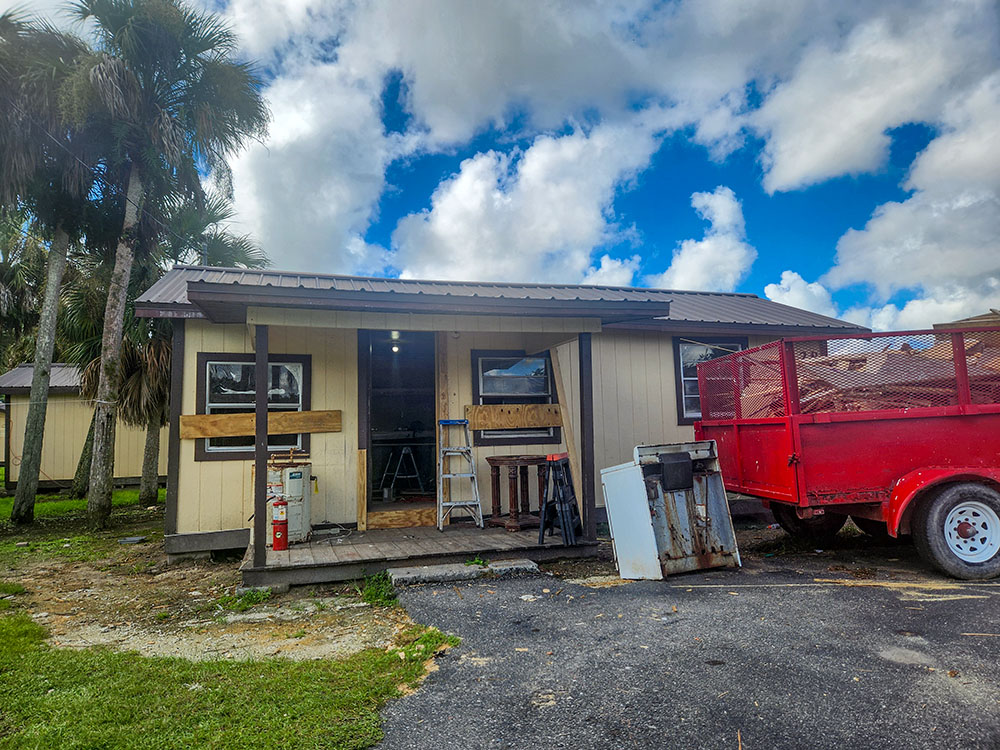
A vacated residence in Immokalee, Fla., an increasingly common sight in a community facing economic challenges (GSR photo/Chris Herlinger)
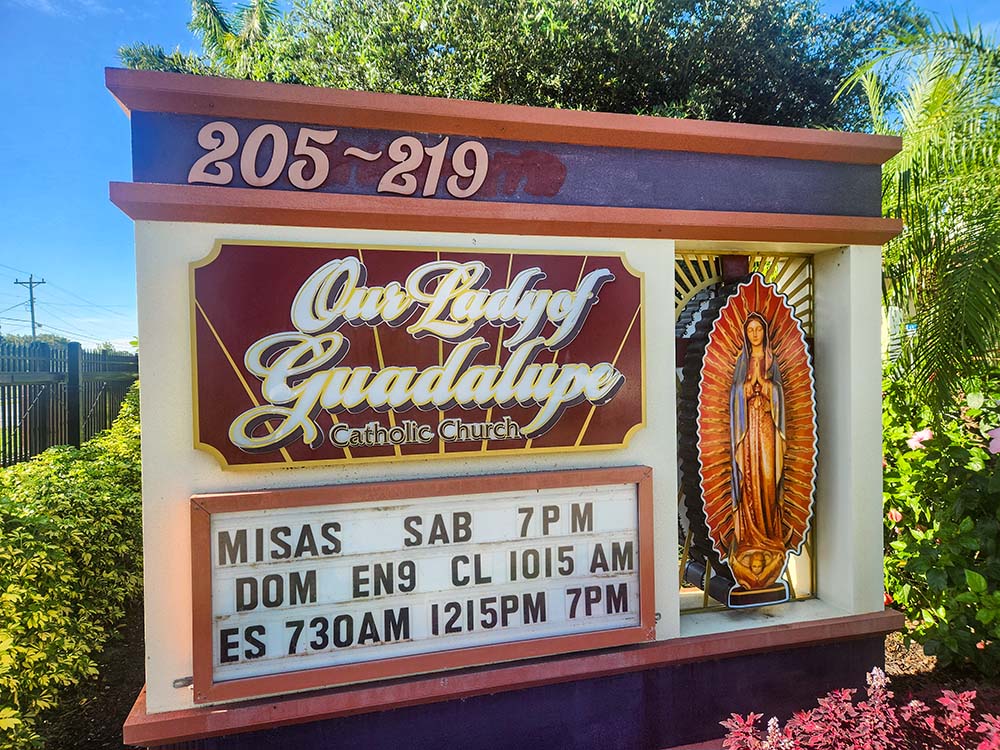
Our Lady of Guadalupe Church, the site of the Catholic Charities ministry in Immokalee, Fla. (GSR photo/Chris Herlinger)
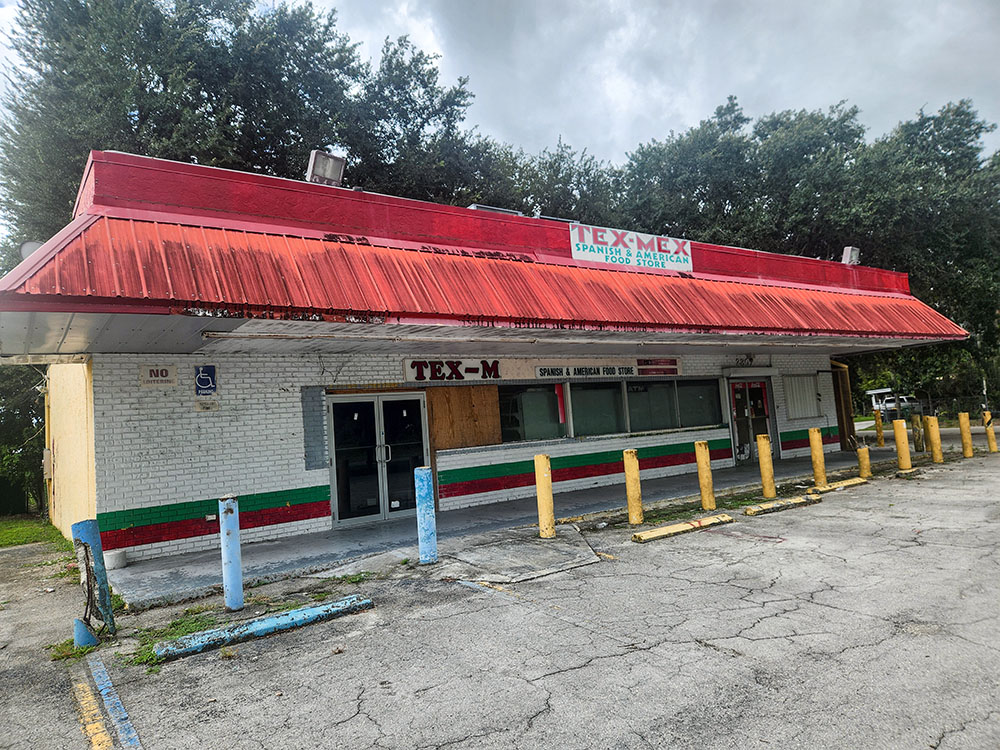
An abandoned restaurant in Immokalee, Fla., an increasingly common sight in a community facing economic challenges (GSR photo/Chris Herlinger)
"Honestly, it's hard to understand what is happening," the mother said, adding that she struggles to understand the policy change given the "nitty-gritty work" Haitians do in farm fields, hospitals and nursing homes — jobs she described as "essential to the country."
Her daughter described the uncertainty more simply: "We don't know which way to go: left, right, up or down."
Returning to Haiti does not feel like a real option. The mother pointed to the lack of reliable healthcare, electricity, roads and security there.
"We don't have anything there to go back to," the daughter said. "This is home."
'No one in the community feels protected'
If returning to Haiti is a fear, so is the presence of U.S. Immigration and Customs Enforcement, or ICE. By most accounts, ICE agents have not targeted Immokalee — yet. There are occasional rumors of ICE spottings. But a massive raid has yet to happen.
Men would once play dominoes outside in midday in Immokalee, Fla., but not now given fears of raids by agents of ICE. (GSR photo/Chris Herlinger)
The spottiness doesn't matter. The fear of being caught up in an ICE sweep among Haitians, including those who are now U.S. citizens, is palpable.
One longtime Haitian American businessman and community leader would normally have had no problem being identified publicly or quoted in an article about the Immokalee Haitian community.
Not now.
In an interview he described the situation as challenging as anything he has witnessed. Right now, he said, "no one in the community feels protected." That includes those who, like him, hold U.S. citizenship.
He tells fellow Haitian residents that "they have to have a plan" and must be prepared for the worst, which would be being deported and sent back to Haiti.
A local Haitian cleric, Scalabrinian Fr. Patrick Bernard, told GSR that fewer Haitians are attending Creole-language Mass at Our Lady of Guadalupe Catholic Church, where he ministers to the Haitian community.
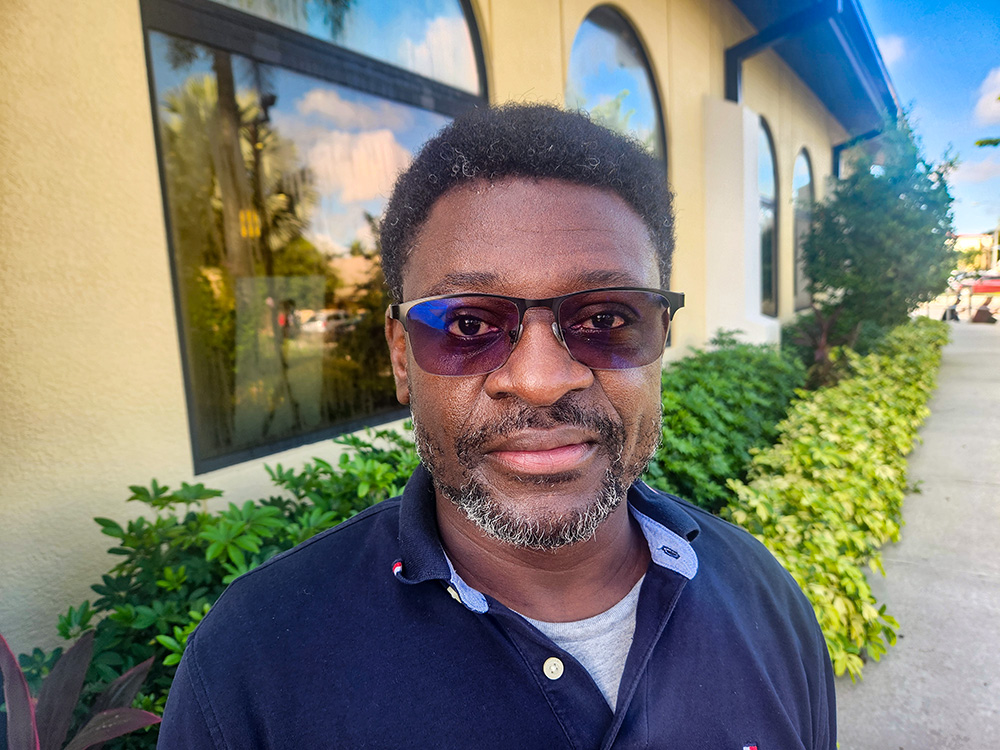
Scalabrinian Fr. Patrick Bernard says that Haitians are now reluctant to attend Mass at Our Lady of Guadalupe Church in Immokalee, Fla., because of fear of ICE agents. (GSR photo/Chris Herlinger)
More and more, he is ministering to people in their homes, he said, adding that there is little he can do but "accompany" Haitians — offer counsel, prayer and a caring ear. Bernard tells the parishioners that he has to follow the law and cannot give much beyond spiritual support and guidance.
"They are thankful for anything we can give them."
For one sister, it's 'an issue of social justice'
In counseling Haitians in her small office, painted in calming velvet blue and adorned with Haitian folk art, Dohner said she sees courage among the Haitians to see through adversity and find ways to support their families.
She listens attentively to the stories, like the one of a Haitian man in his 50s who is blind and can't find work. Sitting in Dohner's office, he and his teenage son said they don't really know what to do now. The two said they are getting by partly through the kindness of a landlord who allows them to pay rent when they are able.
Later, Dohner told GSR that the Haitian man's cousin met with her the following week; she gave him a little cash to help the family during a bad patch but was also frank with him. It would be best, she said, if they "self-deported."
Advertisement
Staying in the U.S. is "simply hopeless for them," Dohner told GSR, noting that the blind man is not eligible for disability and that his blindness will make it nearly impossible for him to find work in the current fraught environment.
Such advice does not come easily or sit comfortably with Dohner, who believes what is happening to the Haitians is unjust and that it is important "to speak the truth" about the current injustices they face.
"Immokalee is a very fragile place right now," Dohner said. "One 71-year-old woman told me, 'I can't go back to Haiti. I have no home there and no family,' " Dohner said. "Would it be just to deport someone like that?"
"It's a sin," she said. "This is an issue of social justice."
It particularly pains Dohner, given the depth of religious conviction that undergirds the Haitian experience.
She recounts that many Haitians have told her that God will protect them during this challenging moment and that, despite all evidence, somehow their TPS status will be reinstated — something that seems doubtful as long as President Donald Trump, who has made derogatory and racist comments about Haitians, remains as president.
The Haitian community leader agrees, saying that Haitians — by all accounts faithful people to a fault — will always say, "God is with us." Some pray that somehow time will win out and favor them.
For her part, Dohner reassures them that, no matter where they are, whether in Florida or back in Haiti, "Jesus will always be walking with them."