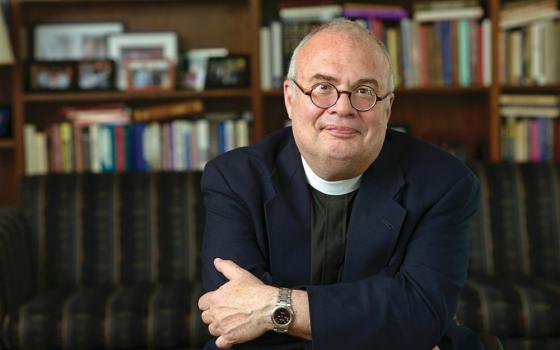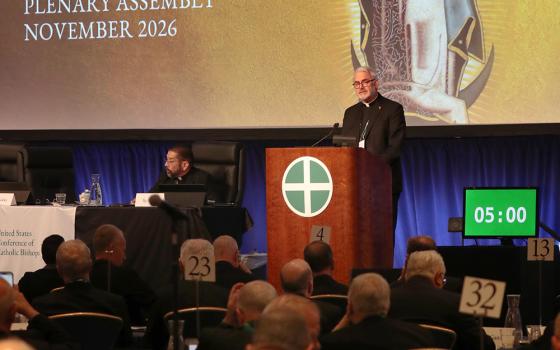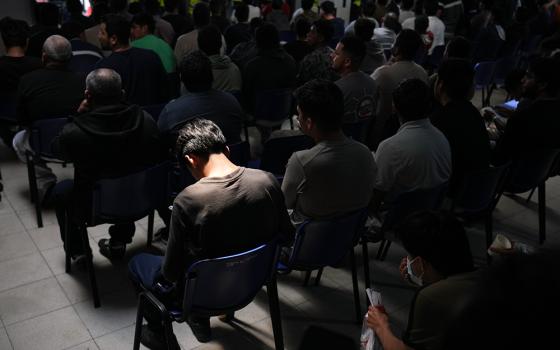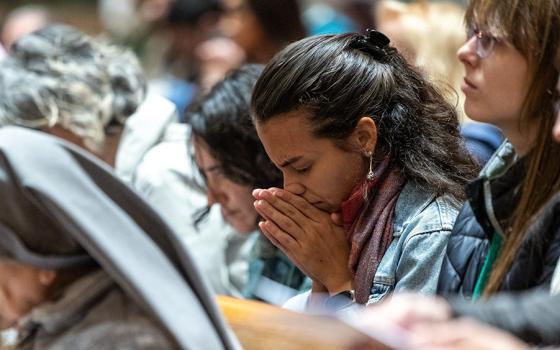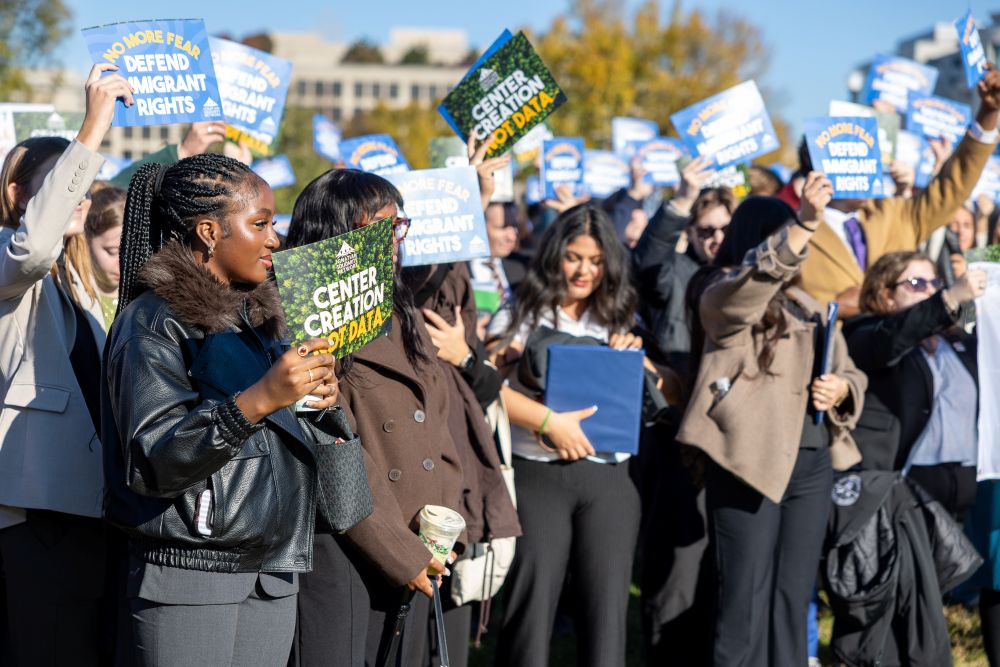
Students from Jesuit high schools and colleges nationwide participate in the day of advocacy portion of the Ignatian Family Teach-In for Justice on Capitol Hill Nov. 16, 2026. (Ignatian Solidarity Network/Doris Sump)

Join the Conversation
Send your thoughts to Letters to the Editor. Learn more
There often seem to be endless reasons to fear for the future of Gen Z Catholics and their reported attraction to a pre-Vatican II faith. Is it really any wonder that under a second Trump administration, many teenagers and young adults in this country are gravitating to that which makes them feel powerful and safe? Recent studies show that young priests and seminarians lean to the right, politically and theologically, but you don't have to be a sociologist to observe that young men are being lured by looksmaxxing and aggression; young women, by a glamorization of tradwifedom.
It's a bleak picture for those of us who think progress is a good thing.
But when I'm tempted to despair, there is one event that always brings me back to hope: the annual Ignatian Family Teach-In for Justice in Washington, D.C., organized by the Ignatian Solidarity Network. I fell in love with this gathering in 2023, and last weekend I was able to attend — and present — for the third time.
Largely attended by students, faculty and campus ministers from Jesuit high schools and colleges (but open to anyone), the teach-in has a rich and sacred history: The first gathering was held in Ft. Benning, Georgia, in 1997 to protest the School of the Americas, where the U.S. government trained Salvadoran soldiers — including 19 of the 26 who in 1989 murdered six Jesuits and two companions in El Salvador for speaking out on behalf of the vulnerable.
Honoring the memory of martyrs Jesuit Frs. Ignacio Ellacuría, Ignacio Martín-Baró, Segundo Montes Mozo, Juan Ramón Moreno, Joaquín López y López, Amando López along with their companions, Elba Ramos and Celina Ramos, has remained an important part of the teach-in, and there is a beautiful prayer service to pray to and with them on the first night every year. Their legacy stands as a stark reminder that the church has a holy obligation to speak truth to the power of state; a necessary message in our time of rising Christian nationalism.
Over its 29 years, the event has widened its focus to educate and equip Catholics to respond to myriad social justice issues. With three keynote speakers, a half dozen addresses delivered by student activists and countless breakout programs, the opportunity to be informed and inspired is truly remarkable. This year I led a breakout session for aspiring Catholic writers, and I hope to see some of the attendees' bylines in the pages of NCR in the future. It was an honor to share "insider tips" that might help younger writers find their voices and amplify their cries for justice.
Advertisement
It is tradition for the teach-in to conclude on Monday morning at Capitol Hill for a day of advocacy that begins with a public witness. Emmjolee Mendoza Waters, director of Catholic Mobilizing Network's Death Penalty Abolition Program, encouraged the crowd that although legislative change moves slowly, it can and does come when we persist in believing that every voice matters.
"You are standing just steps away from the United States capitol, in the heart of Washington, D.C., at the center of our country's decision-making and history," Mendoza Waters reminded the hundreds of participants. "And today, because you believe things can change, we are here so that you can do something about it."
After the public witness, students dispersed for scheduled in-person meetings with their respective congressional representatives to advocate for specific bills they have studied and want to see passed. The topics at hand this year were immigration justice and a moratorium on artificial intelligence data centers.
Directly engaging in policy conversation with a government representative is intimidating for anyone, much less a teenager, but the young people I spoke with on the Hill told me they felt equipped and ready.
Gadiel Gonzalez-Pena and Jasper Hoffman, students at Xavier High School in New York City, admitted to feeling a little nervous about their meeting with Sen. Kirsten Gillibrand to discuss immigration legislation, but said the conference had emboldened them.
"I've really learned how to listen [at the Ignatian Family Teach-In]," Gonzalez-Pena said. "And how to truly feel comfortable advocating for others, because it takes a lot of confidence."
Penny Baker, of St. Ignatius College Preparatory School in San Francisco, agreed. "IFTJ did a great job about empowering us, really getting us to think," she told me. "There were some amazing breakout groups and amazing people. It was really inspiring."
Inspiring it is. Maybe, just maybe, the kids are alright.