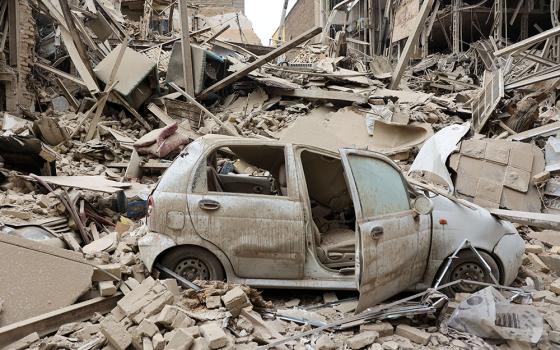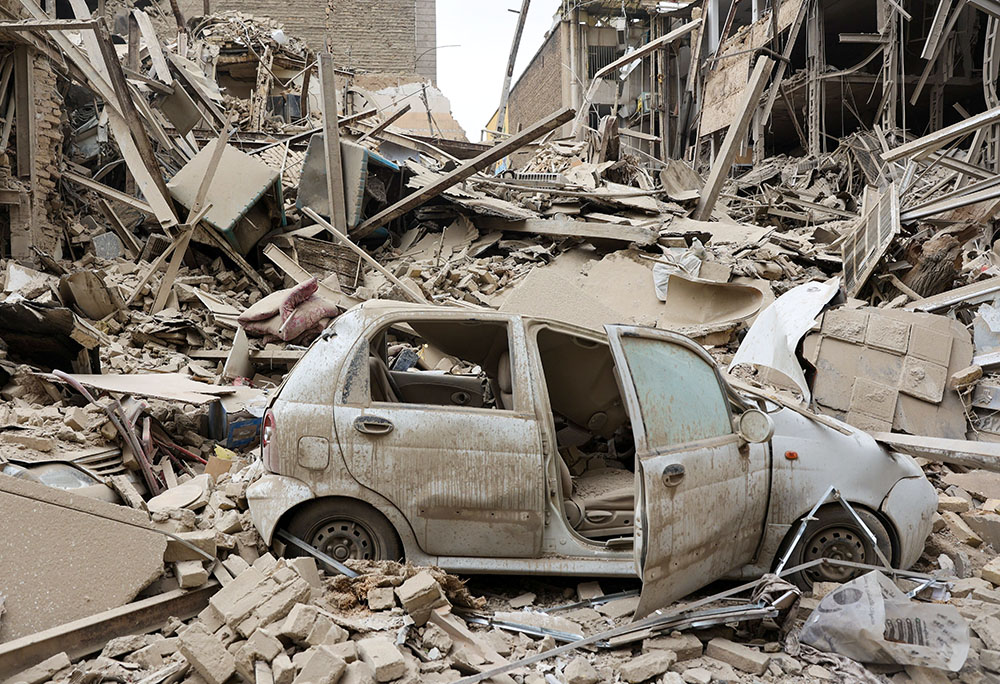
A destroyed vehicle is seen amid rubble at the site of a strike on a residential building in Tehran, Iran, March 16, 2026, amid the U.S.-Israeli war with Iran. (OSV News/WANA via Reuters/Majid Asgaripour)

by Shmuly Yanklowitz
Join the Conversation
Send your thoughts to Letters to the Editor. Learn more
When it comes to the war in Iran, those in favor point to the necessity of liberating the Iranian people from the Islamic Republic and destroying Iran's nuclear capabilities, while those against the war point out the shocking civilian death toll and overall questionable constitutionality.
Both sides are missing a critical consideration — the ethics of interdependence. In assessing the risks and outcomes of this war, we need to be thinking well beyond how it impacts the combatant countries. At present, our moral calculus has not kept pace with the realities that markets, energies and food systems are global.
Already, we have seen how the war's effects go well beyond foreign relations. It ripples into food insecurity, inflation and global instability. Recently, the International Monetary Fund downgraded its global growth forecast as a result of the conflict. Notably, when oil routes close, it is poorer countries who are hardest hit; for example, IMF lowered its outlook especially sharply for sub-Saharan Africa.
I'm not suggesting that nations can't act in self-defense, or that all uses of force are unjustified. I am suggesting that we need to be more honest about the real moral costs of war. We must take into account not just the immediate effects of each bomb dropped, but all the downstream suffering, too. In the words of Israeli poet Yehuda Amichai, we must think about "the diameter of the bomb" in terms of all those it affects.
Advertisement
Politicians have a tendency to speak of war as if it were an isolated regional phenomenon. We'll hear them using words like "contained" to describe a conflict. This is a comforting illusion that is exactly that — an illusion. In truth, there is no such thing as a distant war. As we are seeing with Iran, the ripples effects are everywhere: oil markets, food prices, fragile supply chains.
Everything affects everything. With maritime traffic through the Strait of Hormuz slowed to a trickle, the cost of transporting various goods has greatly increased. This has been especially consequential when it comes to the transport of fertilizer, as about 30% of the global supply passes through the strait. What does this mean on the ground? Well, a farmer in India is now paying twice as much for fertilizer as he did before the war in Iran began.
This will affect food prices in particularly vulnerable regions, where a 5-10% increase in food prices could be devastating for millions of families. Already, the World Food Program warns that an additional 45 million people could face acute hunger if the war continues.
So often, when we in the United States debate the morality of war, we omit much of the globe from the conversation: We do not talk about (or to) rice farmers in Asia or soda vendors in Kenya when discussing the cost of a war in the Middle East. Rather than ignoring global dynamics, we must pair difficult military decisions with aggressive humanitarian mitigation, such as subsidizing the cost of fertilizer in vulnerable countries.
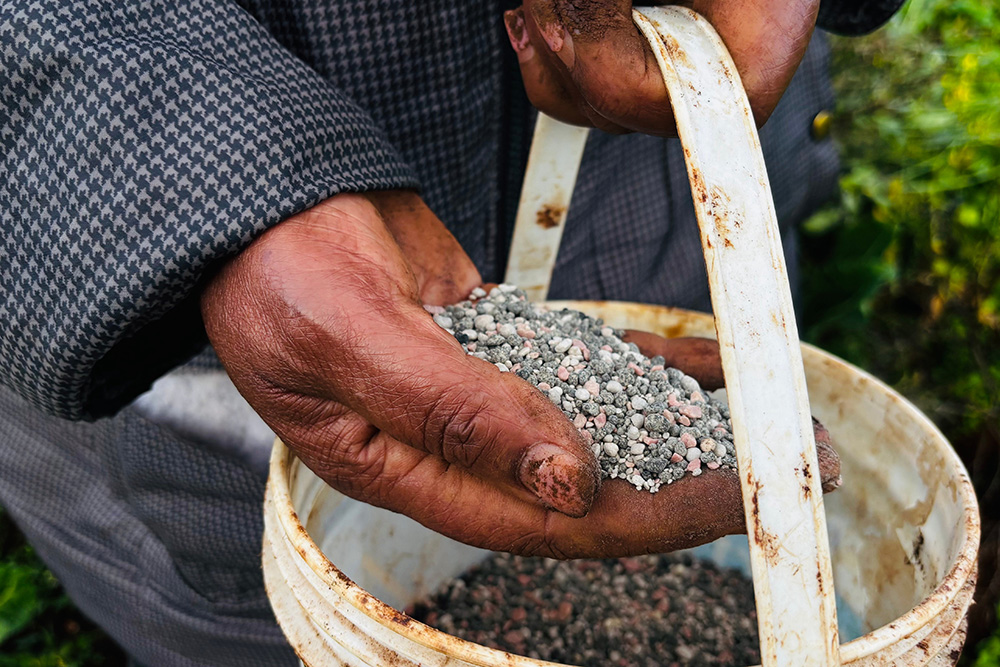
A farmer applies fertilizer to her land in Limuru, Kenya, March 25, 2026. (AP/Jackson Njehia, File)
In general, thinking about global interdependence might lead us to rethink strategies that rely on economic disruption as legitimate tools. But more than anything, we must reconsider the boundaries of our own moral concern.
Part of the challenge is that the nation-state was set up for countries to protect their citizens. The time has come for us to consider ourselves global citizens, with obligations to all of humanity. In the vocabulary of my own Jewish tradition, this would look like expanding the definition of re'echa, one's neighbor, to refer to any human being. We are commanded to care for our neighbors: Lo ta'amod al dam re'echa – "Do not stand idly by while your neighbor bleeds" (Leviticus 19:16).
To consider the whole world our neighbor recalls to me the beautiful poem by Iain Crichton Smith:
My neighbour, if the rain falls on you,
let it fall on me also
from the same black cloud
that does not recognise gates.
In the Jewish framework, this is known as arevut, which is generally understood as mutual responsibility and collective fate. Historically, the term was applied within the Jewish community, and while I do not wish to dilute intracommunal responsibility, I do think times of war require us to think more globally about our interconnectedness.
As ordinary citizens, we may feel powerless to see so many people affected by war. We are not the leaders authorizing warfare — we can neither initiate nor restrain it. However, the reverse is also true — our global interdependence makes each of us powerful. Each action we take has a profound ripple effect. How will you use yours?