(Unsplash/Jorik Kleen)

by Daniel P. Horan
Join the Conversation
Send your thoughts to Letters to the Editor. Learn more
When Harvard University political scientist Robert Putnam published his influential book Bowling Alone: The Collapse and Revival of American Community in 2000, he signaled a concern about declining civic and social participation among Americans in the latter part of the 20th century. At the time, he credited generational change, the rising popularity of television, the increasing flight to the suburbs and work-commute times, and a growing sense of time demands from work and school as contributing to the significant drop in what he called "social capital" that arises from active participation in civic groups, social clubs, religious institutions, and informal gatherings of family, friends and neighbors.
This clarion call was published four years before Facebook launched, five years before YouTube was available, and seven years before the advent of the first Apple iPhone and Netflix began streaming services online. I would argue, like many others, that threats to "social capital," which Putnam said provides both a bonding (it brings together like-minded people with shared interests) and bridging (it builds connections among people who are different) function in our communities, have only increased exponentially since Bowling Alone hit the shelves.
The importance of in-person meeting and socializing has been a topic of discussion in my personal and professional circles lately, as Pope Leo XIV's important encyclical Magnifica Humanitas expresses significant cautions about an overly digitized experience and uncritical reliance on artificial intelligence.
It is important to acknowledge that there is a cost to in-person gatherings, whether professional or personal. Meeting in person, especially when travel is required, can be costly in terms of time, finances and its toll on the environment. But, generally speaking, I have come to believe that in most cases the positive impact — both individually and collectively — of prioritizing in-person meetings is worth the costs.
As I mentioned briefly in a previous column, I recently participated in a three-day international symposium on embodiment in the academic study of spirituality in Dublin. About 30 scholars were invited from across the globe, including Hong Kong, South Korea, Australia, South Africa, Namibia, the U.K. and several countries in Europe and North America, to participate.
Given the significant financial and temporal costs, especially for those traveling from Asia and Oceania, to get to Dublin for three days, one could be forgiven for thinking about the benefits of hosting this meeting over Zoom or another online format. It would have been cheaper, and the environmental impact would have been less, but I am certain that the results of such a virtual conference would have been significantly inferior to the in-person experience.
(Unsplash/M Accelerator)
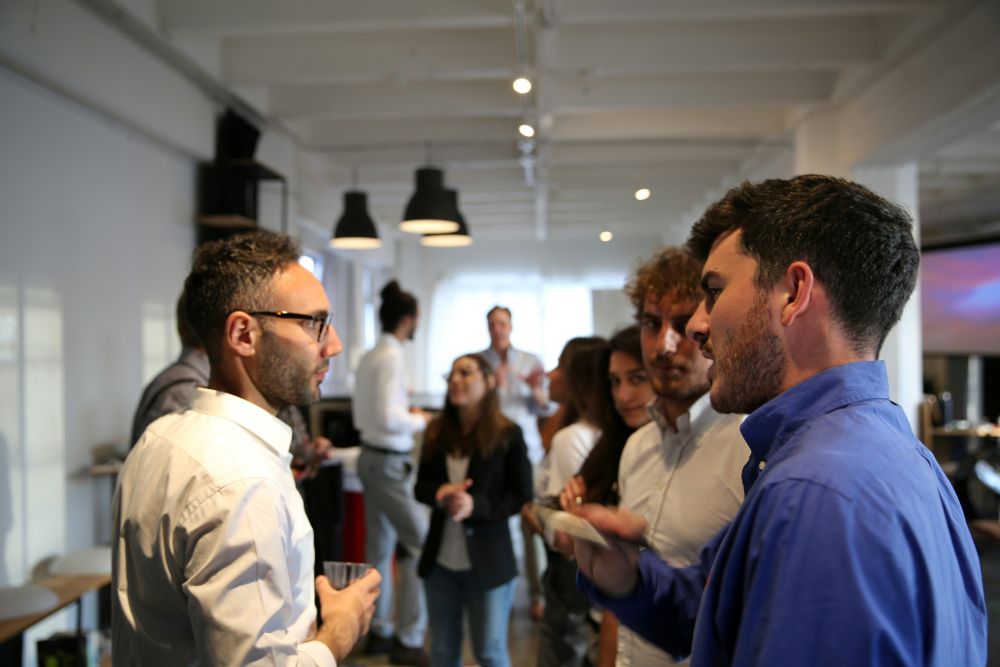
First of all, there is no way to replicate online the manifold ways that communication is conveyed in person. The subtleties of body language, the ability to "read the room" if you are a presenter or a respondent, the felicitous side chat that allows one to clarify a thought or question, the continued conversations over tea or coffee during a break — none of these things are possible online.
Furthermore, the "networking" (I kind of hate that overtly corporate term) or "relationship building" (this feels more Christian) that takes place over meals, or during a morning or evening walk, or over a pint of beer at an Irish pub down the street is where the real magic of intellectual and spiritual work unfolds. As brilliant and insightful as any academic paper may be, nothing beats the truly human practice of informal dialogue and debate among friends and colleagues.
Such bonding simply cannot happen online. No matter how much one tries to replicate these kinds of encounters, they fall short, often feel awkward, and inevitably register as a mere simulacrum of the real human experience of being together in person.
I traveled from Dublin to St. Louis, Missouri, for the annual meeting of the Catholic Theological Society of America. Again, despite my jetlag and the real costs required to attend and participate, I do not regret being there in person. We experienced a virtual iteration of the conference during the COVID-19 pandemic and, despite the excellent work and dedication of those who made this version of the event happen in unprecedented times, I do not wish to go back to that experience.
Professional societies of all kinds, not just scholarly ones like the Catholic Theological Society of America, have been debating the potential merits of occasionally moving meetings online. In the abstract, I get it and even support it. I don't like how expensive these meetings can be, especially as many universities continue to claw back financial support for faculty to attend. Likewise, as someone deeply concerned about the environmental toll travel can take, I recognize the prospective benefits of fewer people traveling long distances.
However, so much of what makes these kinds of meetings meaningful — in terms of scholarly production, community building and idea formation — are the many little, occasional, spontaneous interactions and conversations that cannot be planned or scheduled into a Zoom session. They happen in hallways or near book exhibits or on the bus that takes participants to the church where those gathered celebrate the Eucharist together, in person. There is also the joy of reconnecting with friends and colleagues you may only get to see once a year at an event like this, which I feel is worth it as much as any professional benefit to being present.
I have also been moved by other in-person gatherings outside the professional realm in recent weeks, including a trip to New York state to celebrate my godson's high school graduation. Vincent is the eldest of my college friends' four children and someone I have watched grow and mature into a bright, talented, caring, young man who is also deeply committed to his Catholic faith.
Advertisement
While it didn't require the logistics of traveling to and from Dublin, getting from South Bend, Indiana, to Binghamton, New York, involved two short flights, renting a car and driving more than an hour. But it was worth it. Not only could I be there to celebrate my godson's accomplishments, but I was able to spend a day with his parents and siblings, with the extended family on both sides that I have gotten to know over a quarter century, and to meet other people that I wouldn't have encountered had I just sent a congratulatory card or called in over FaceTime.
The bonus experience came in my ability to visit my younger brother and his family for a few hours in Syracuse after flying into that airport before driving downstate. All the texts, calls or Zoom meetings in the world do not add up to or compare with a few hours sitting in the backyard, talking with your family members.
I realize how privileged I am to be able to experience these in-person encounters, both professionally and personally. Not everyone can afford something like this in terms of time or money, and not everyone would support the potential environmental costs. But one doesn't have to travel to Europe or another state to be in-person this summer. And it doesn't necessarily require a lot of time, either.
My hope is that more people spend more time with others, in person. If you can gather outdoors and celebrate the gift of life on this planet among the rest of God's creation, even better. I believe the costs are worth it and the relational, emotional, psychological, physical and spiritual benefits are irreplaceable. And the building of what Putnam calls "social capital" may also strengthen our communities during these otherwise deeply divisive times. So, let's get offline and get in person this summer!